Below we show you which DIY jobs are the noisiest. Below that, we have listed 10 tools for home DIY and garden chores, including their noise level. How many dB does a hand saw produce, for example? Finally, we give you tips on choosing earplugs for DIY.
How many decibels of noise tools produce
Sanding a door or window frame with an electric sander produces around 95 dB(A). The list below shows the average sound level of each tool.
|
TOOL |
NOISE LEVEL |
|
Lawnmower |
85 dB |
|
Hand saw |
85 dB |
|
Drill |
95 dB |
|
Belt sander |
95 dB |
|
Angle grinder |
98 dB |
|
High-pressure cleaner |
108 dB |
|
Electric saw |
110 dB |
|
Leaf blower |
110 dB |
|
Chainsaw |
120 dB |
|
Hammering a nail |
120 dB |
How do you choose the right earplugs for DIY?
As you can see, DIY jobs produce more decibels than you might have expected.
Fortunately, there are good hearing protectors you can buy that are comfortable to wear and reduce the noise of your tools. Find out below which hearing protection for DIY is right for your situation.
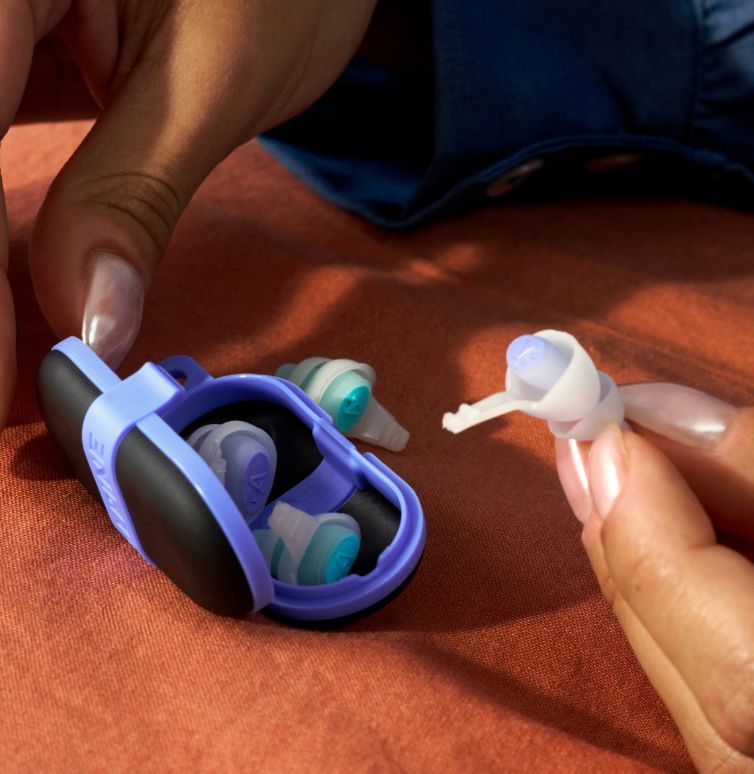
Alpine WorkSafe earplugs
Attenuation: 23dB
Suitable for: lighter DIY jobs in and around the house.
Benefits: Alpine WorkSafe earplugs are made specifically for DIY jobs. The soft, flexible material shapes itself to your ear canal completely due to body heat, assuring you of proper protection. Thanks to the filters, warning sounds and conversations are still sufficiently audible. The extended stem makes inserting and removing the earplugs easy. In addition, they come as standard with a lanyard to hang them around your neck if you take them out for a while.
Alpine Defender earmuffs
Attenuation: 26dB
Suitable for: working with heavy tools that produce more than 110 dB, such as chainsaws, circular saws and drills.
Benefits: Alpine Defender earmuffs provide high-quality hearing protection. Thanks to the adjustable headband, the earmuffs always fit and leave nothing to be desired in terms of comfort. By the way, Alpine Defender earmuffs are also highly suitable as hearing protection in other situations!