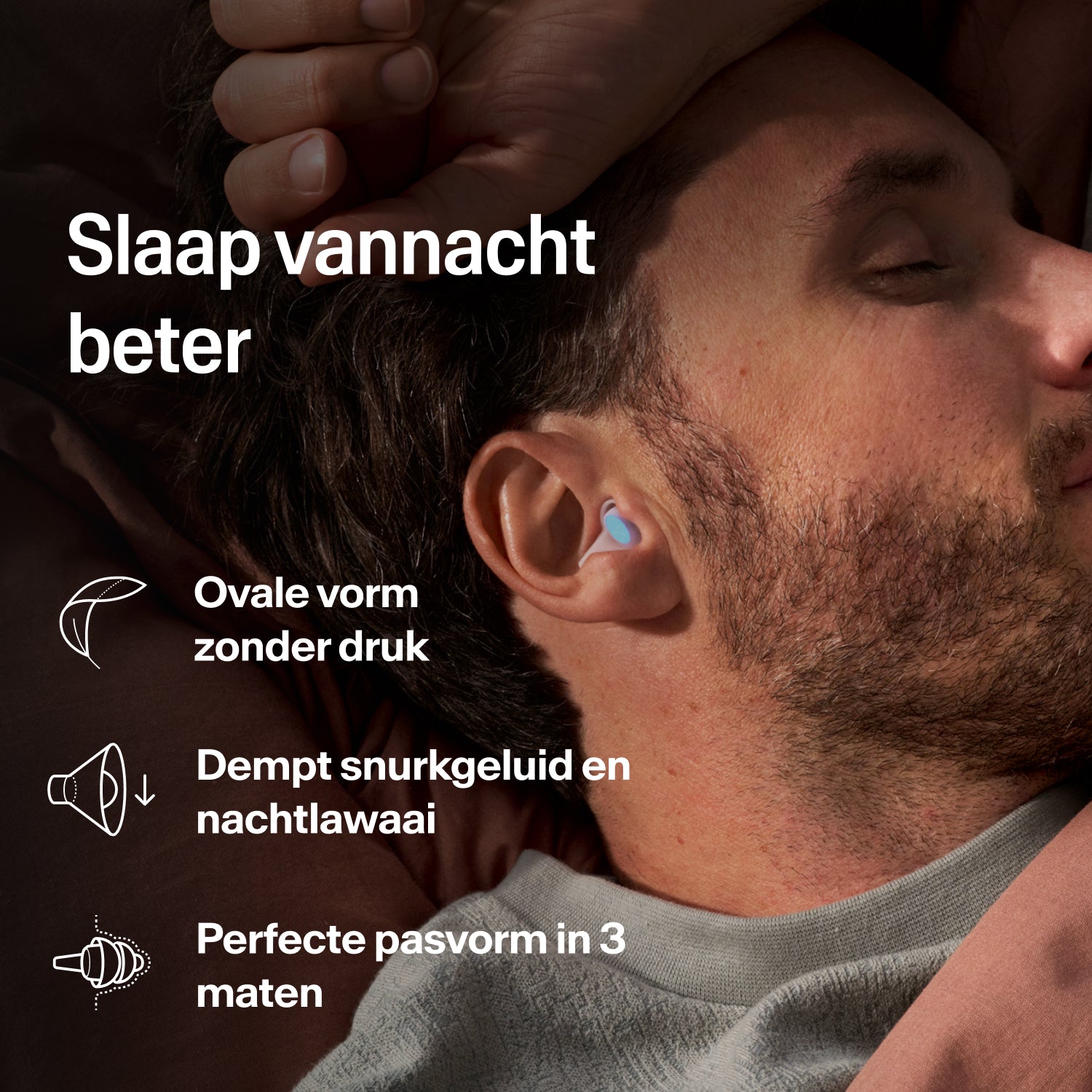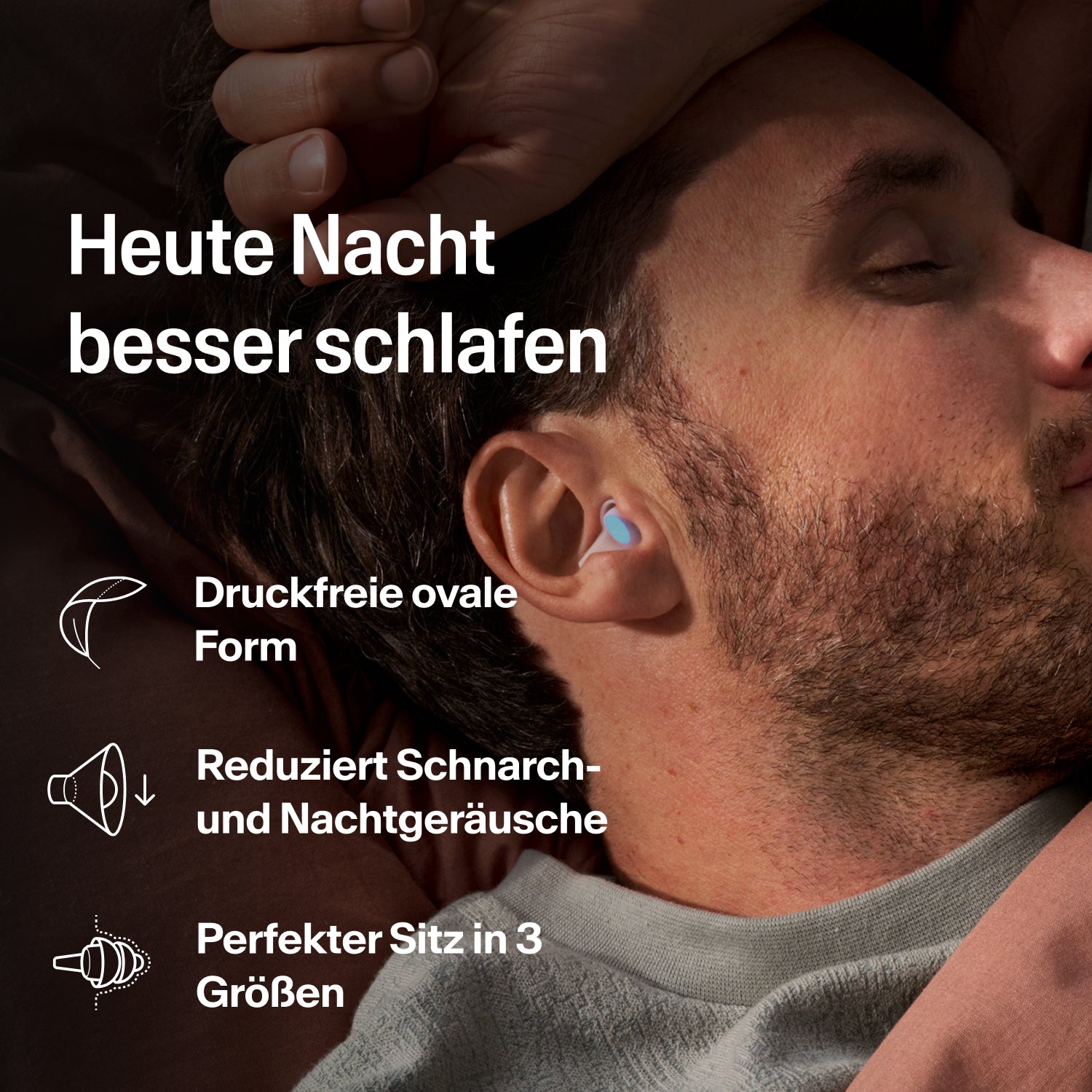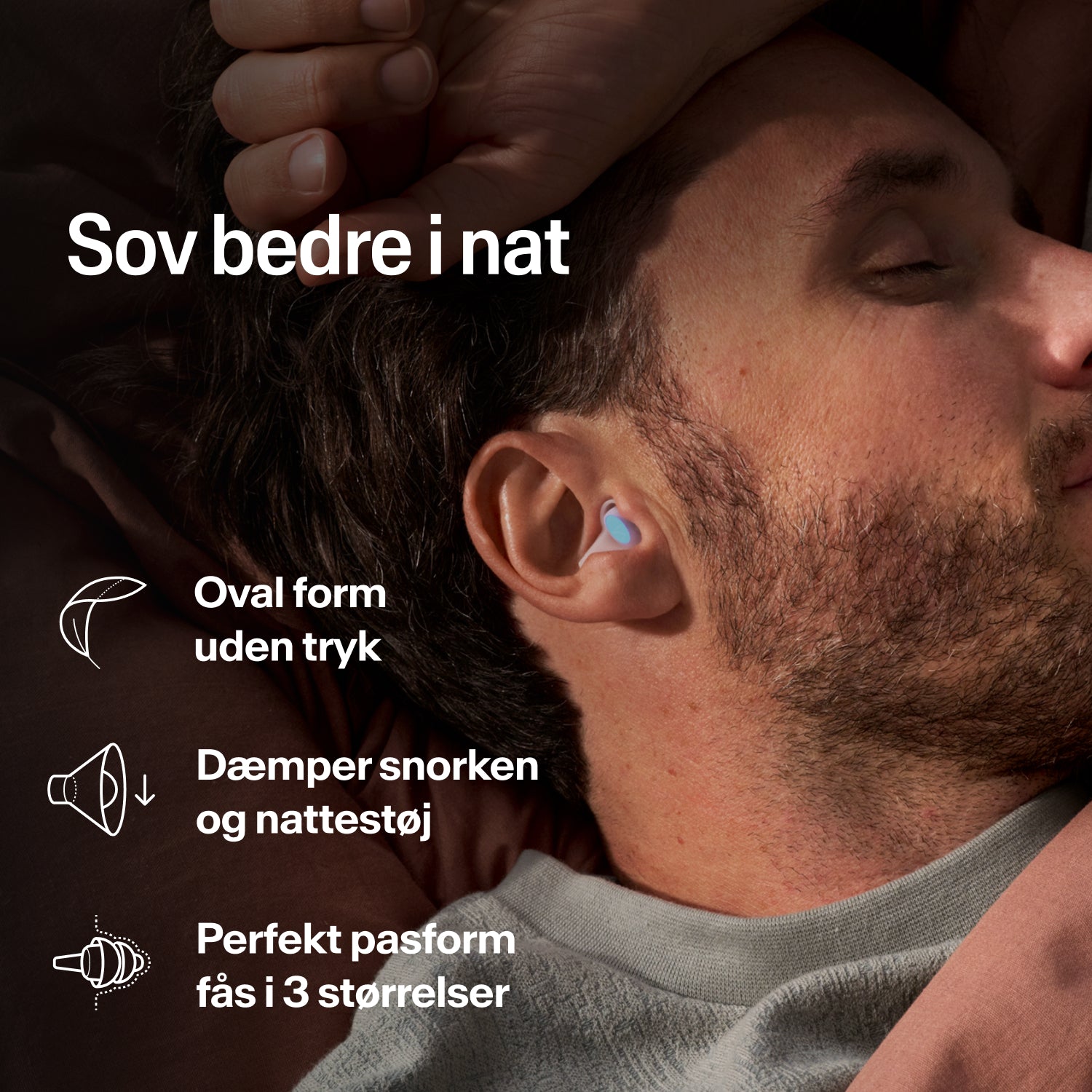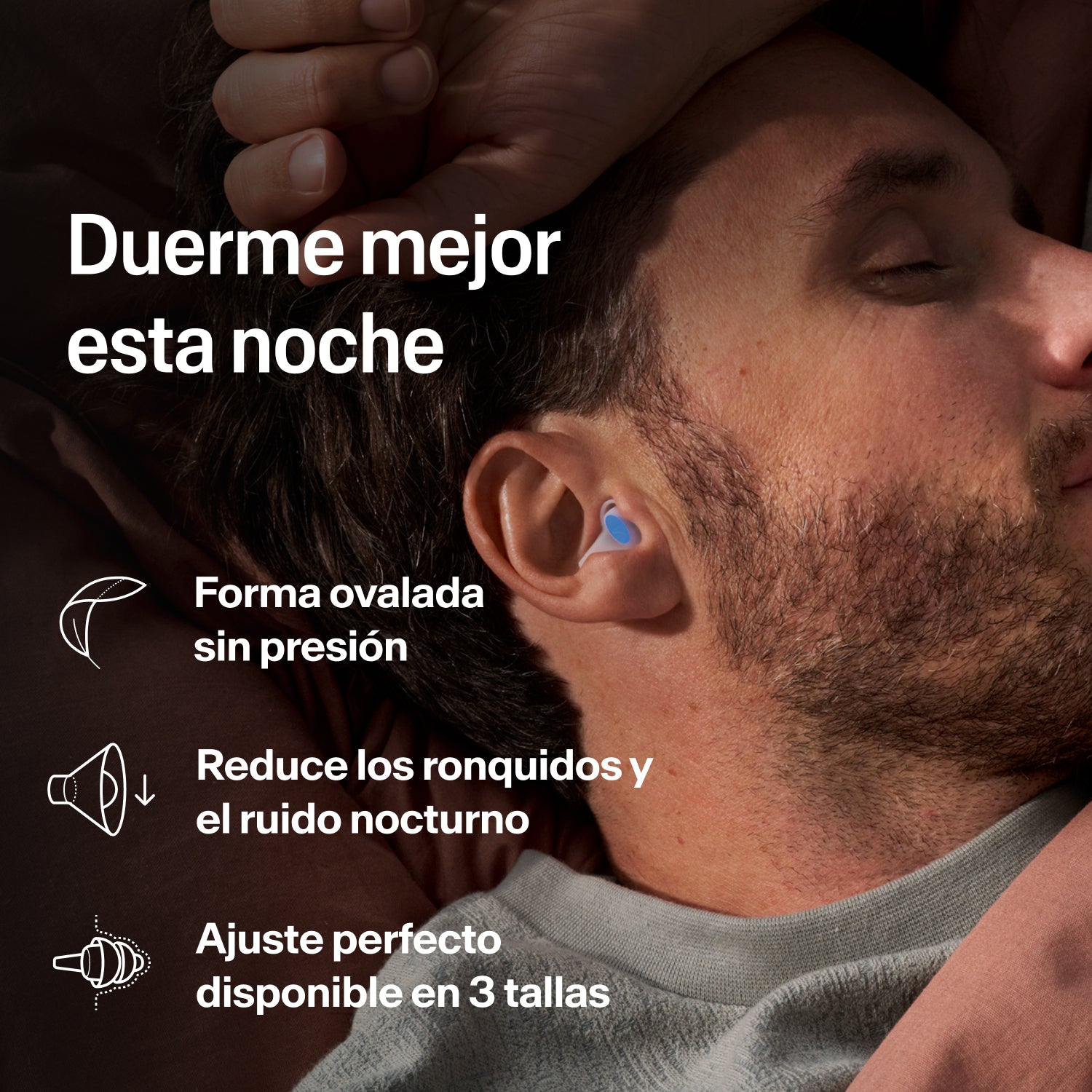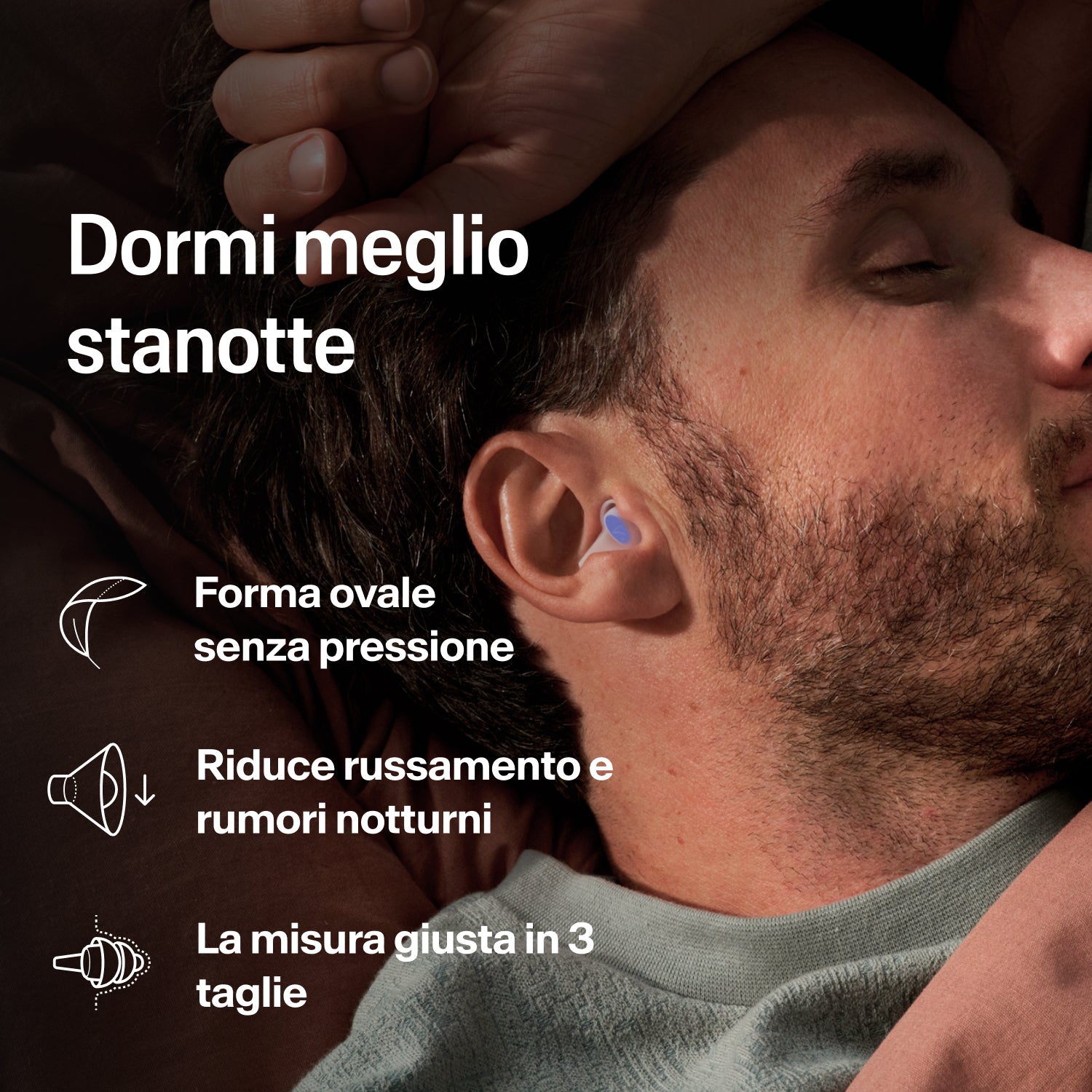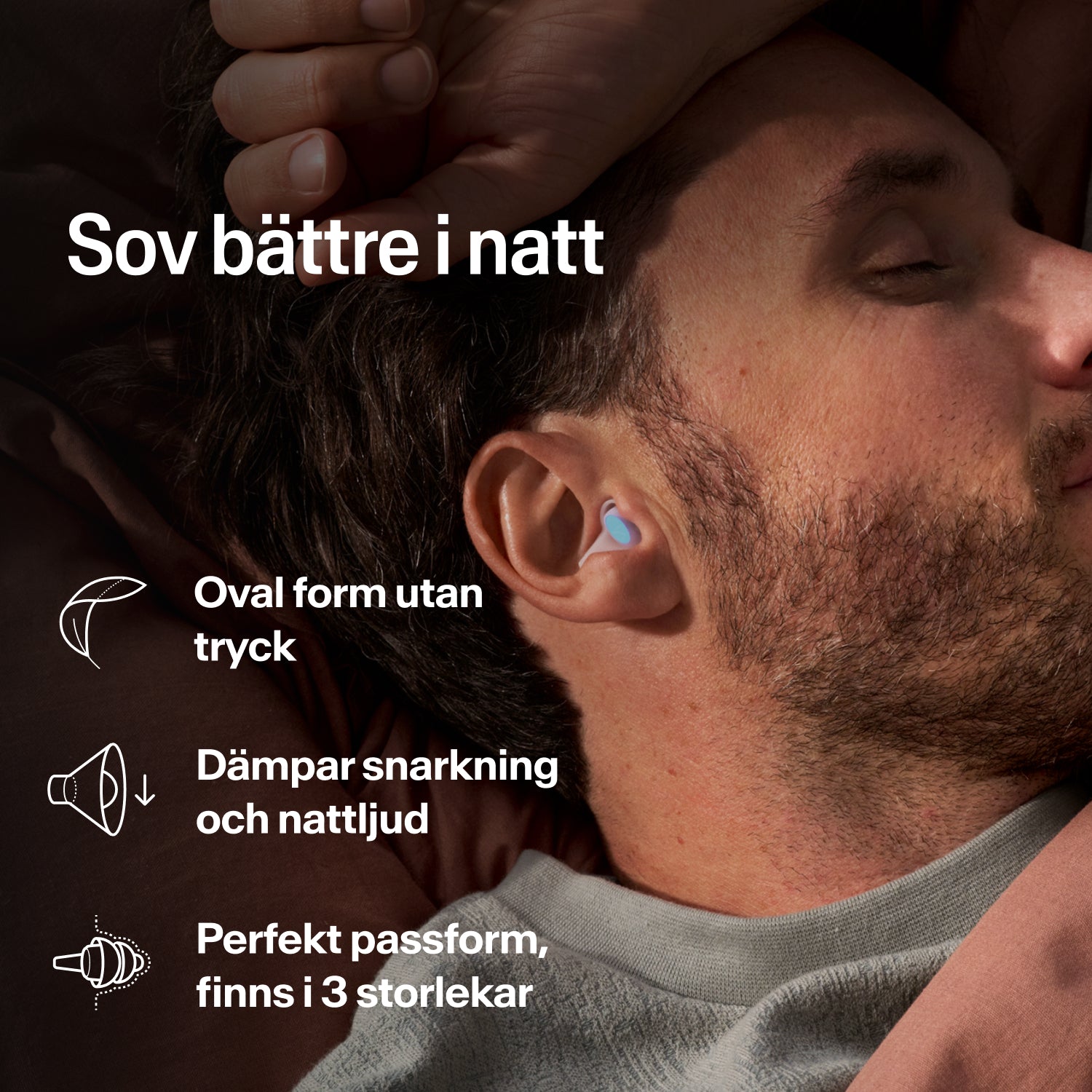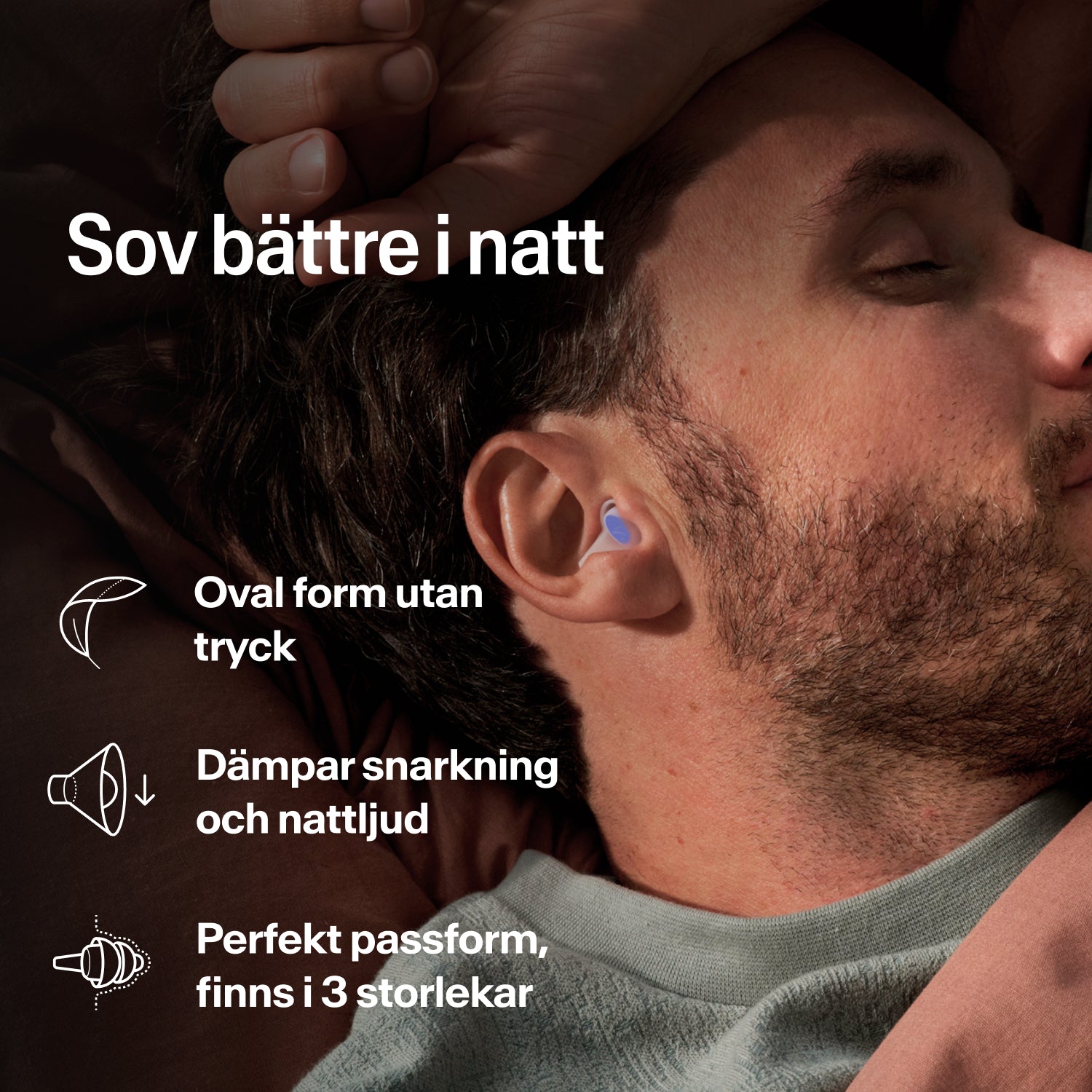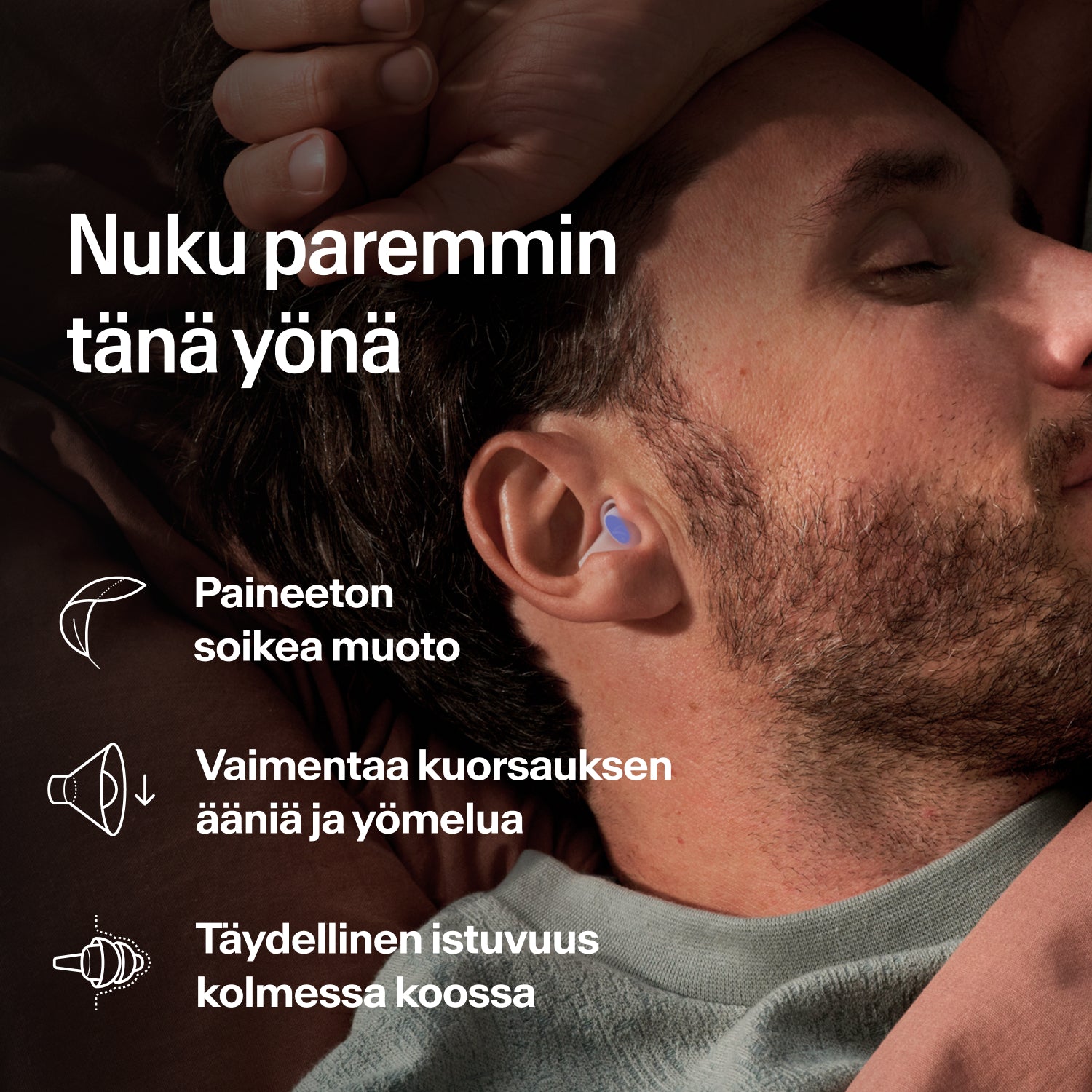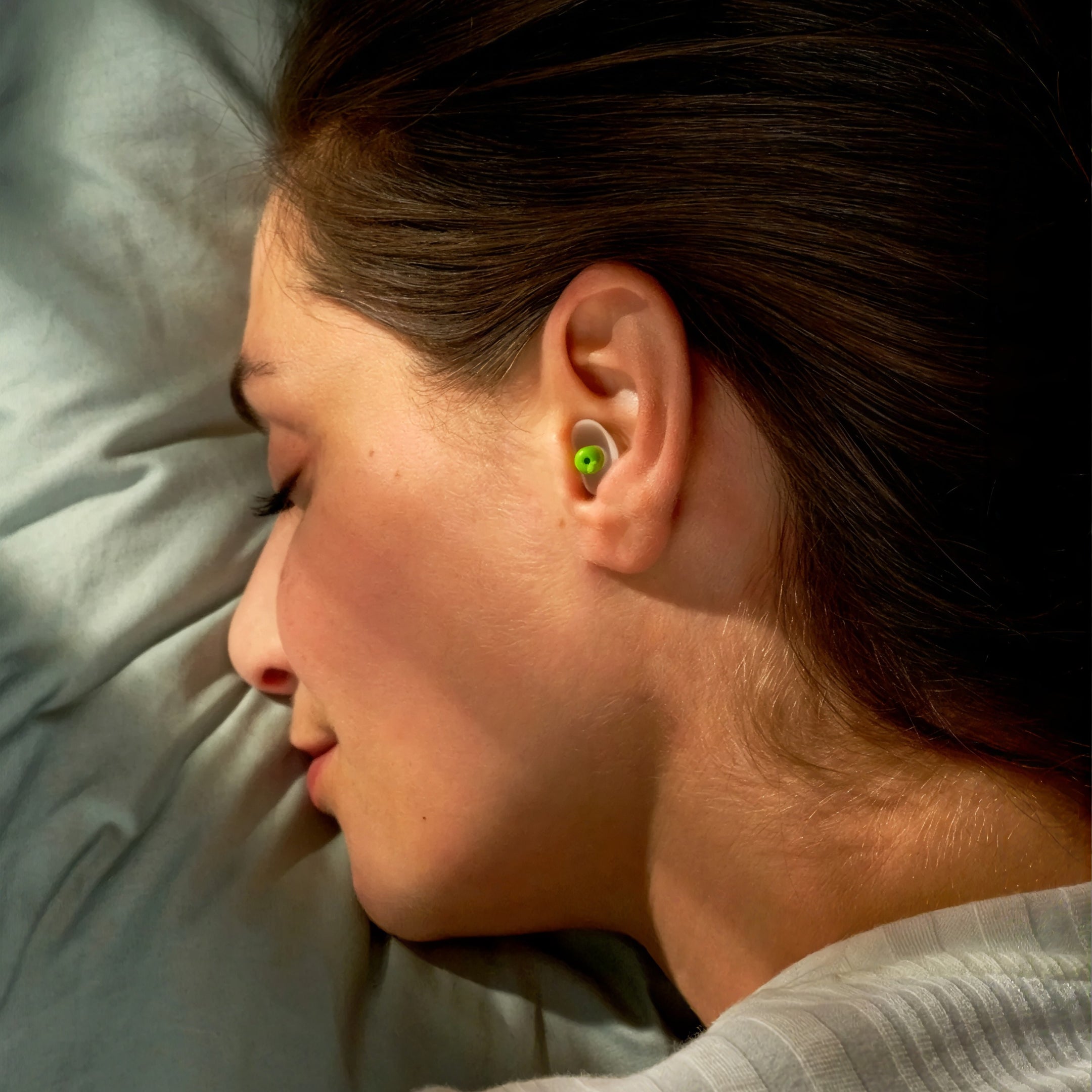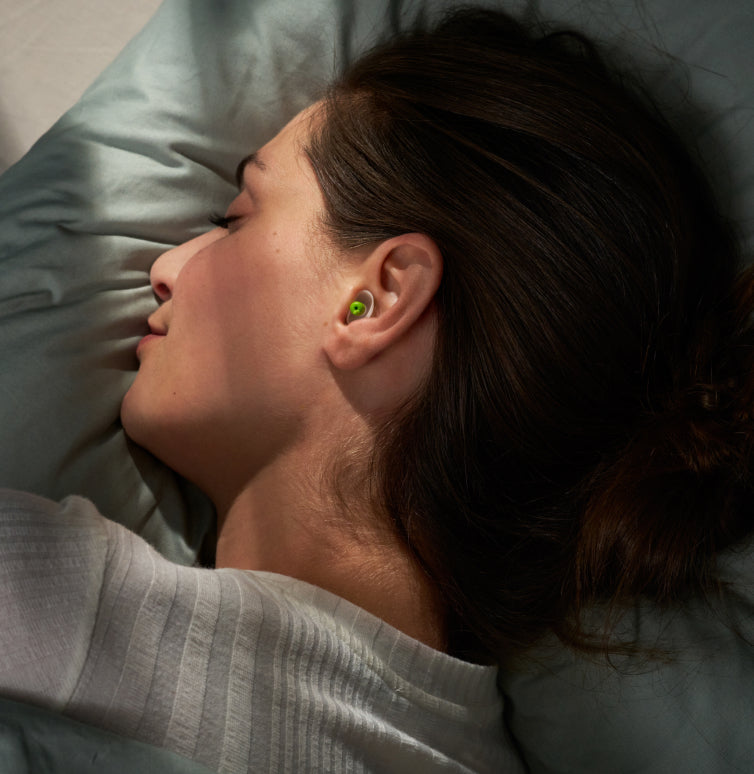
Sleeping on your back? Your ears are free and nothing gets in the way. Roll onto your side and it's a different story: your ear is pressed into the pillow, and a firm pillow pushes right back. Add ear plugs for sleeping to the mix and that pressure can turn a good night into a long one.
That's why ear plugs for side sleepers need to be picked with care. The right pair isn't the quietest one on the shelf. It's the one that stays comfortable in your ear for a full 8 hours. In this guide we look at fit, sizes and noise reduction, so you can find a pair you'll forget you're wearing.
Why standard earplugs can hurt when sleeping on your side
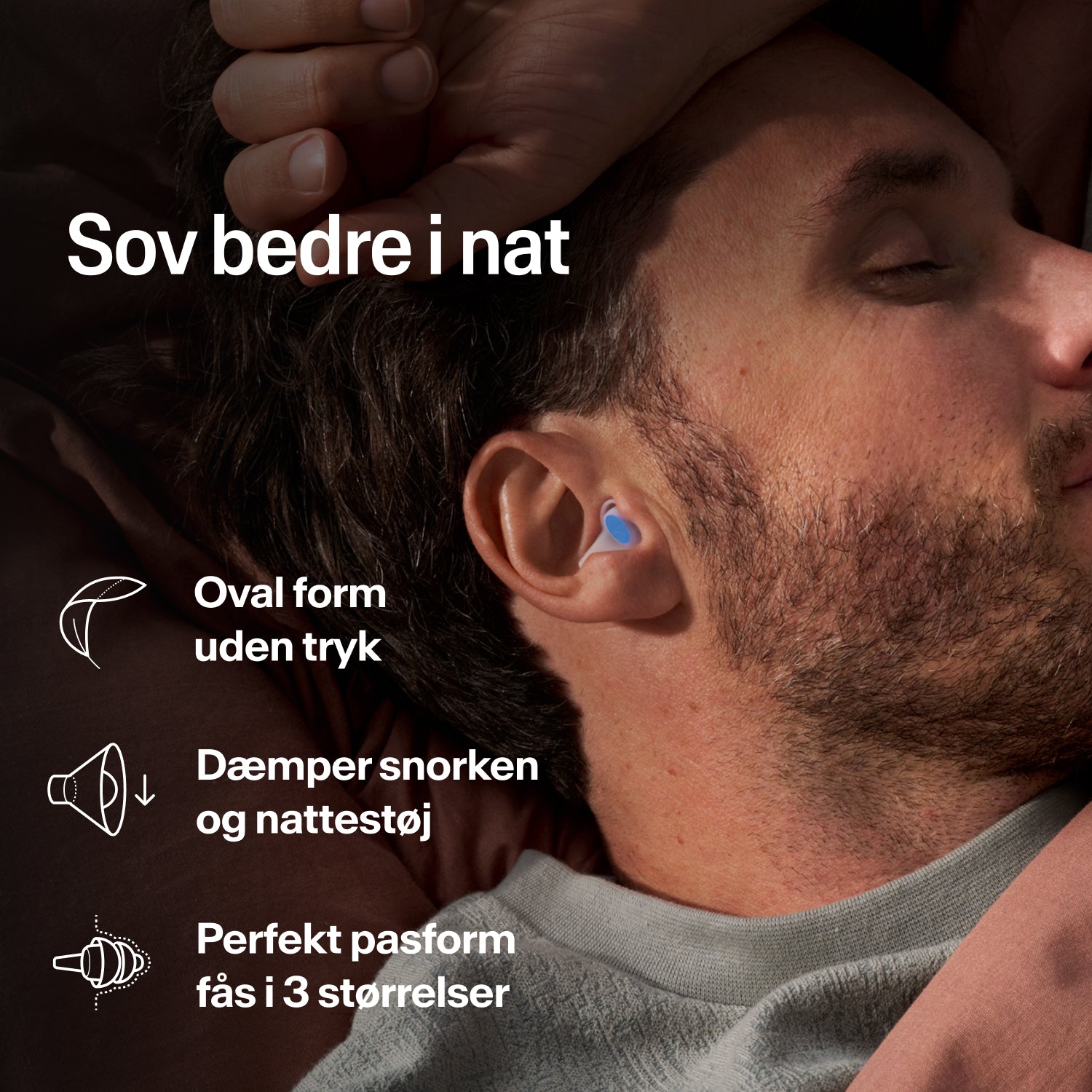
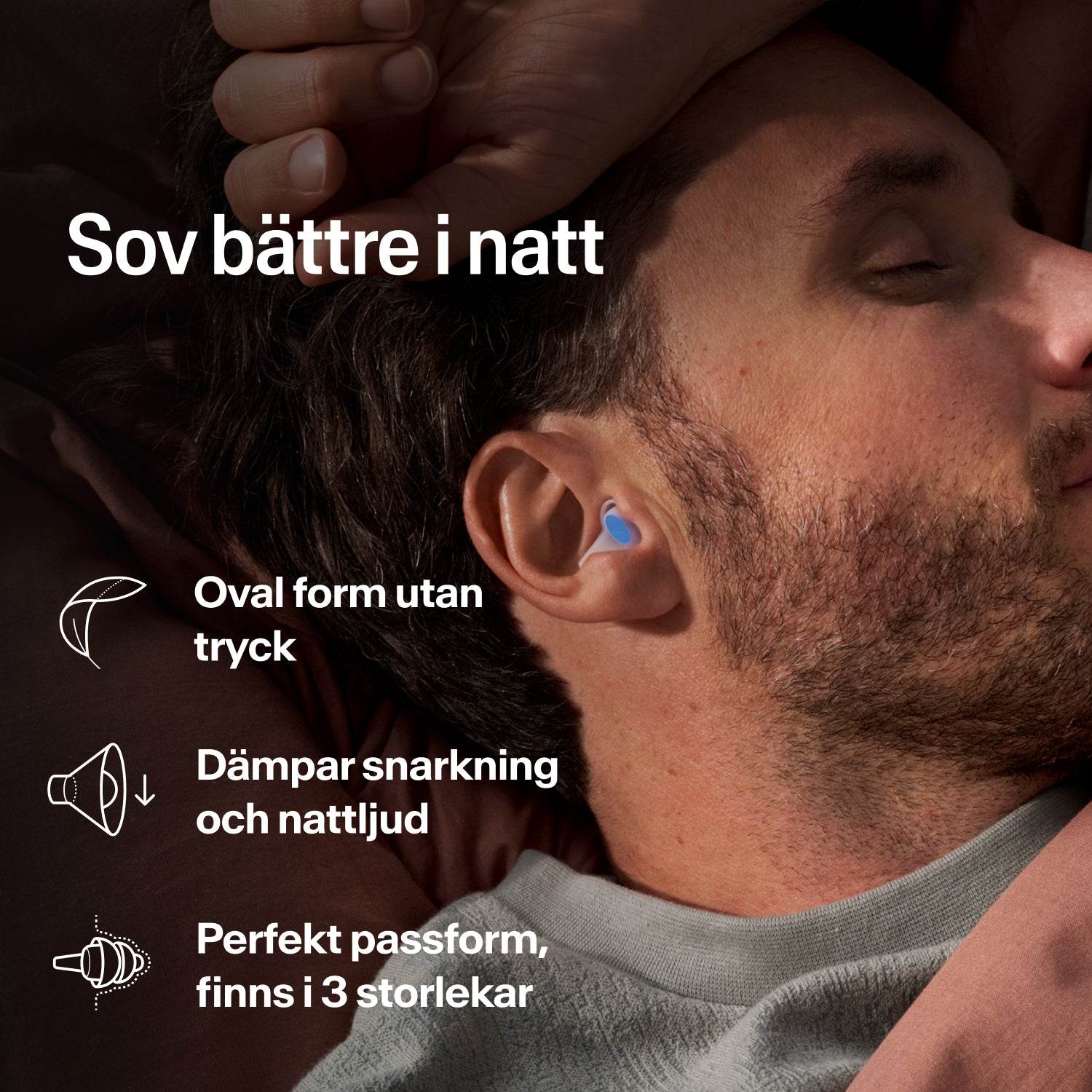
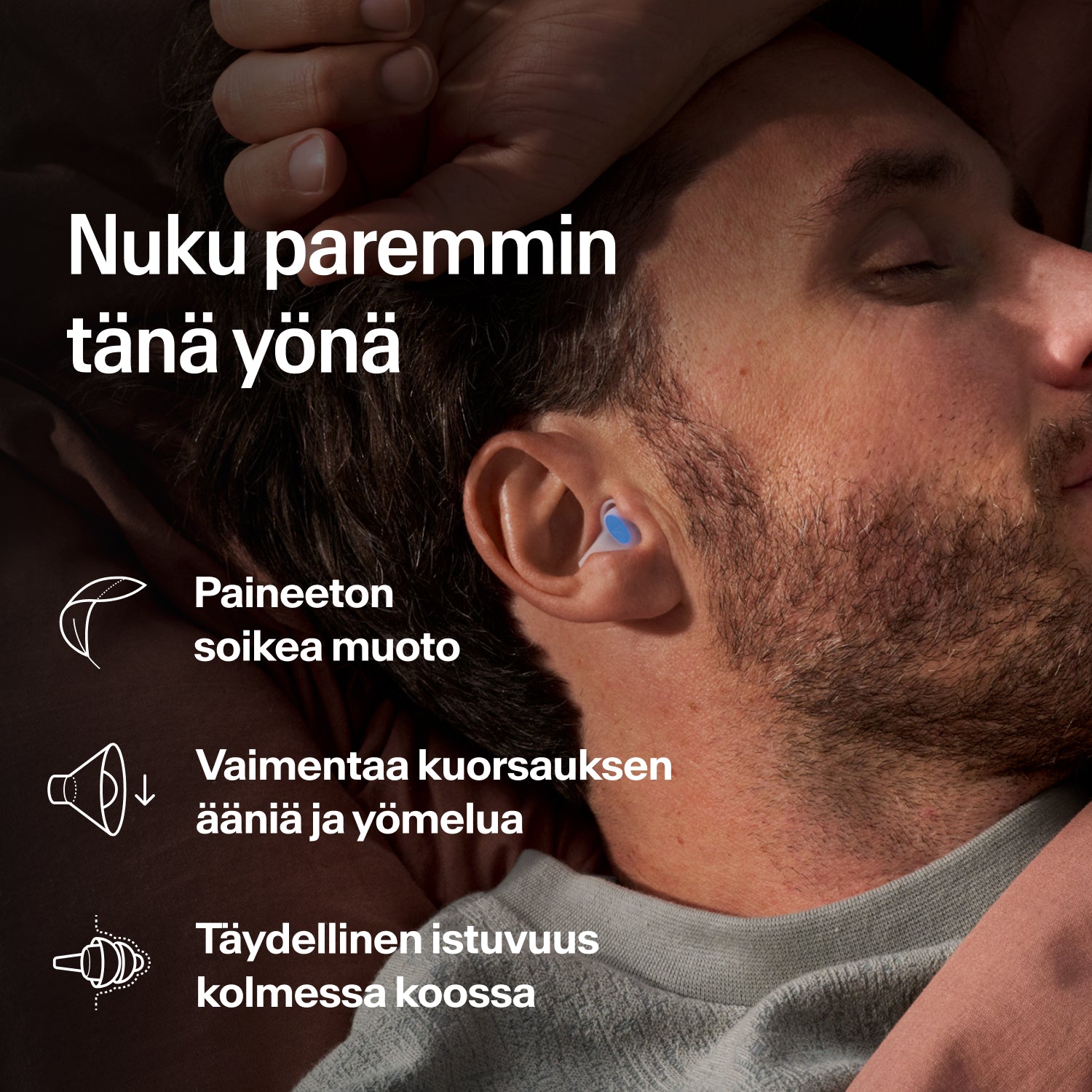
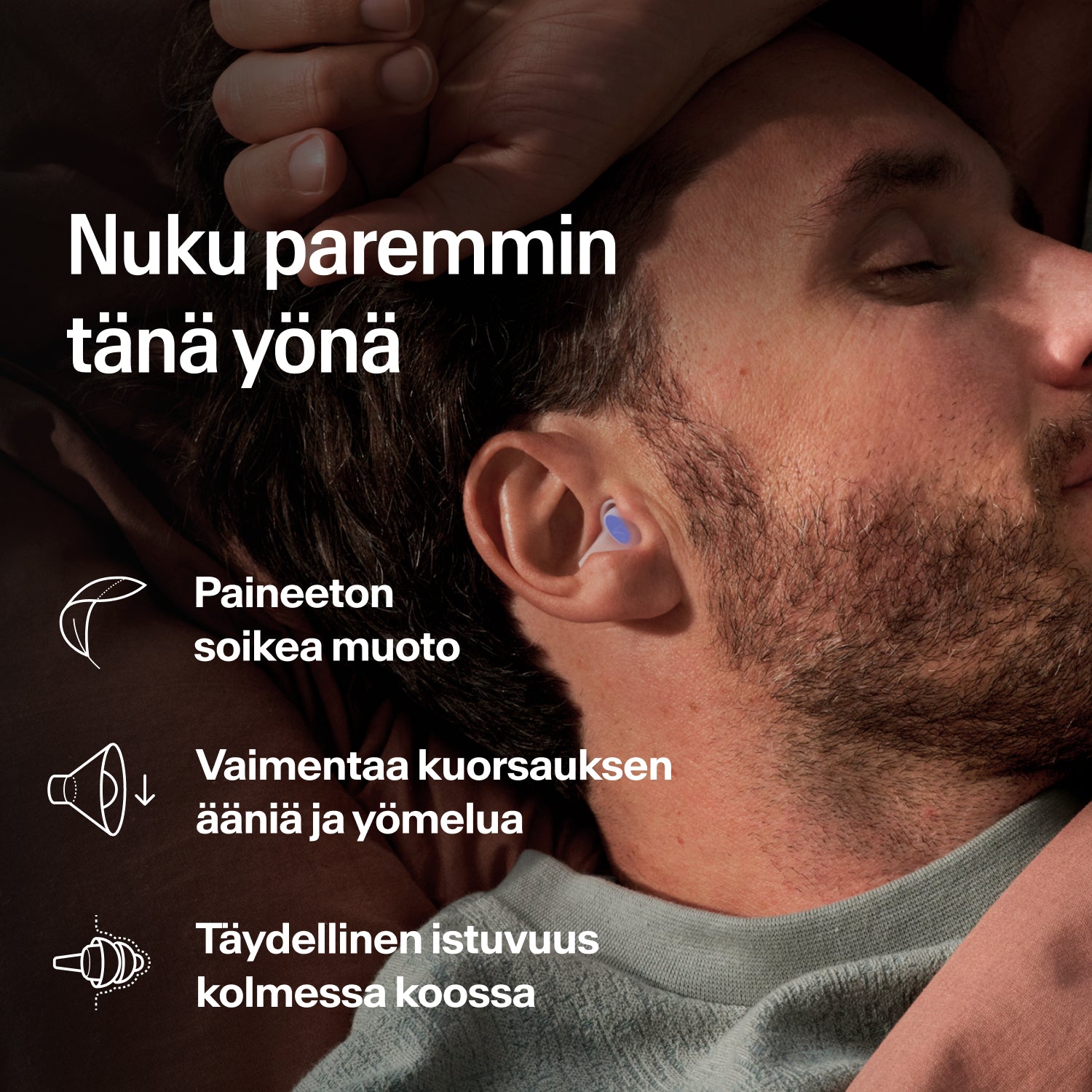
Ear plugs that don't hurt when you're on your back can feel very different on your side. Lying down, your head rests at another angle and your jaw sits differently. Your ear is pressed against the pillow at the same time. An earplug that sticks out, or is too big or too firm, gets pushed against your ear all night.
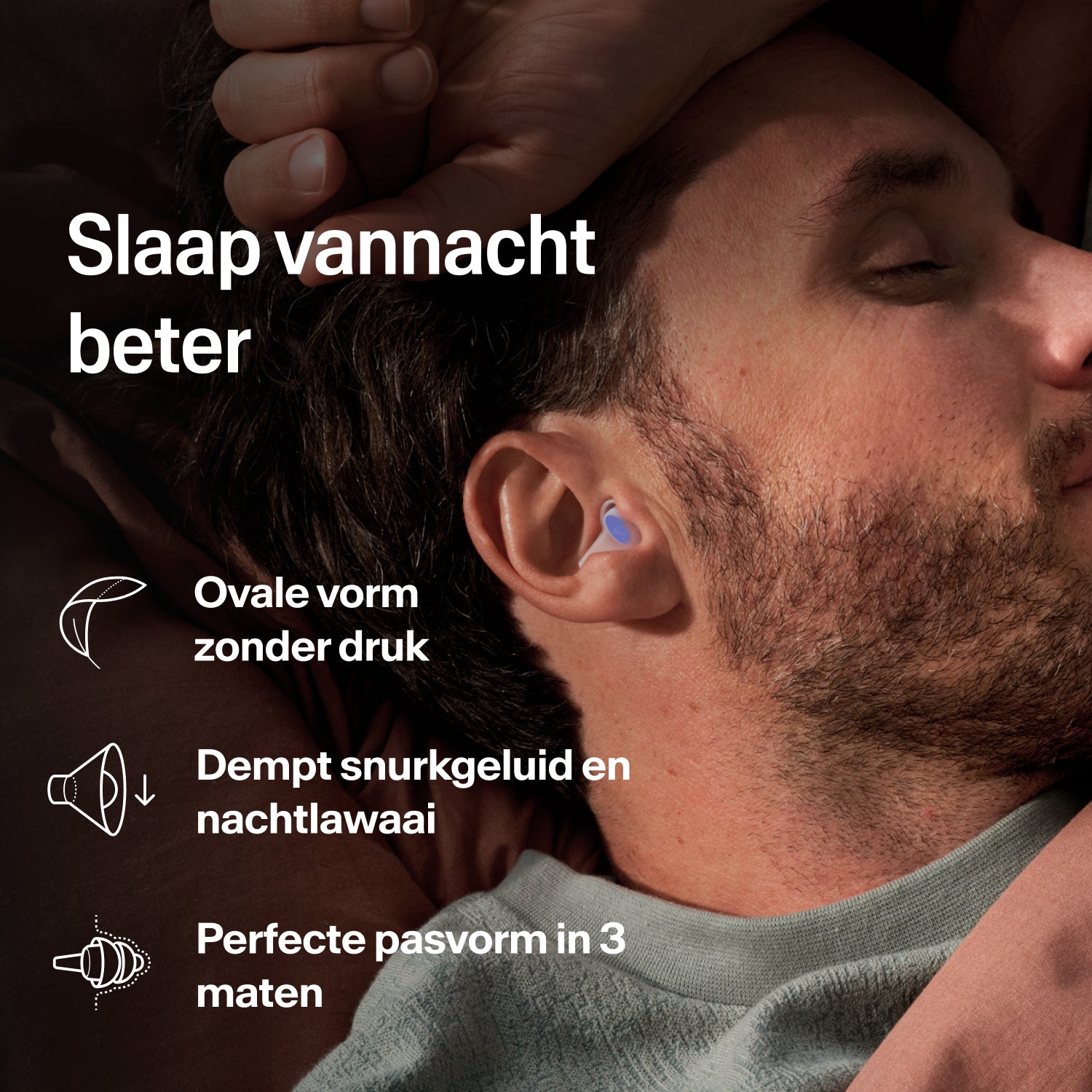
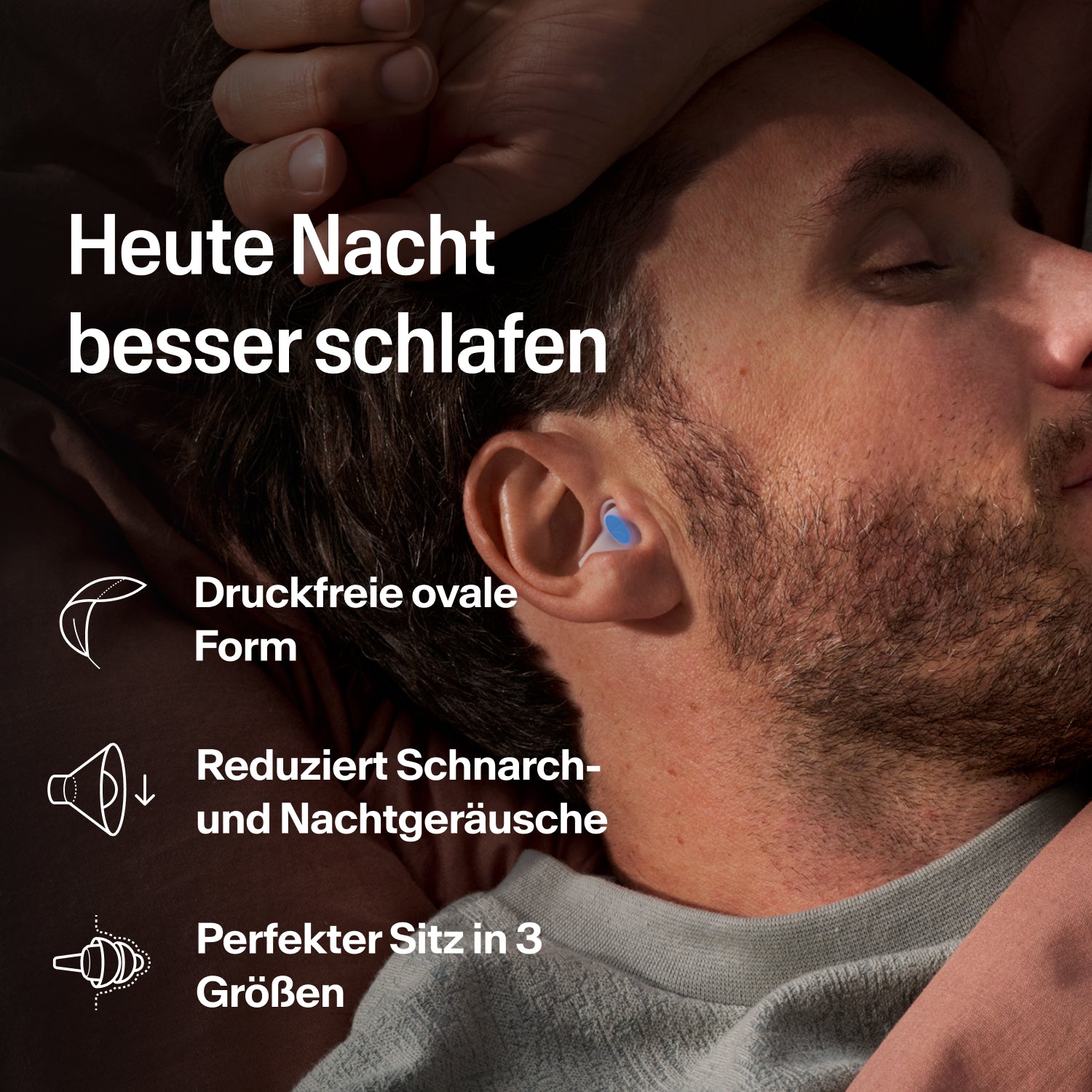
Result: pressure, an achy ear and a pair that ends up on the nightstand at 3 a.m. So for comfortable earplugs for sleeping on your side, fit matters more than anything else. A plug that sits flush leaves nothing to press against the pillow.
Foam ear plugs and side sleeping
Foam ear plugs for sleeping work like this: you roll the plug small, put it in your ear and it expands to fill the space. For some people that expansion feels like too much. On your side, with your ear pressed into the pillow, it can turn into a dull ache that keeps you awake.
Looking for soft ear plugs that don't push back? Alpine sleep earplugs are not made of foam, so there's nothing to expand in your ear. Pick your size, put them in and they stay where you put them.
Hair tangling and wax residue
Got long hair? Then you know the problem. Wax ear plugs for sleeping can feel sticky, and on your side, strands of hair can end up stuck to the plug overnight. Waking up to a tug on your hair is not the fresh start you wanted.
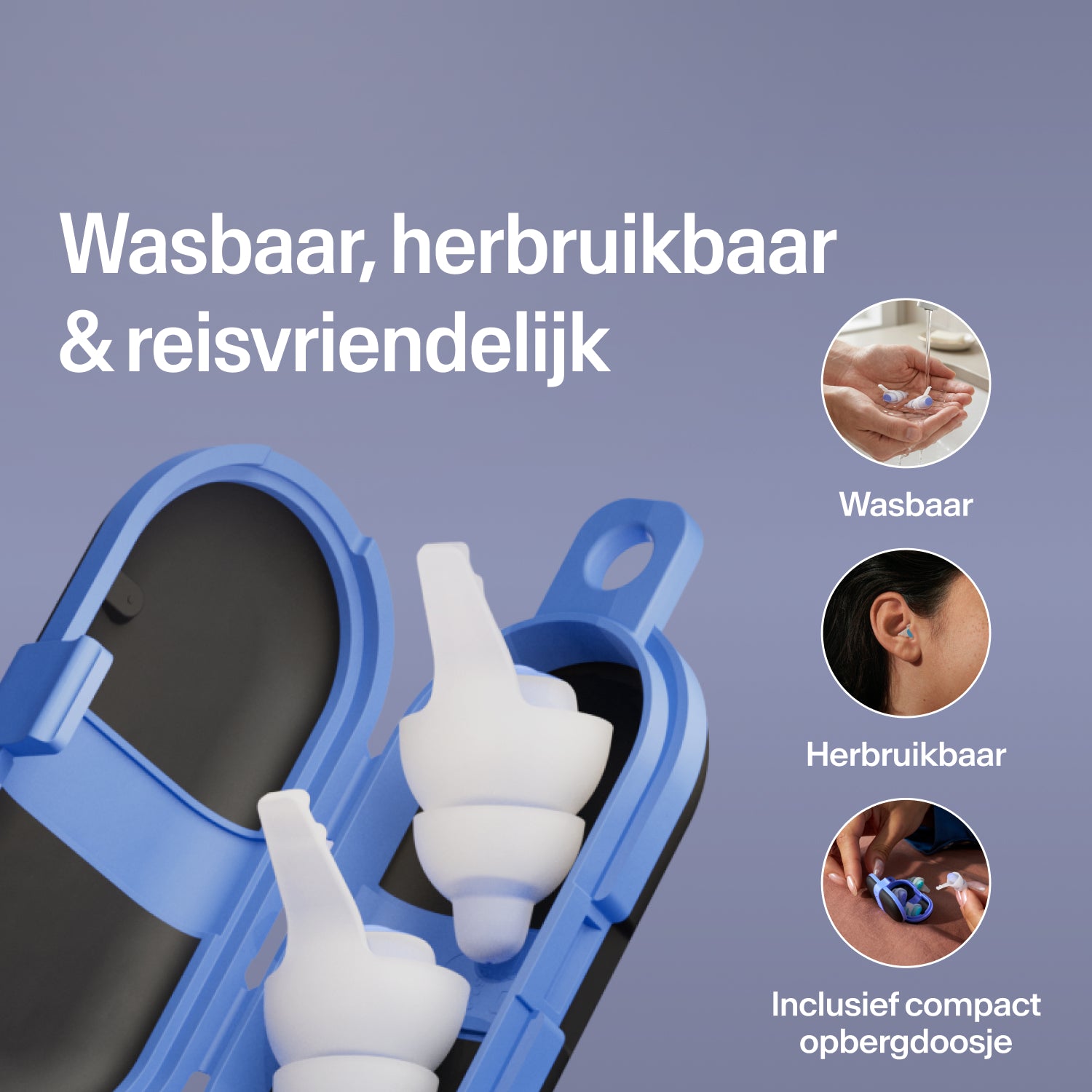
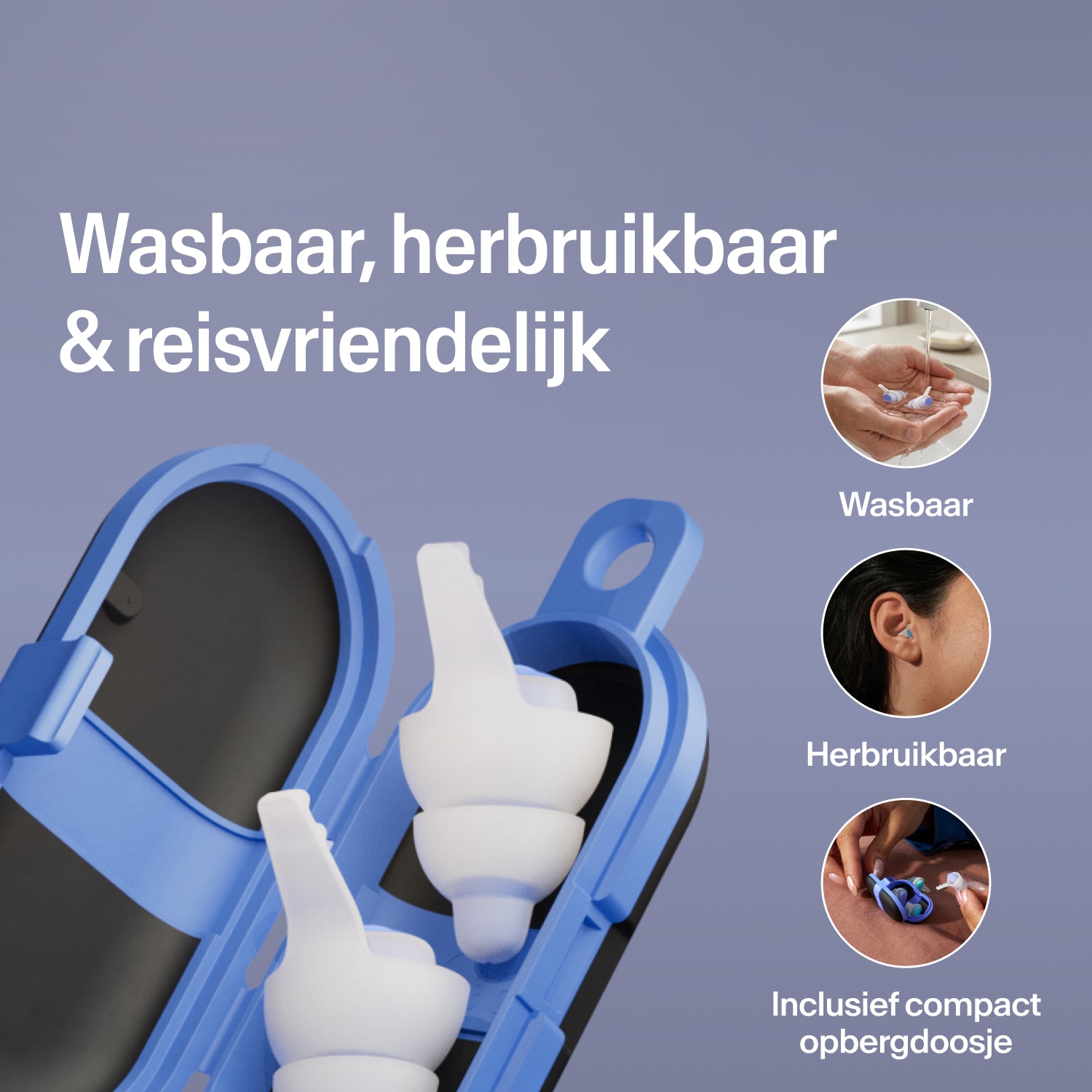
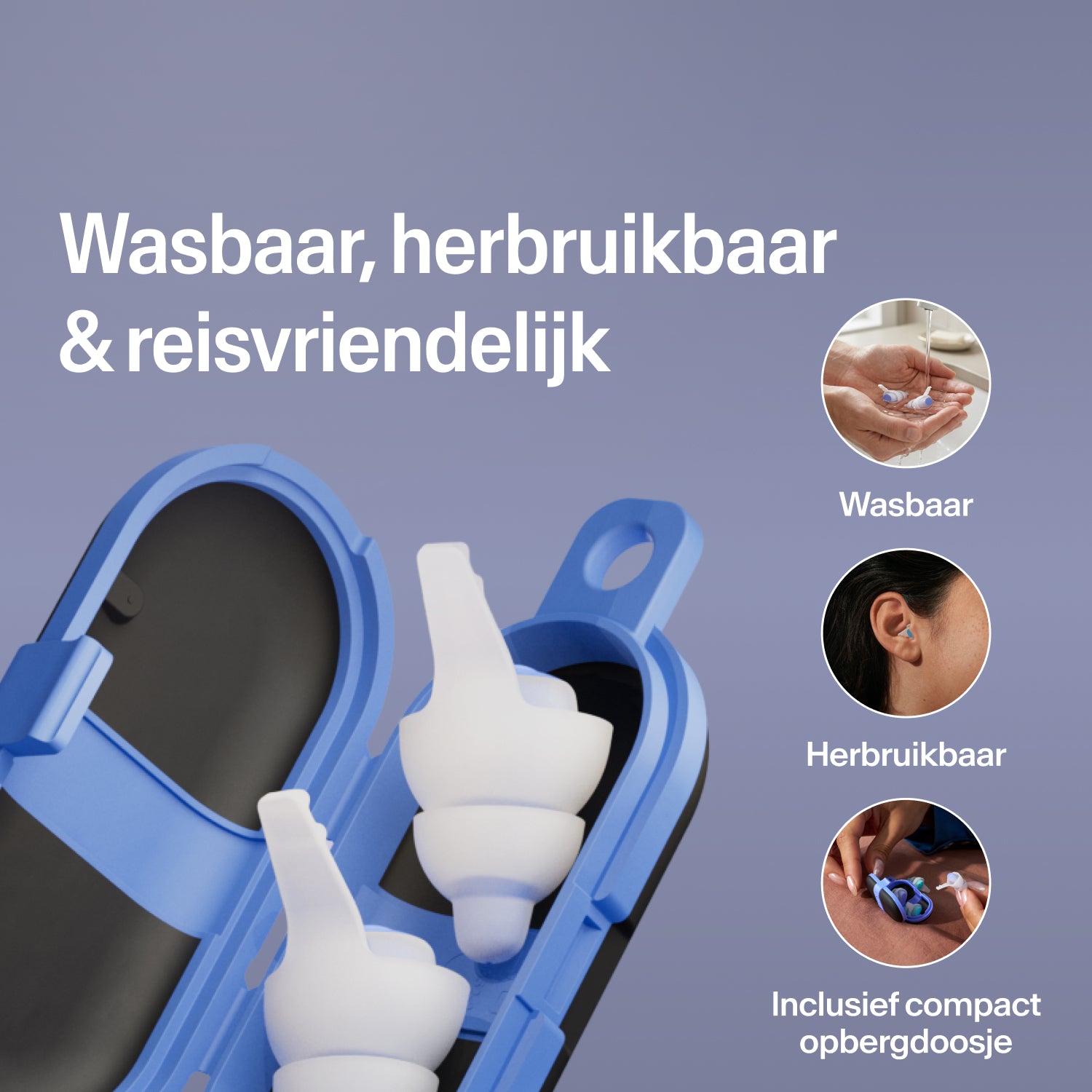
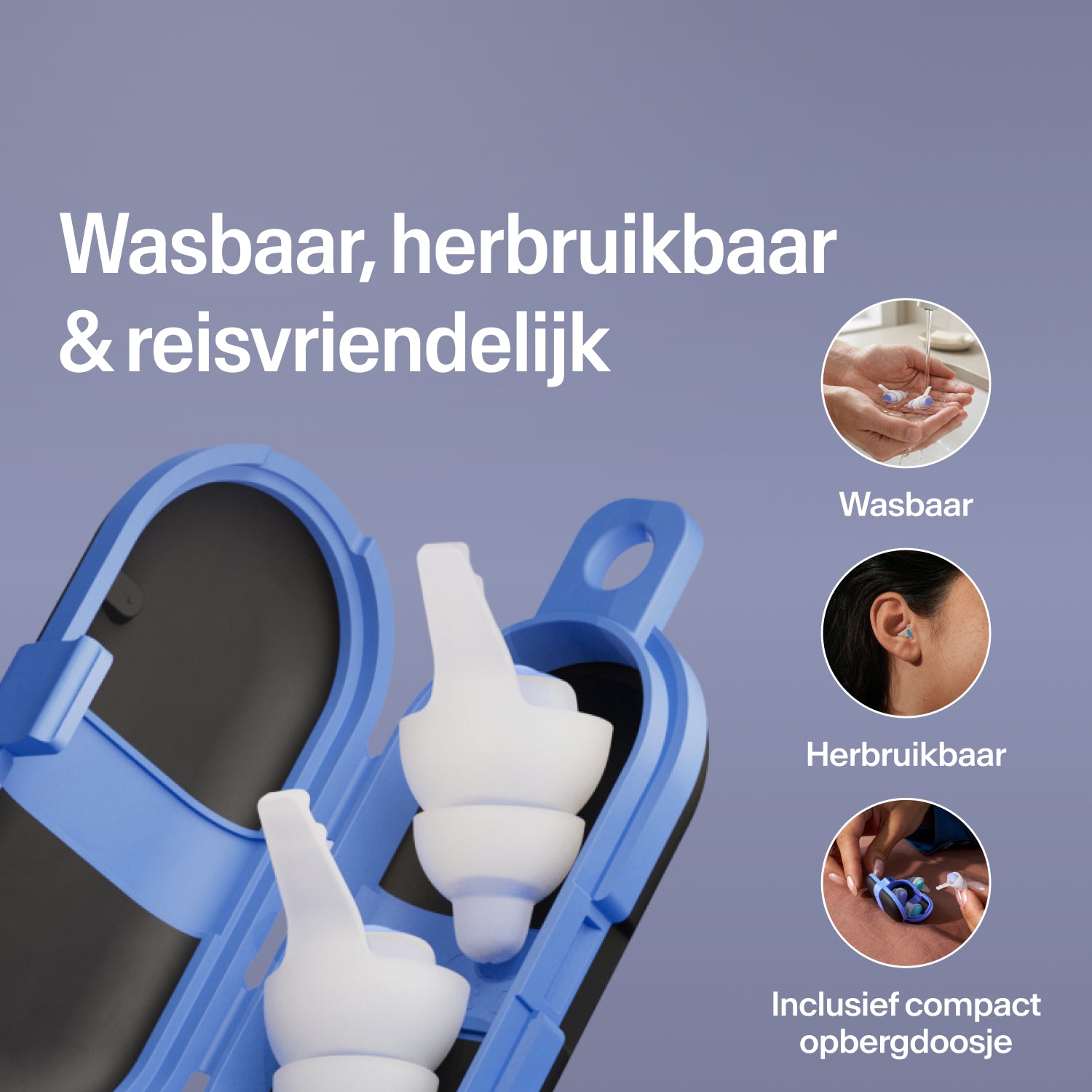
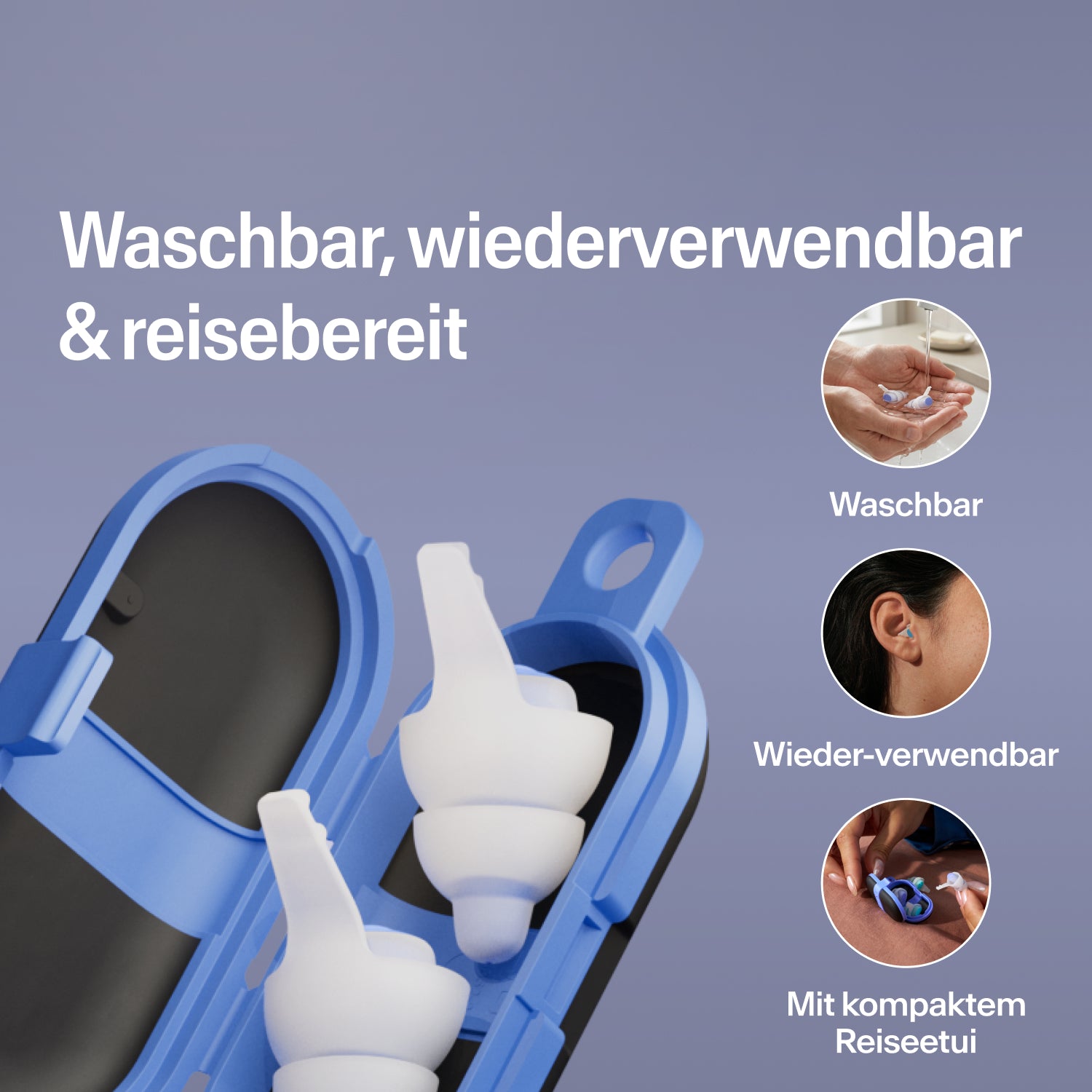
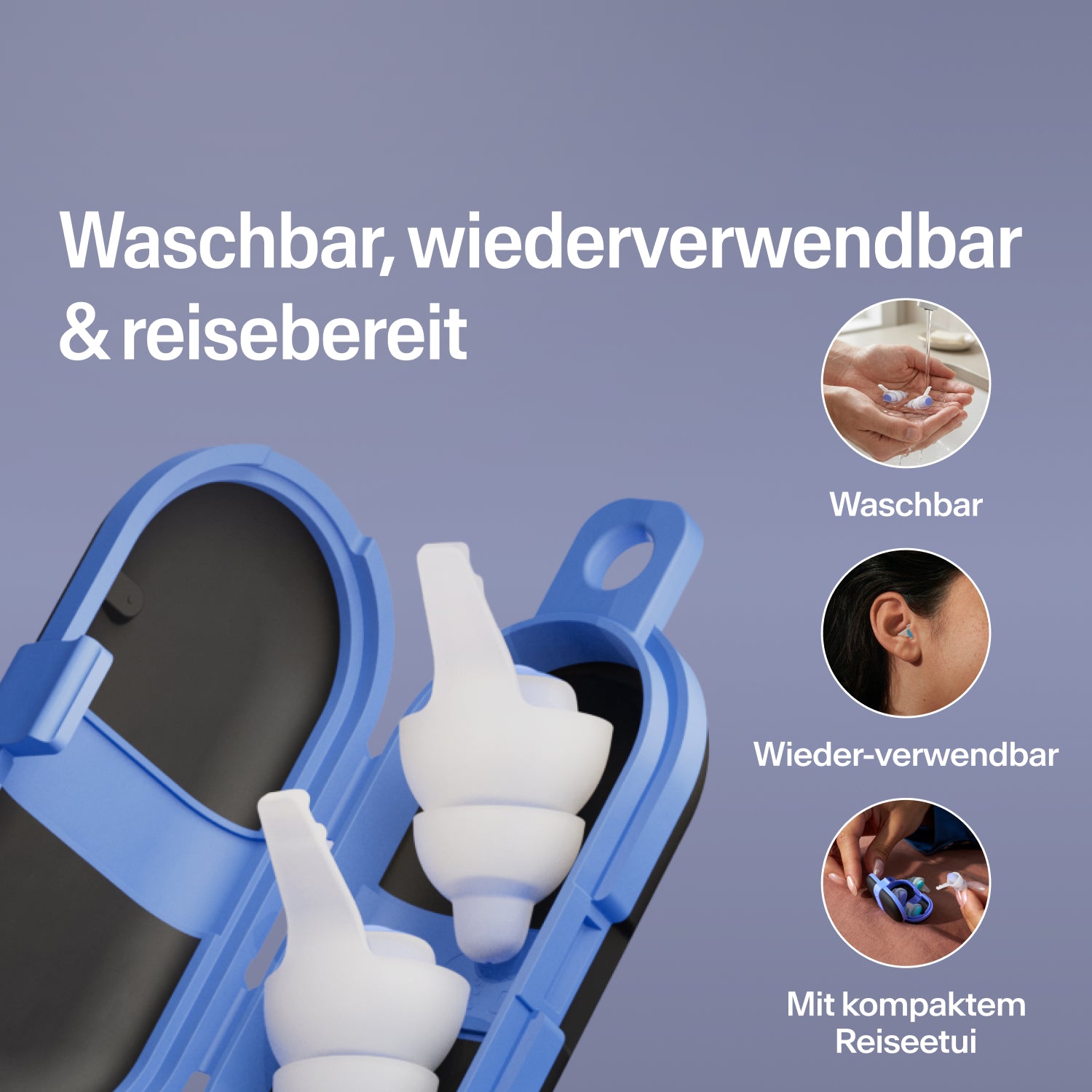
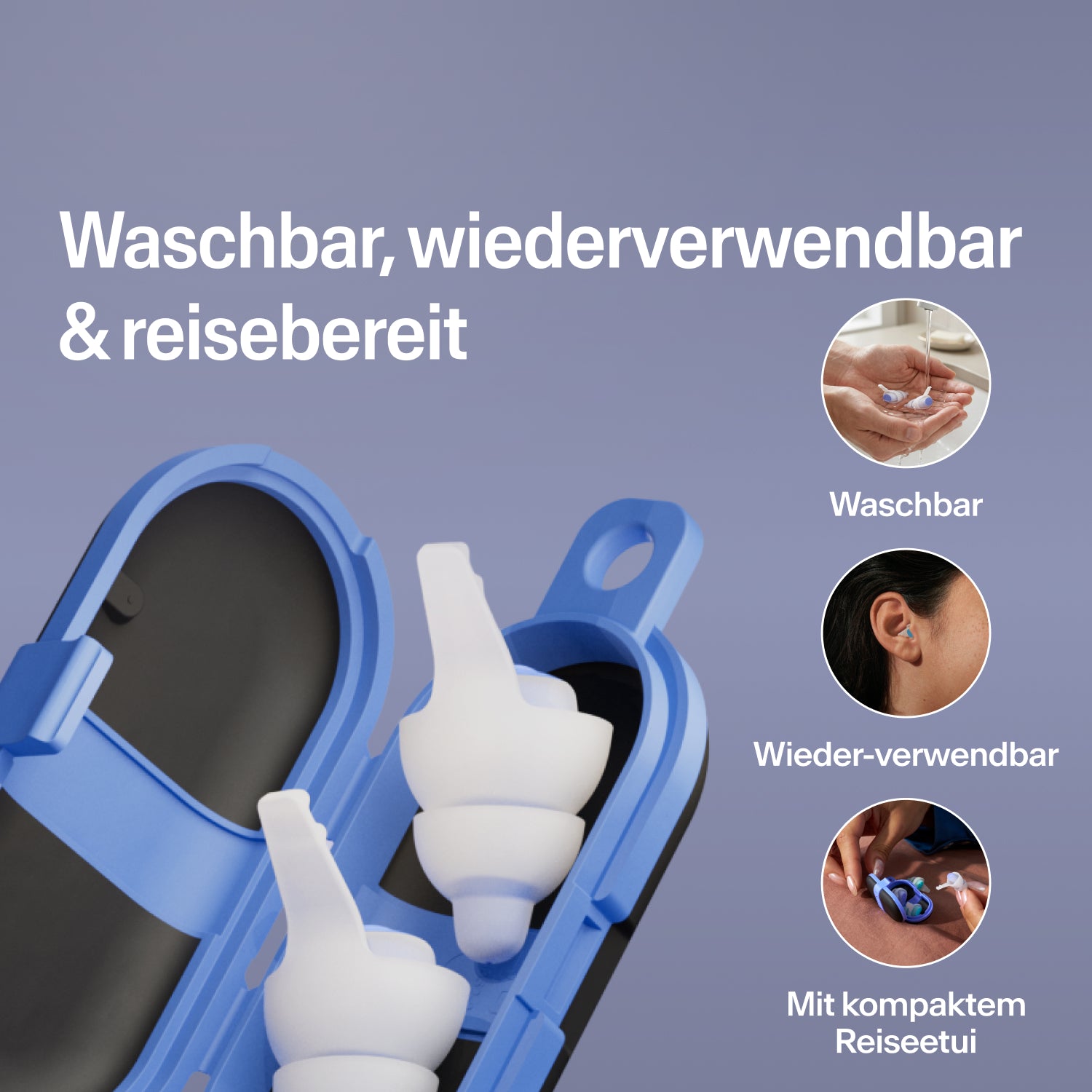
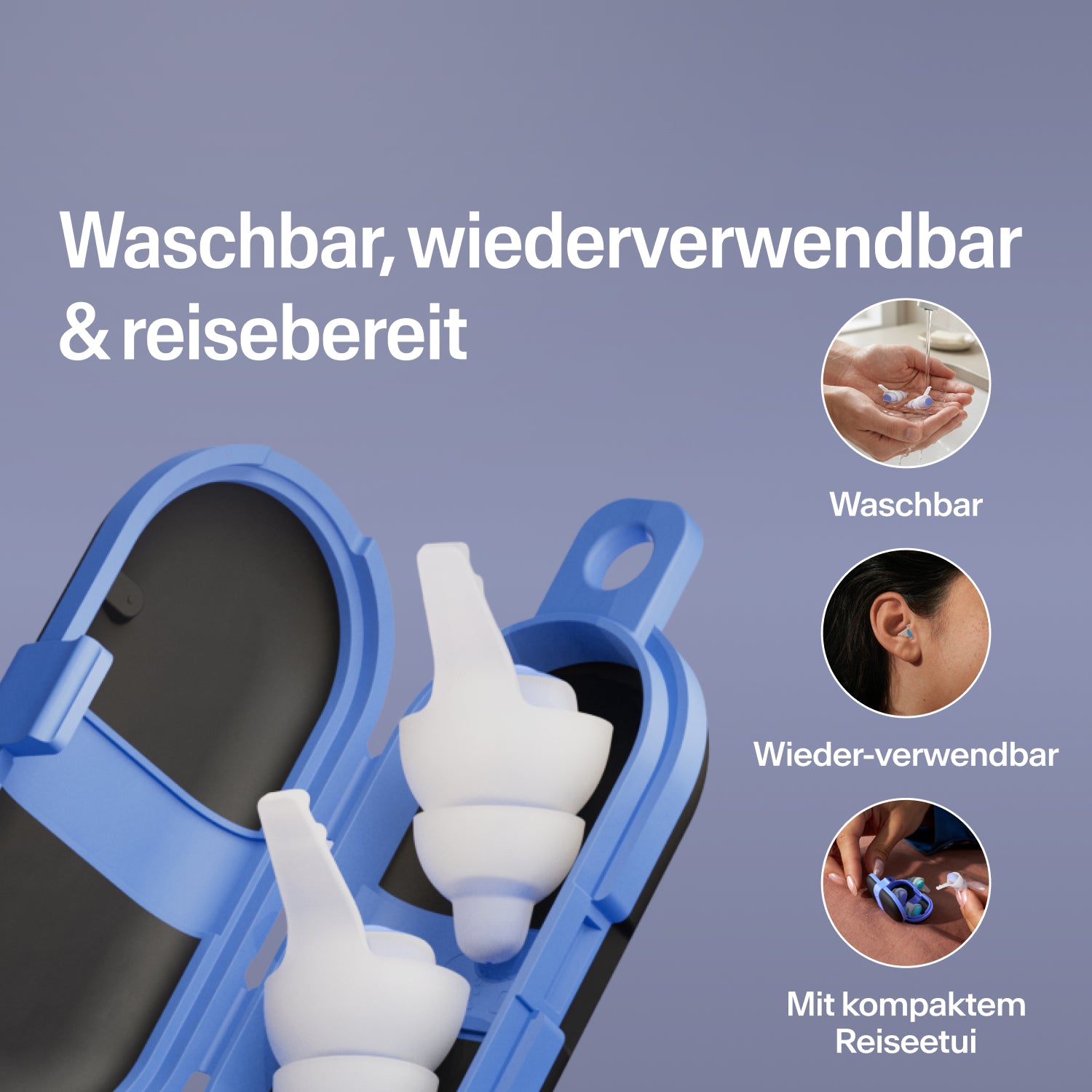
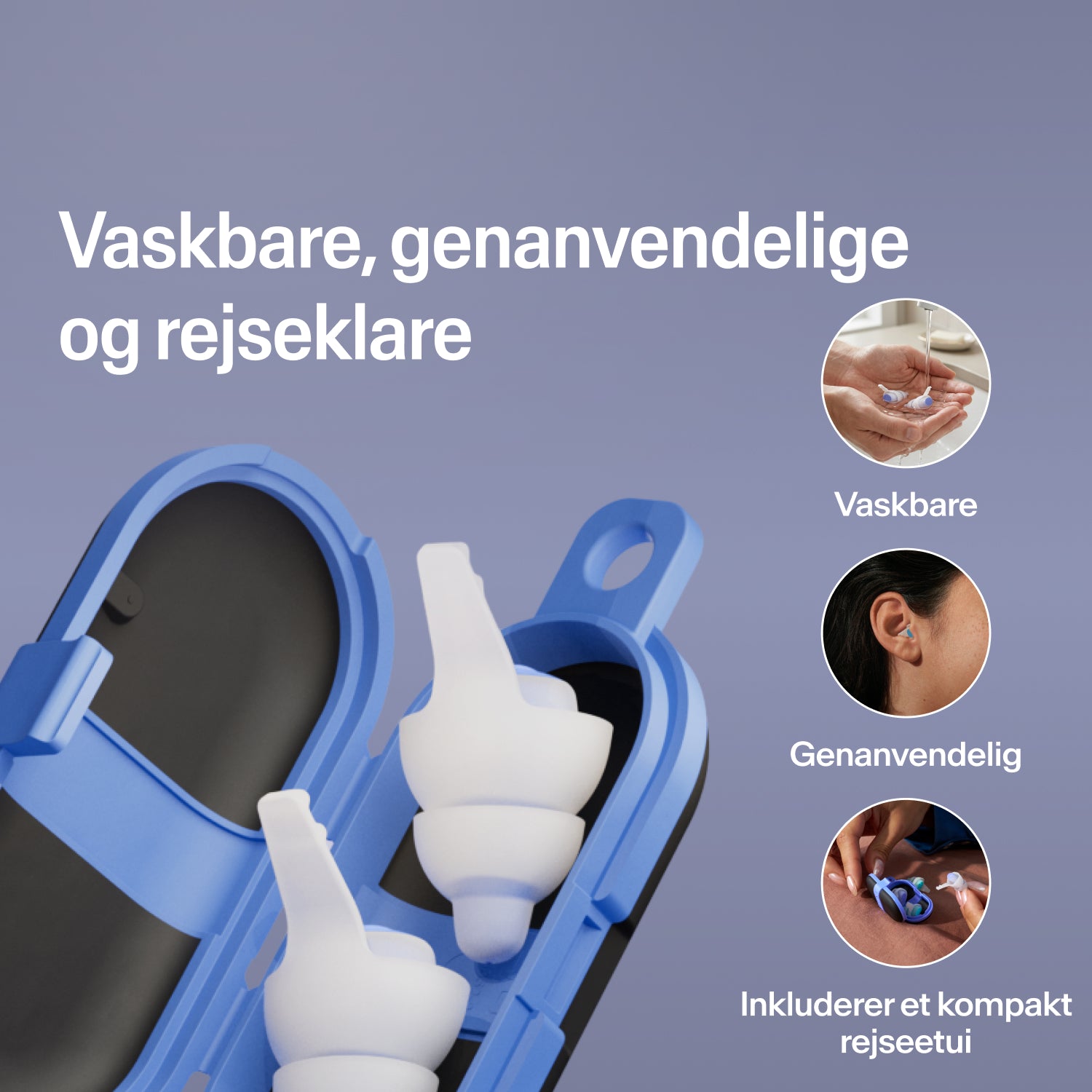
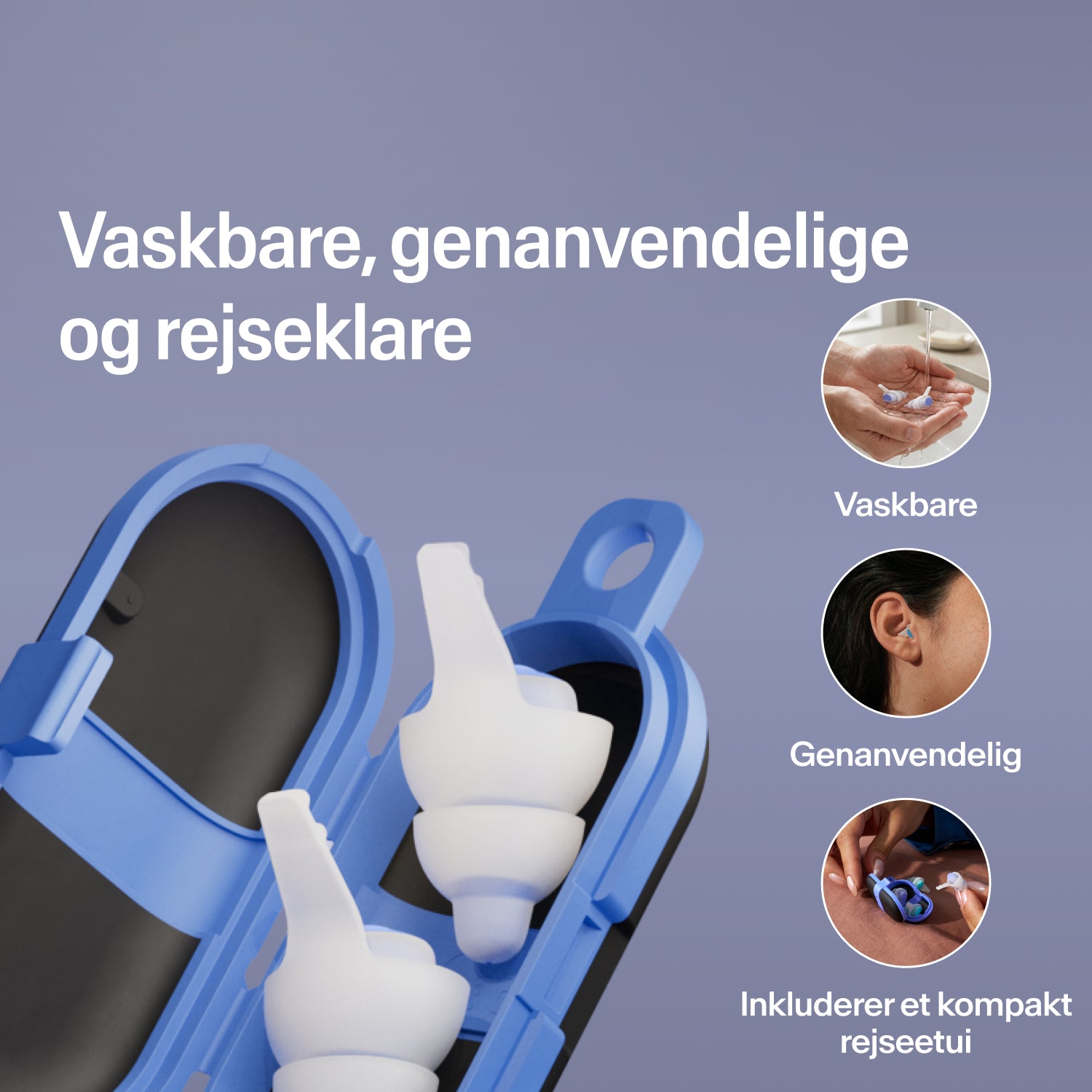
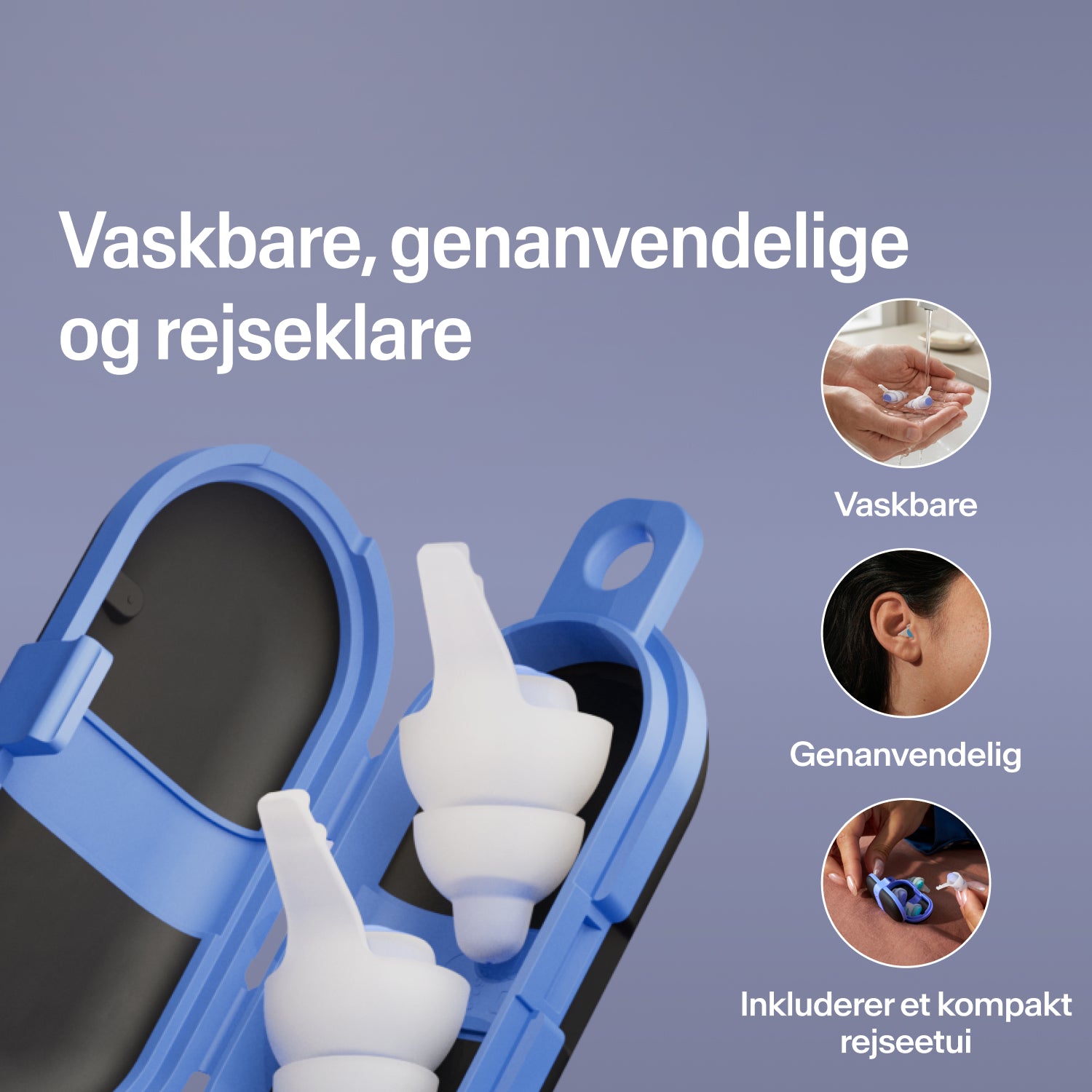
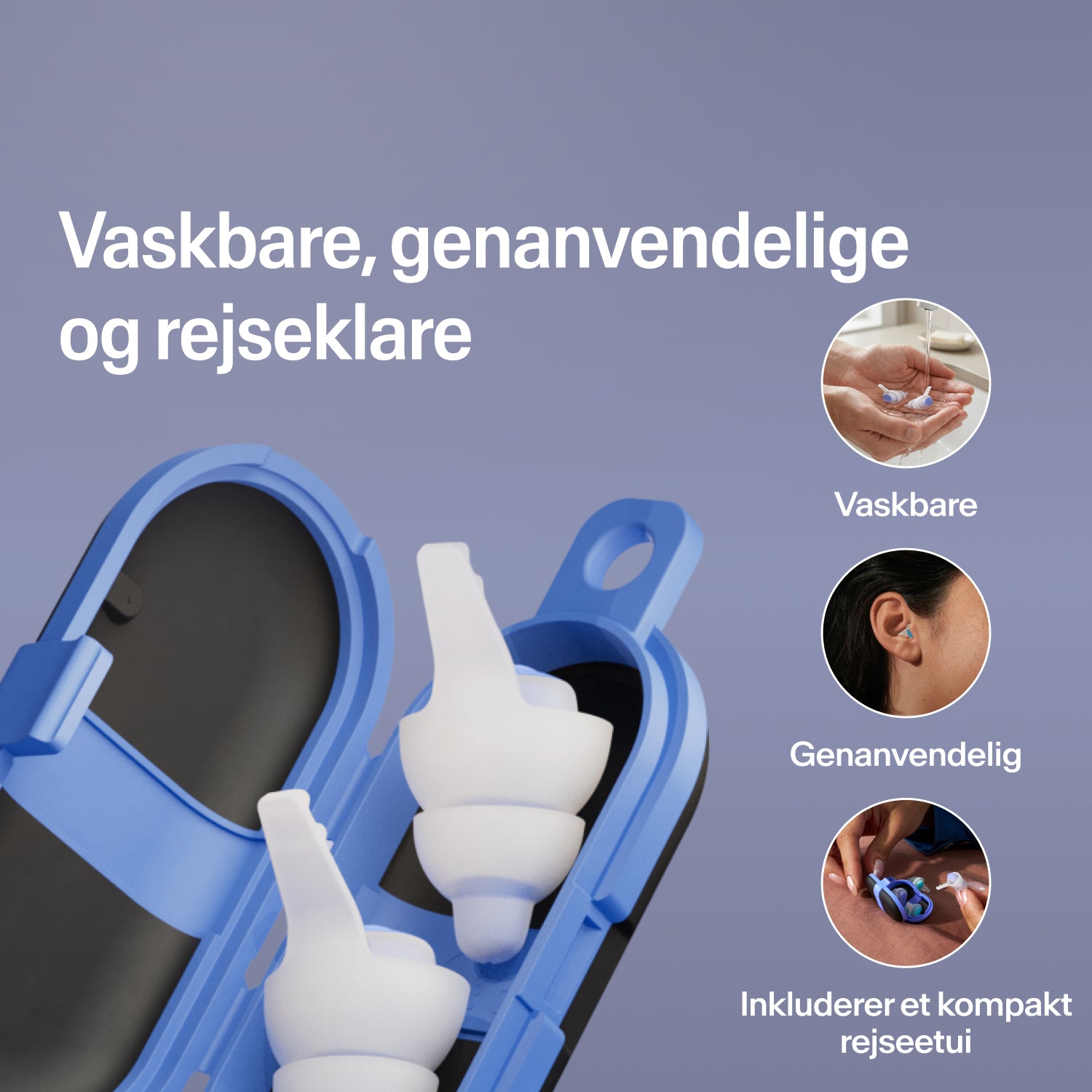
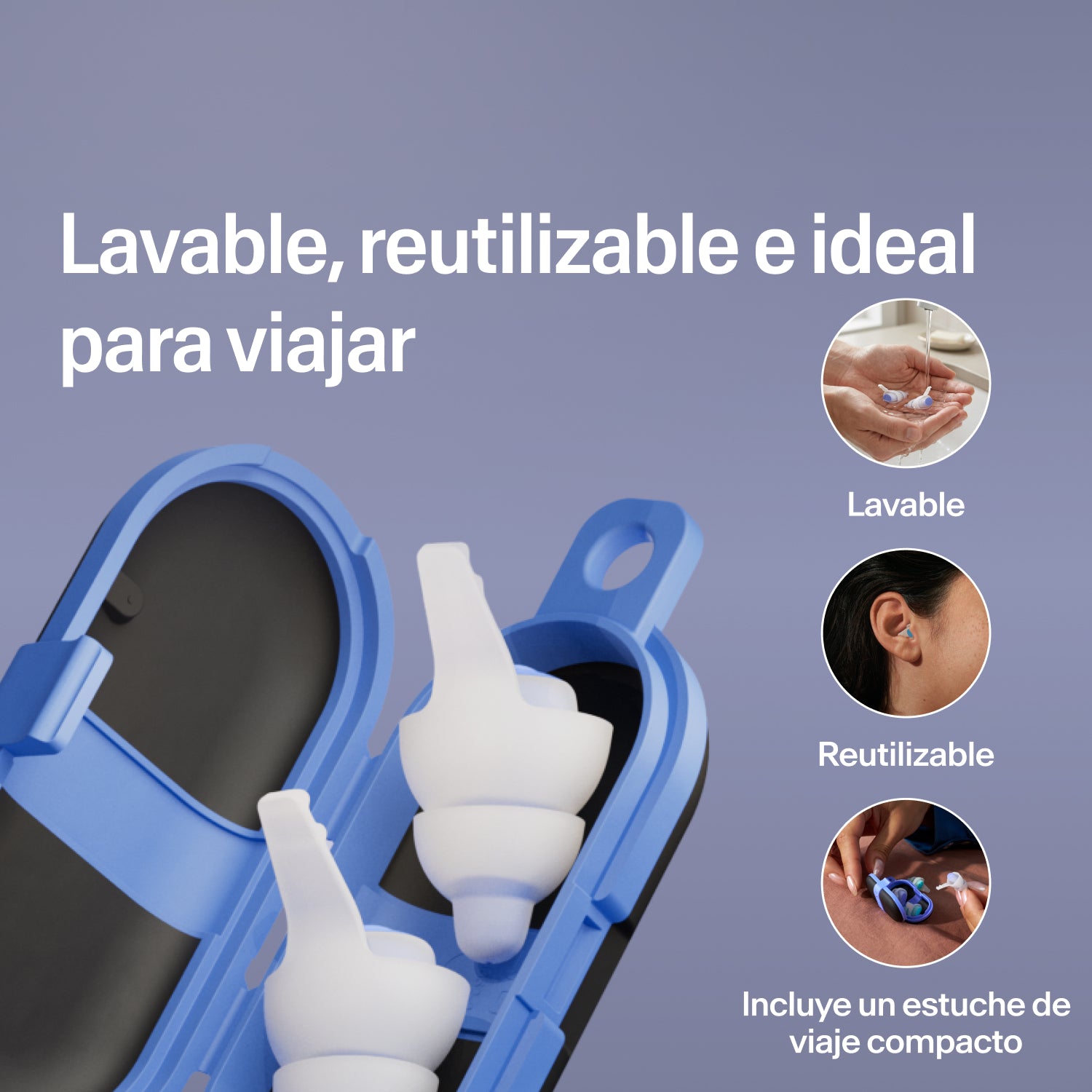
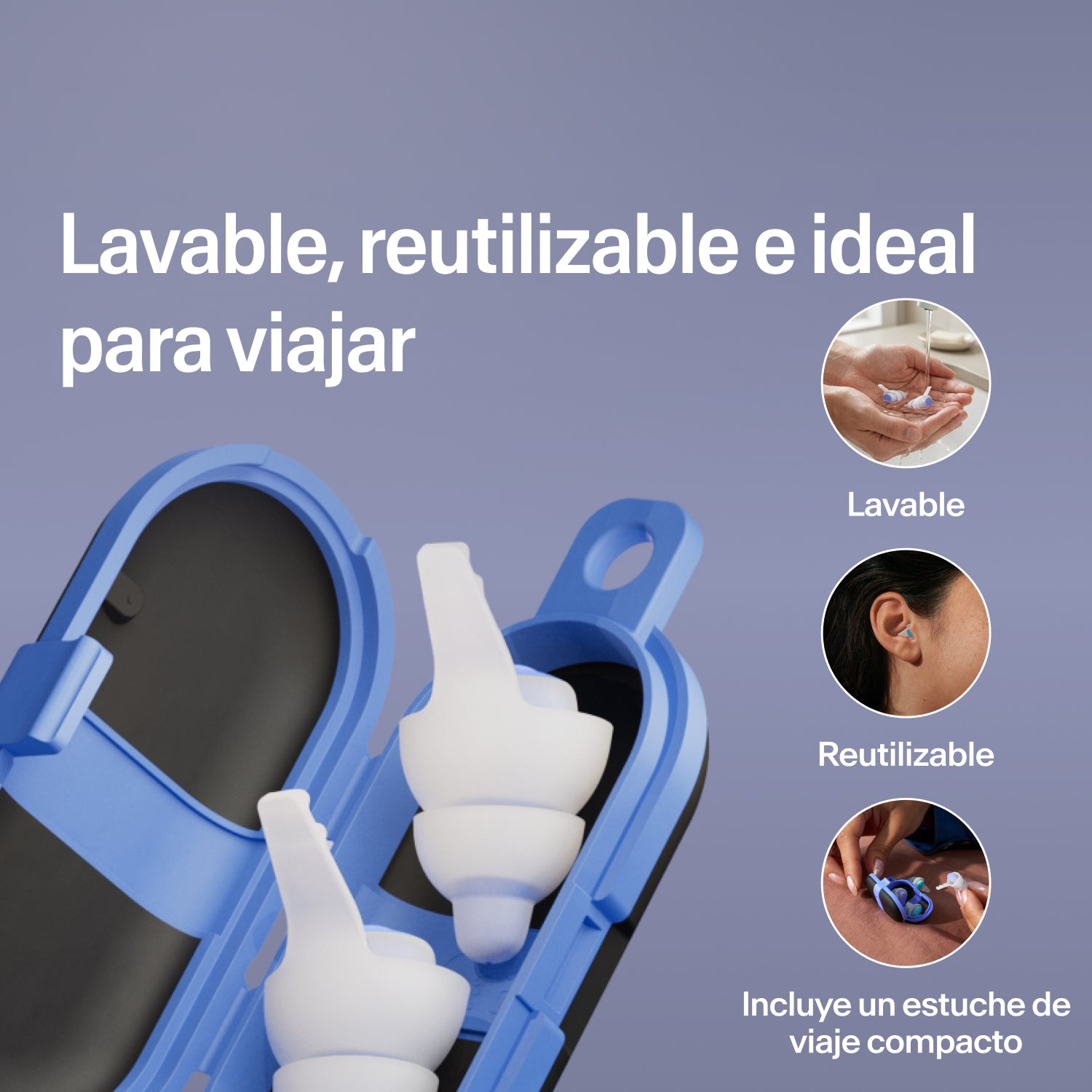
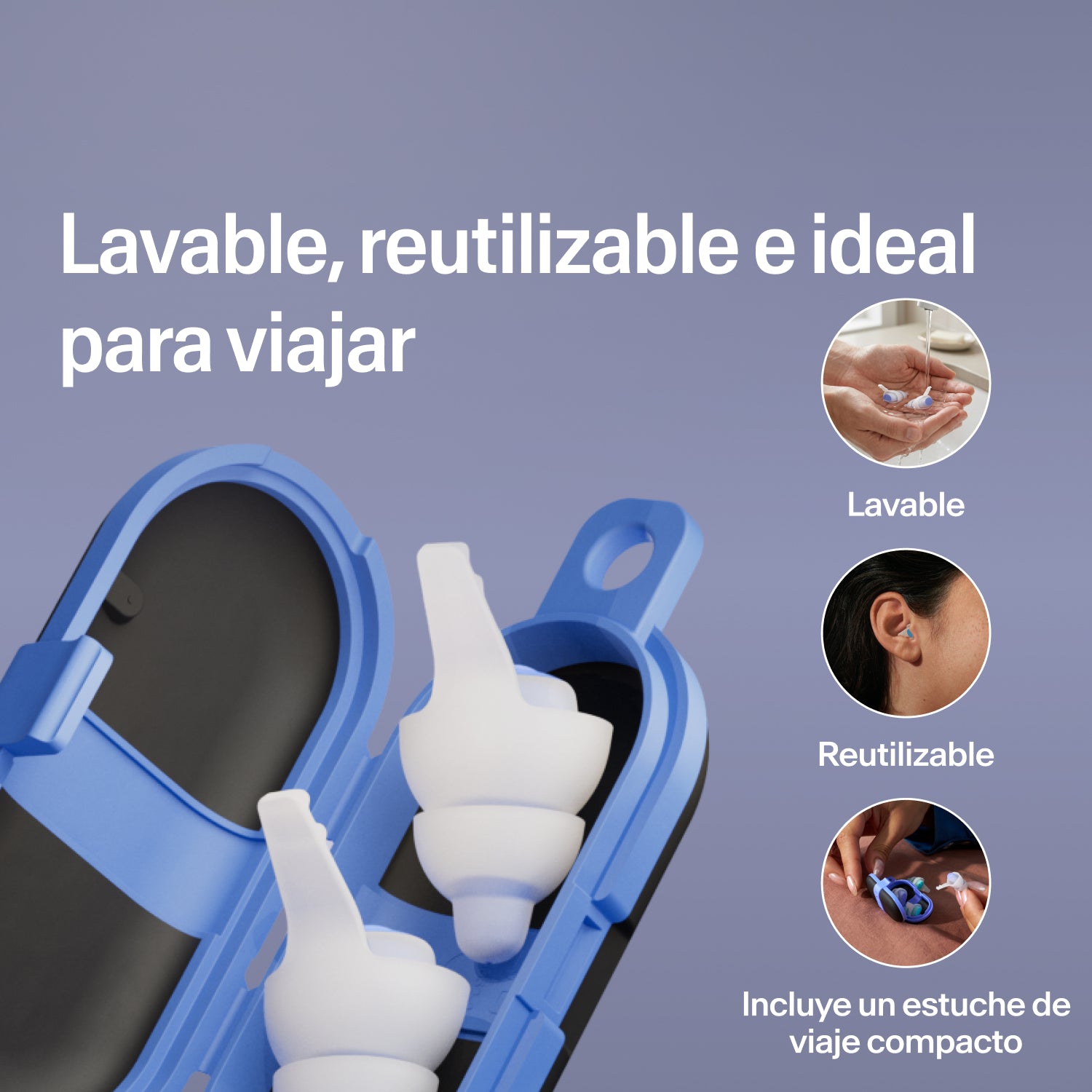
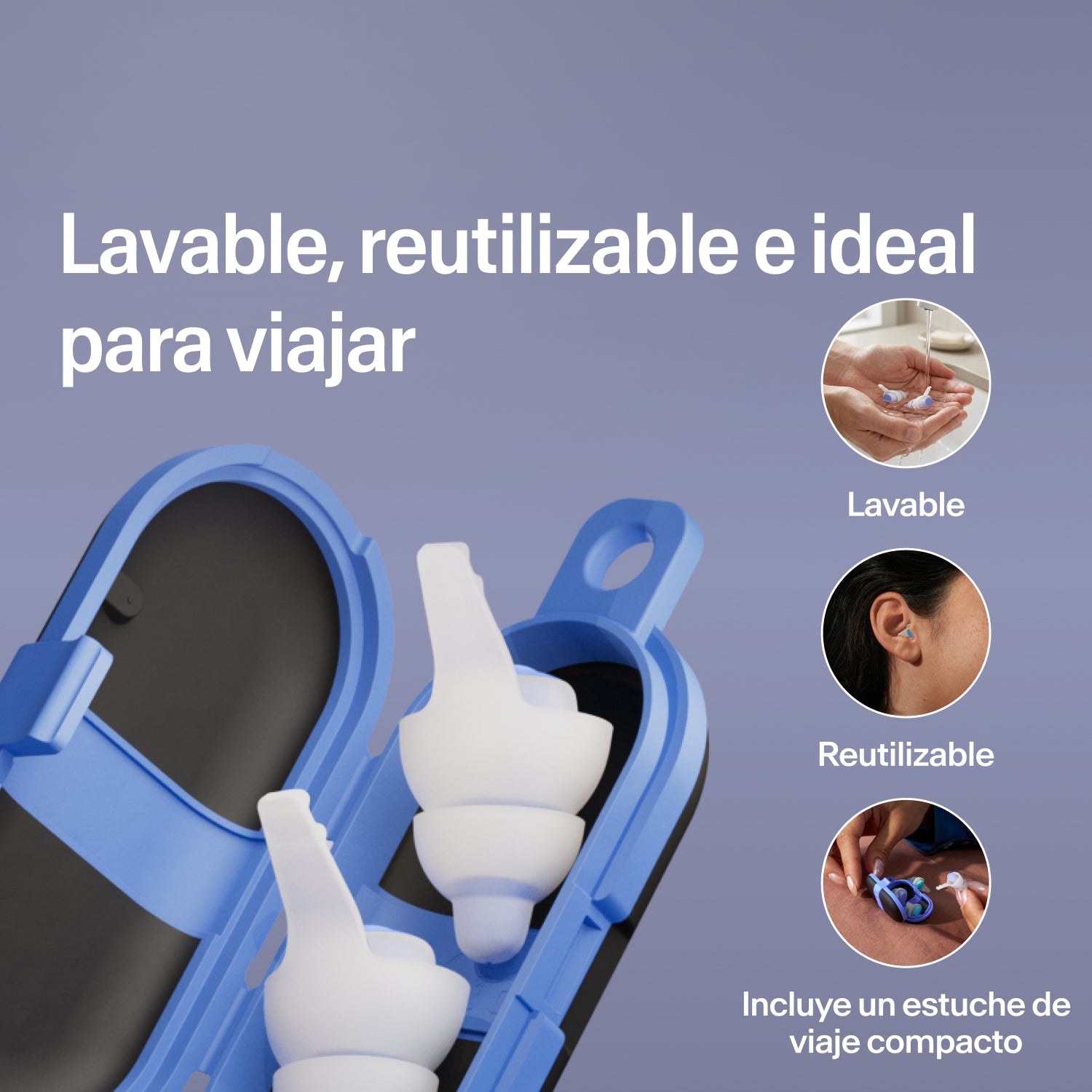
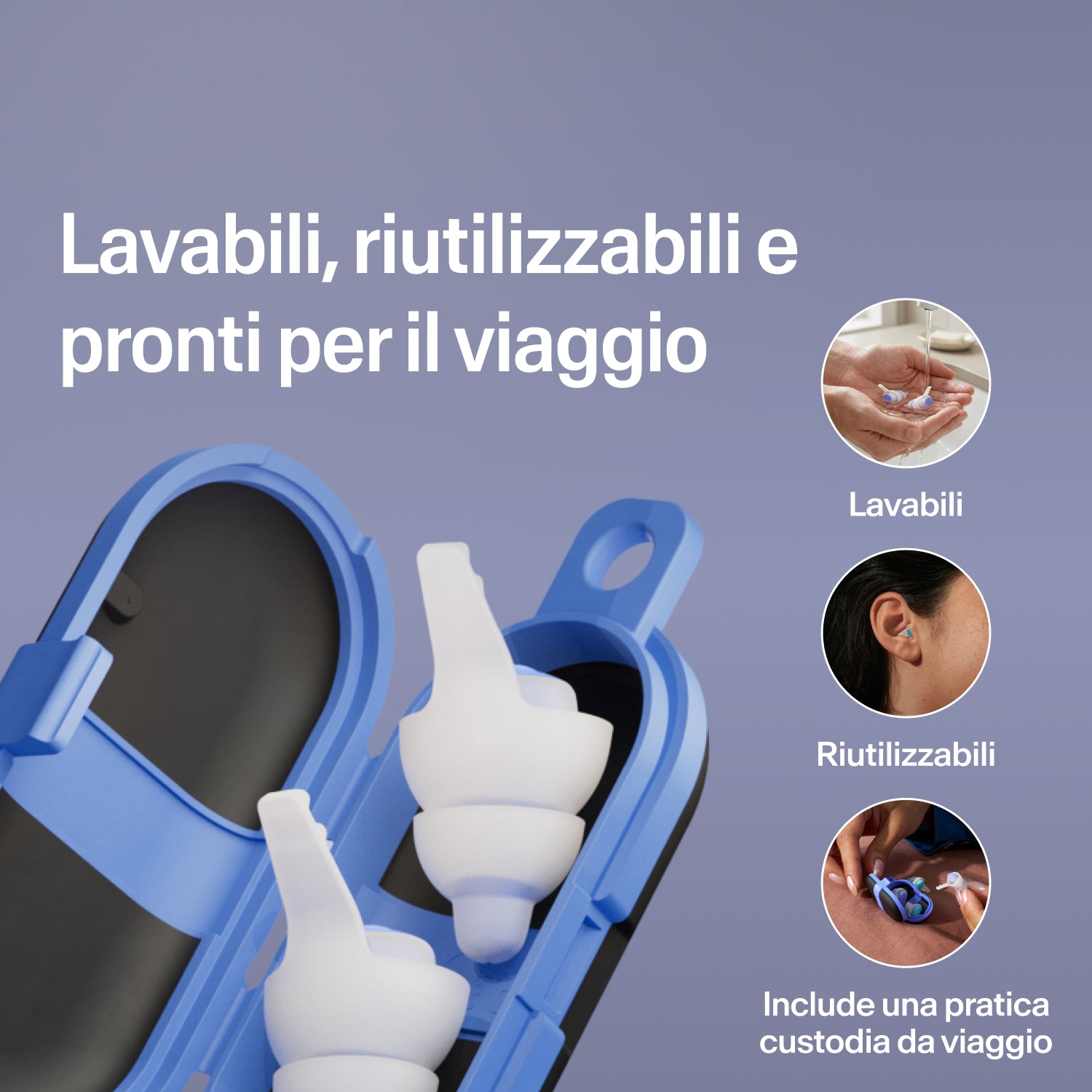
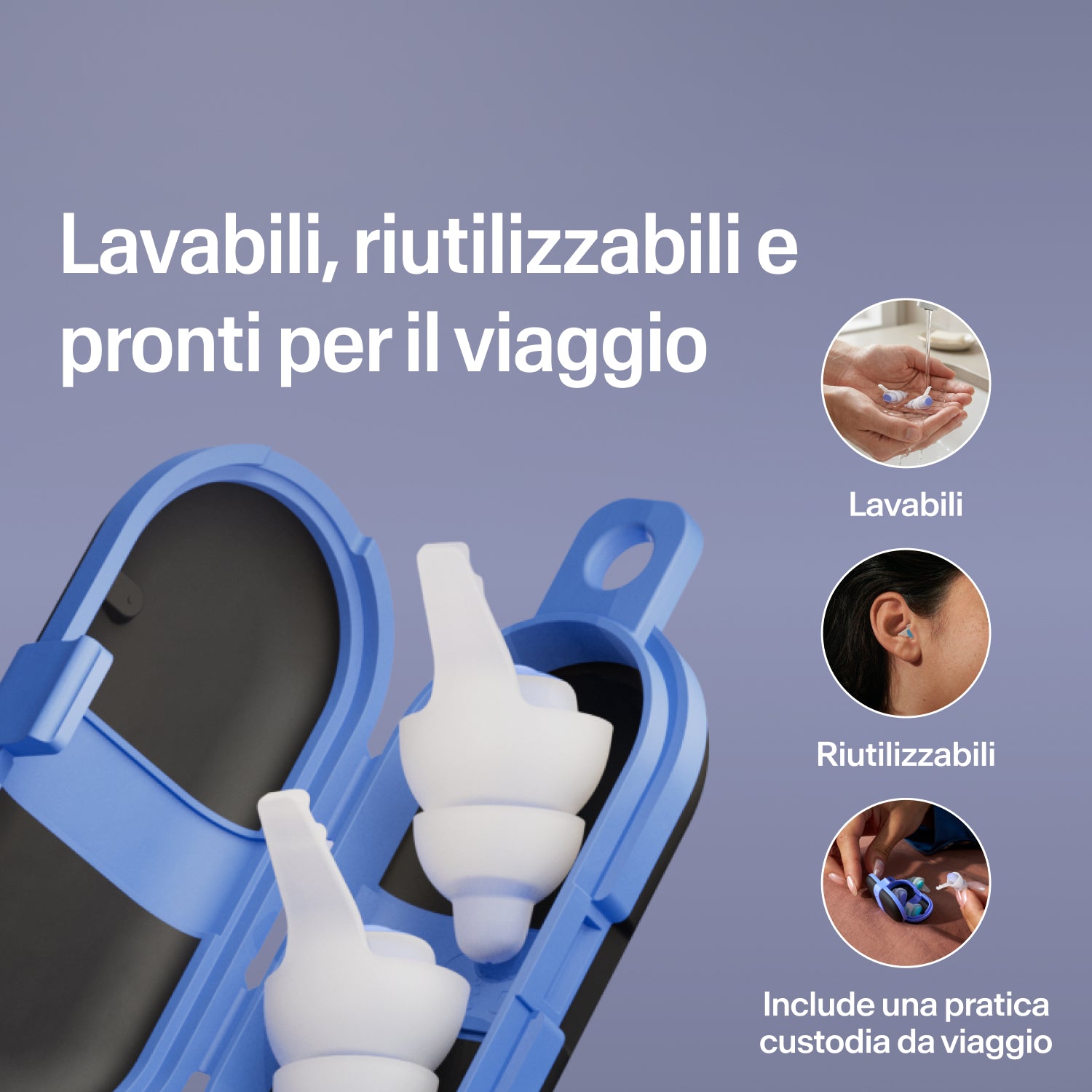
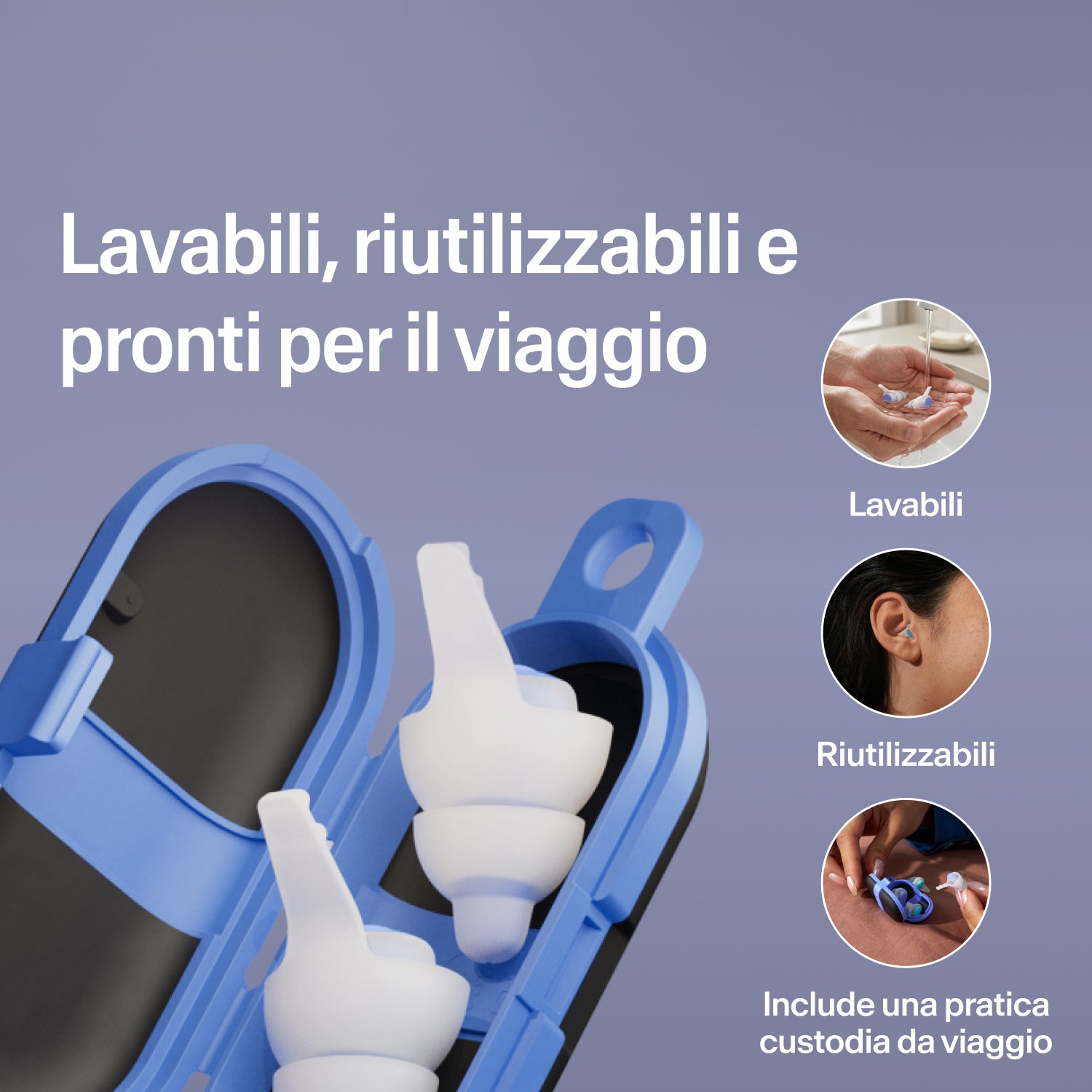
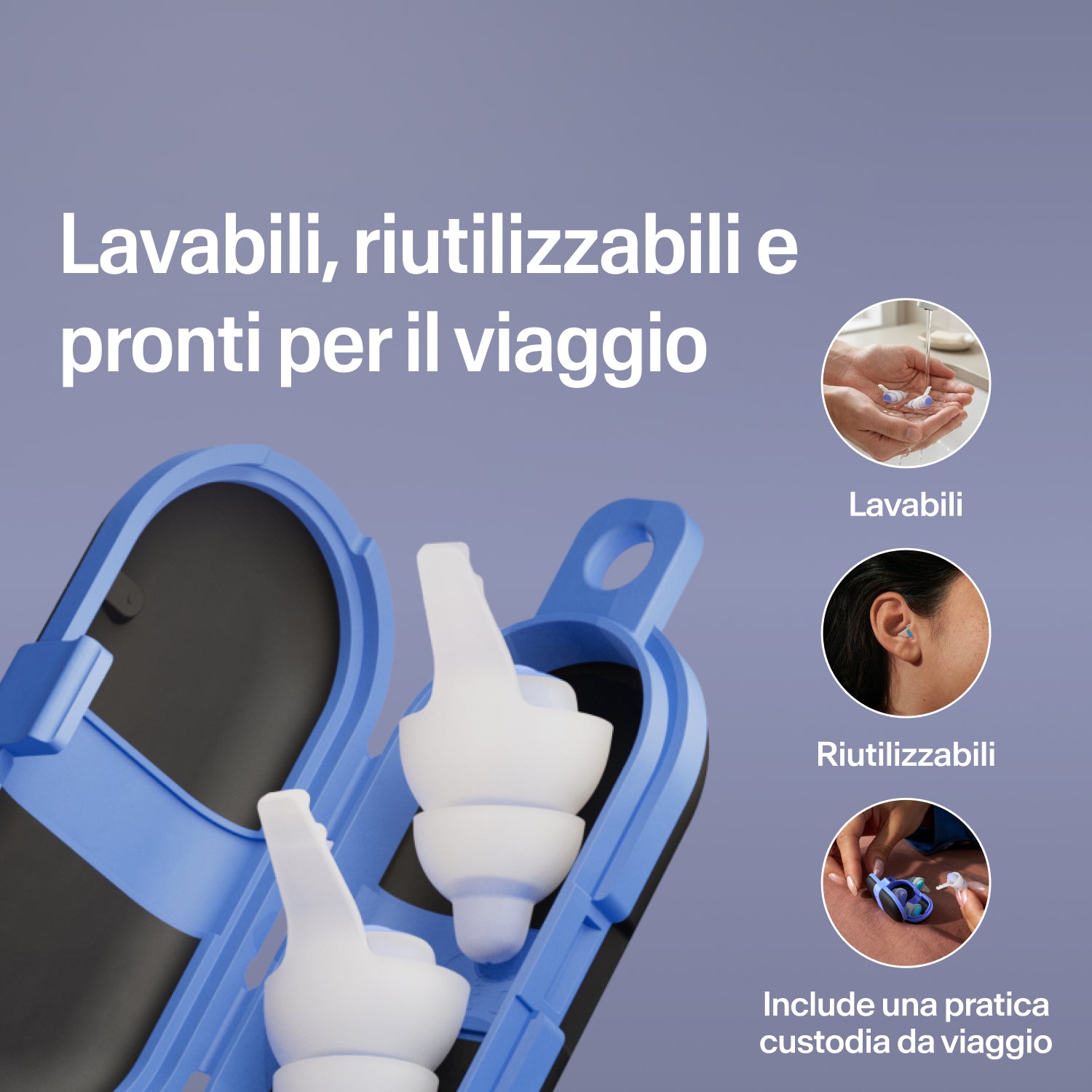
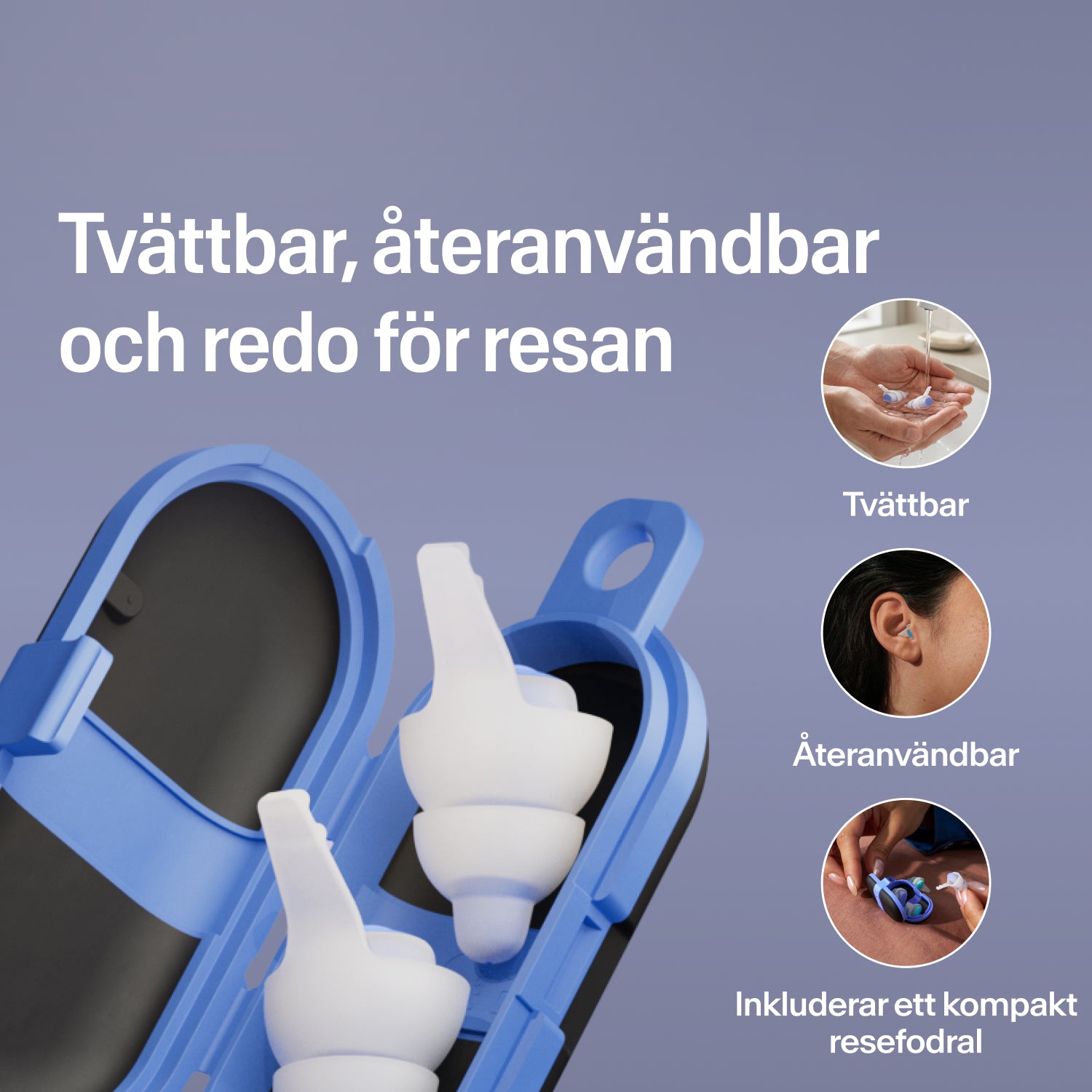
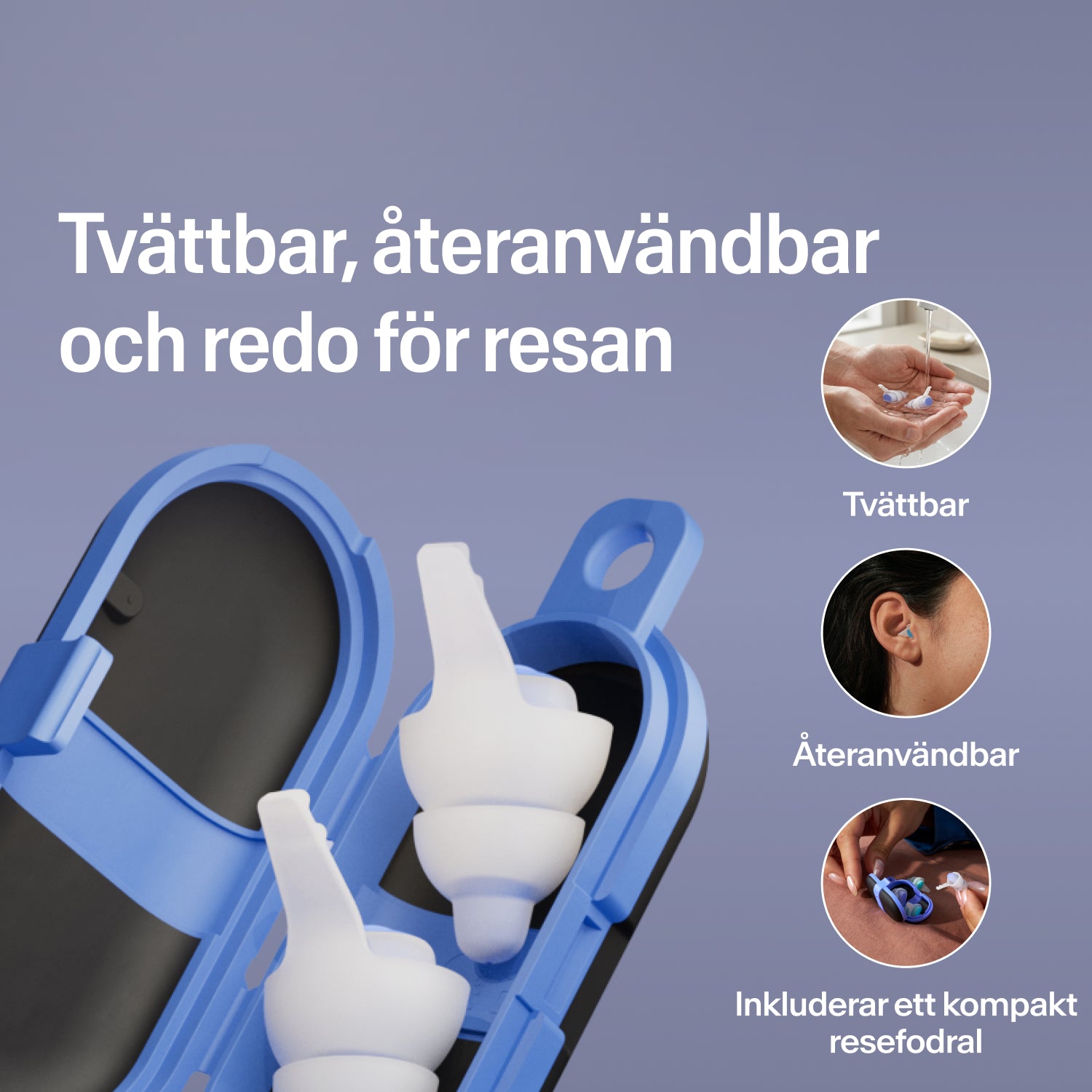
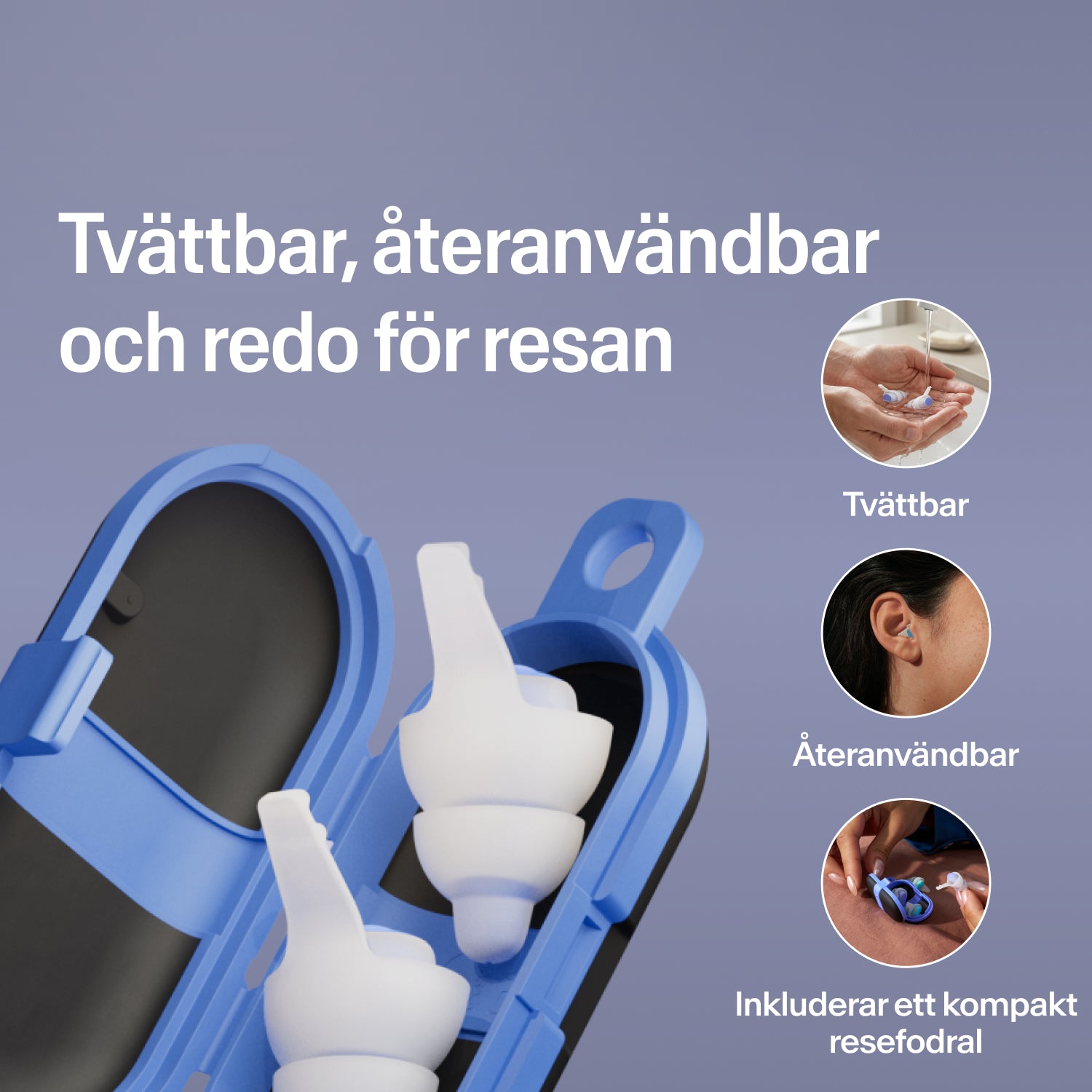
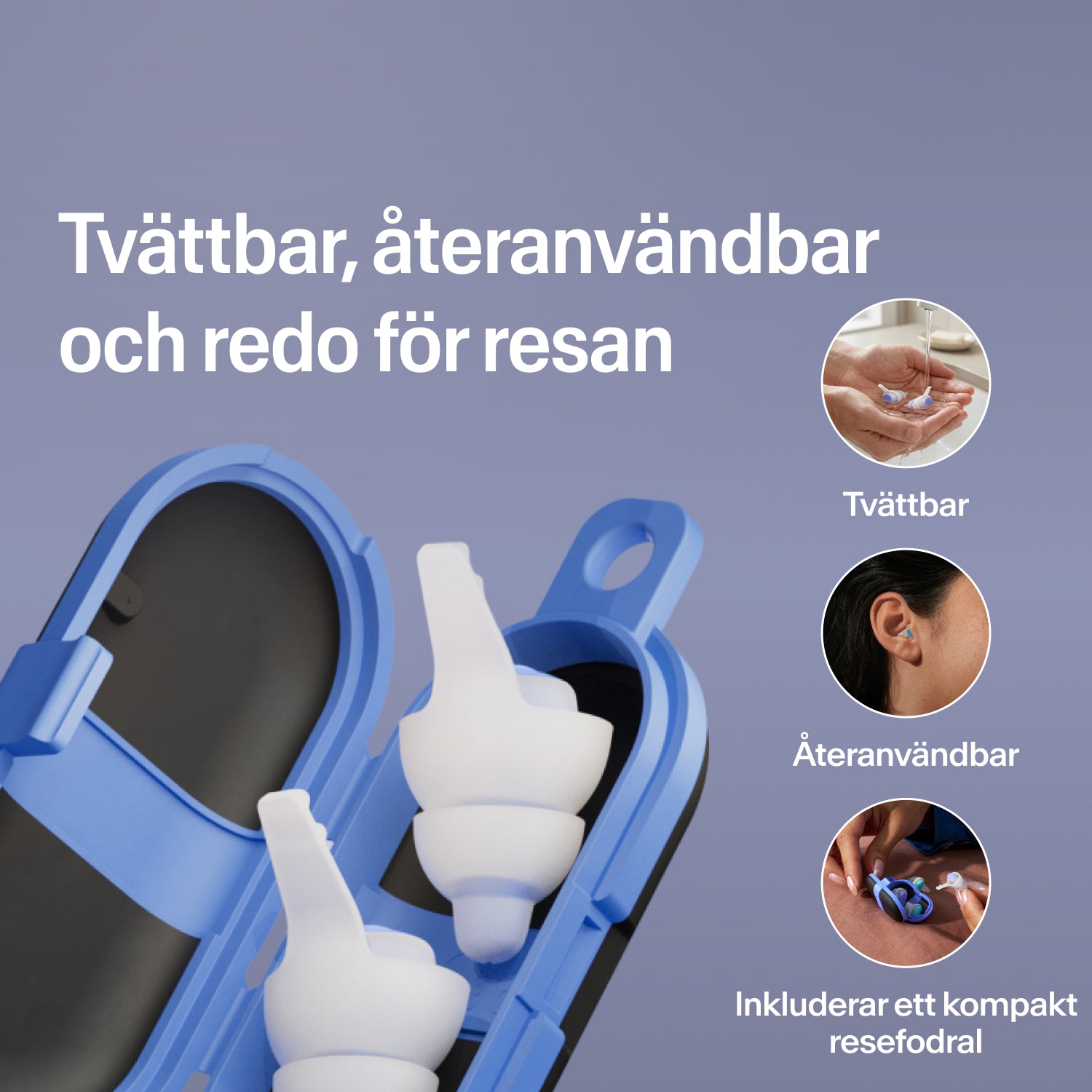
A reusable earplug that doesn't feel sticky keeps hair out of the equation. Rinse it, let it dry and it's ready for the next night. Curious about silicone? Take a look at SoftSilicone.
How to choose comfortable earplugs for sleeping?
The right pair for you comes down to four things:
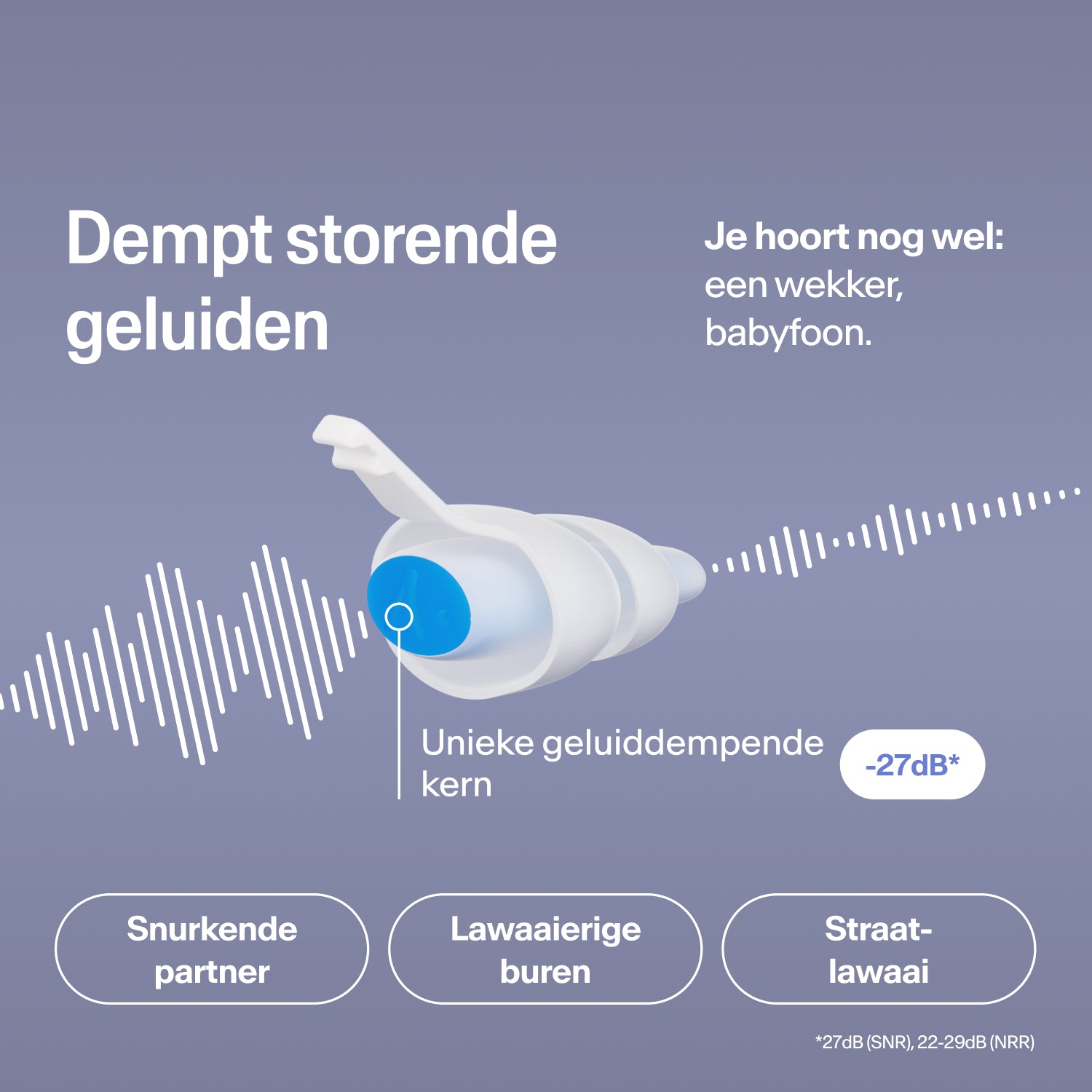
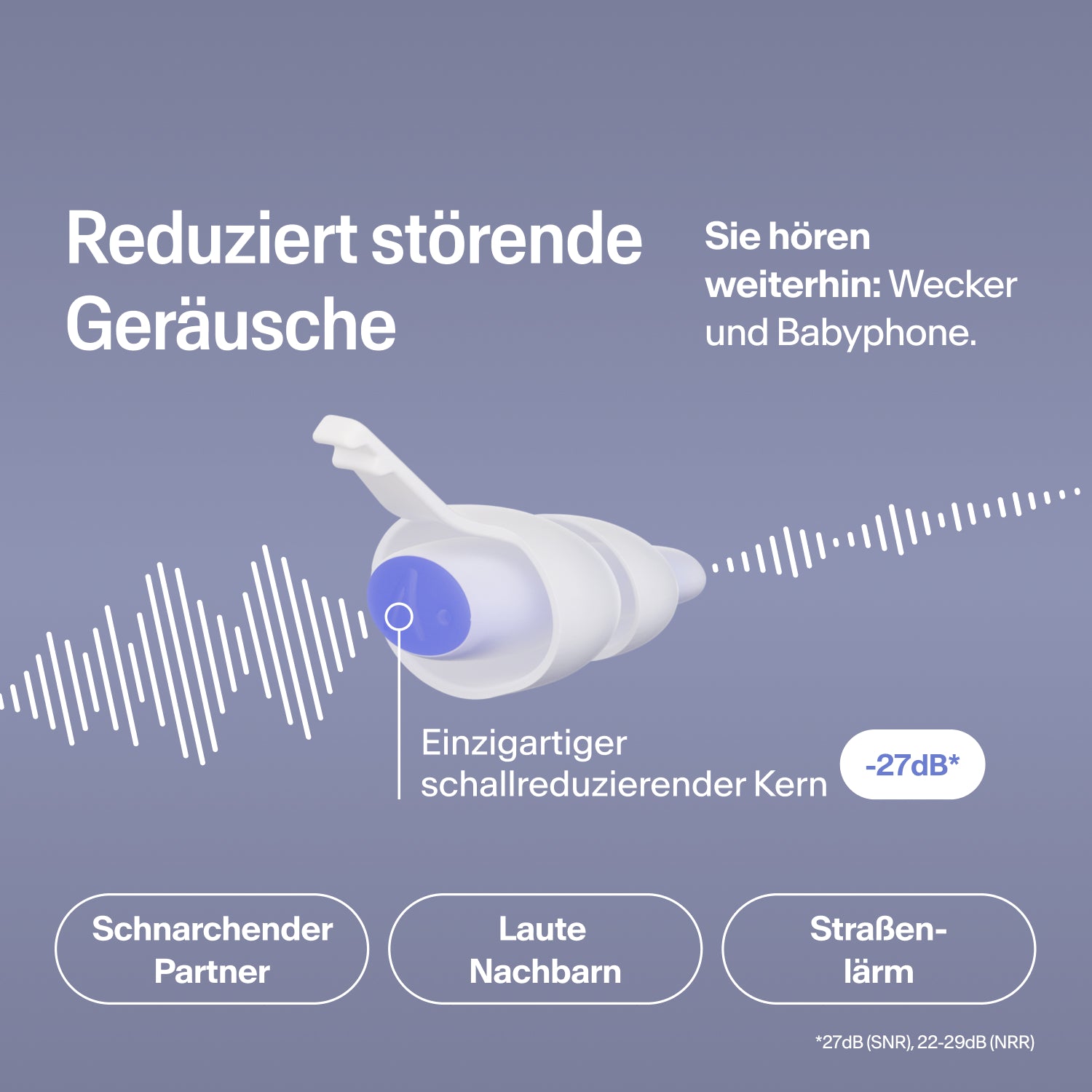
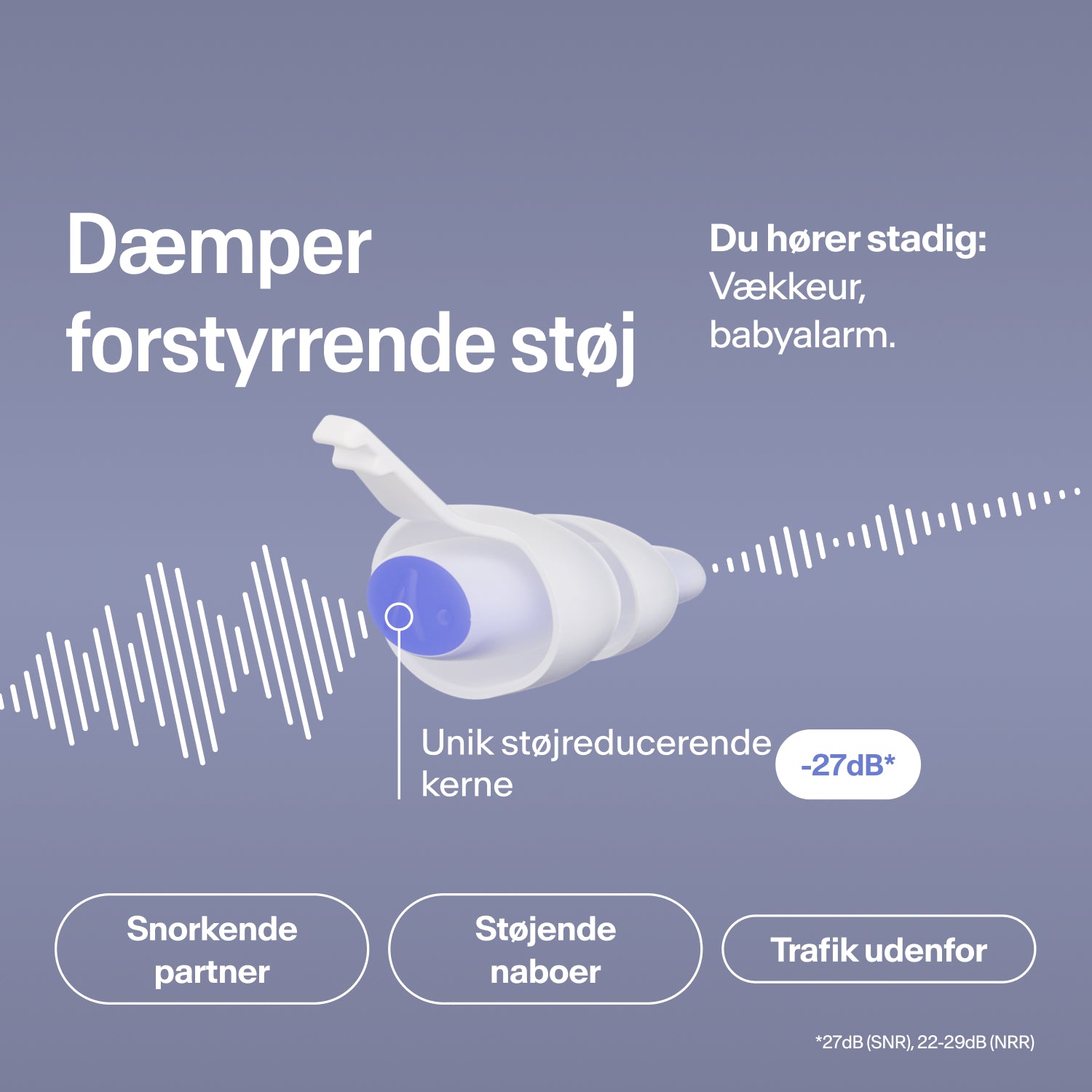
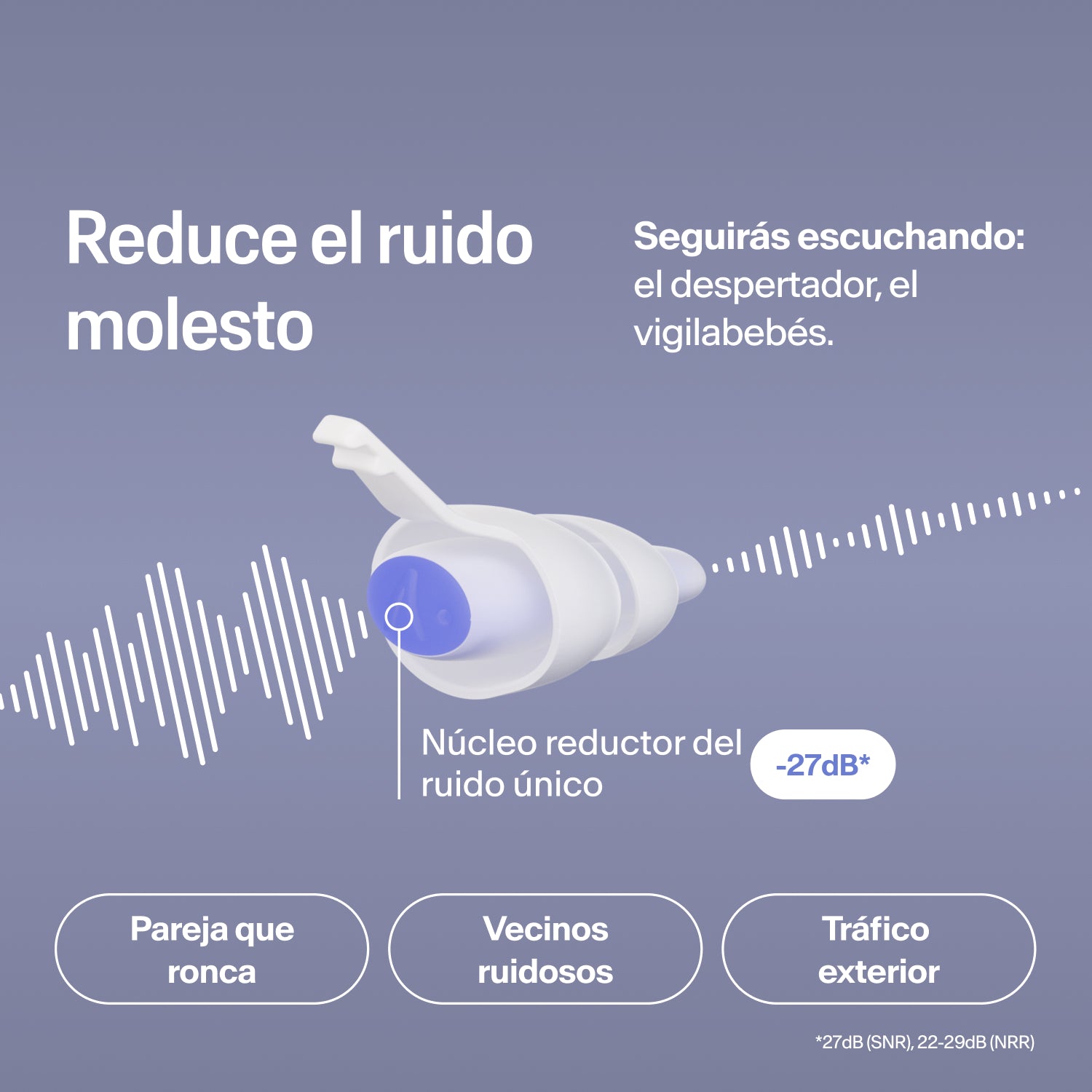
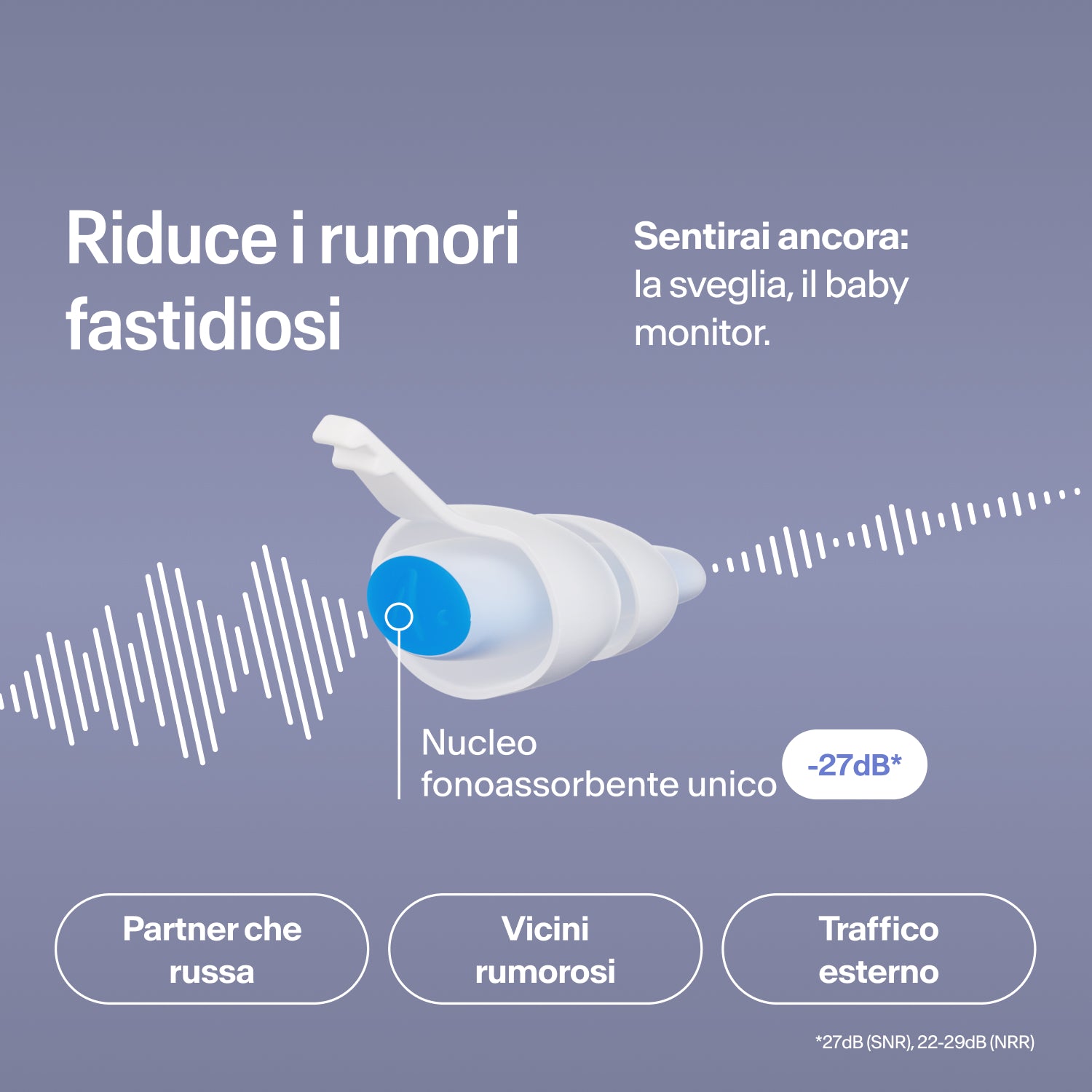
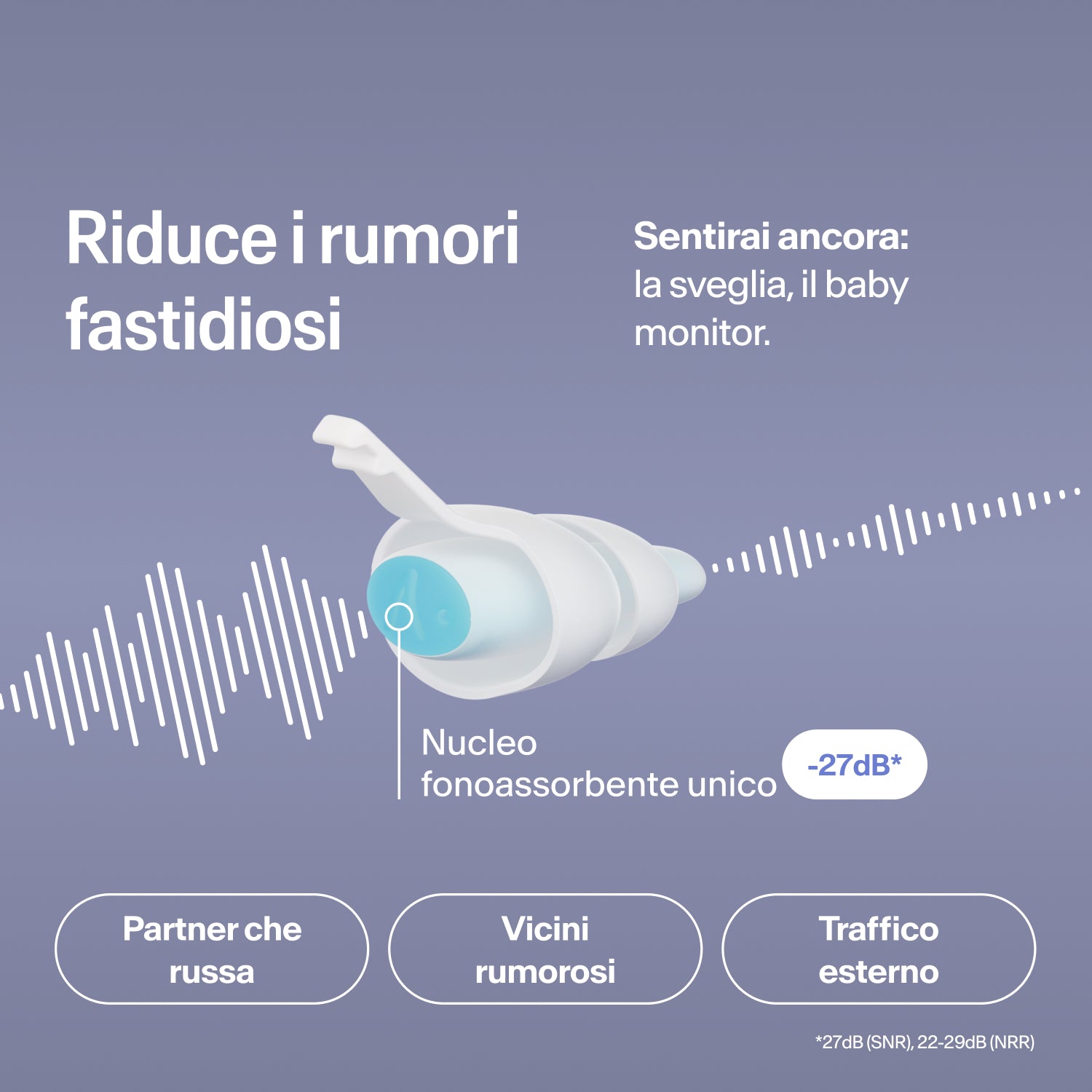
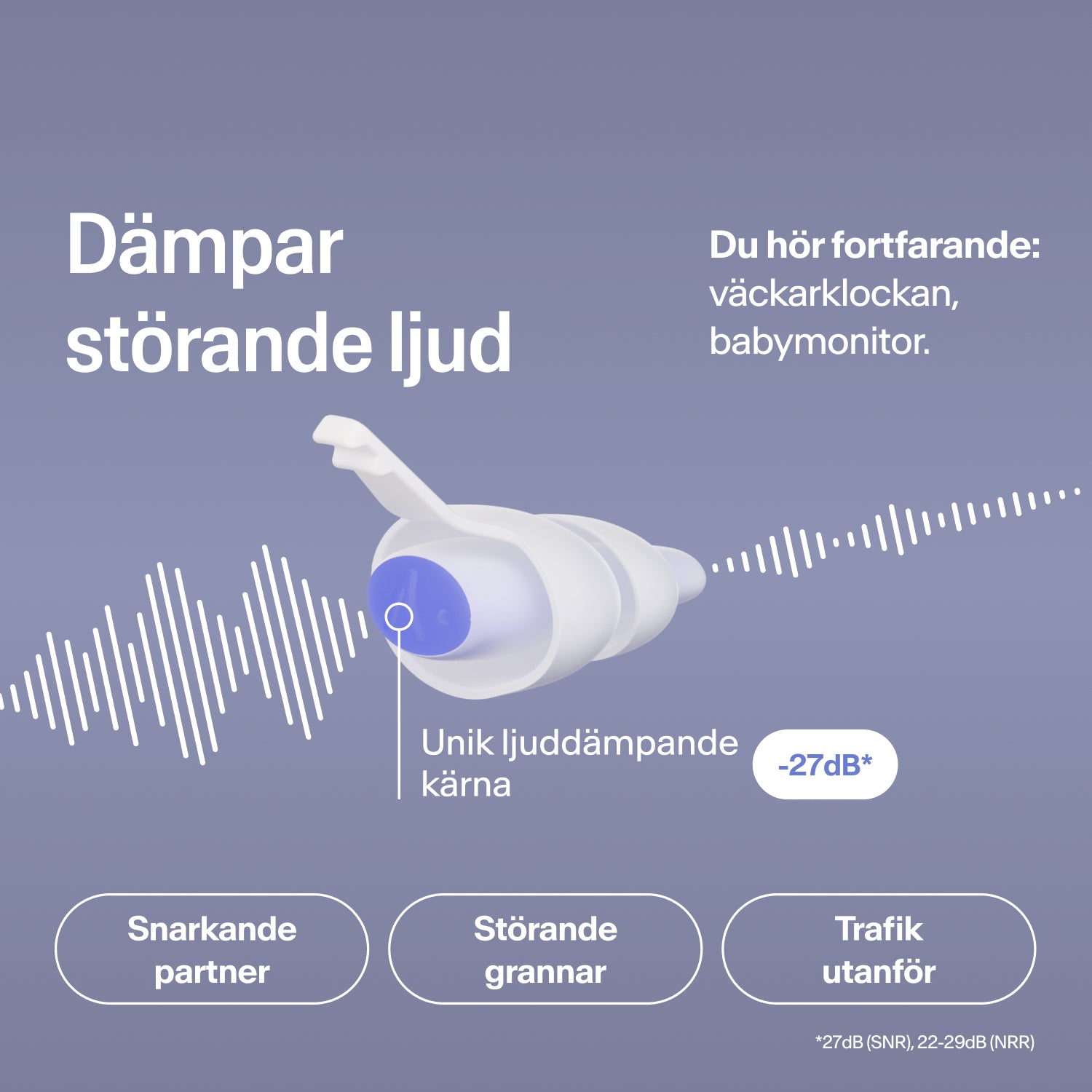
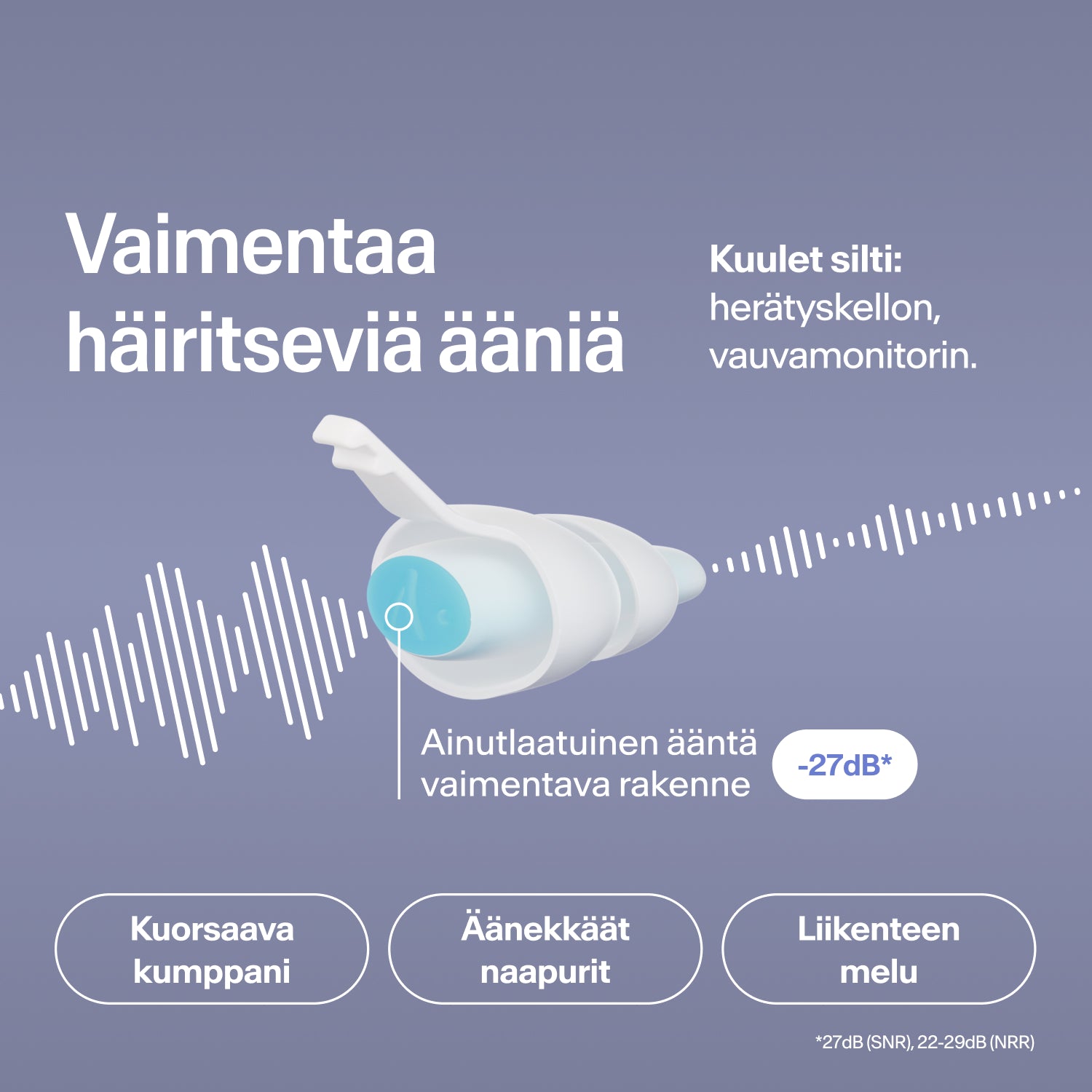
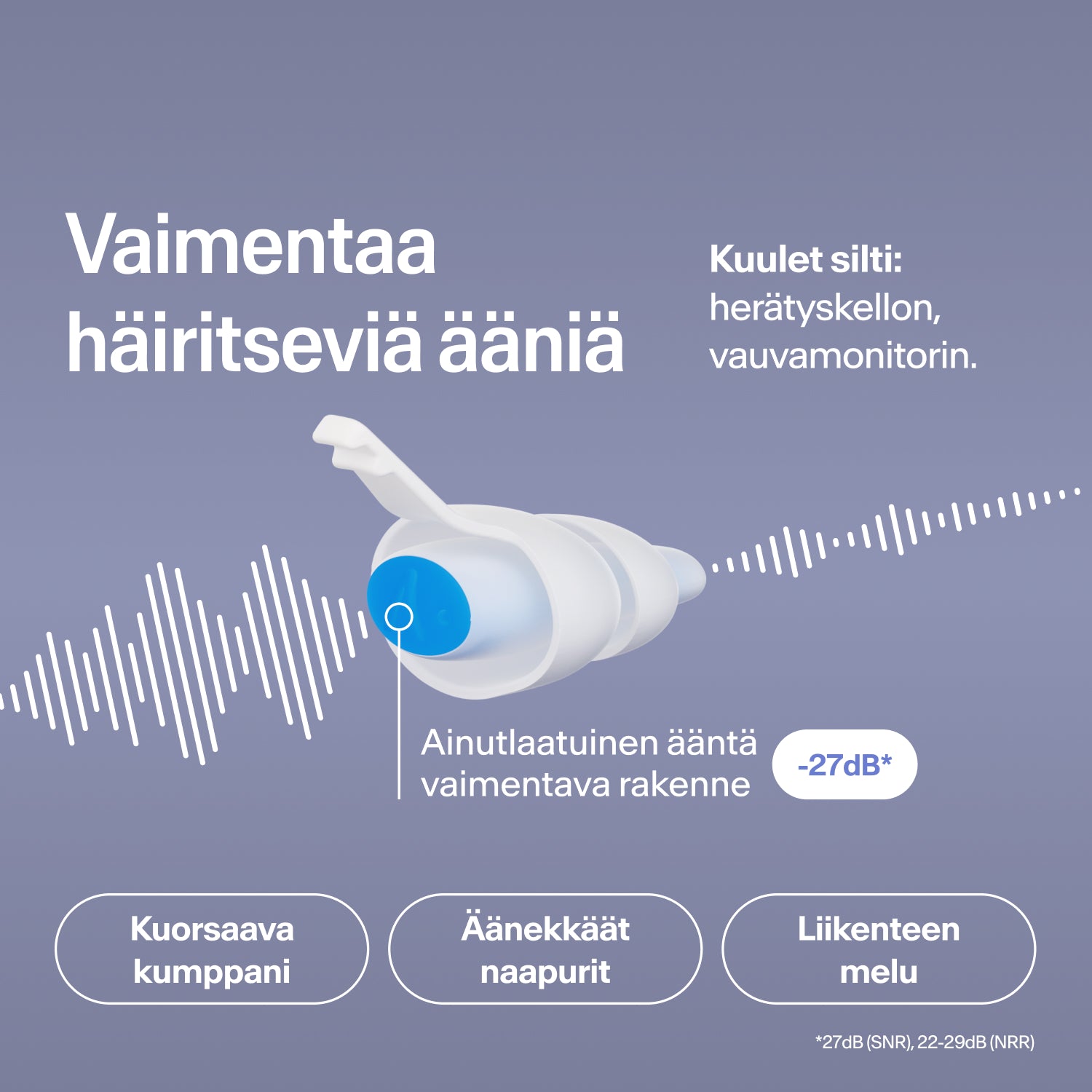
- Noise reduction: Look for the SNR on the box. It tells you how much a pair turns the volume down. Higher isn't always better: the more noise you take out, the less you hear of everything else. What you need depends on what keeps you up. A light rumble from next door asks for something different than a partner who's really sawing logs. Are you sensitive to noise? Then a higher SNR can make sense, as long as the pair stays comfortable.
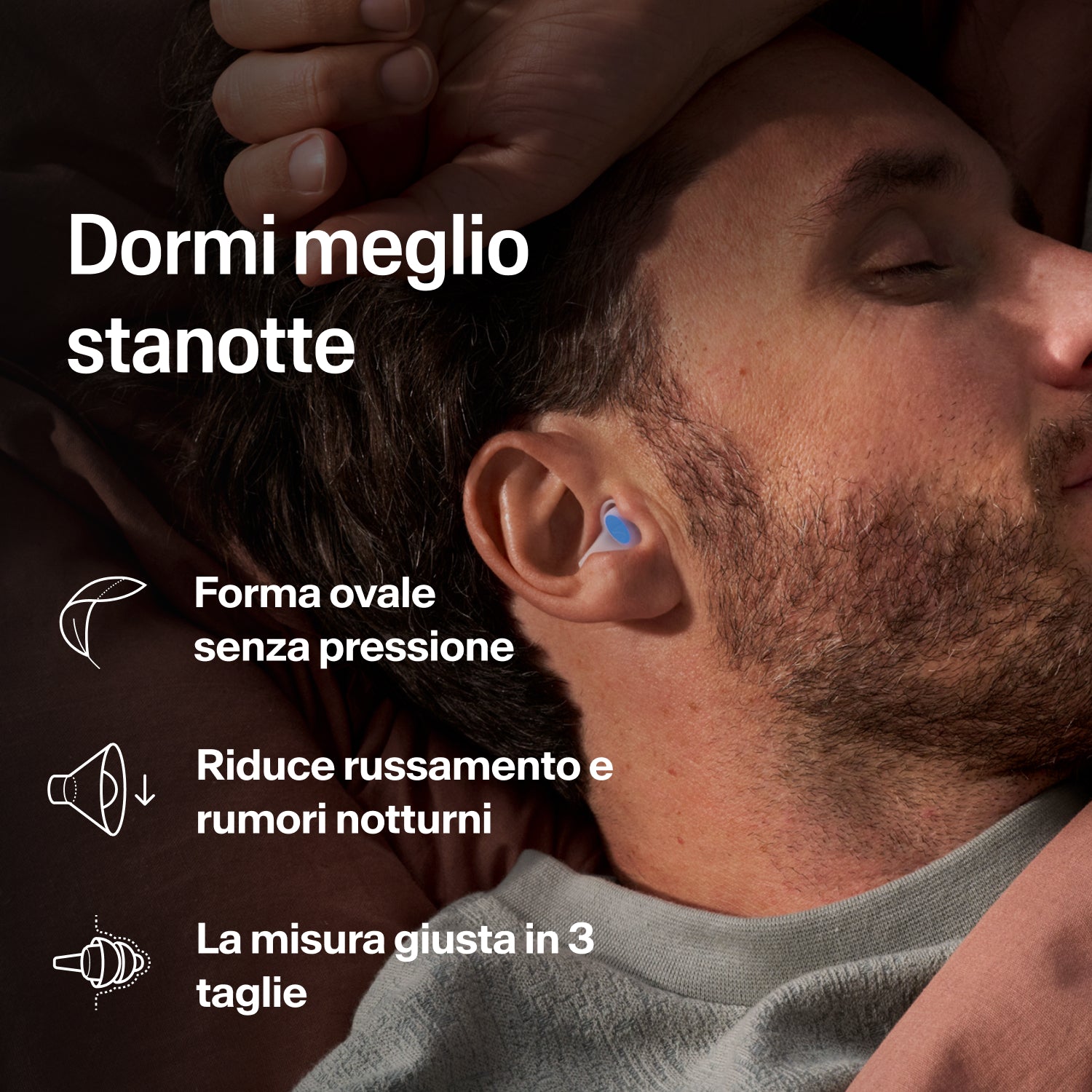
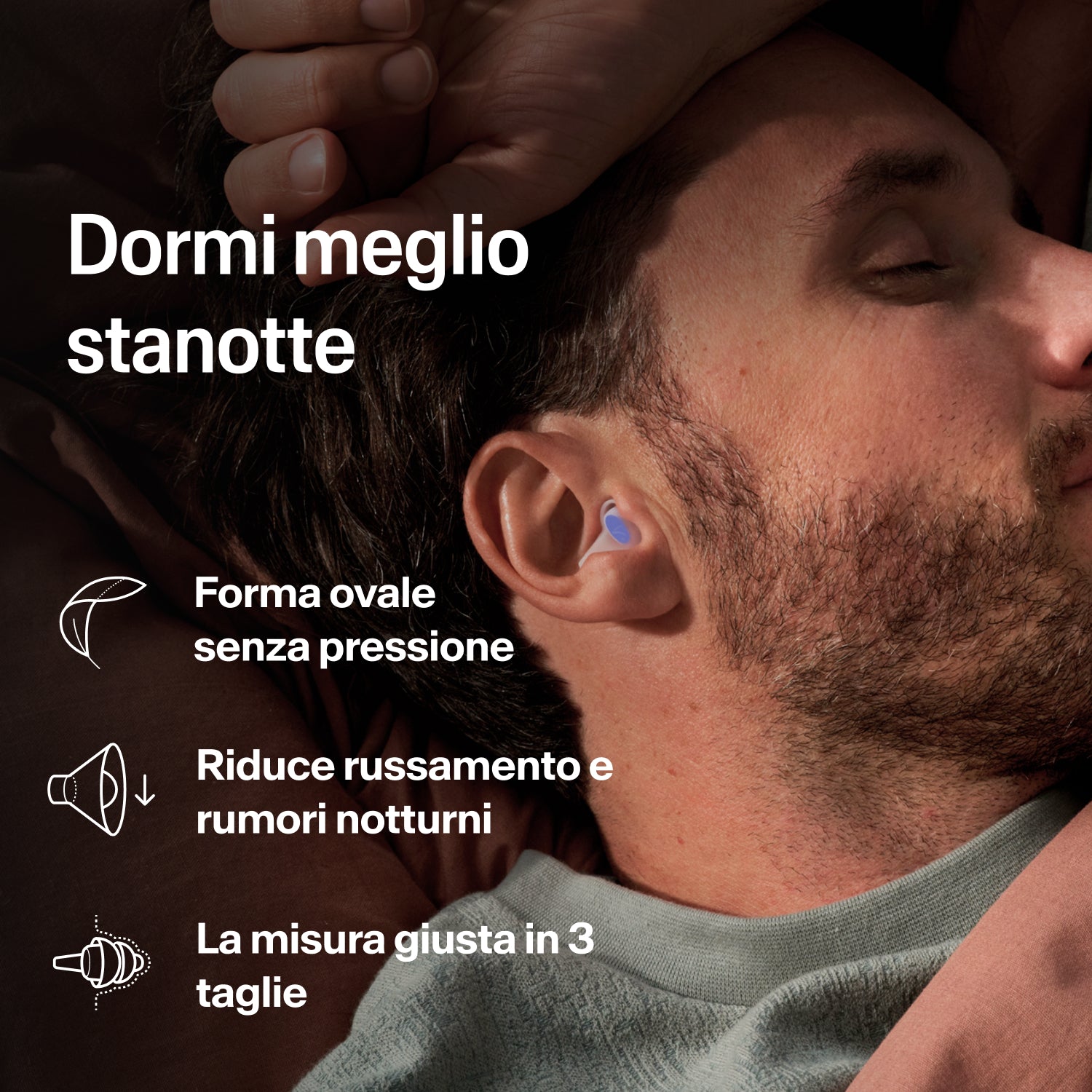
- Comfort: If you feel it, you won't wear it. Choose a soft, low-profile earplug that doesn't press when you're lying down.
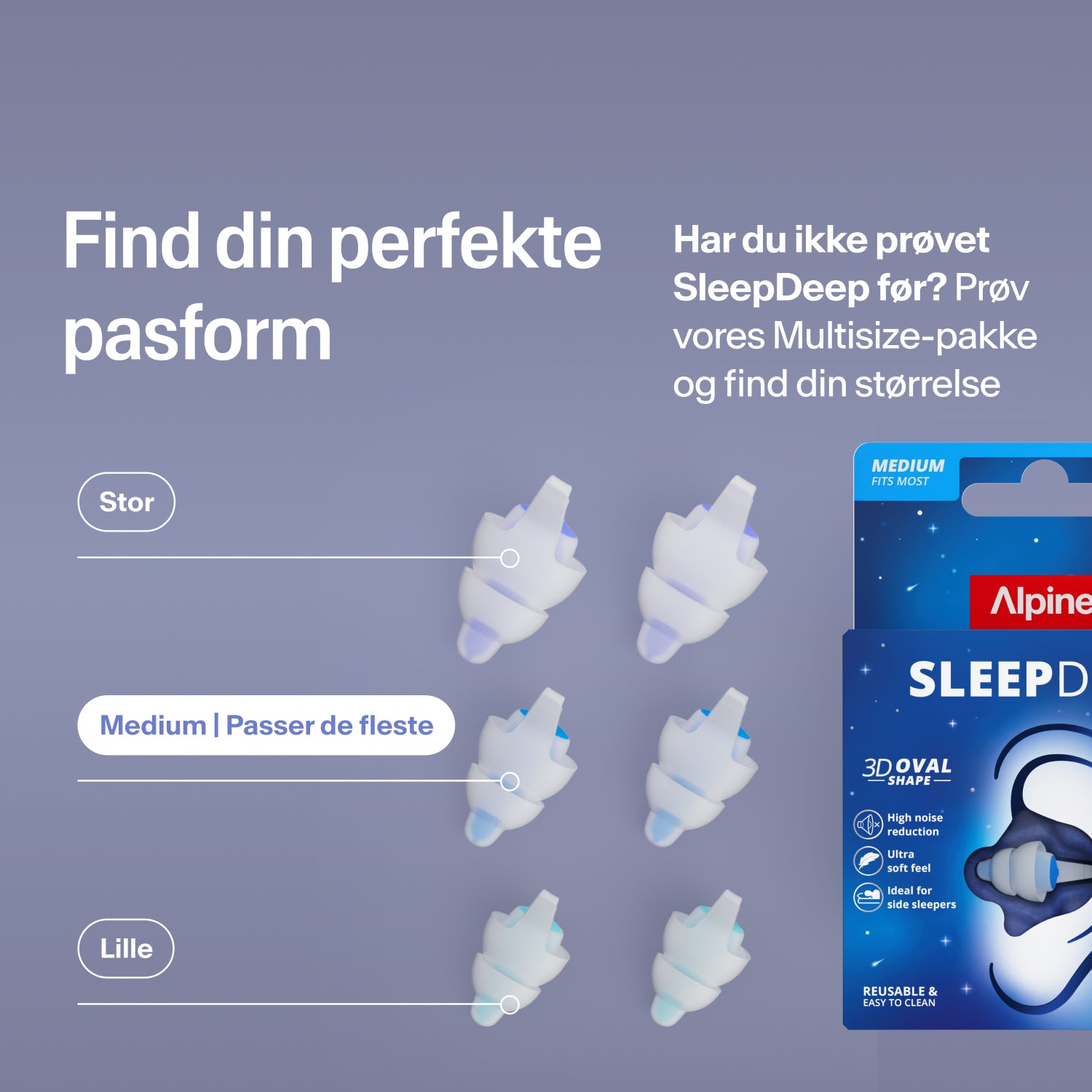
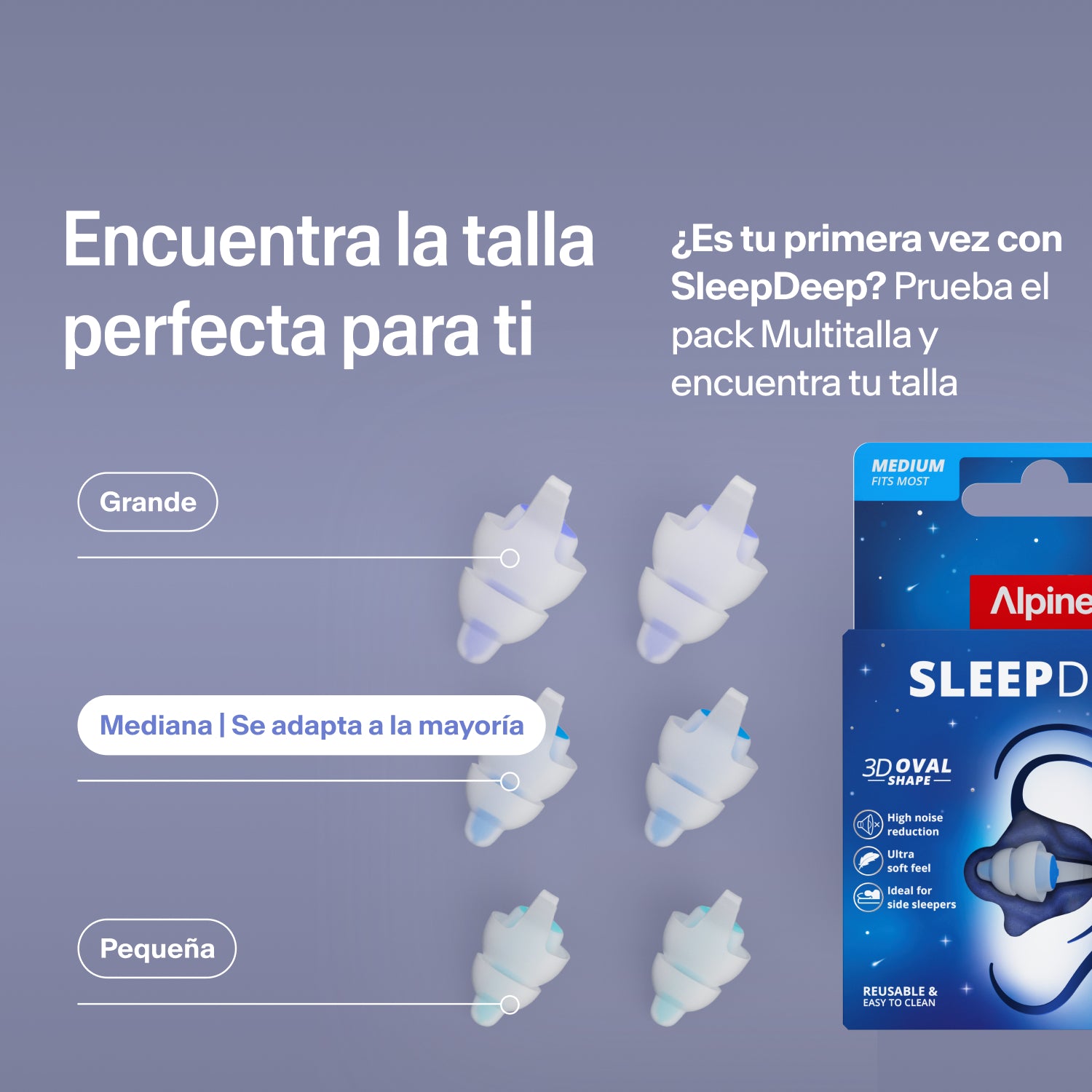
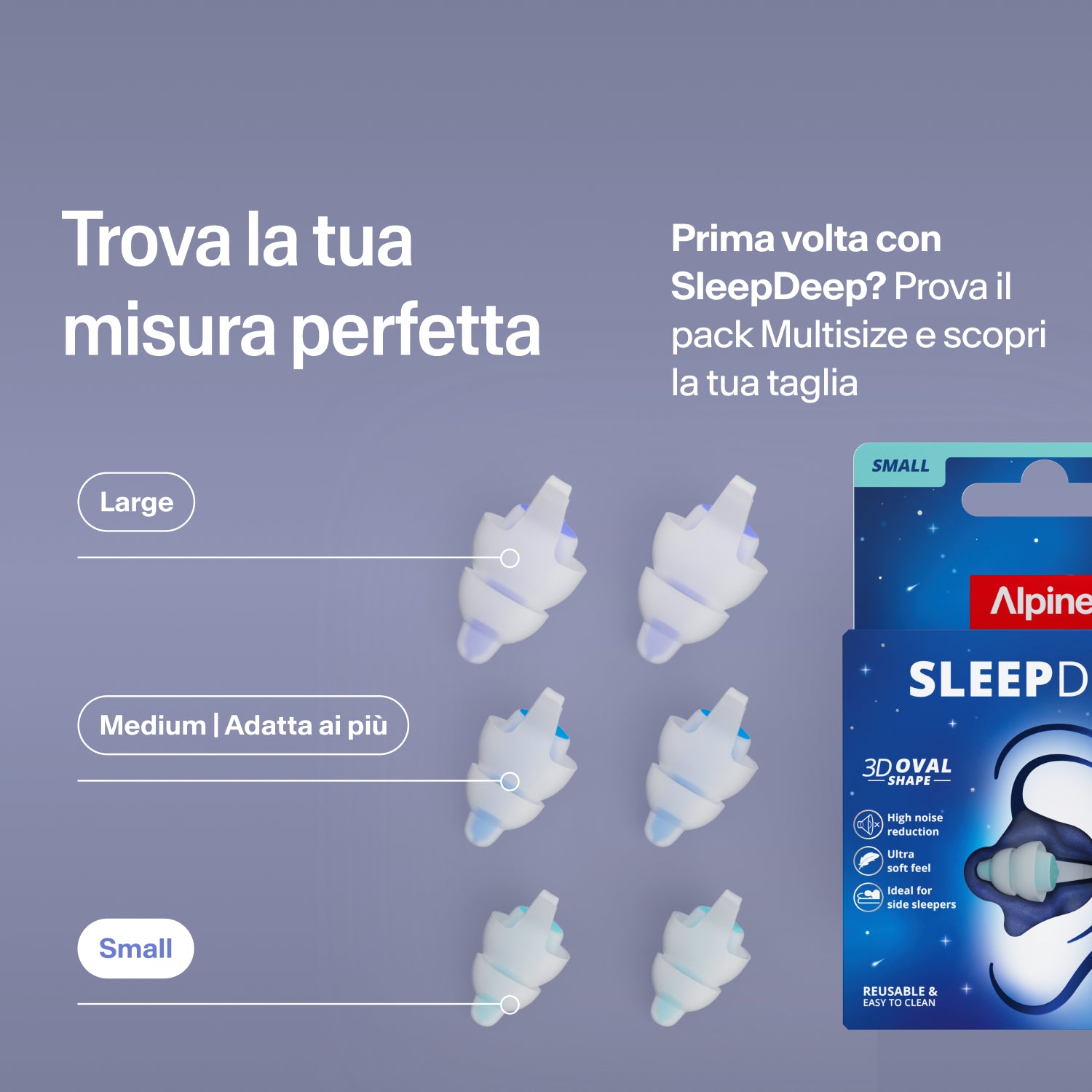
- Fit: The right size keeps the plug in place and comfortable all night. Too small and it slips out. Too big and it feels tight. Sizes make the difference, so pick a pair that comes in more than one.
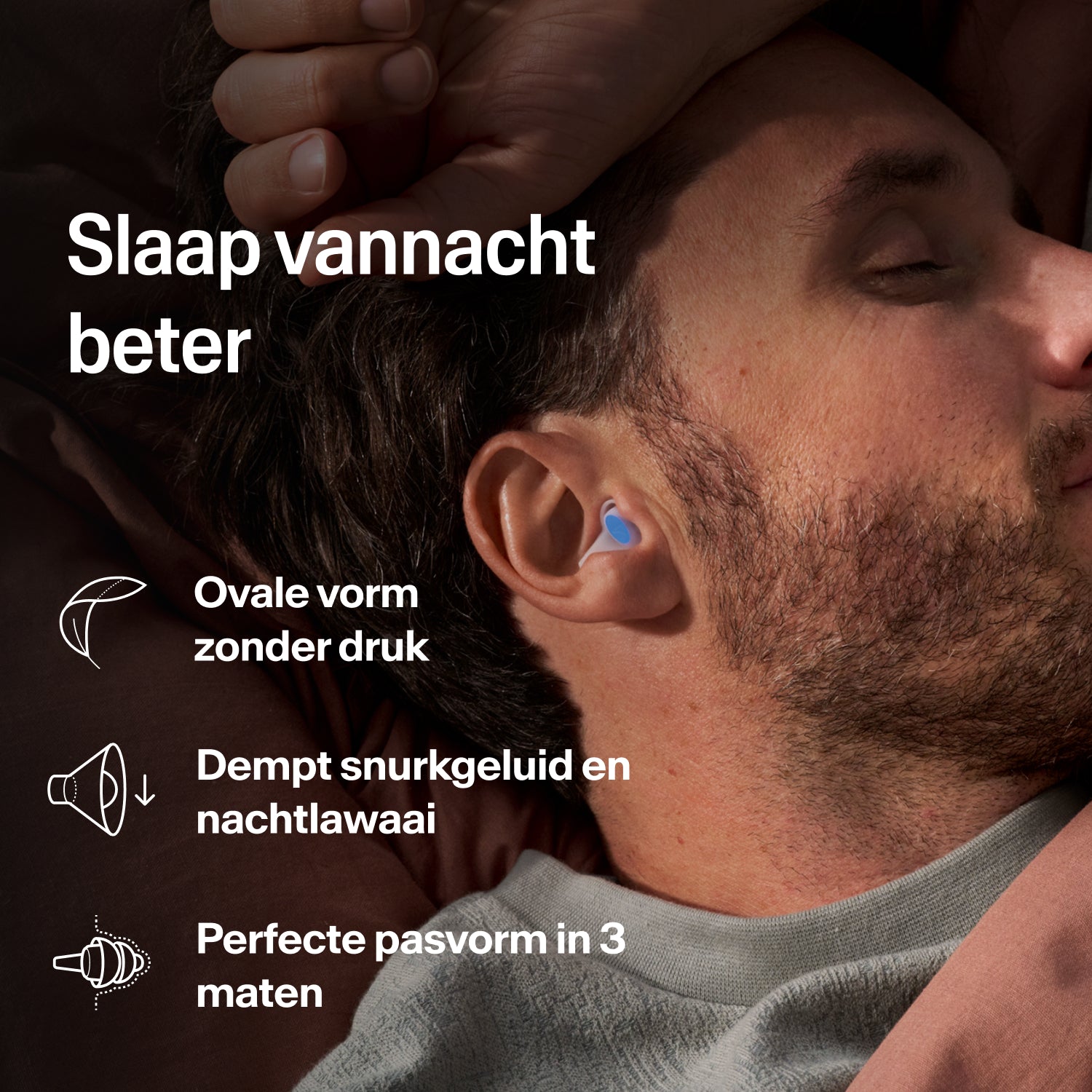
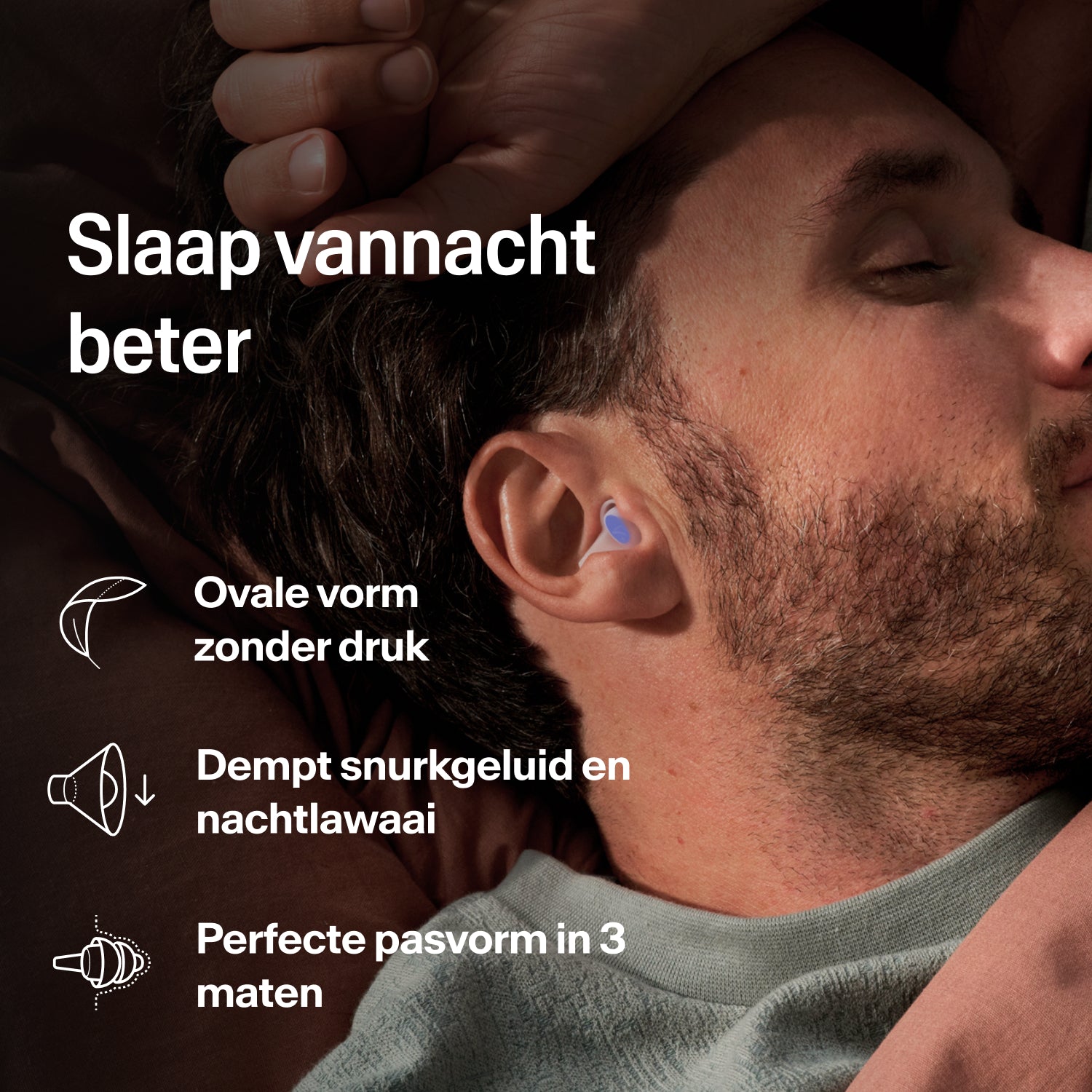
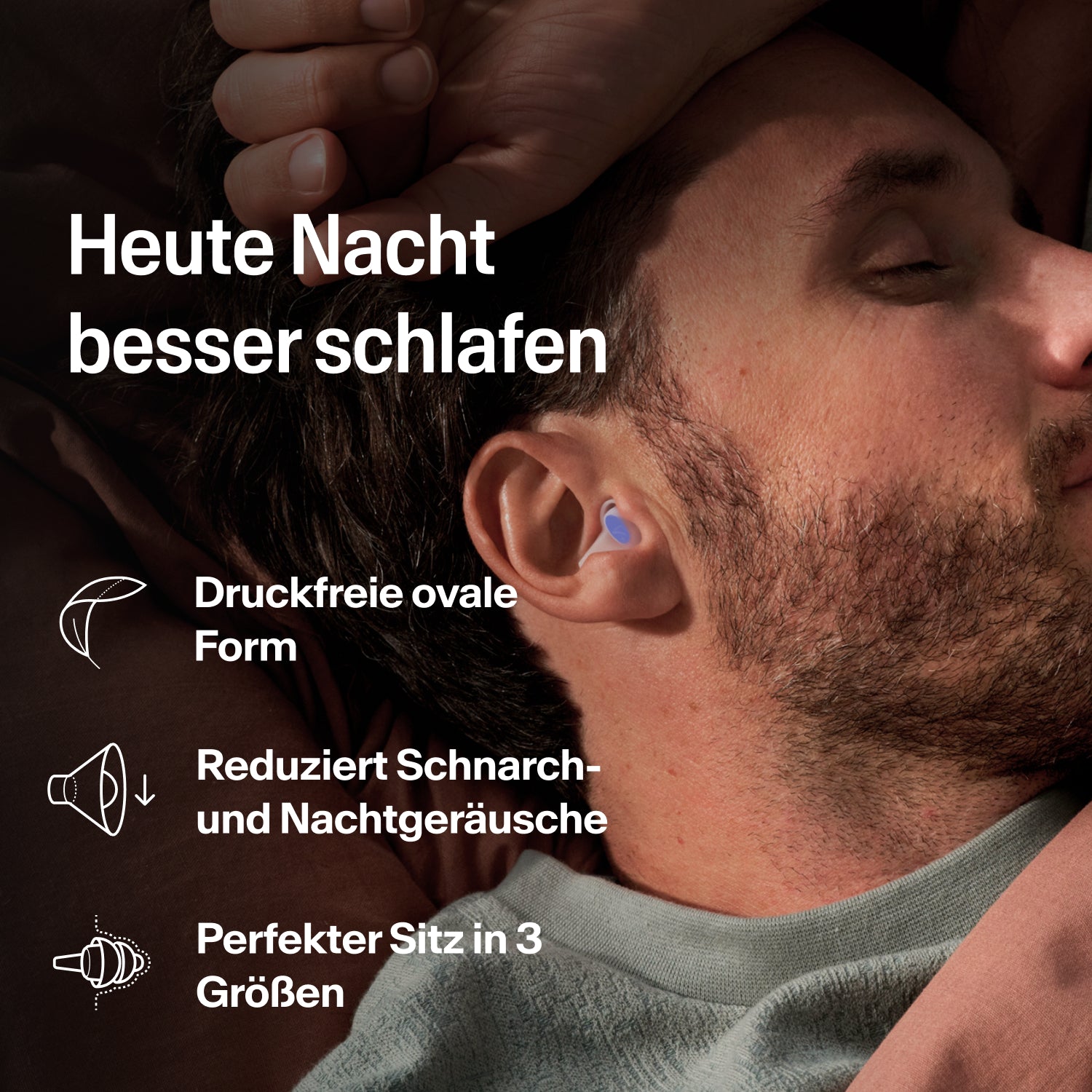
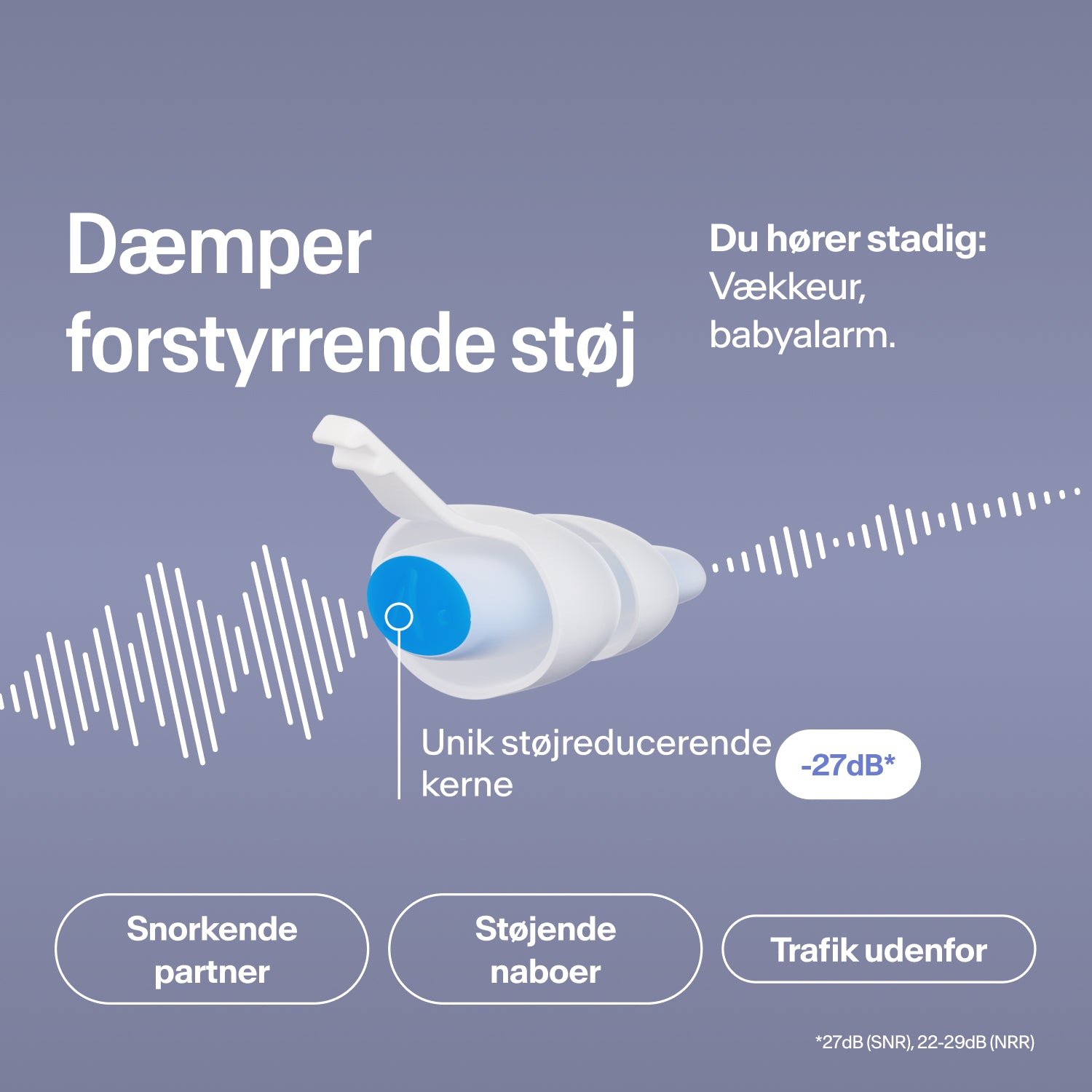
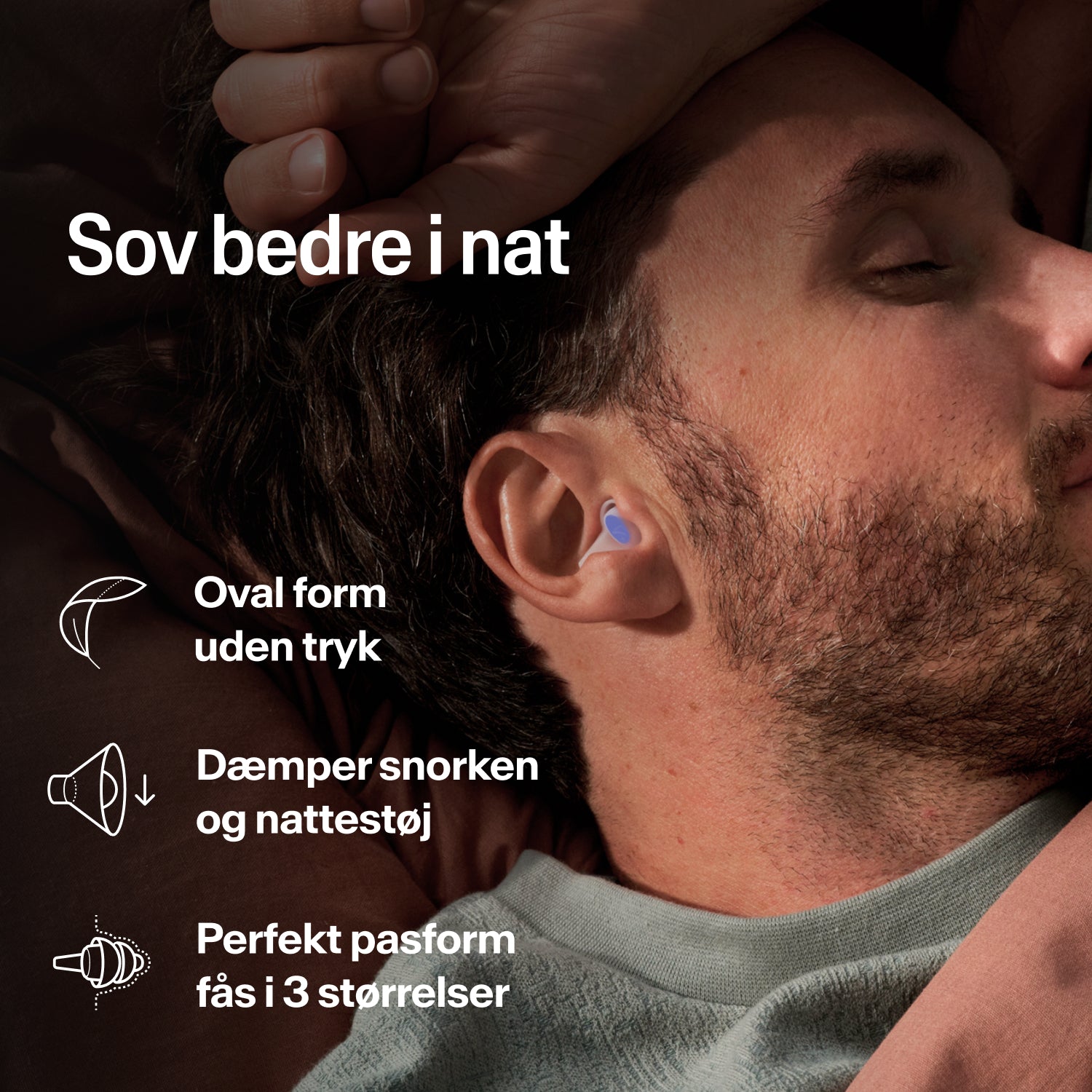
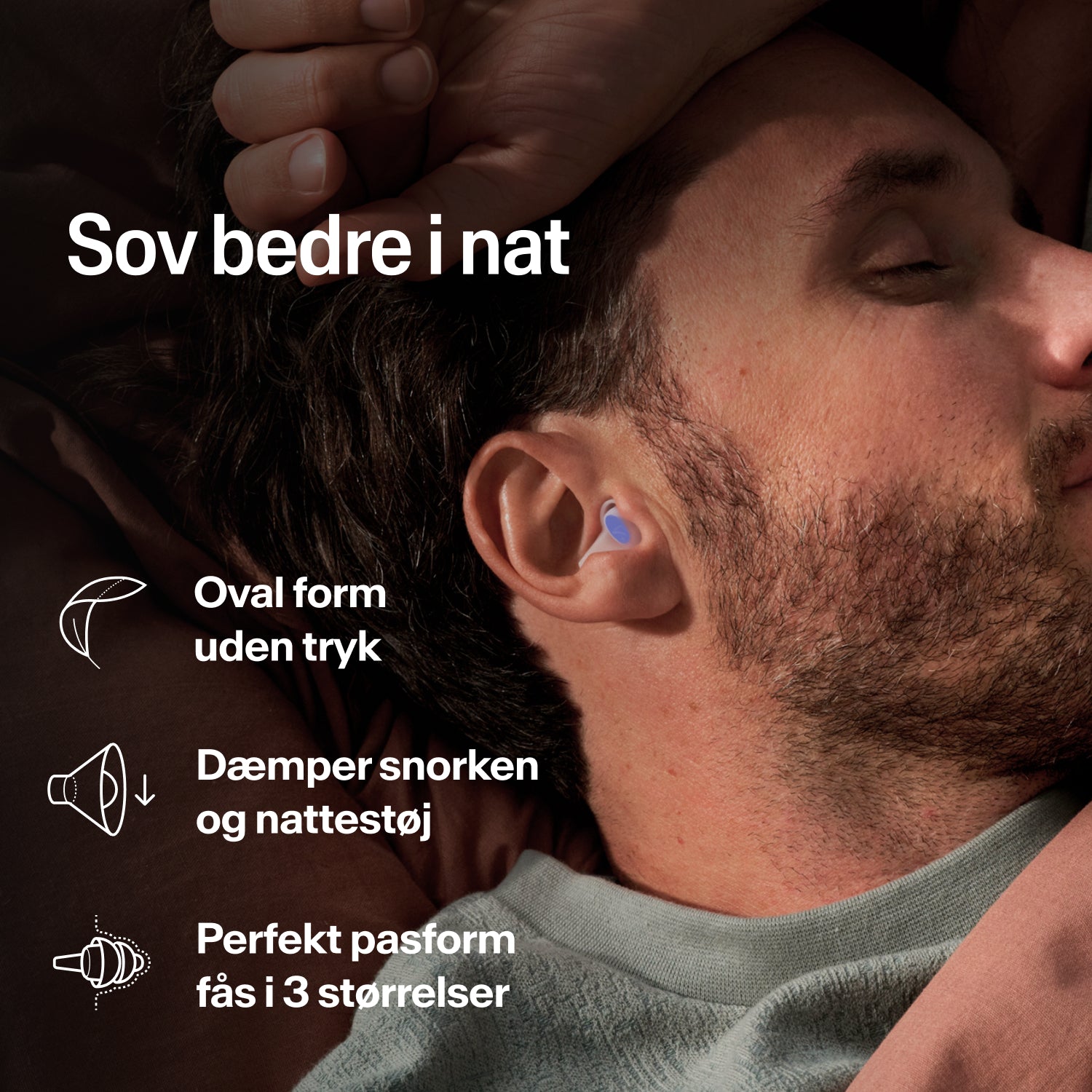
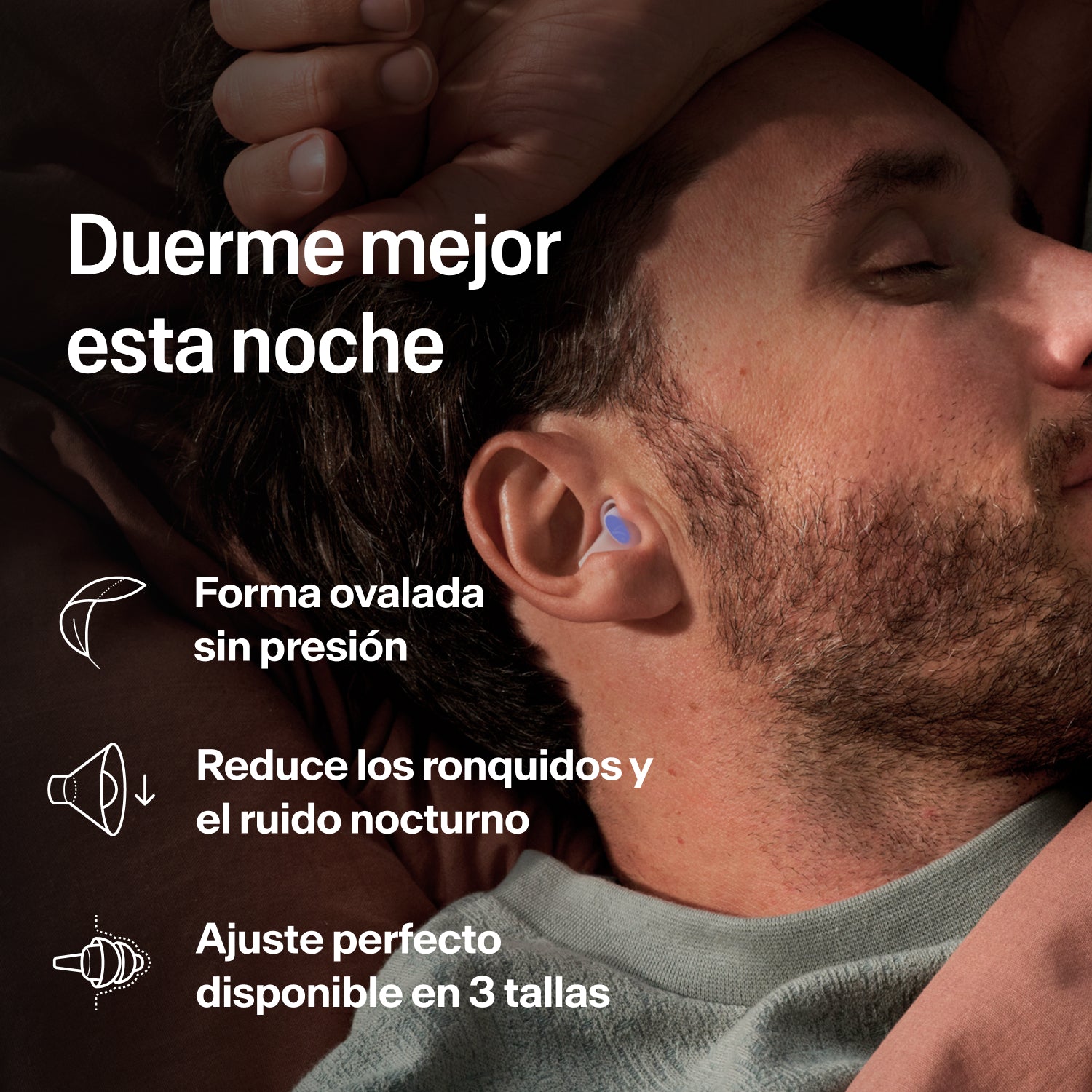
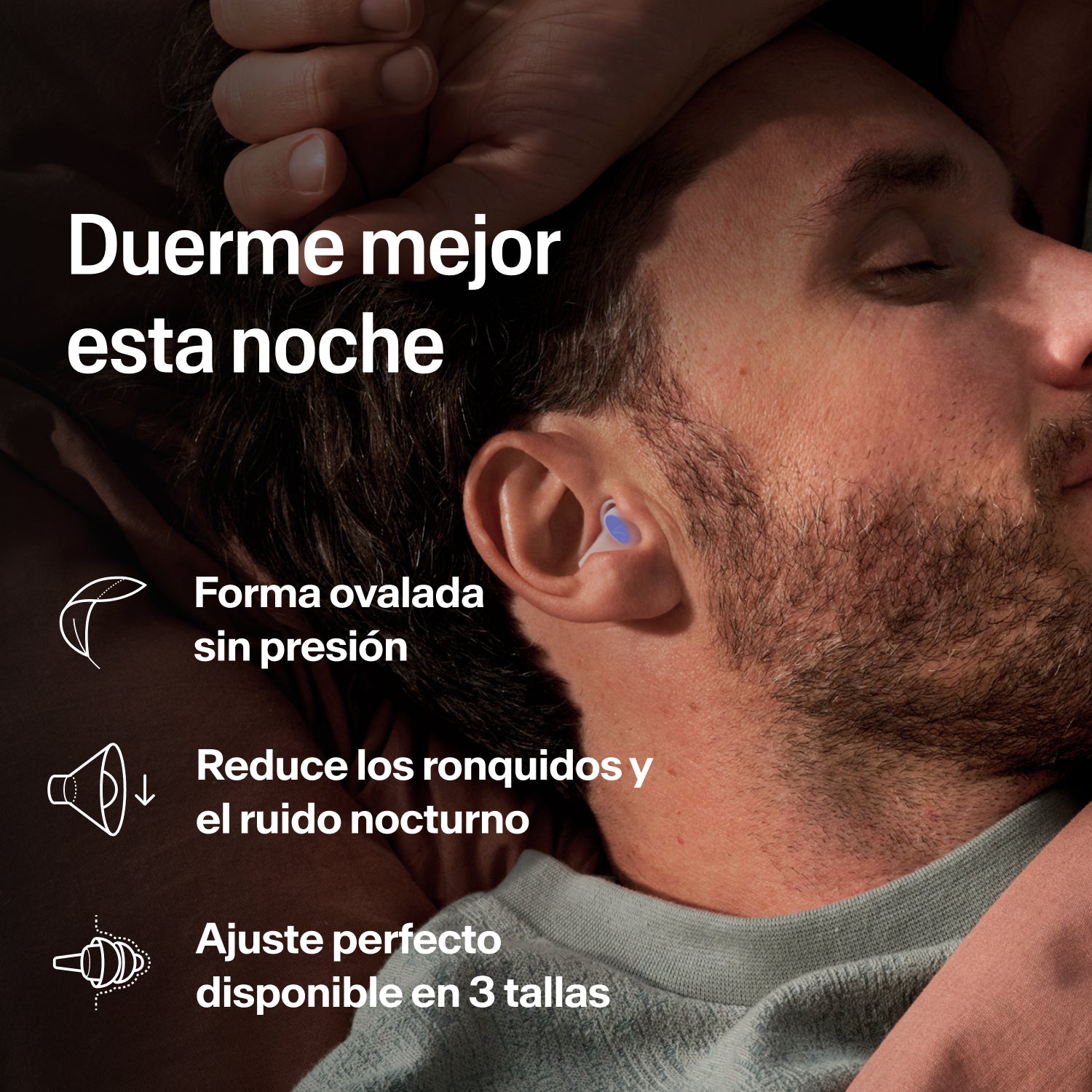
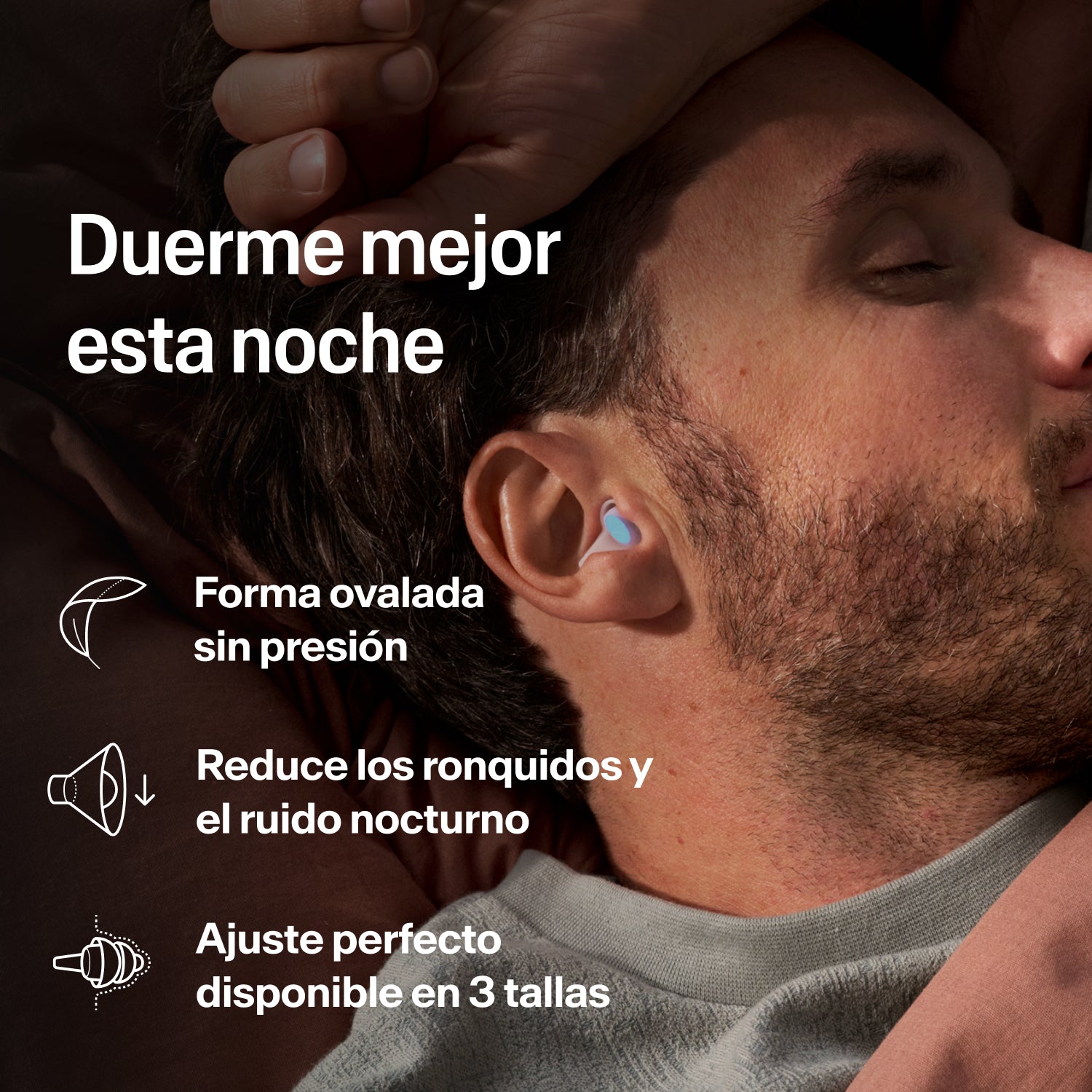
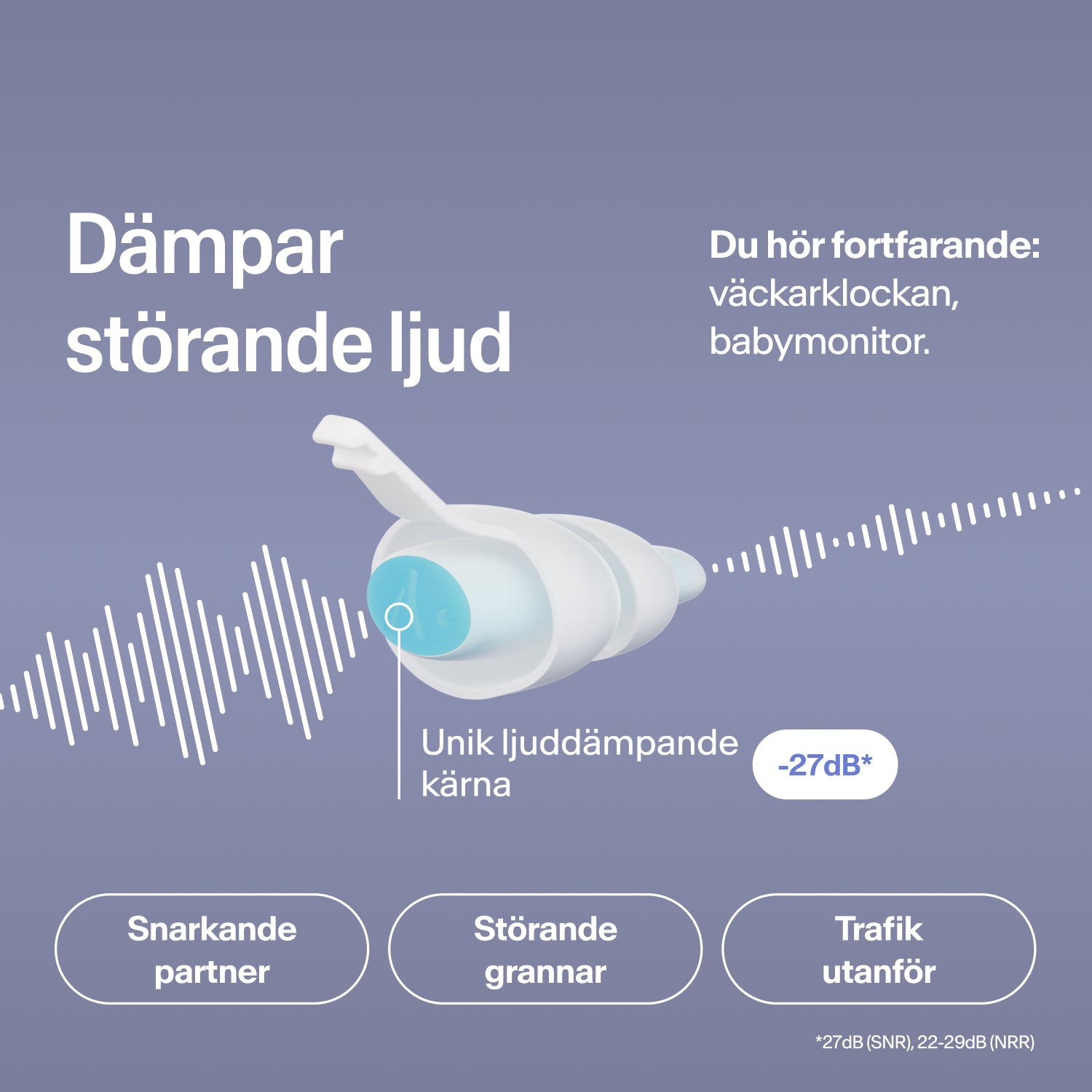
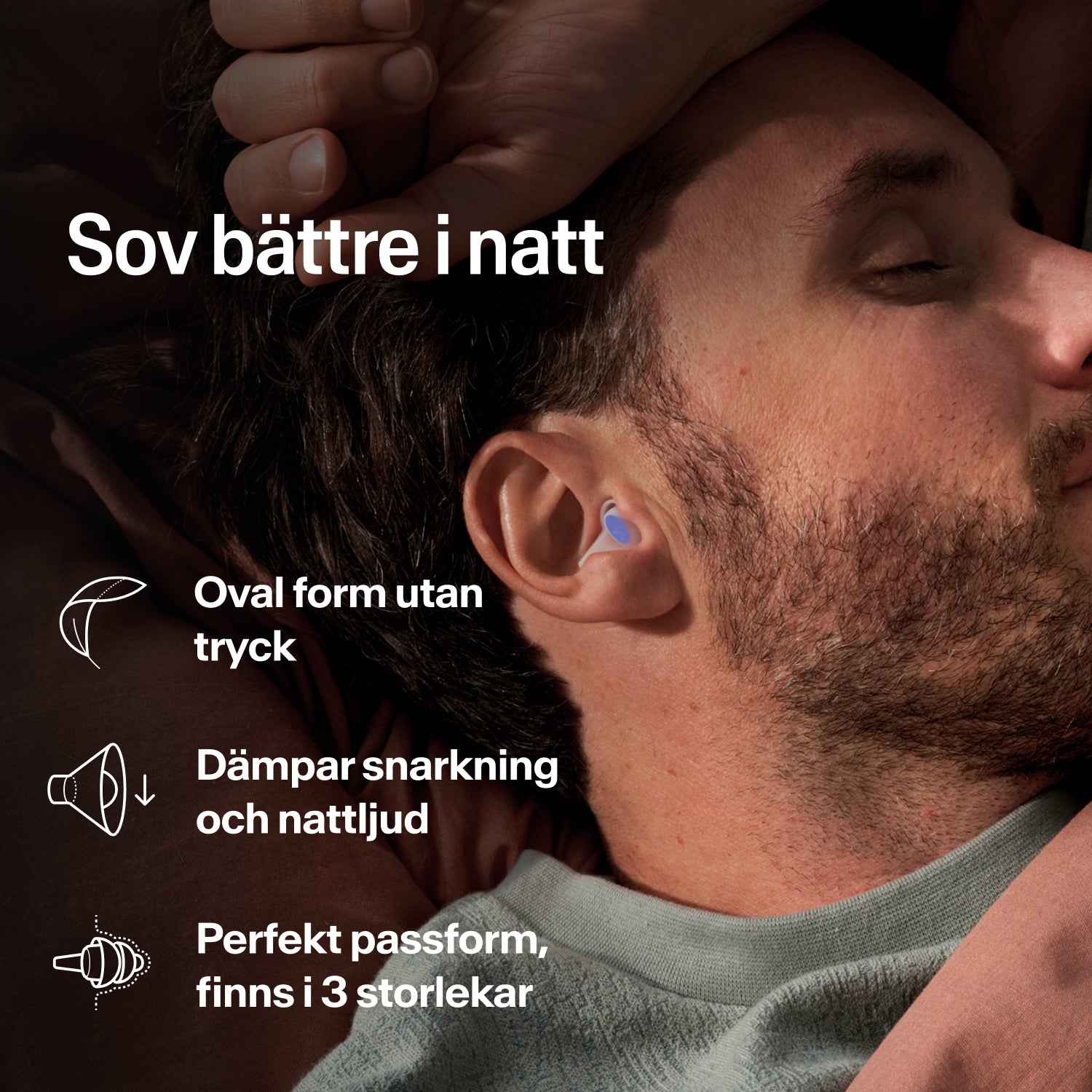
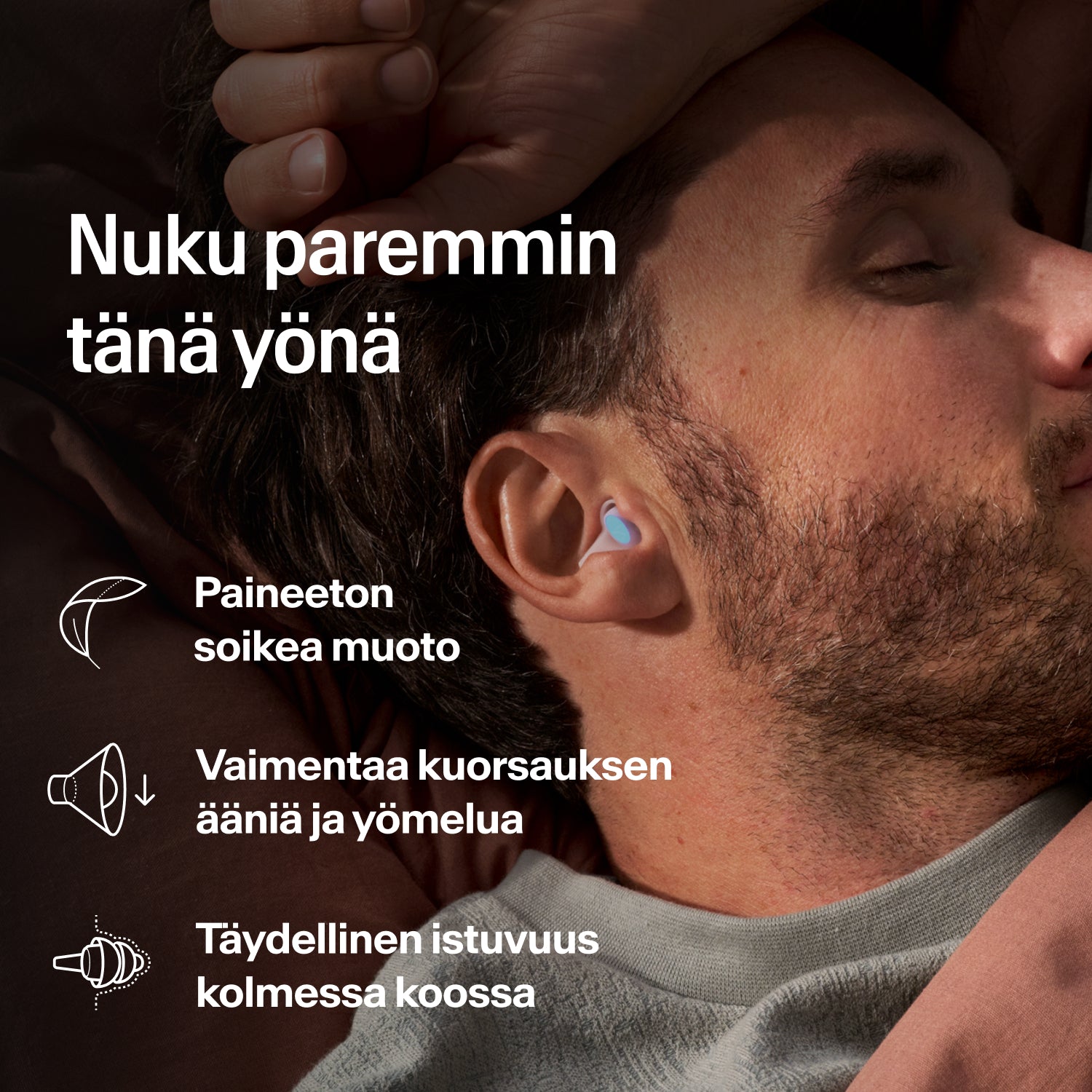
- Sleeping position: Sleeping on your back is easy on any earplug. On your side, your ear is pressed into the pillow, so a plug that sits flush matters most. SleepDeep is designed for exactly that, with an SNR of 27 dB.
Finding a flush fit that sits completely within the ear bowl
For side sleeper ear plugs, one thing matters most: nothing should stick out. A plug that sits flush leaves nothing for your pillow to push against. Not sure yours does? Run this quick check before bedtime:
- Mirror check: Look at your ear from the side. The plug should sit inside your ear, not stick out.
- Hand test: Lightly press your flat hand against your ear. If the plug shifts or you feel pressure, try another size.
- Pillow test: Lie down on your side, on your usual pillow, for a few minutes. It should feel comfortable, with no pressing and no slipping.
- Morning check: Is the plug still in place, and does your ear feel fine? Then you've found your fit.
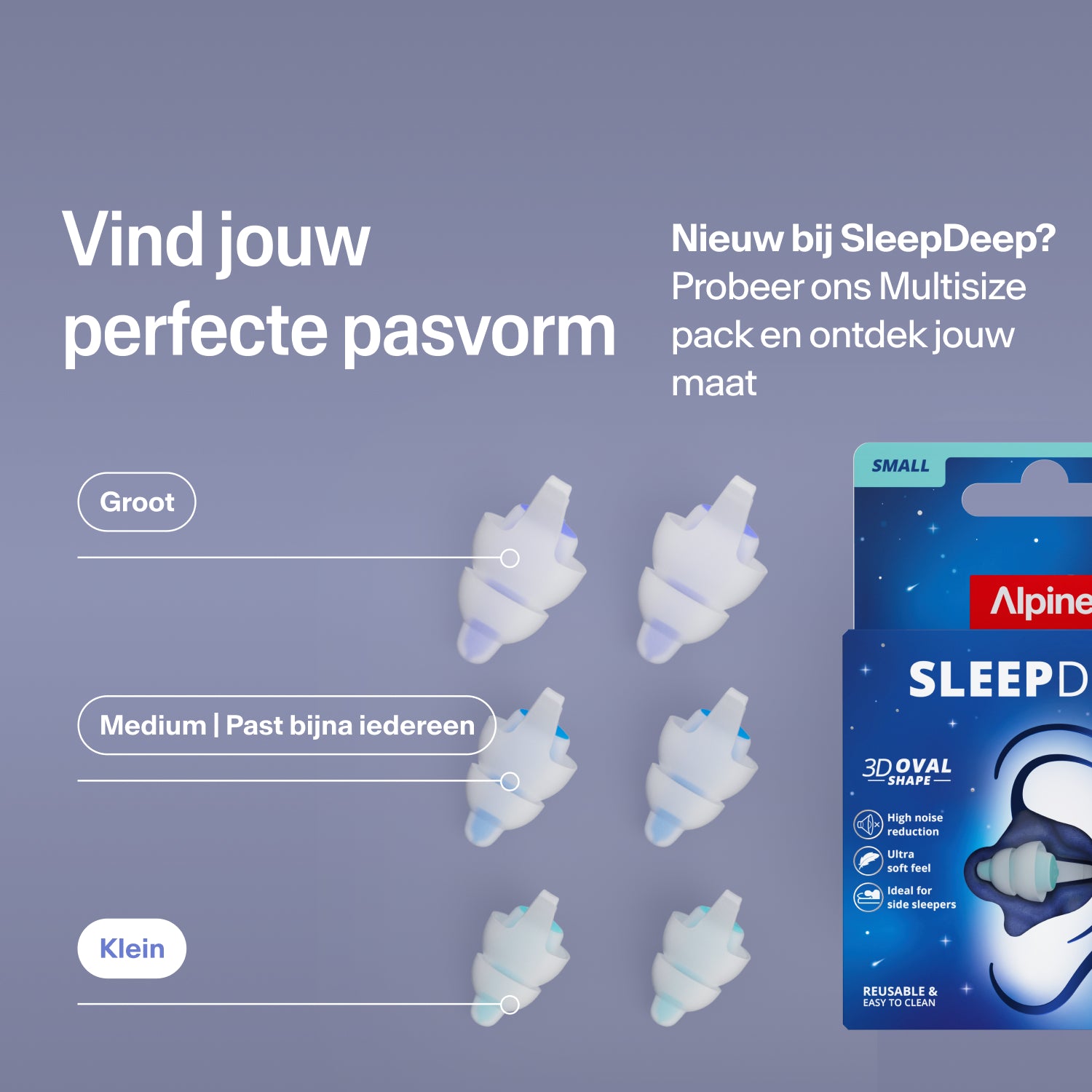
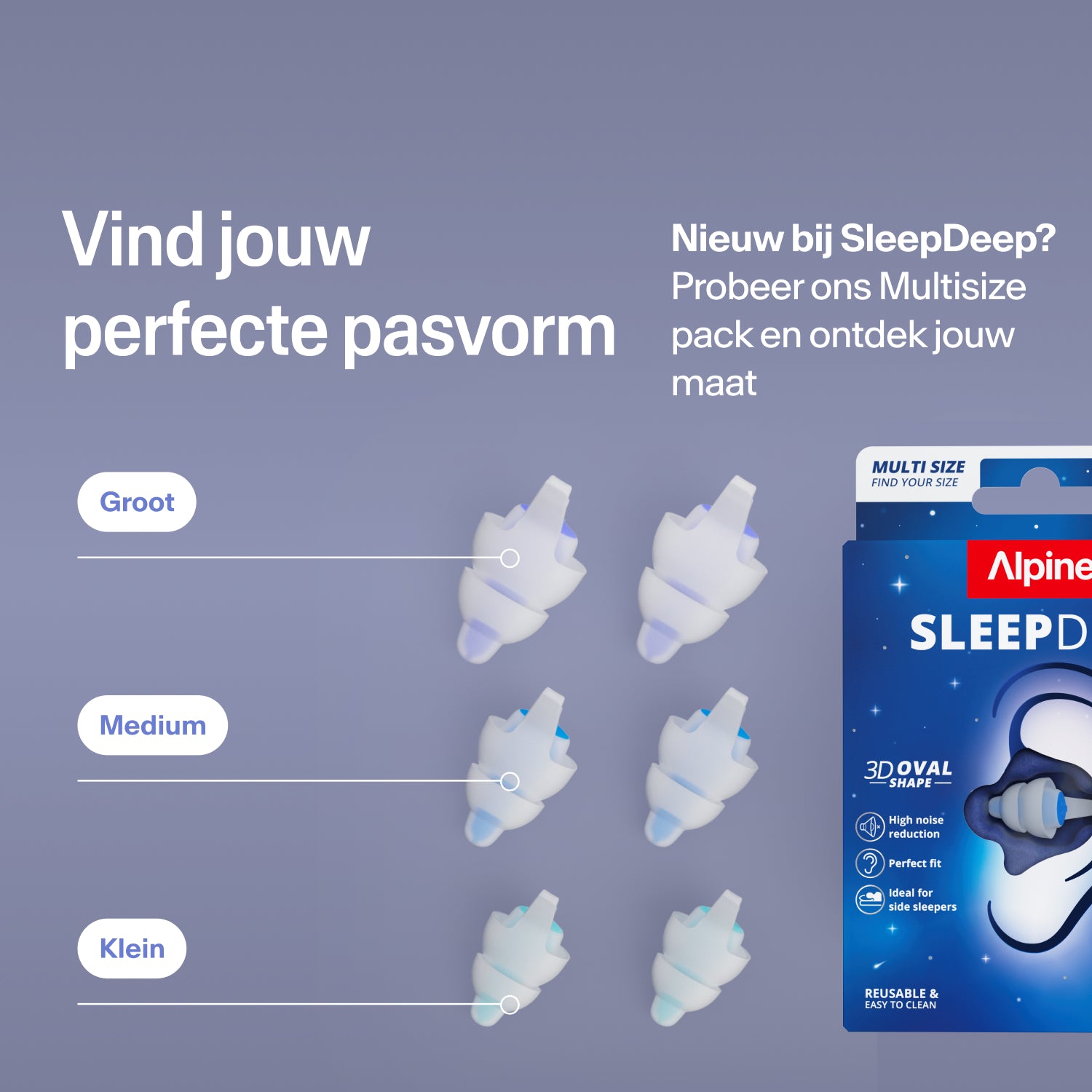
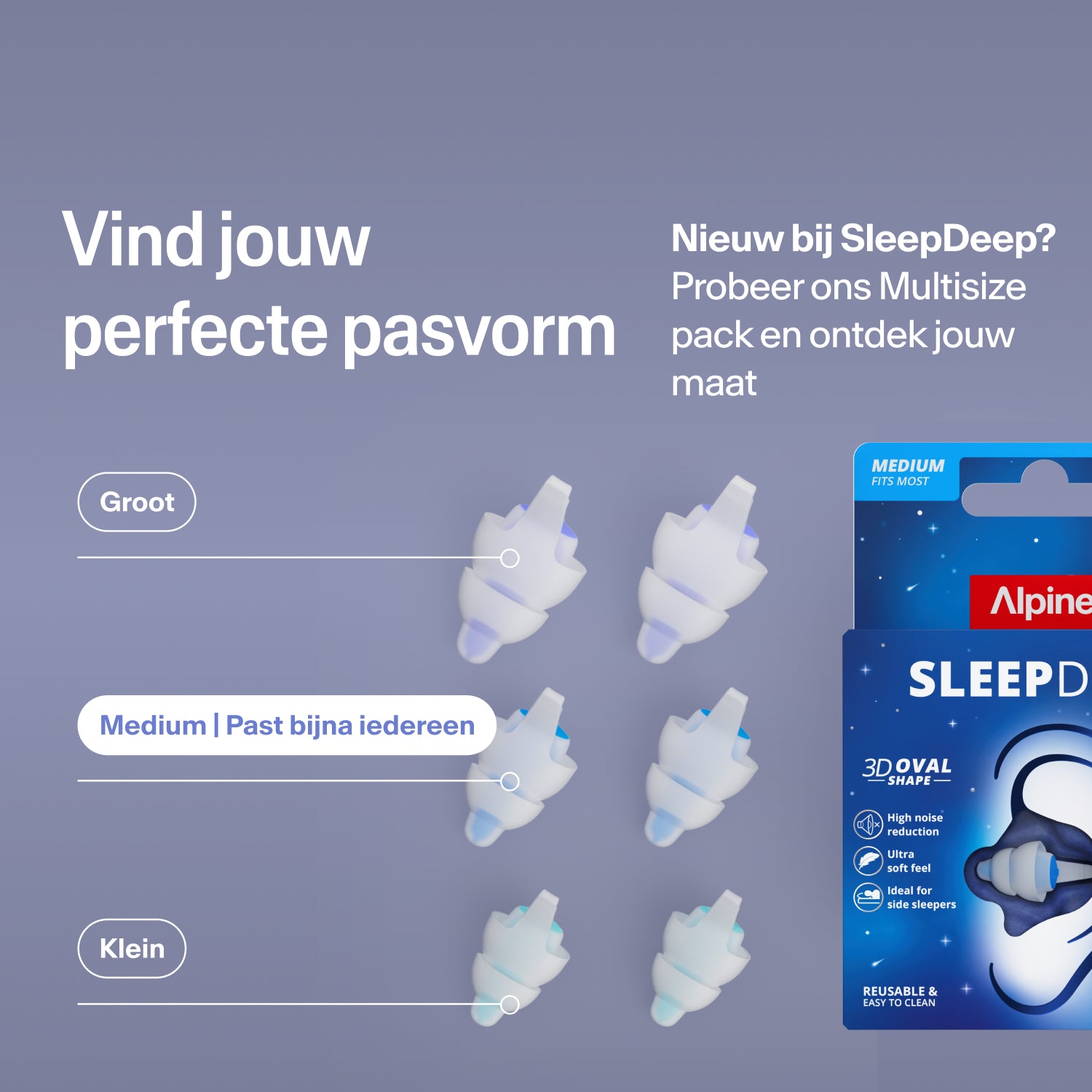
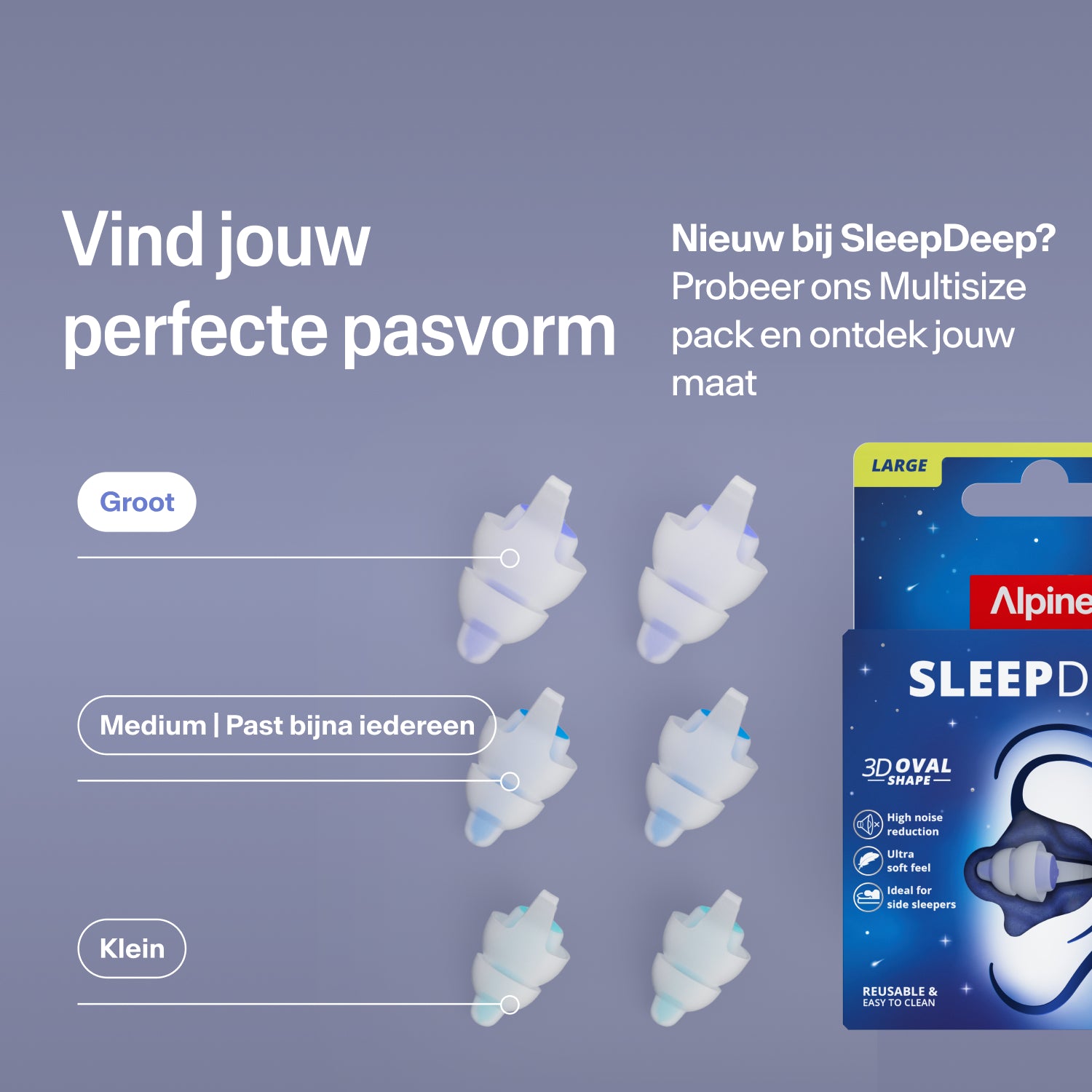
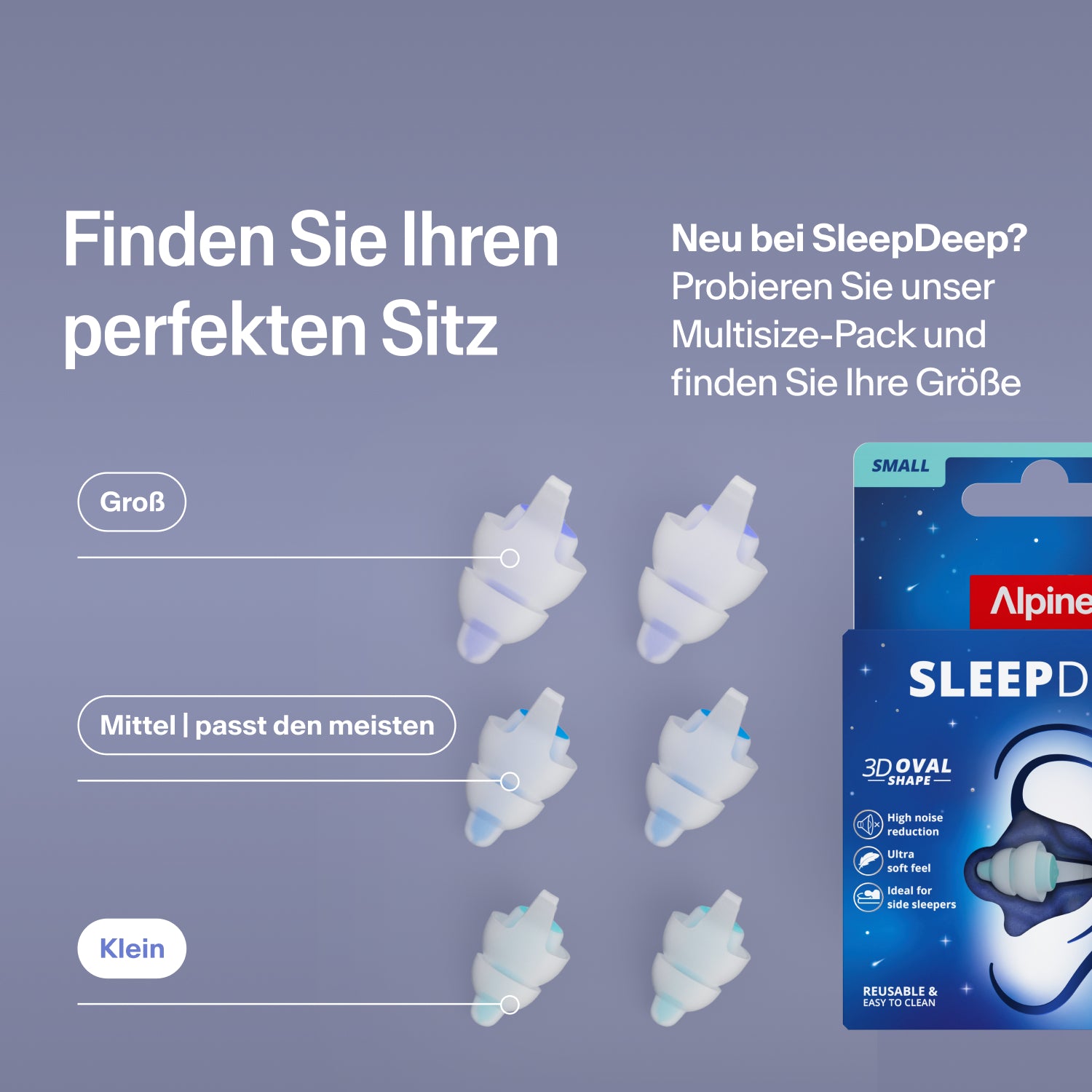
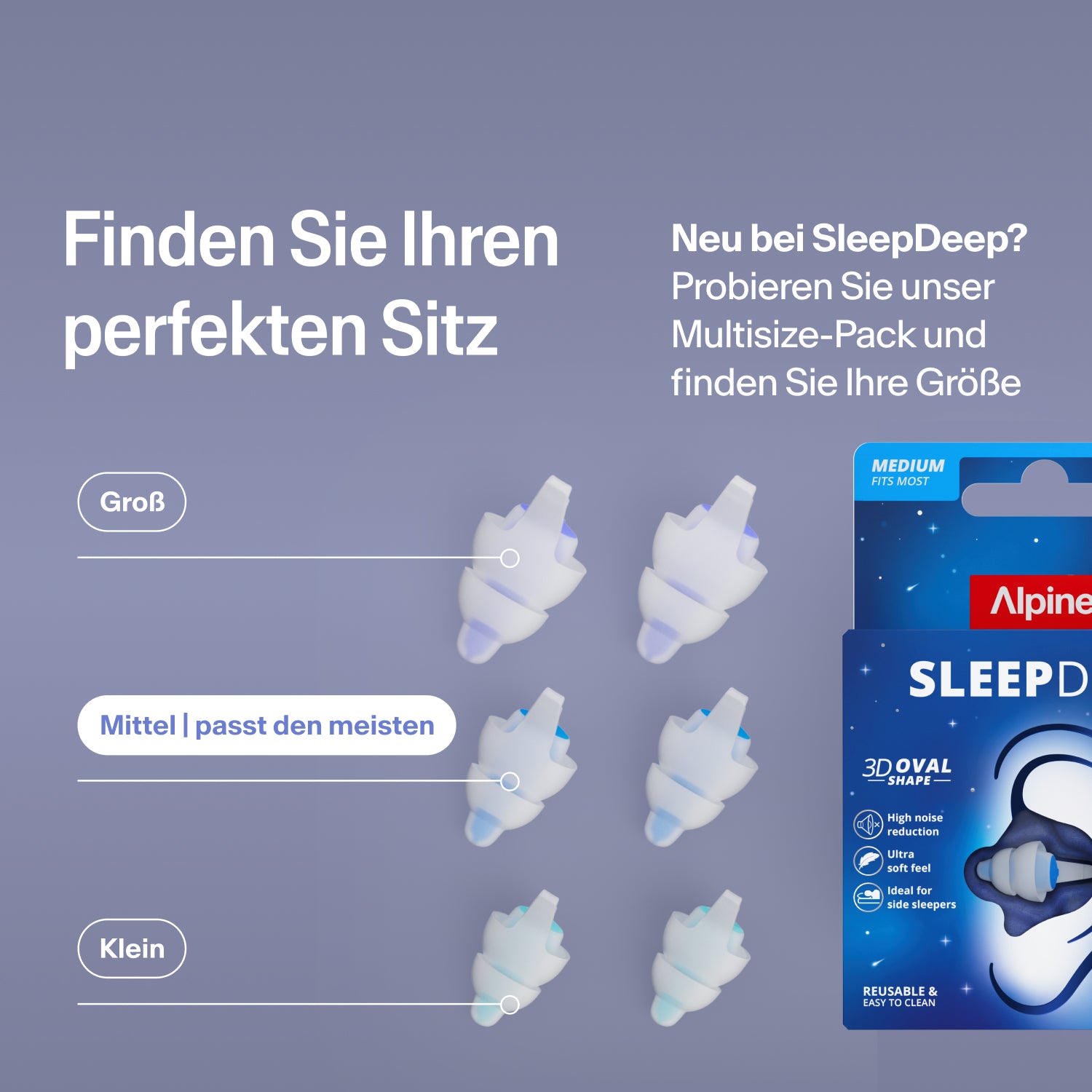
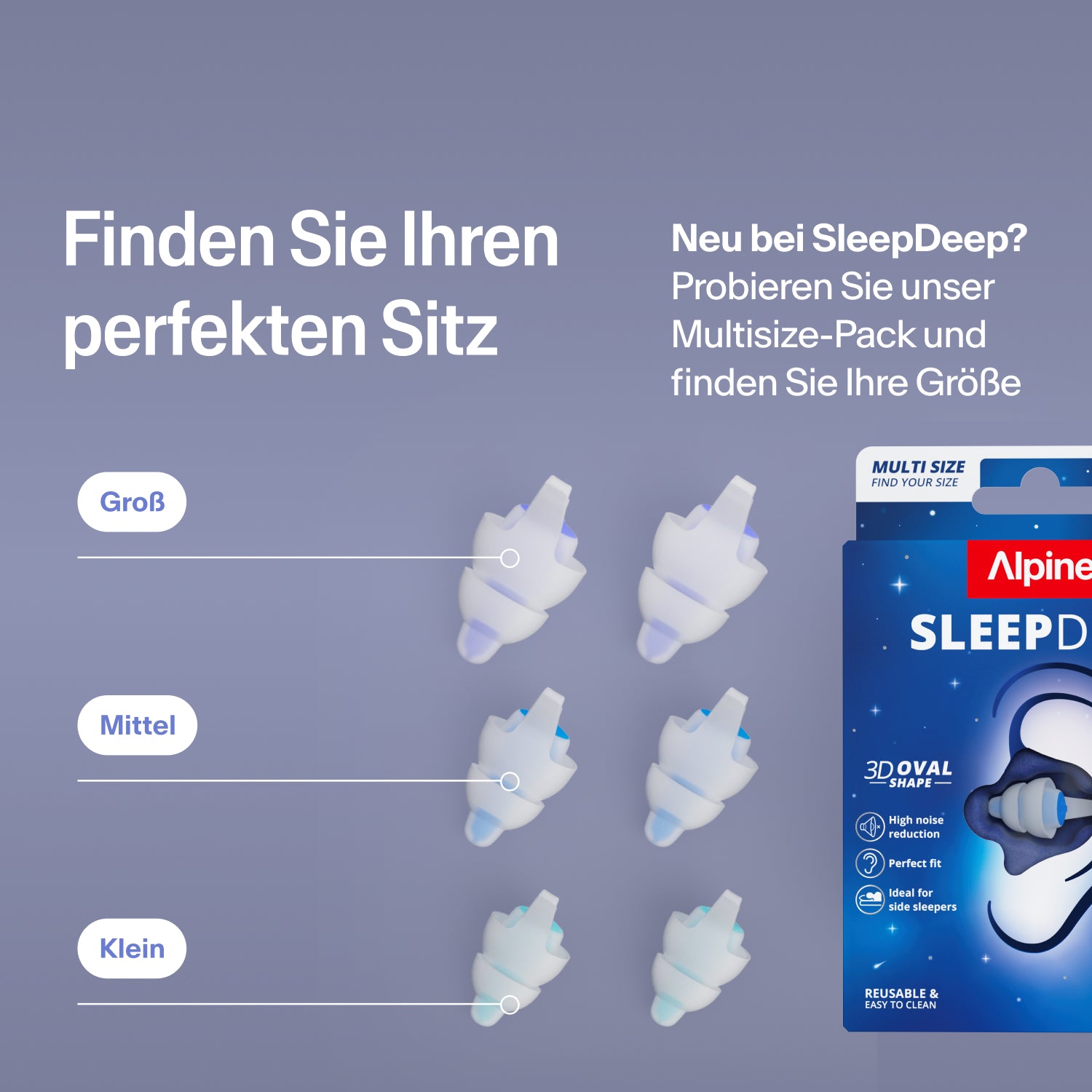
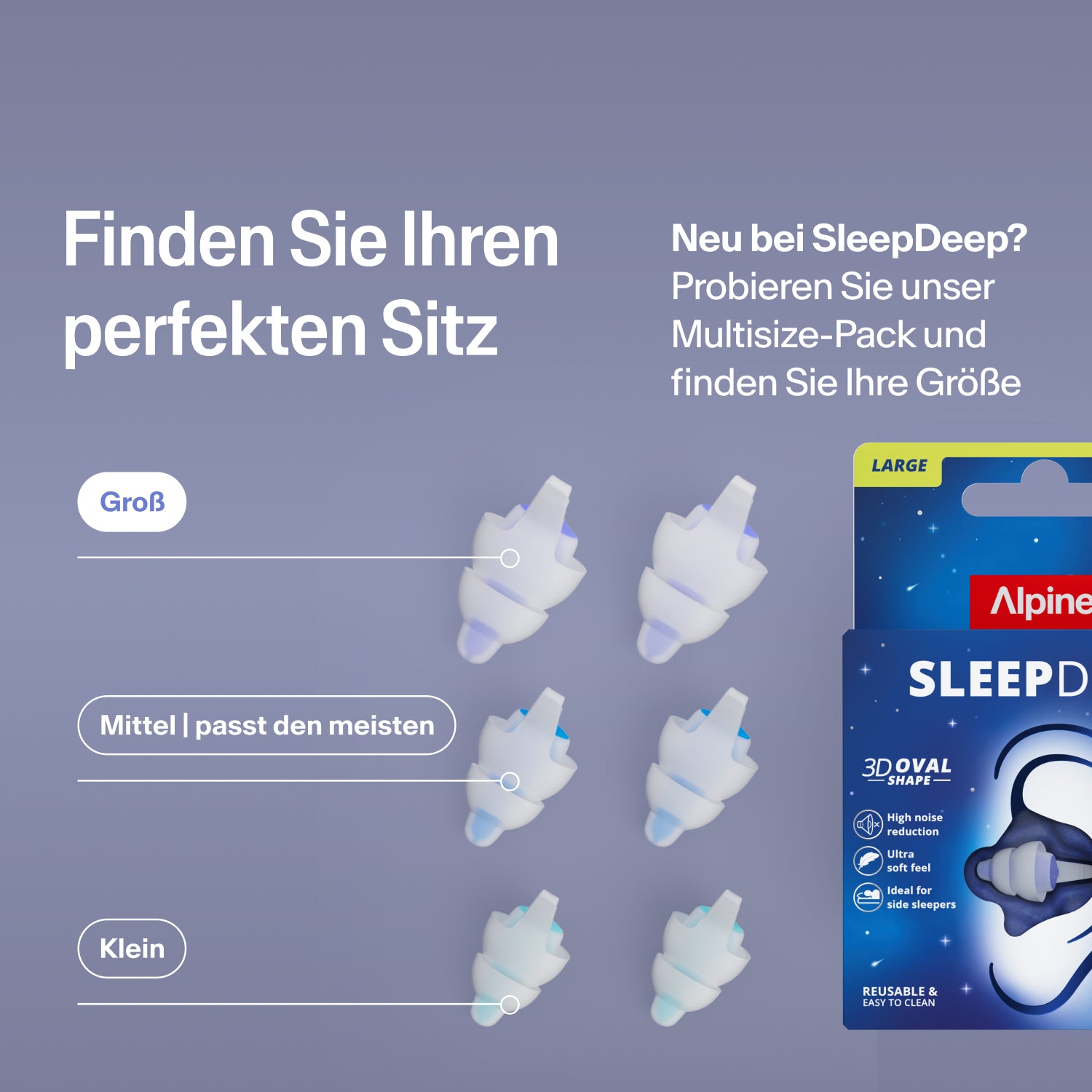
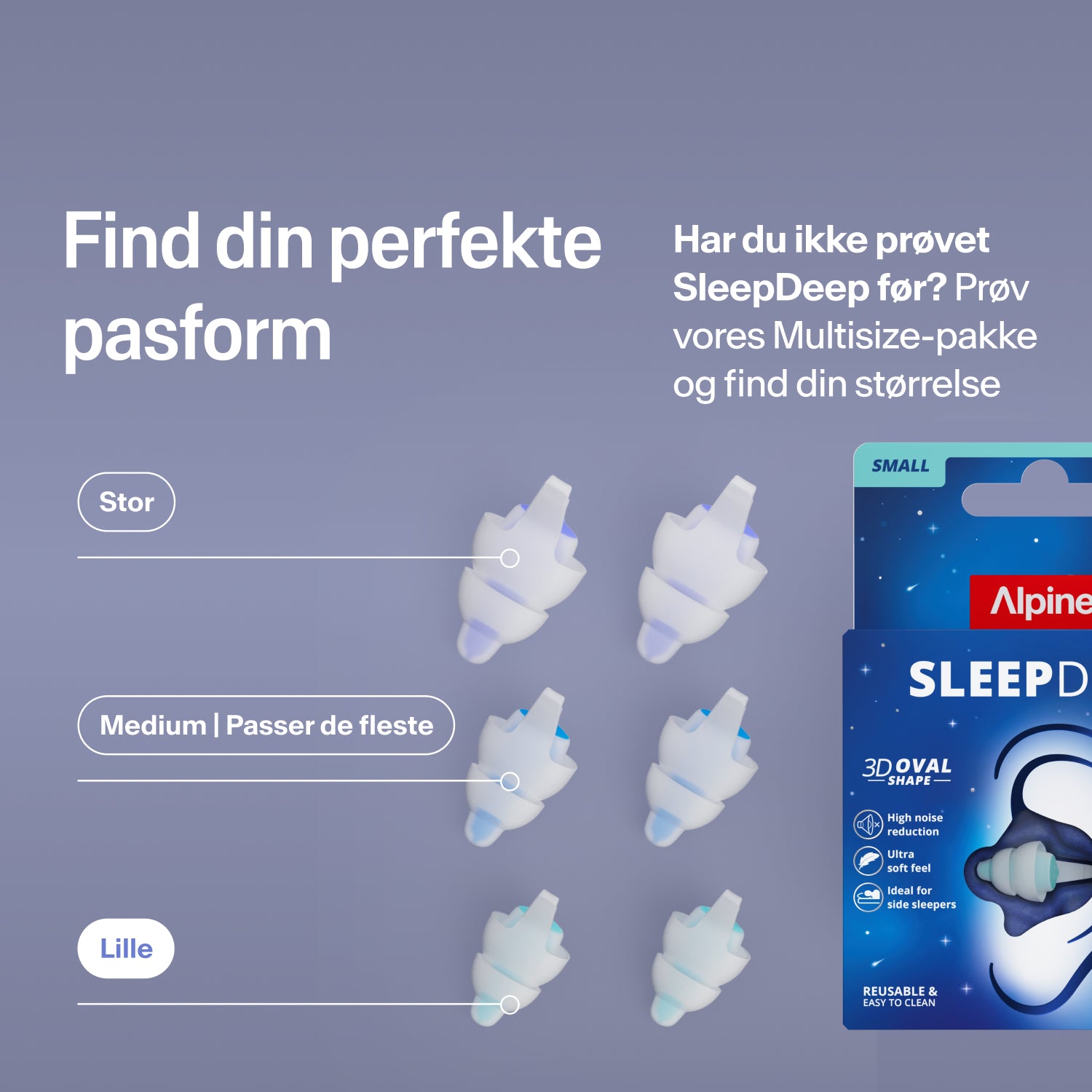
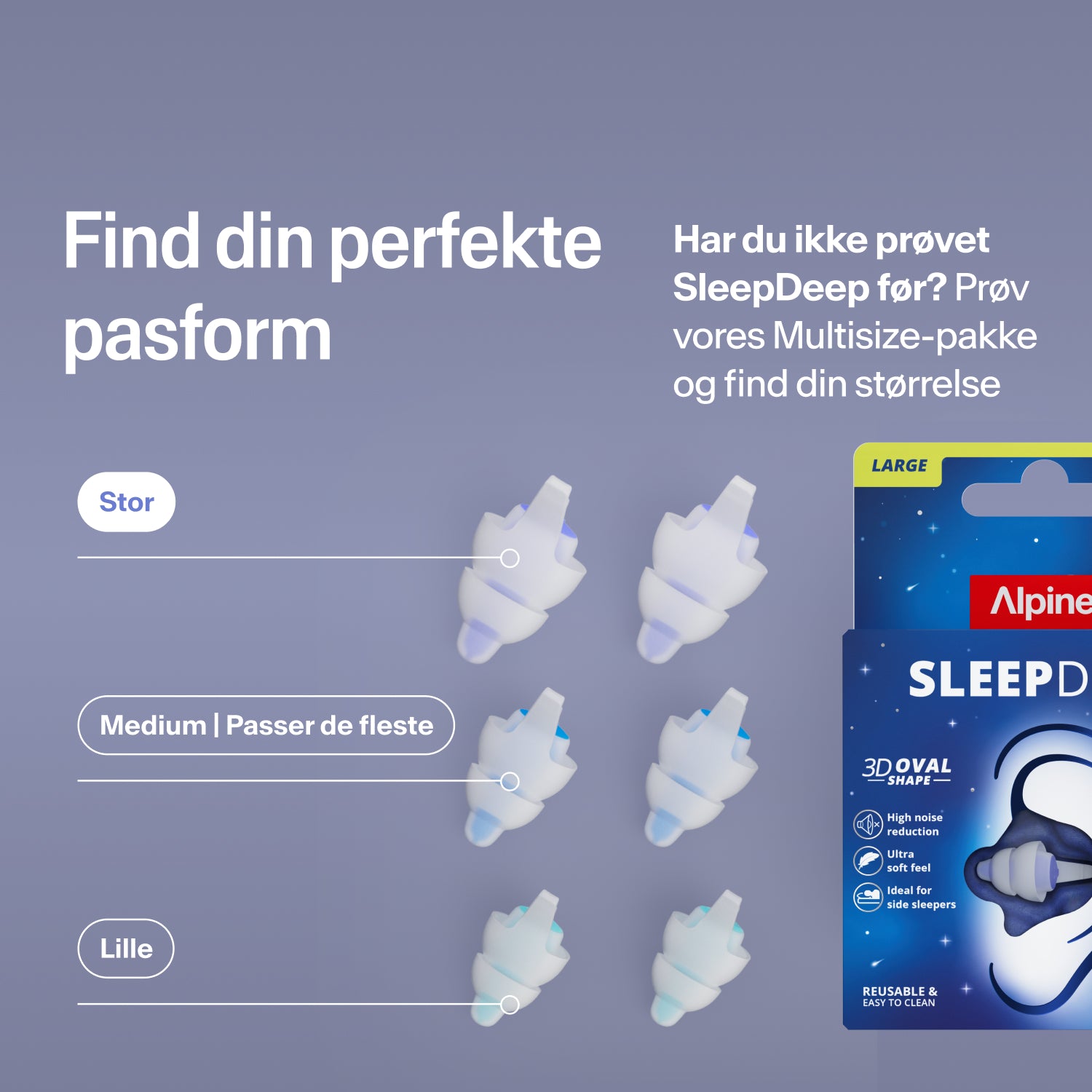
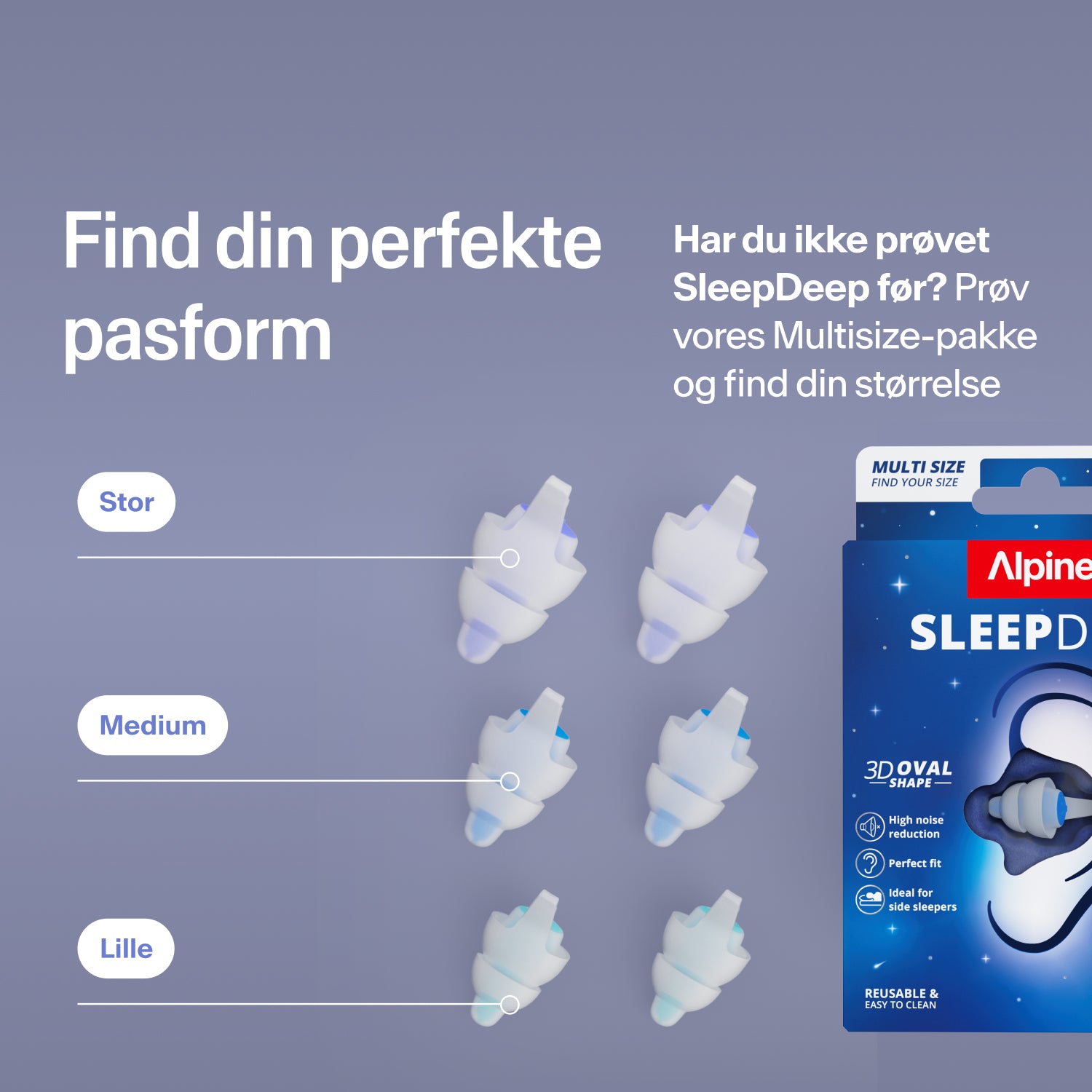
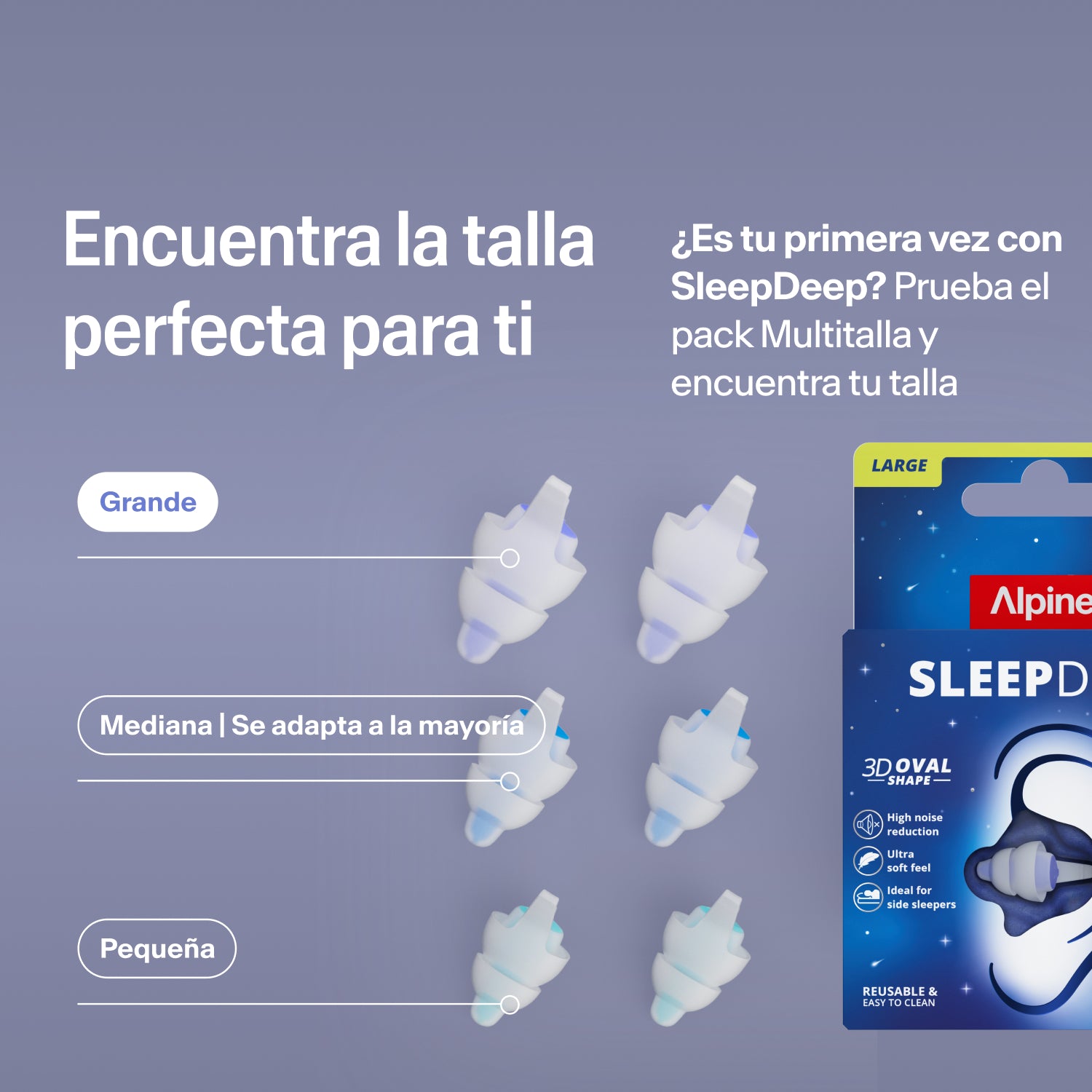
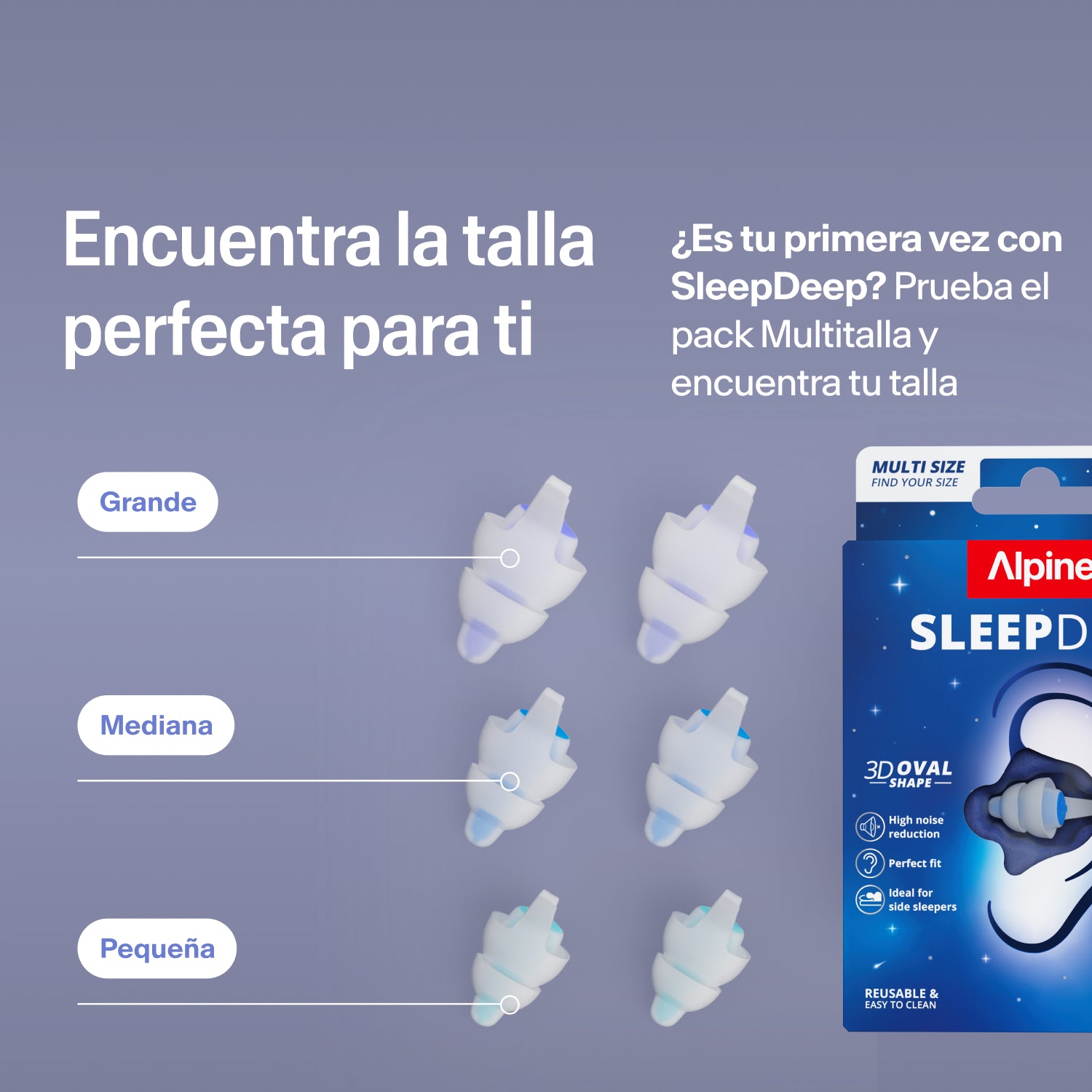
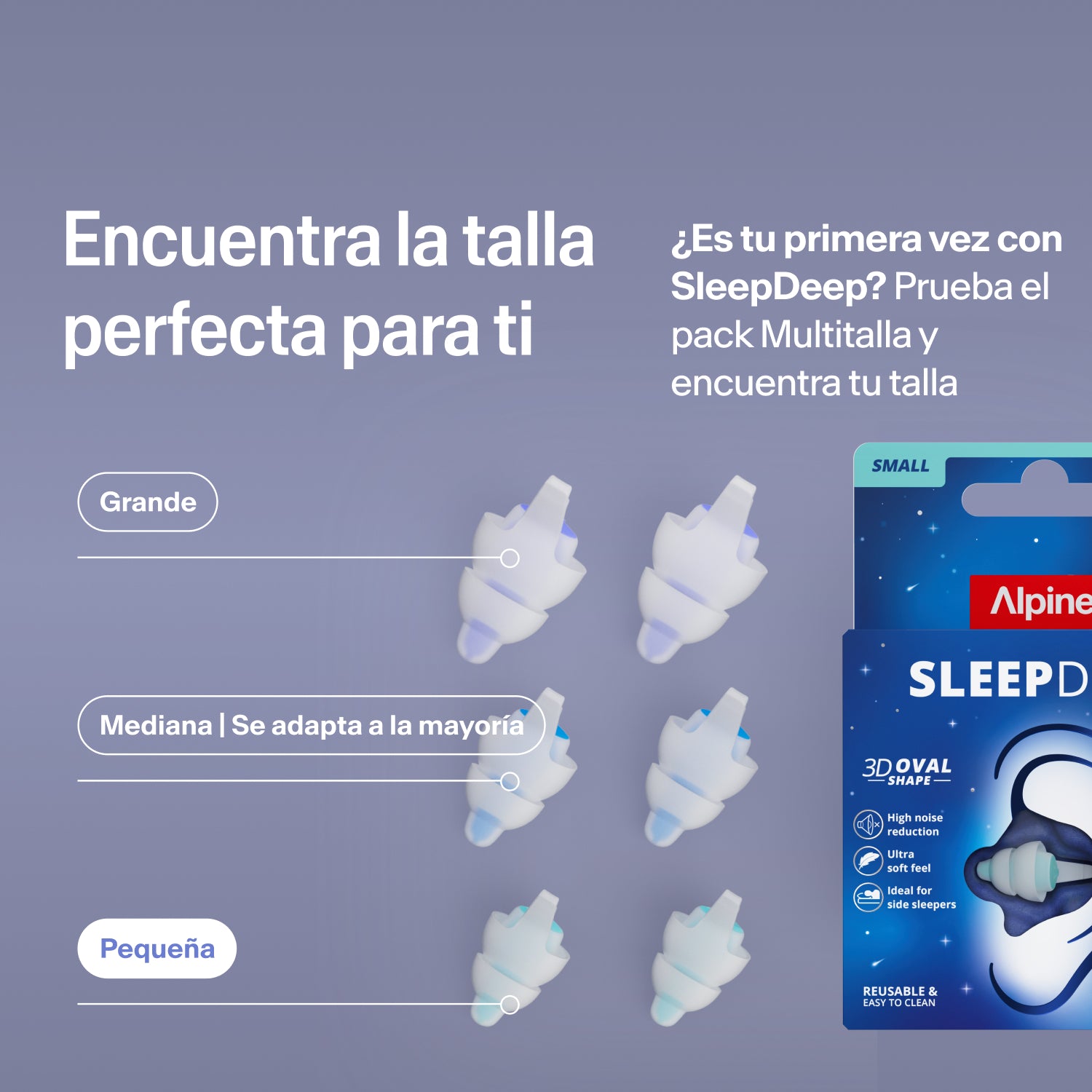
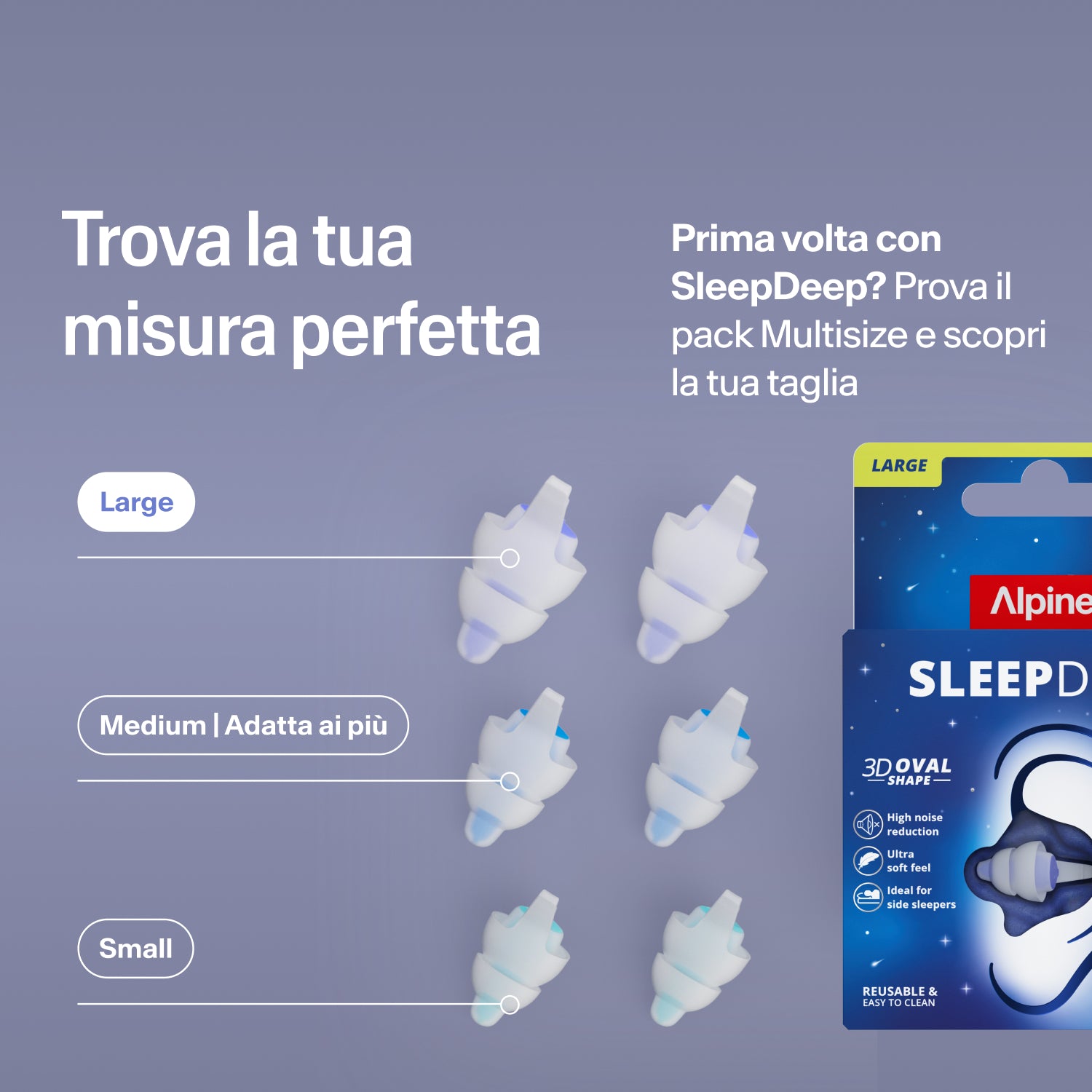
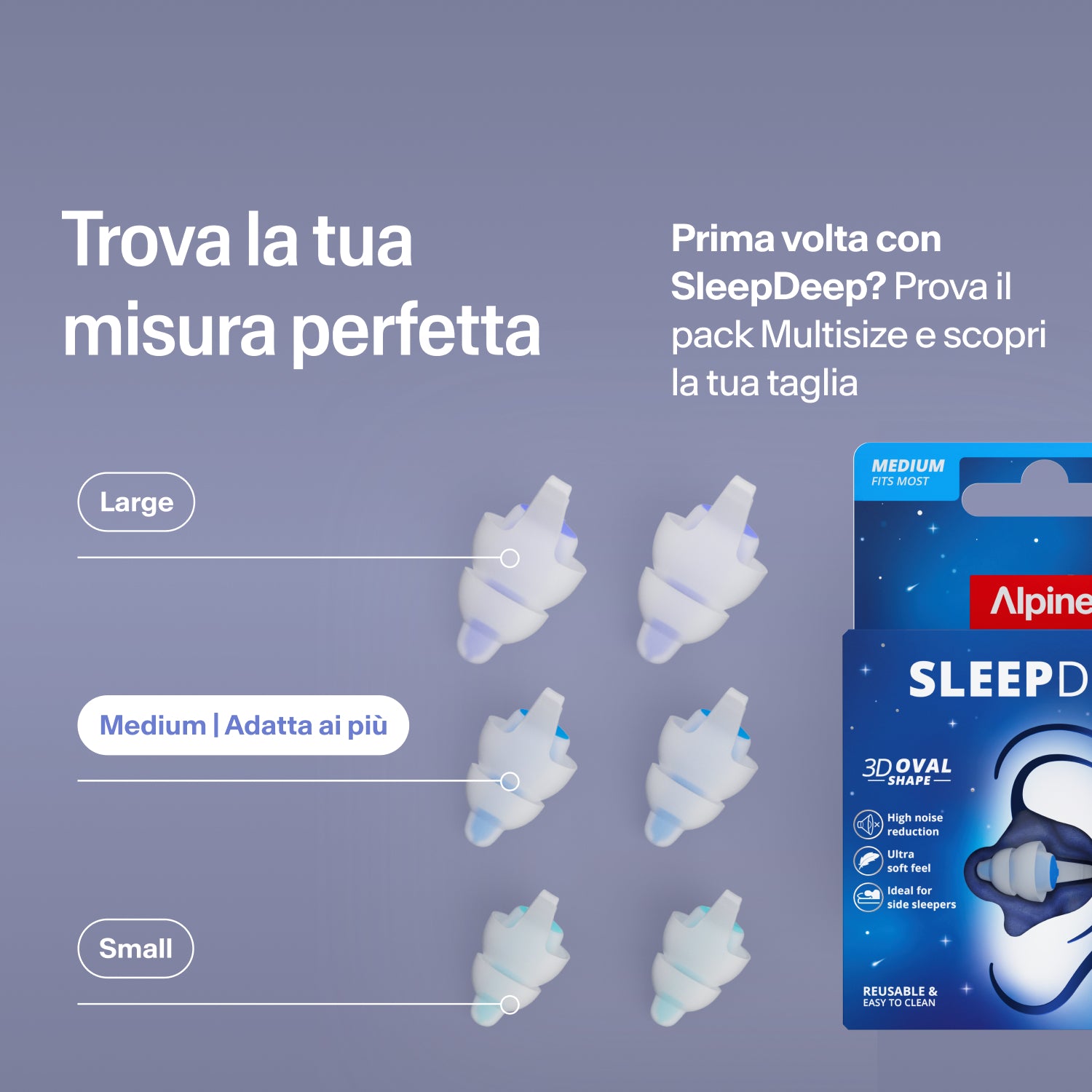
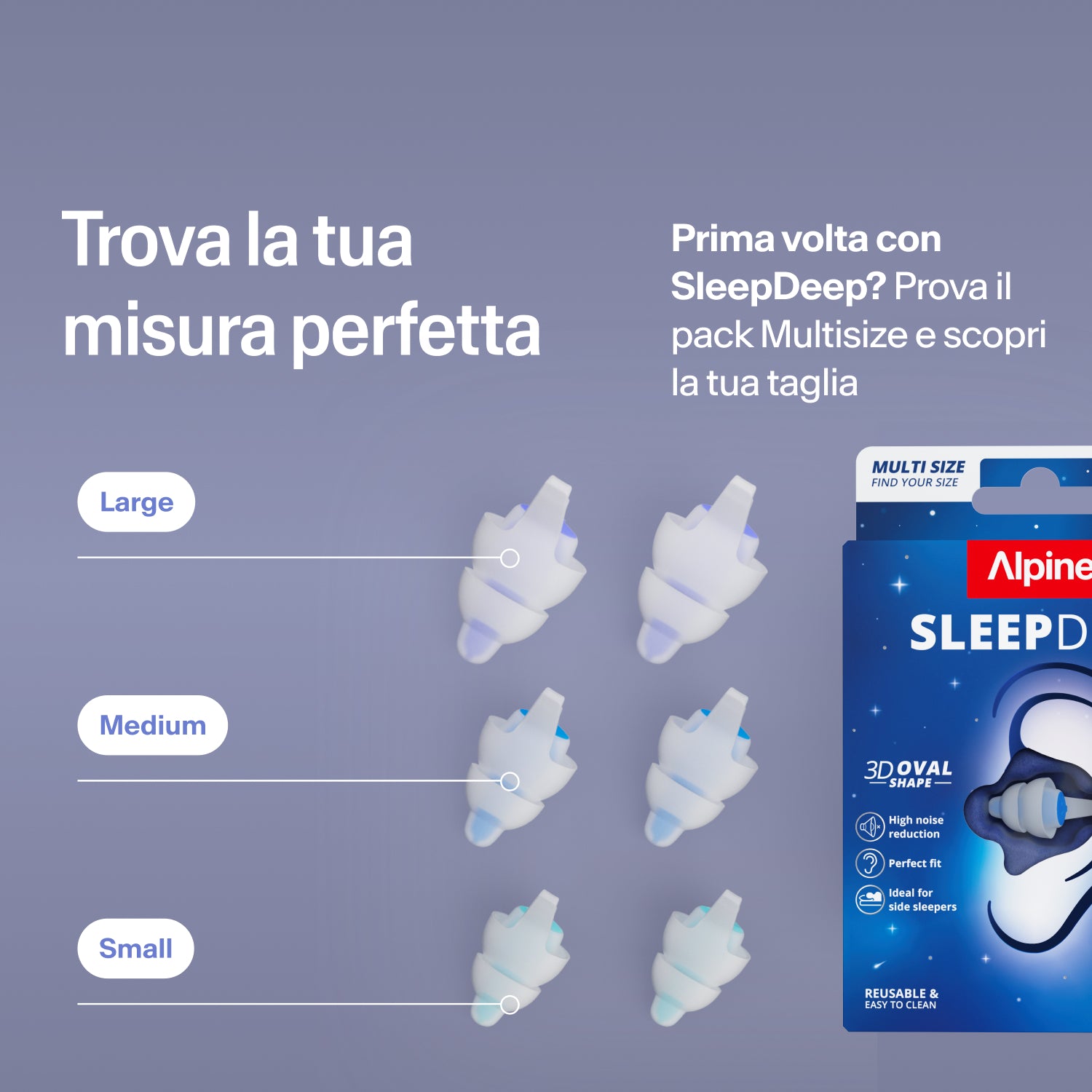
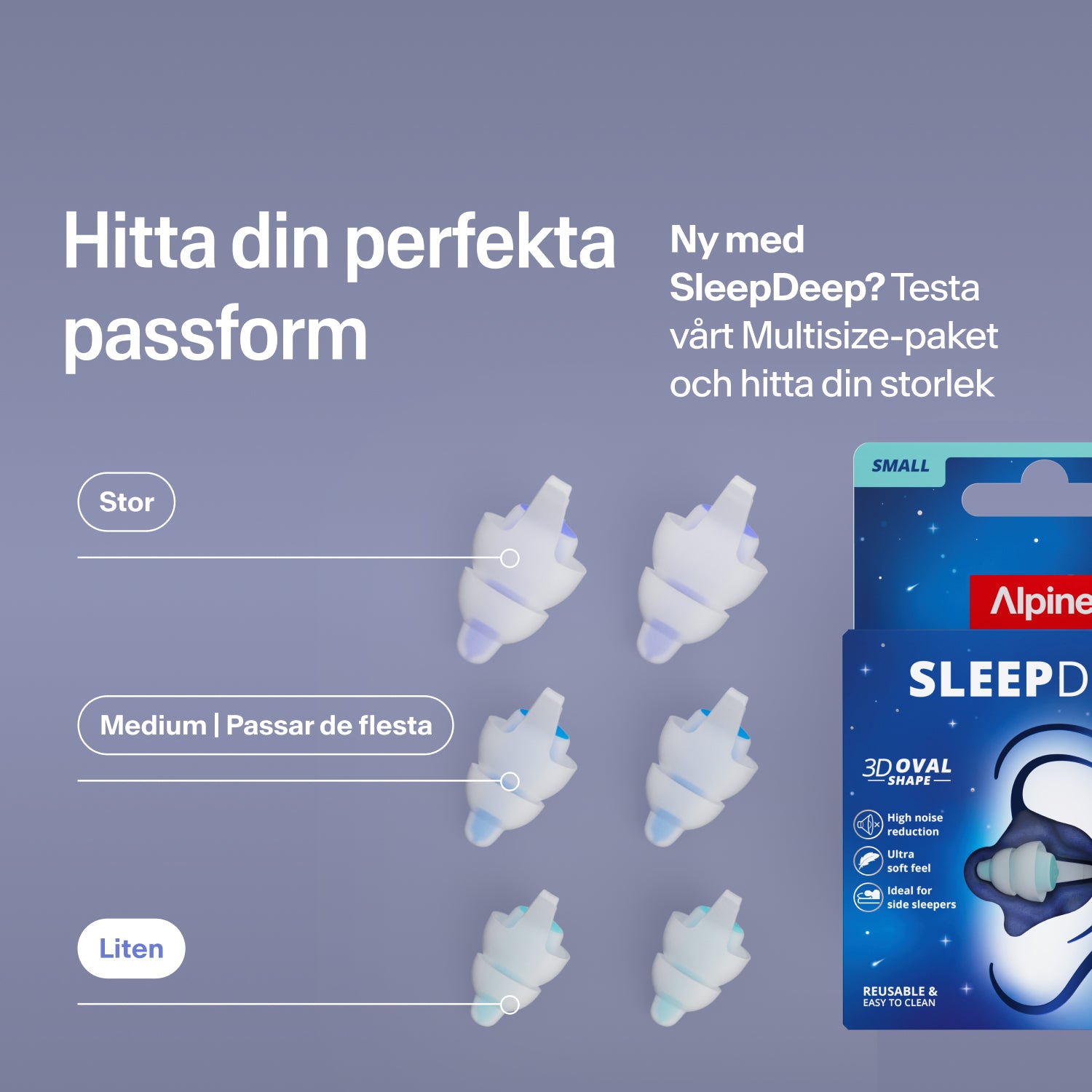
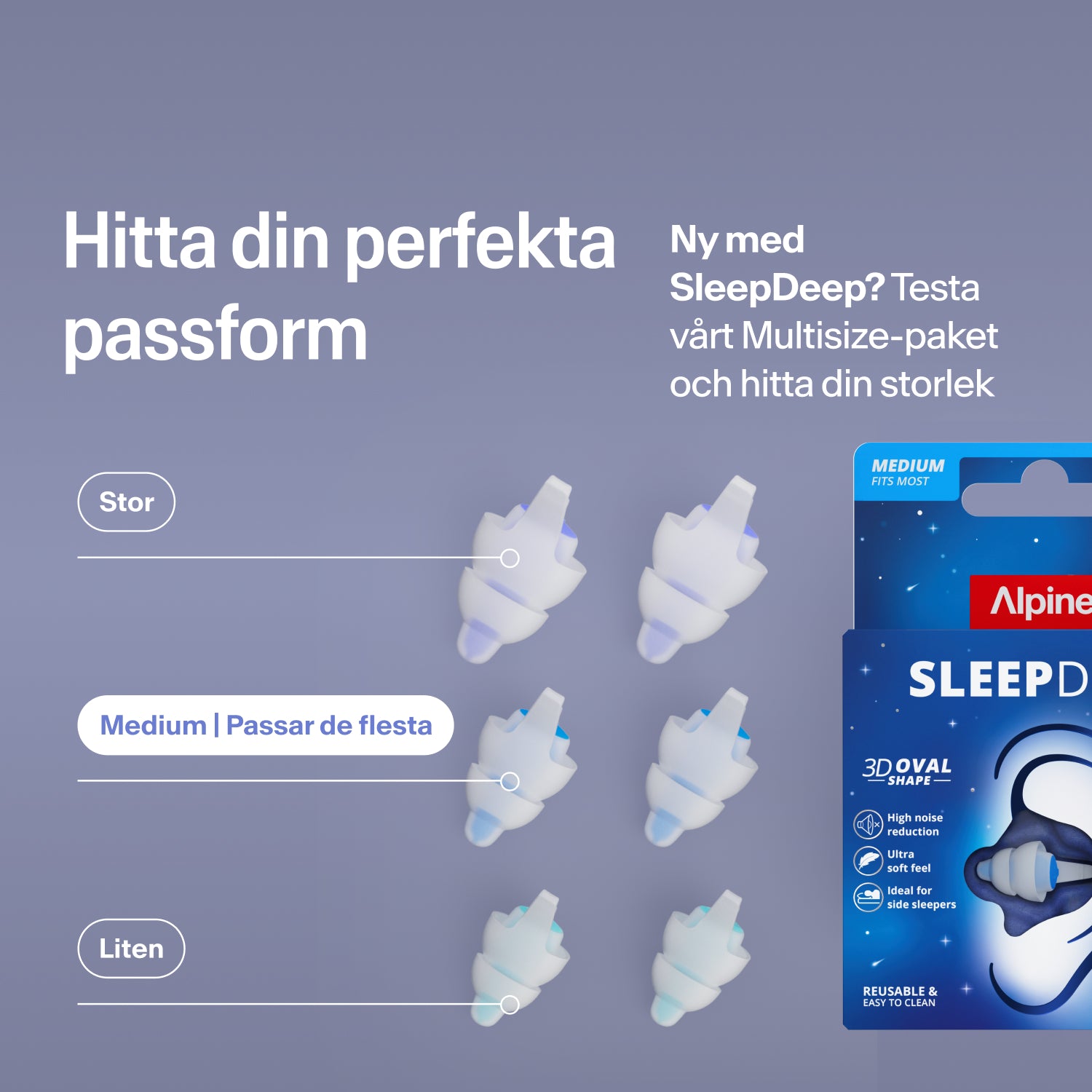
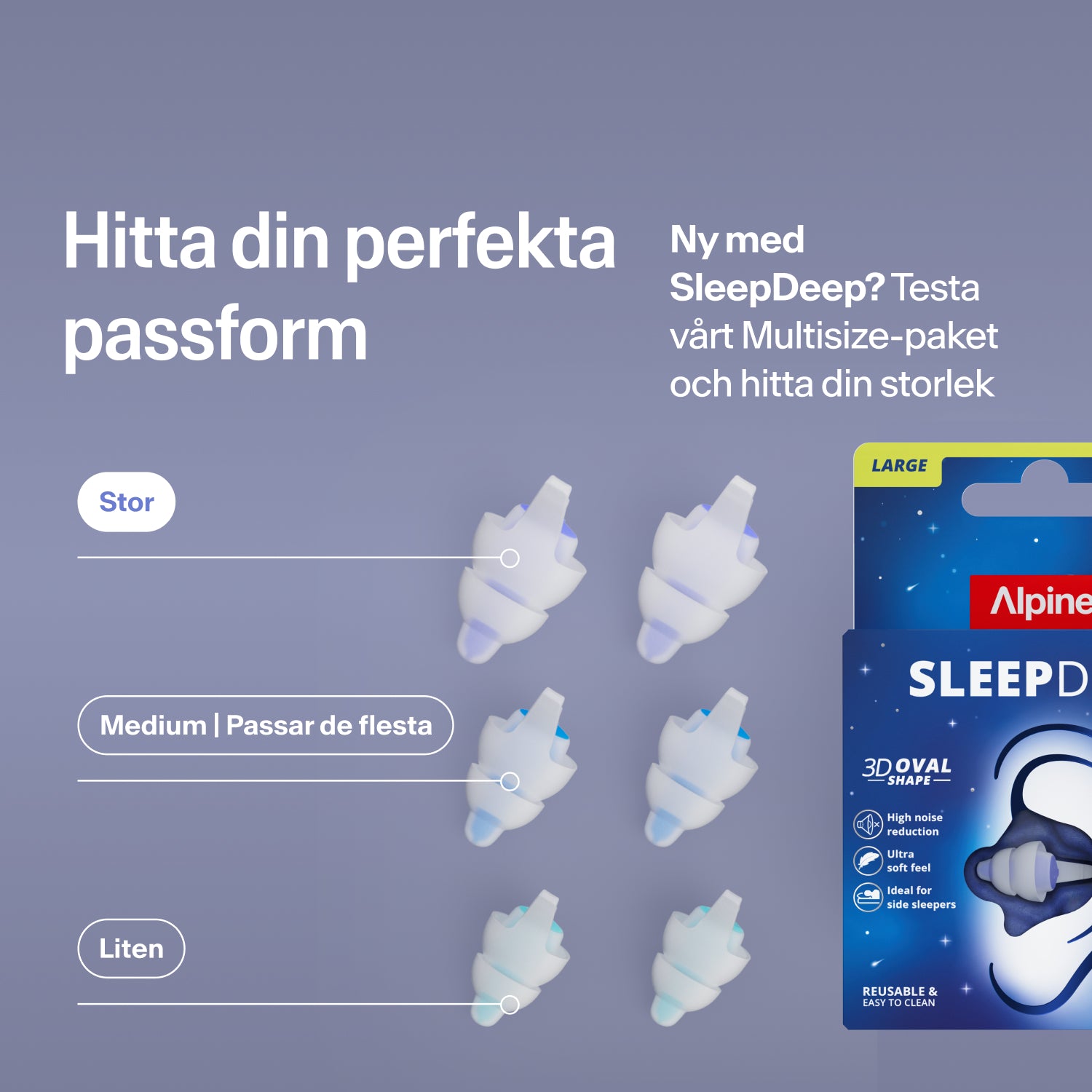
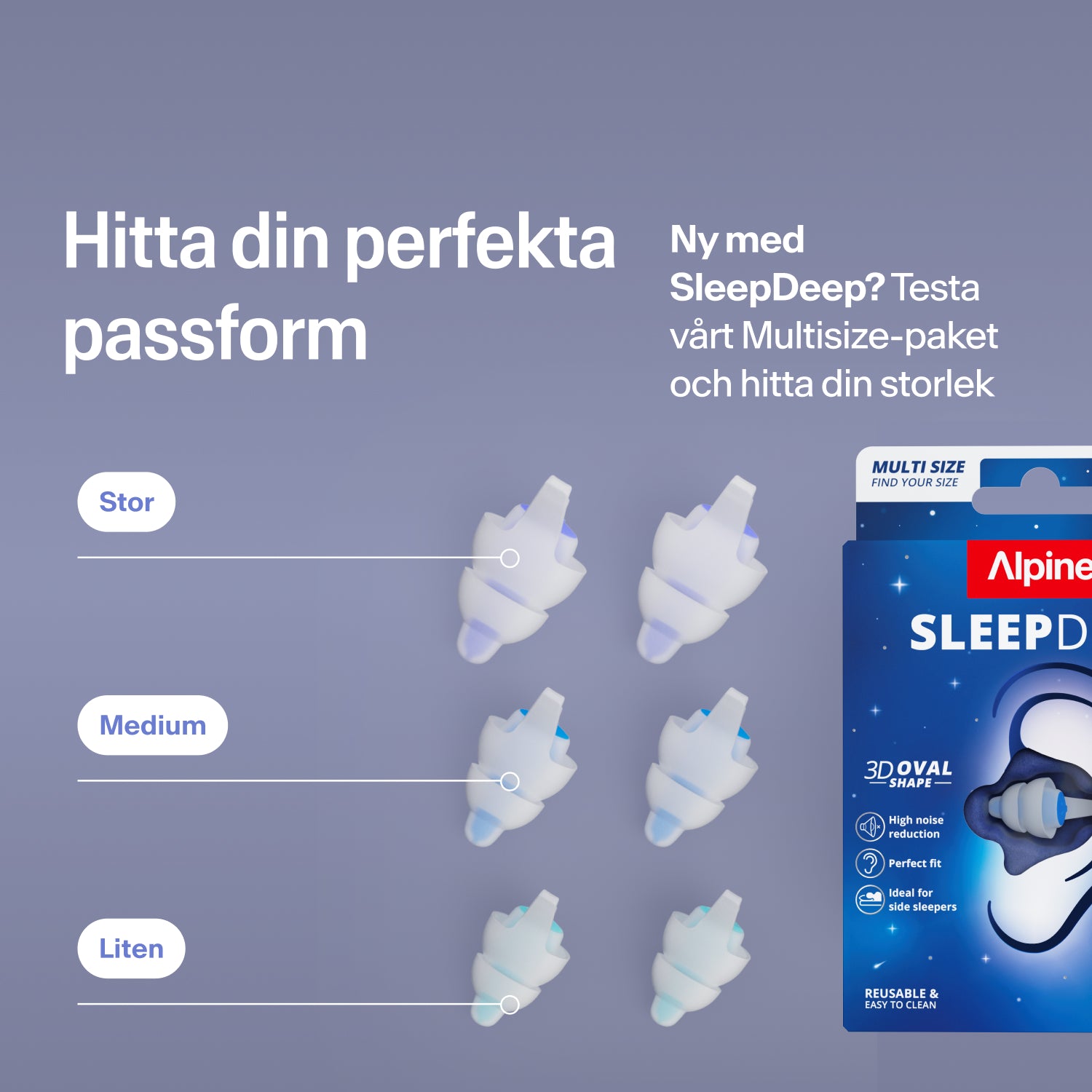
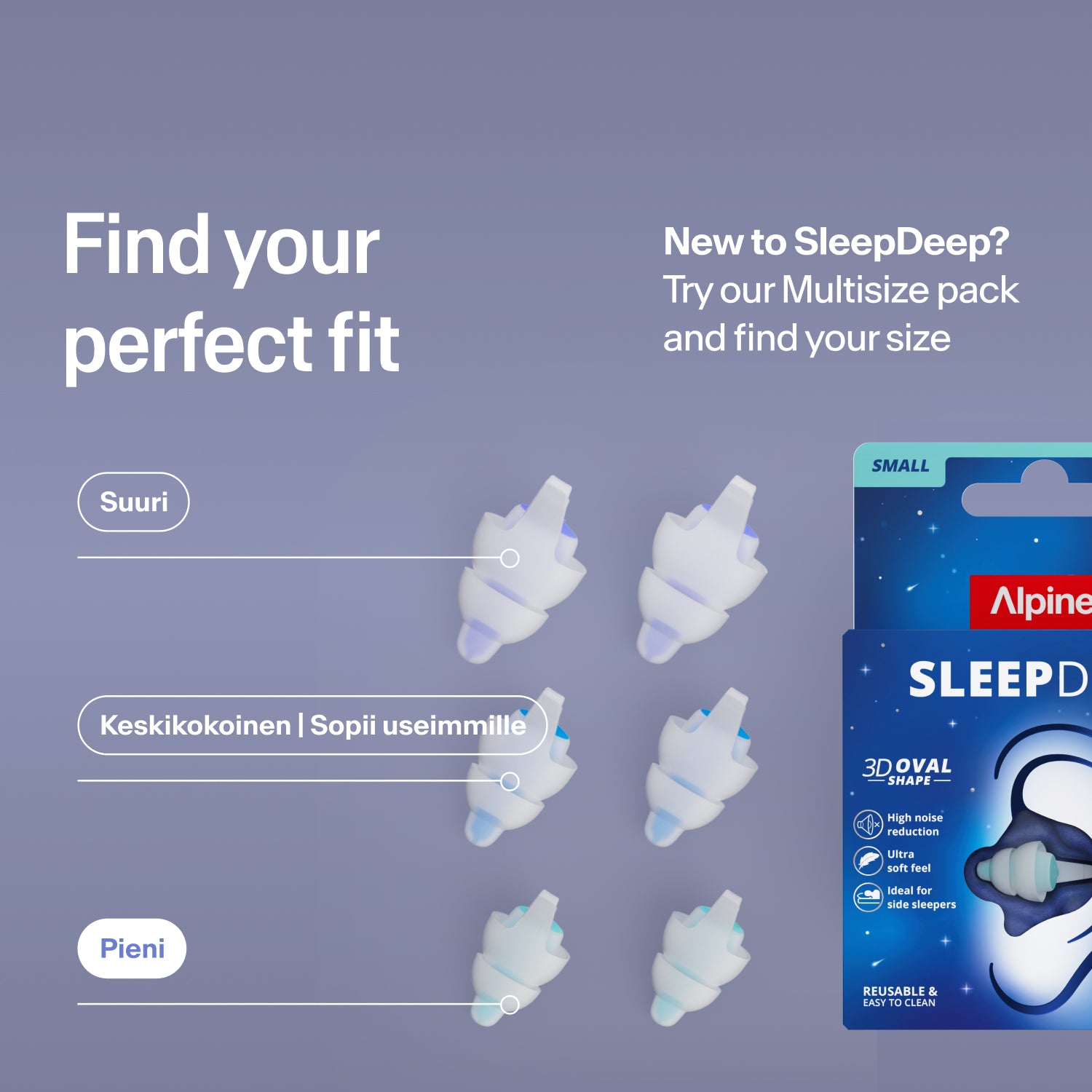
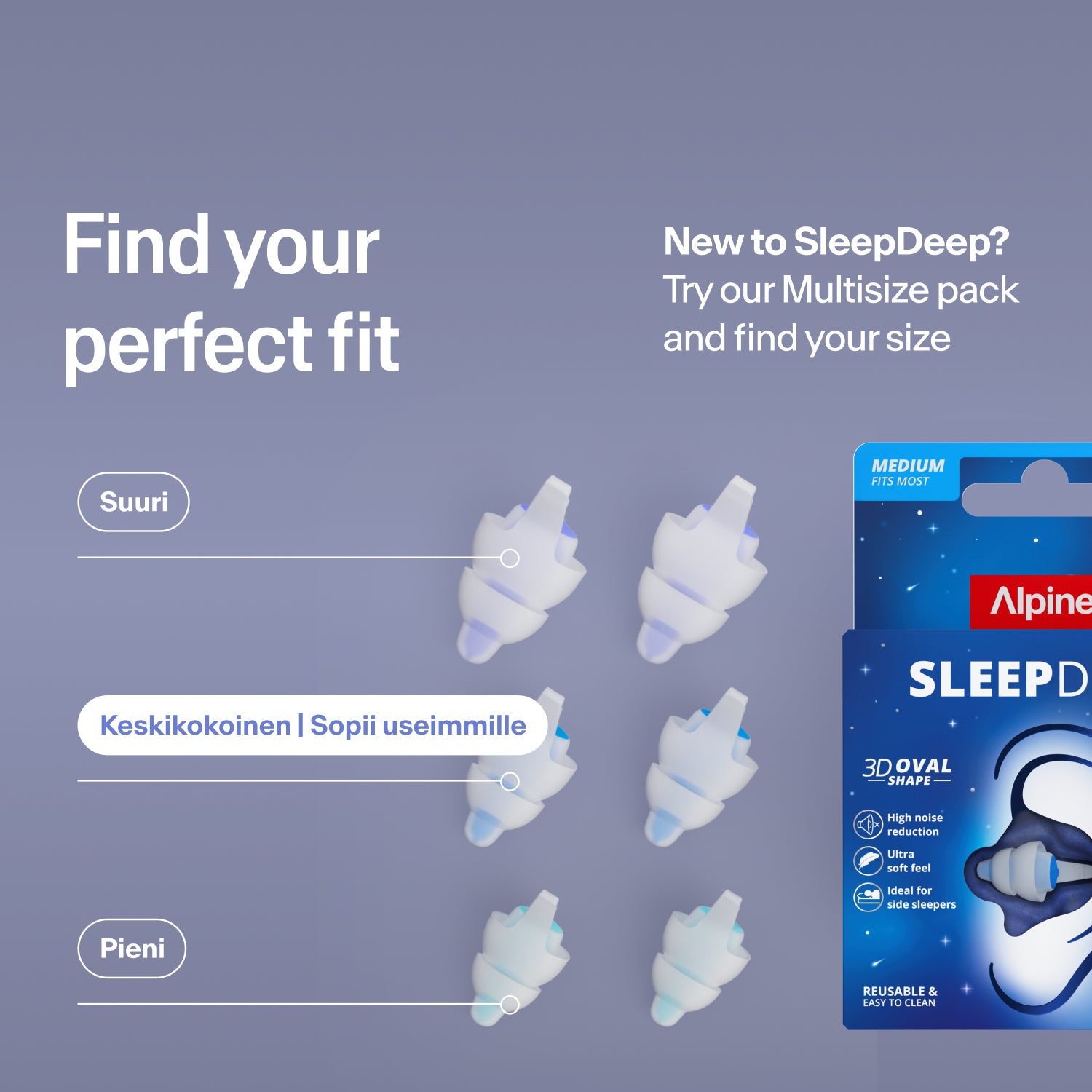
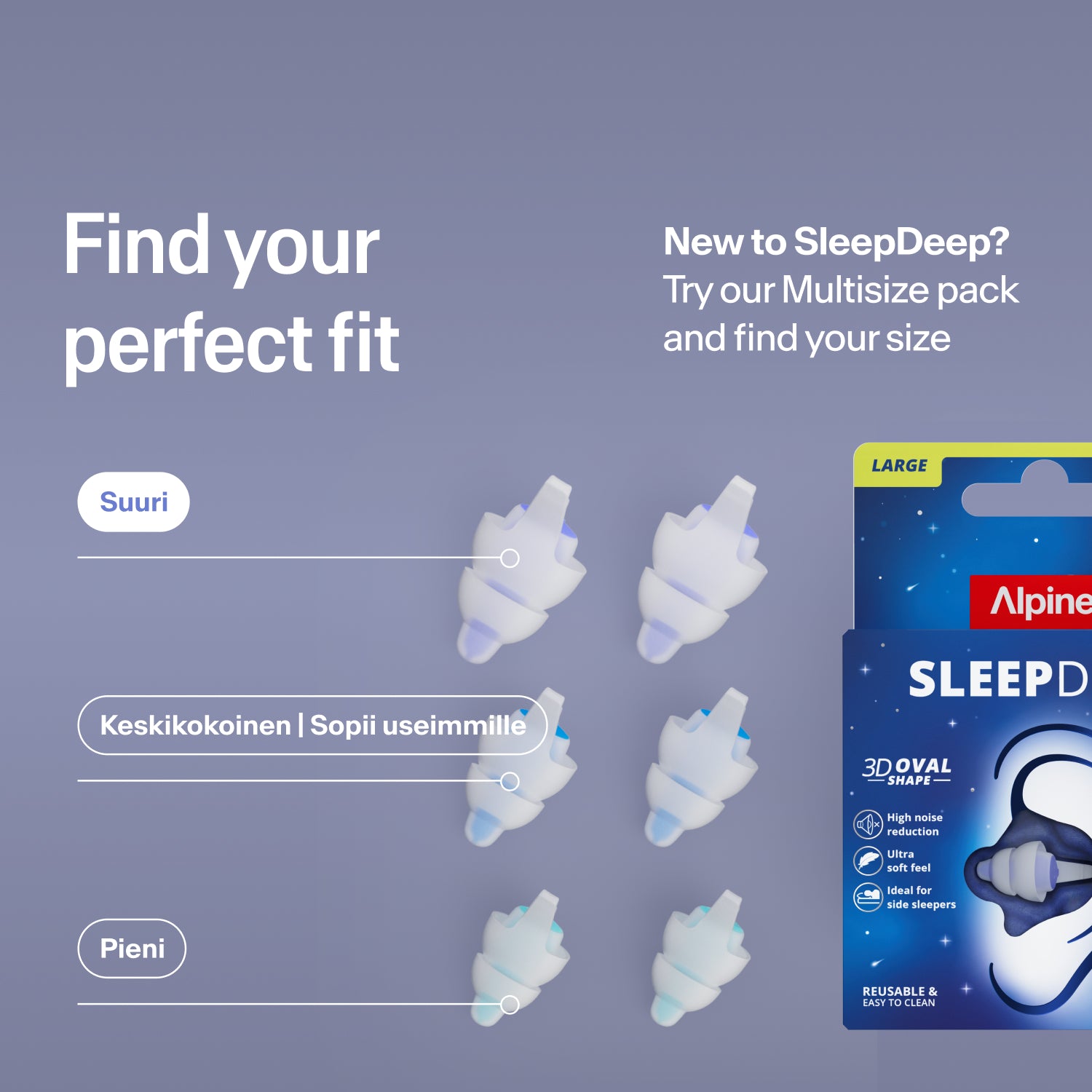
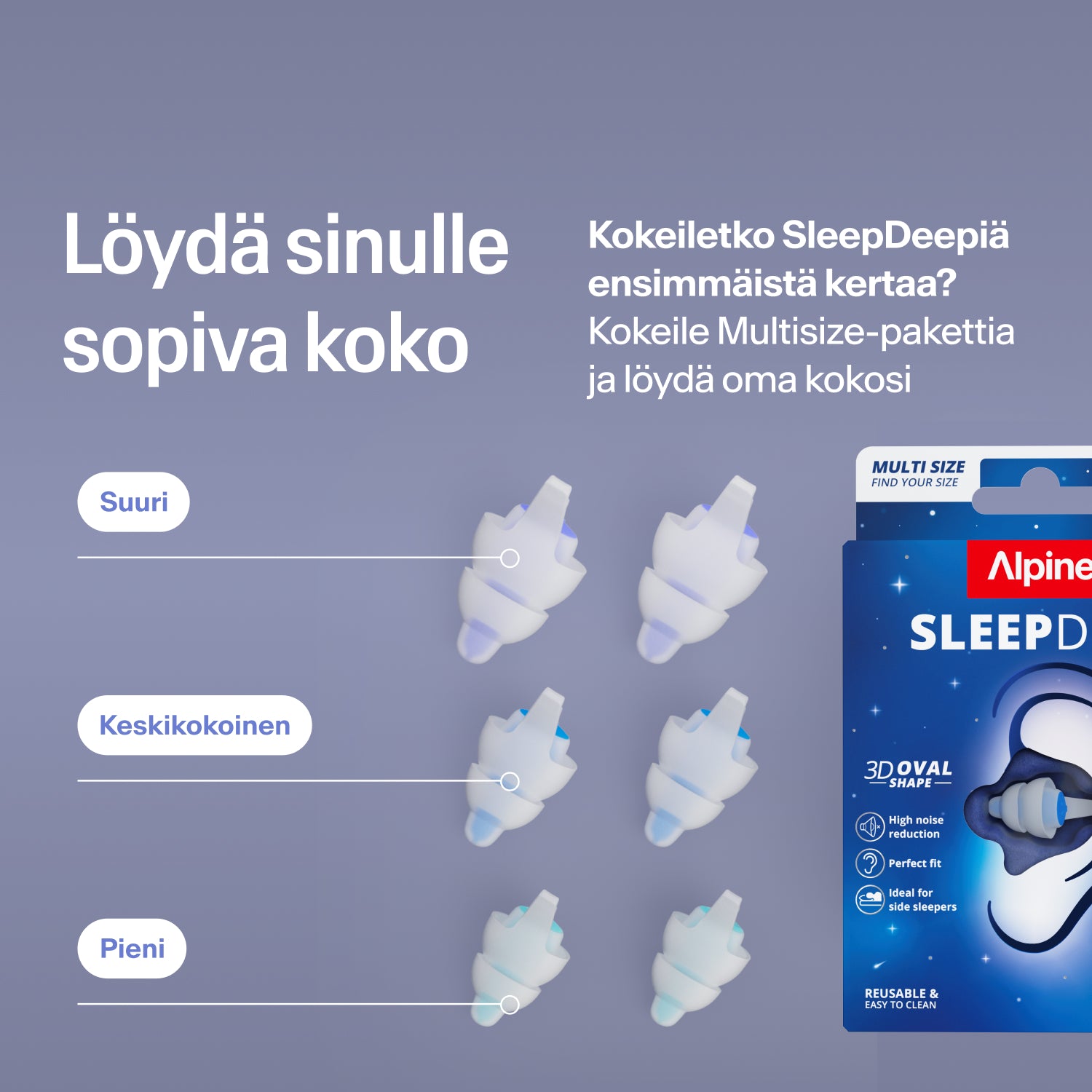
Sleeping earplugs that don't fall out start with the right size. Buying SleepDeep for the first time? Start with the multisize pack, so you can try the sizes and find your fit.
Material flexibility: why a flexible earplug matters for side sleepers
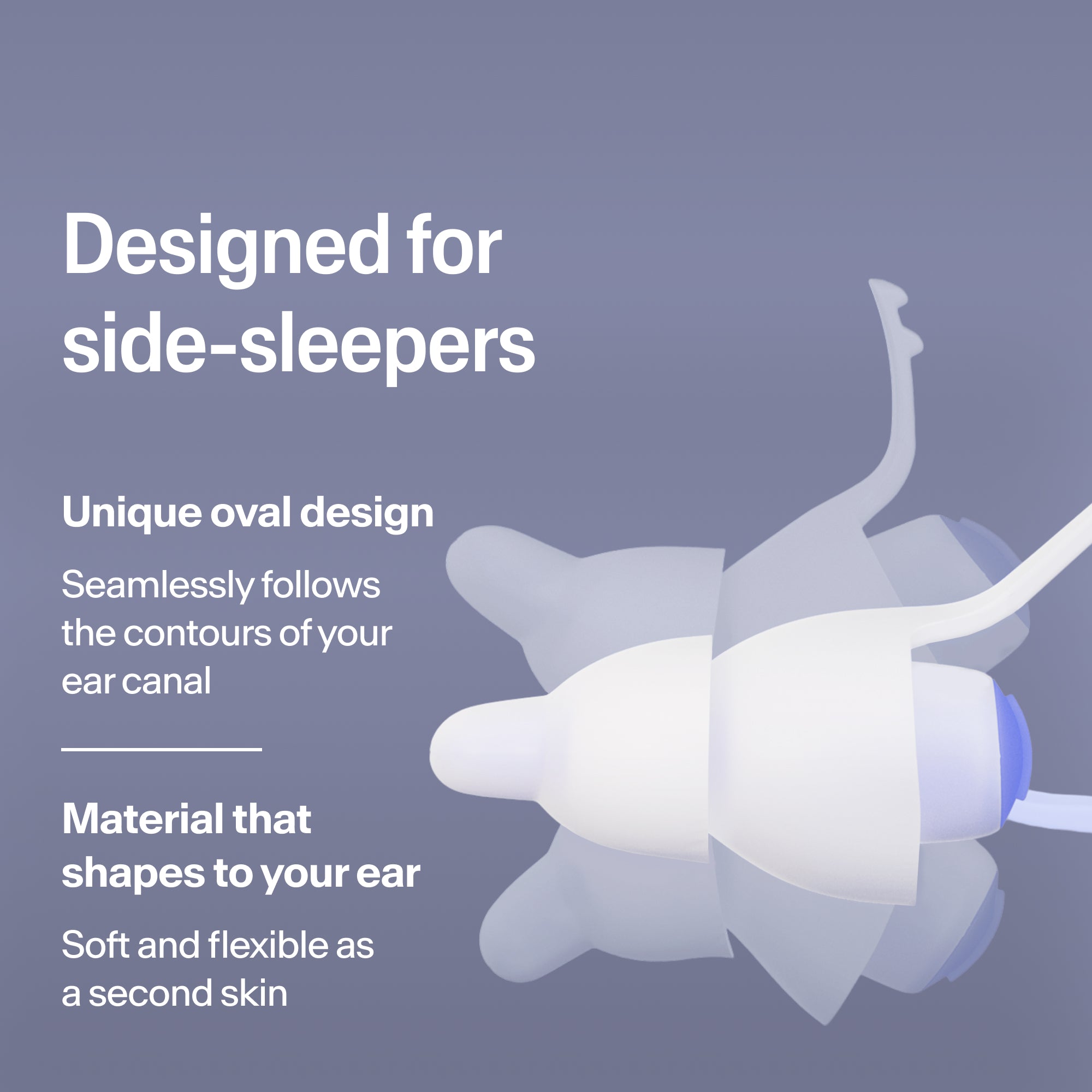
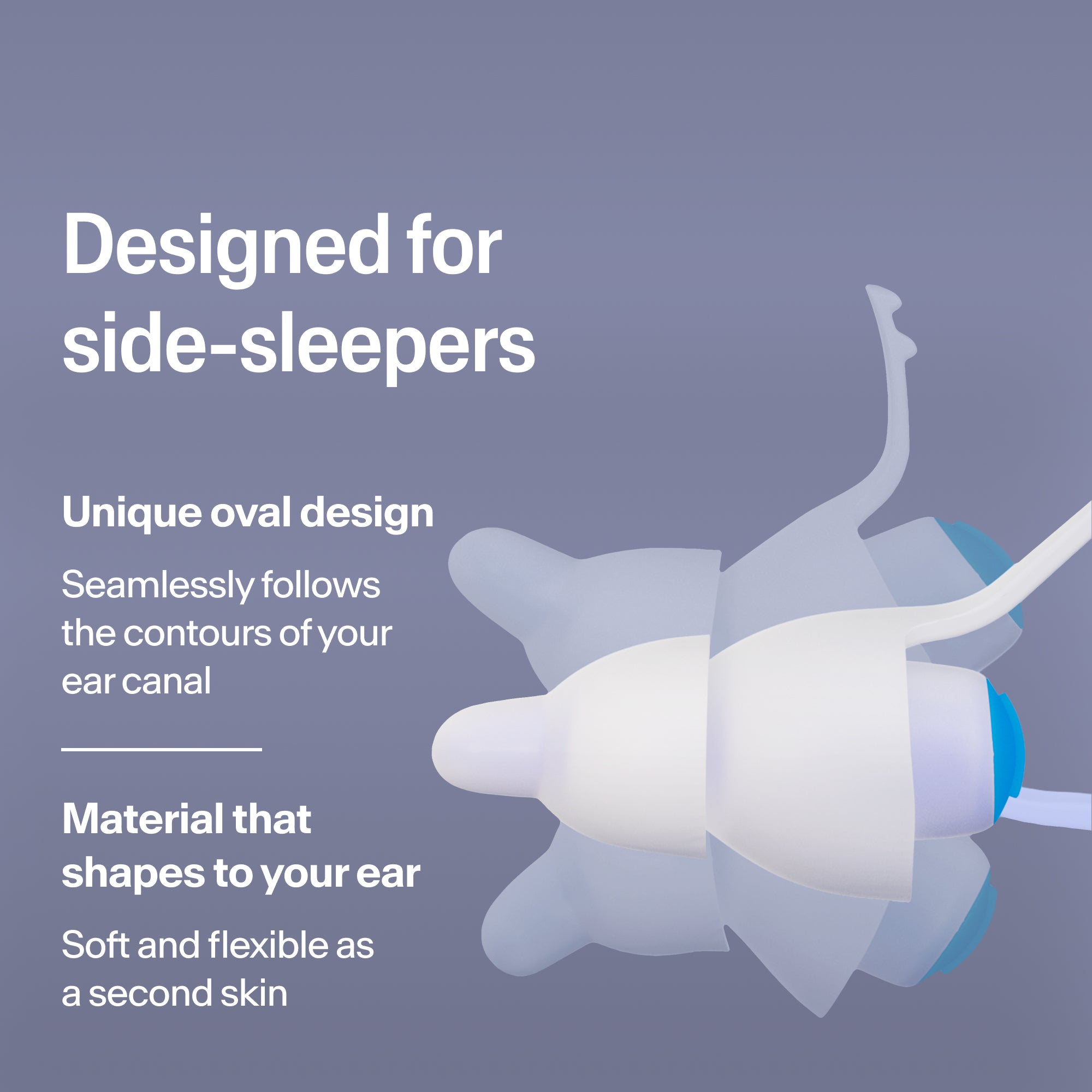
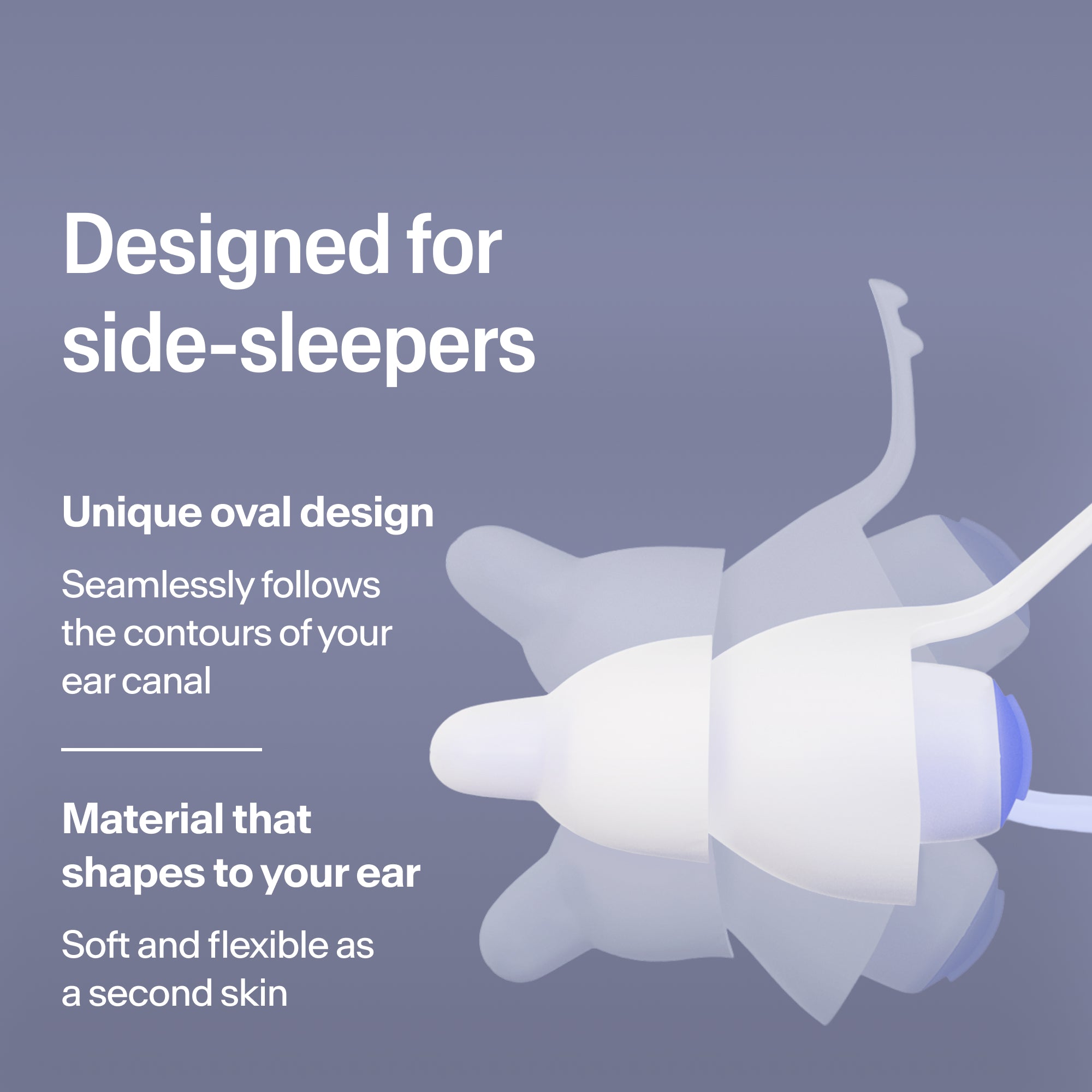
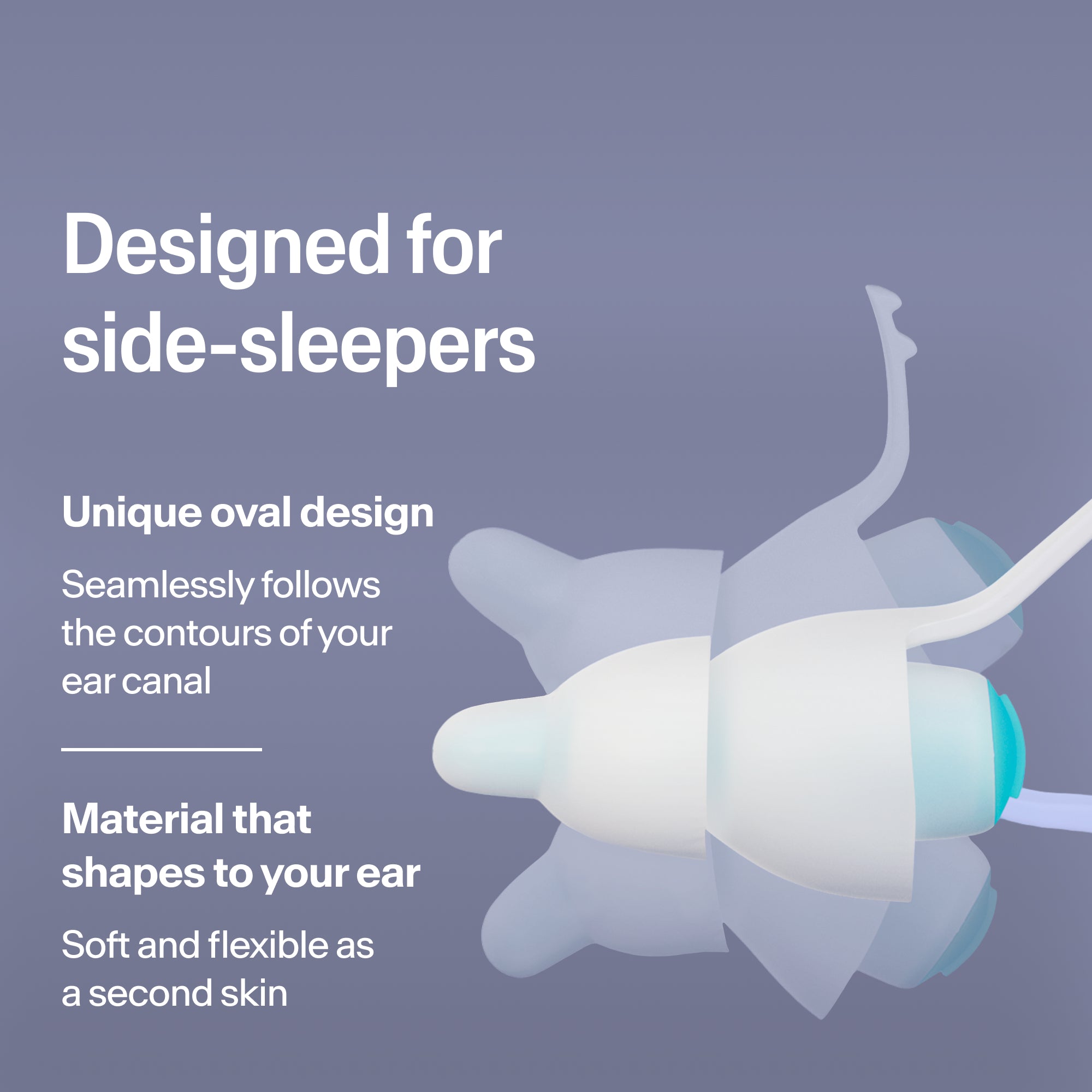
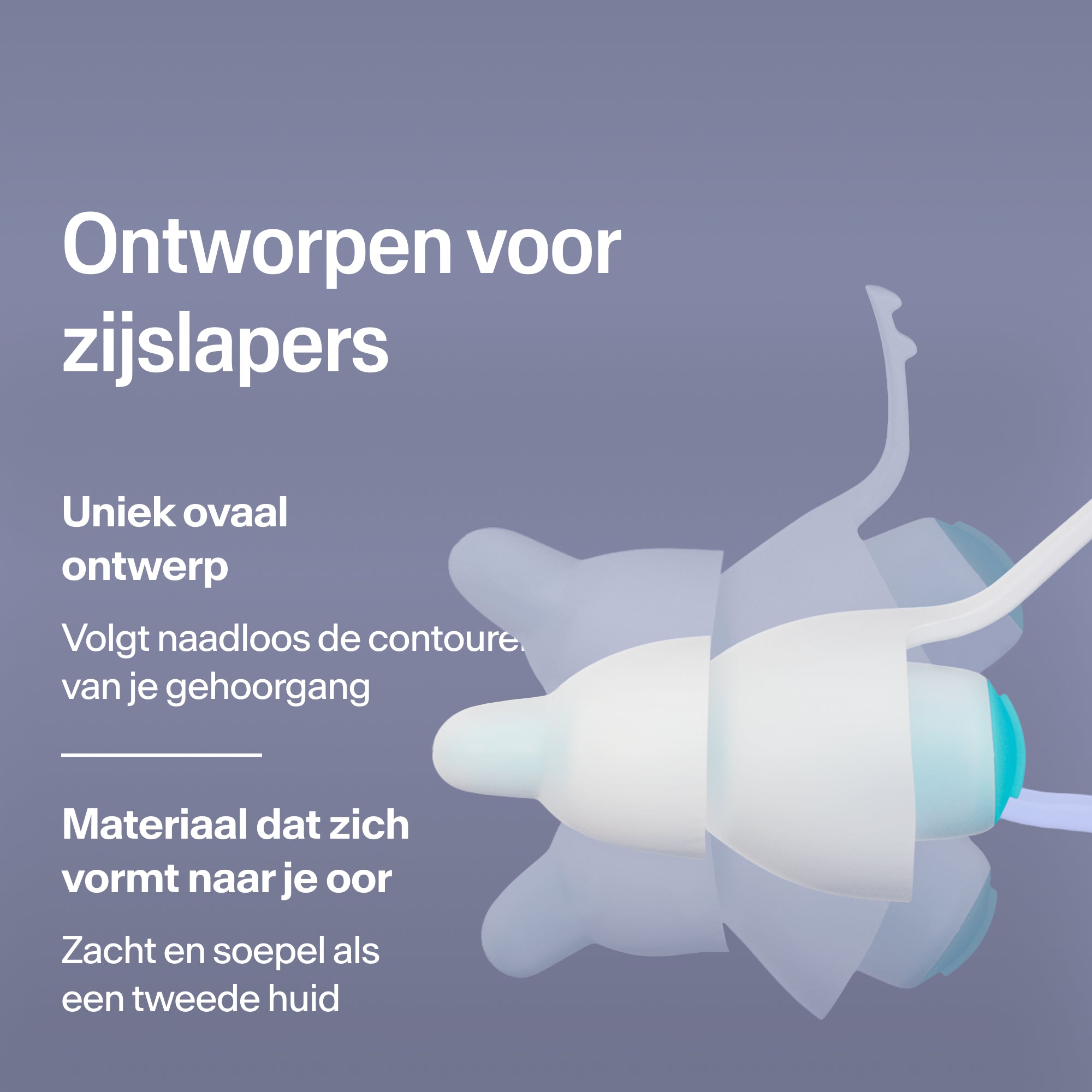
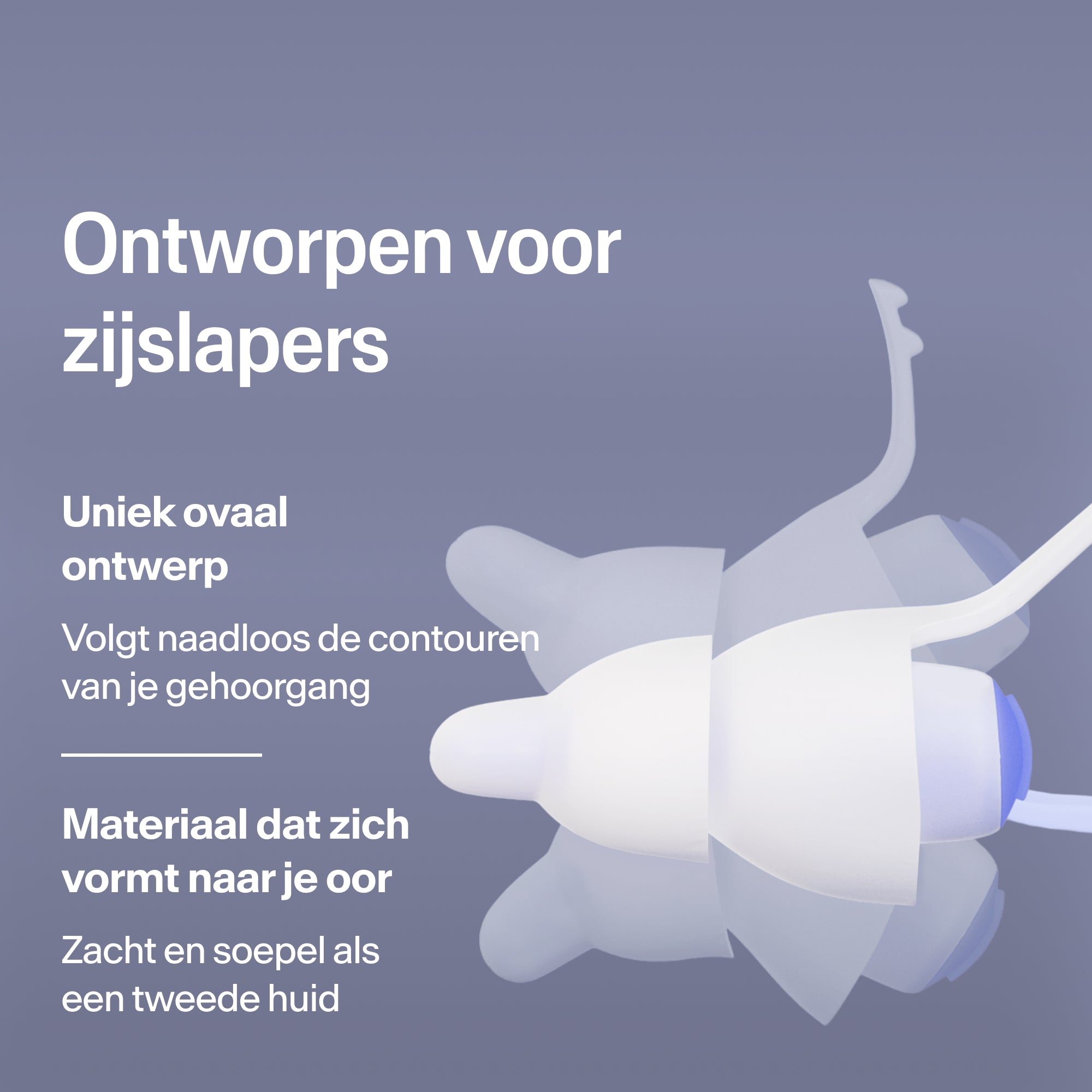
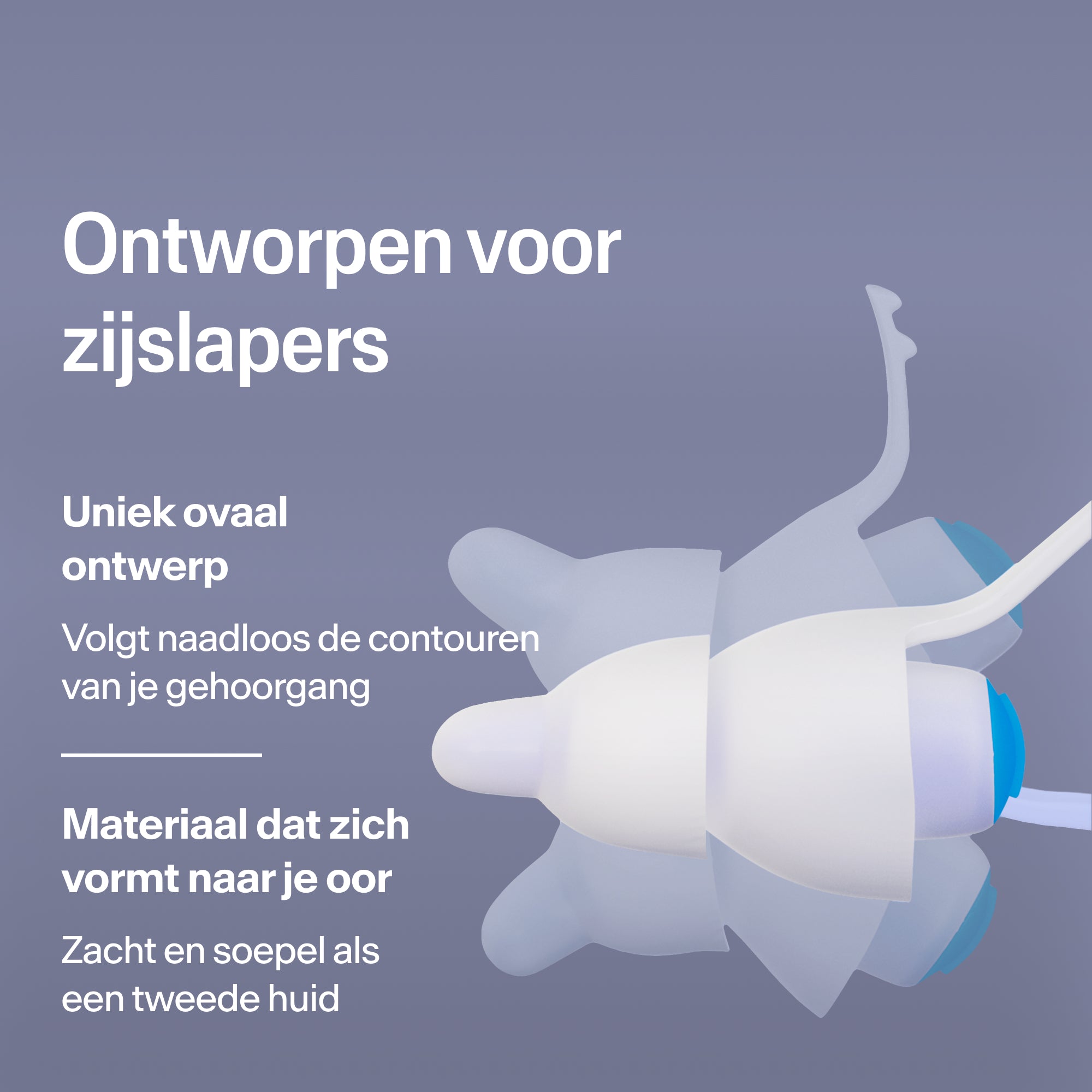
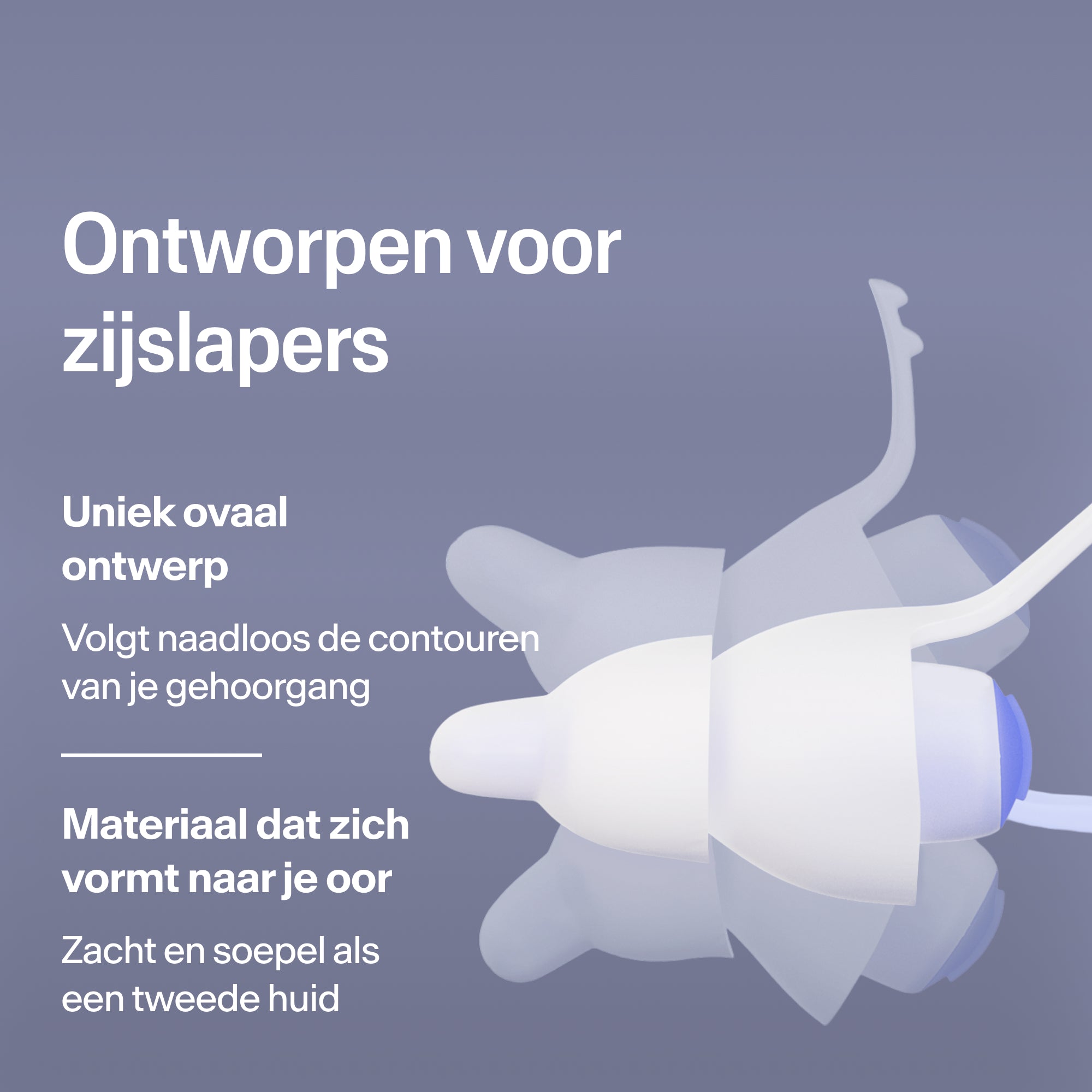
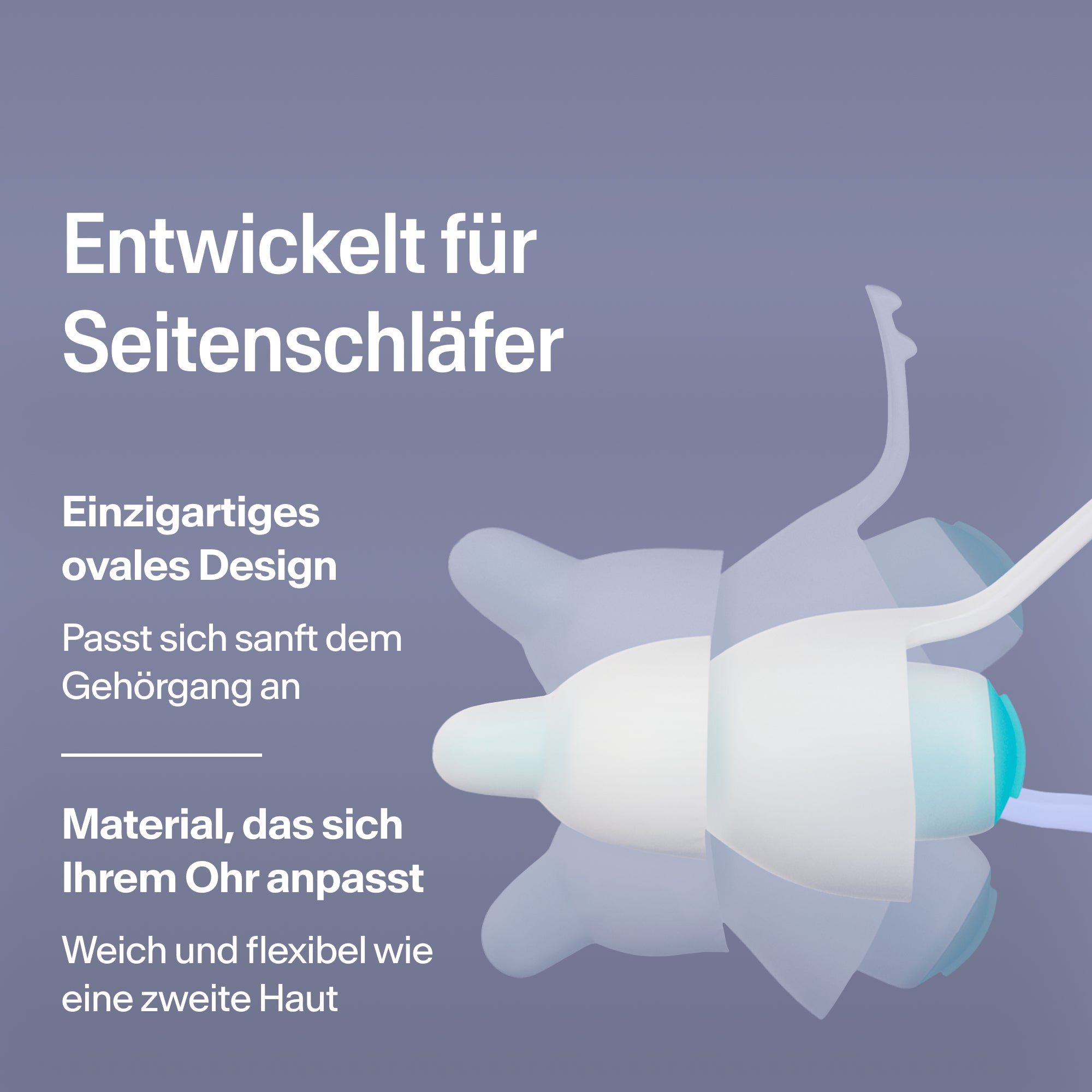
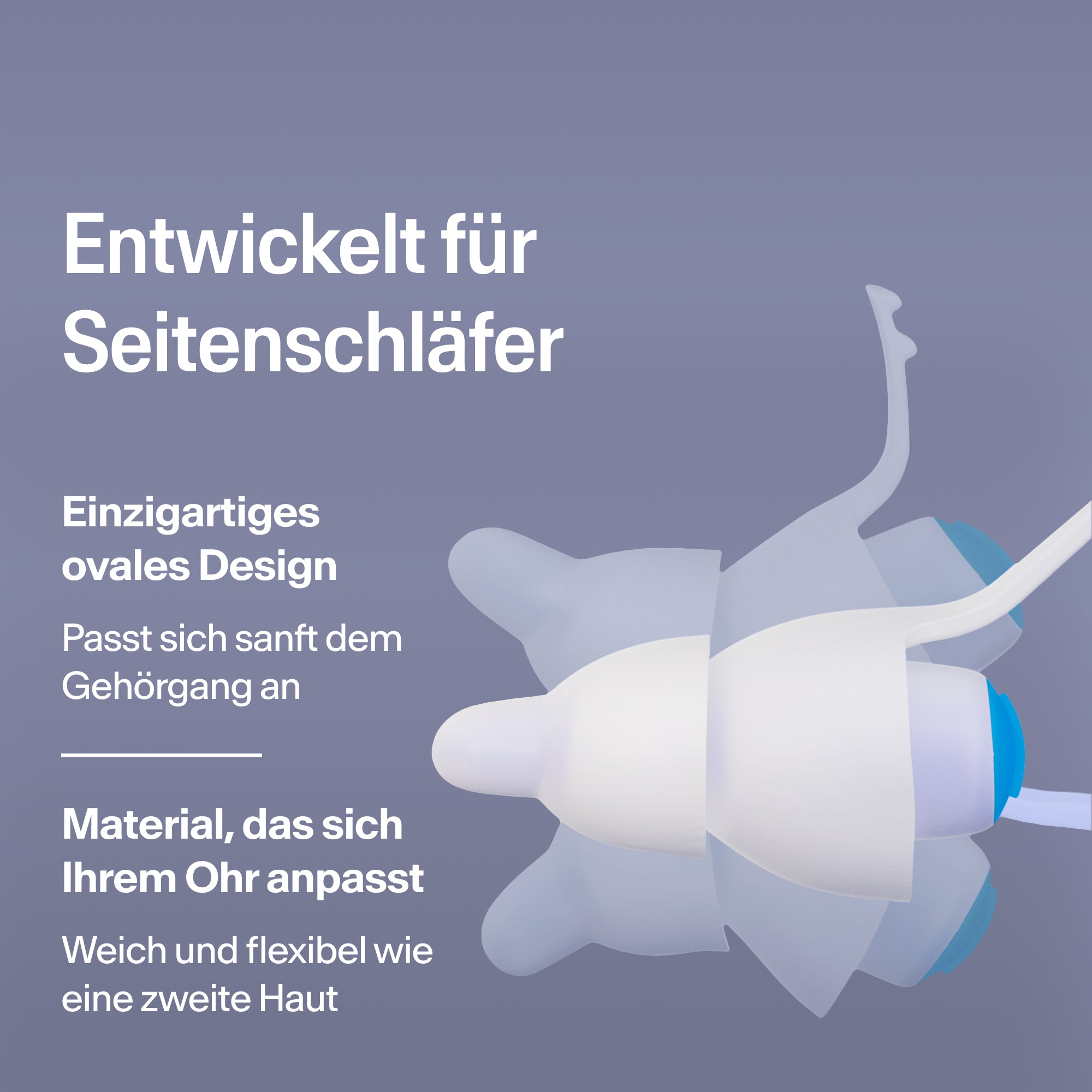
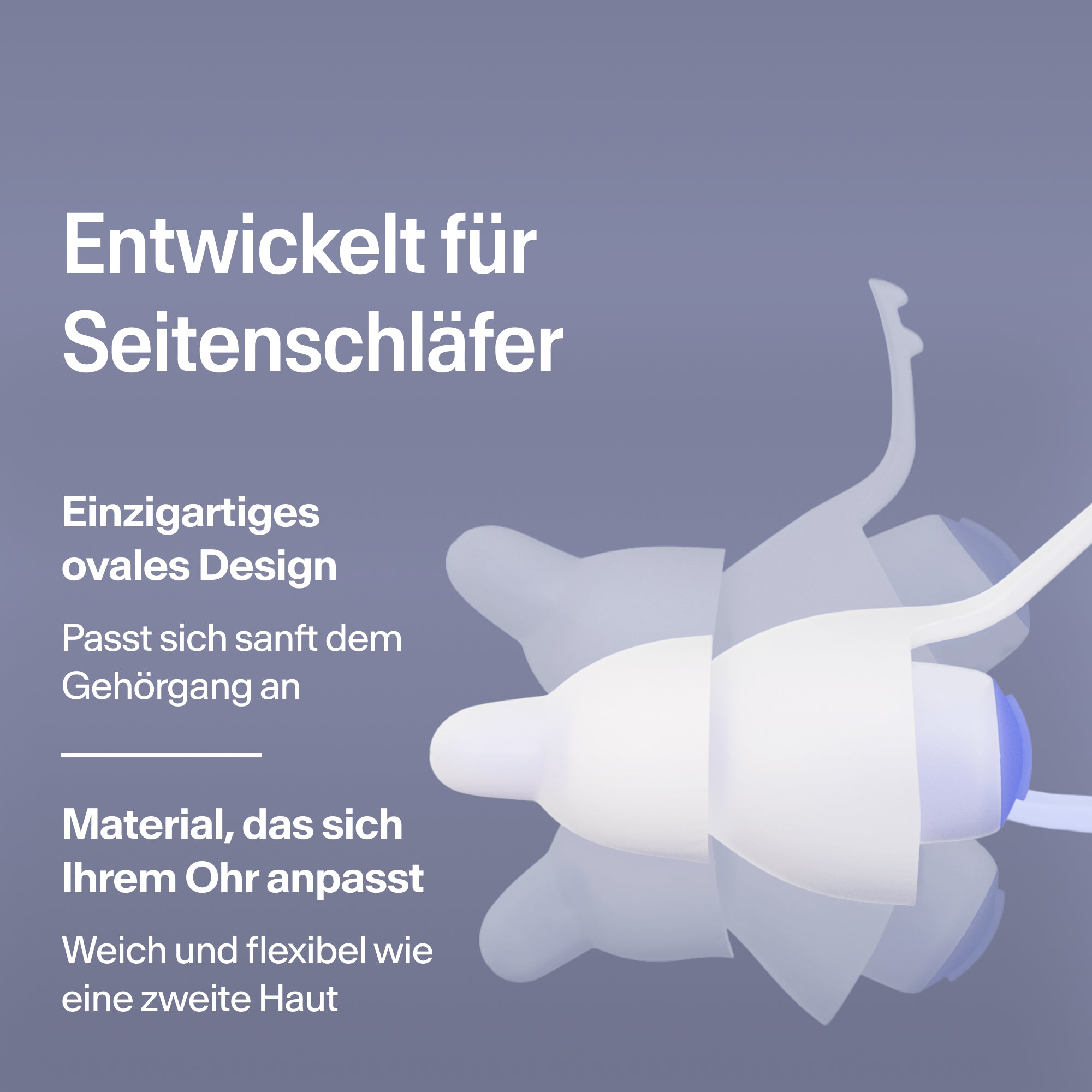
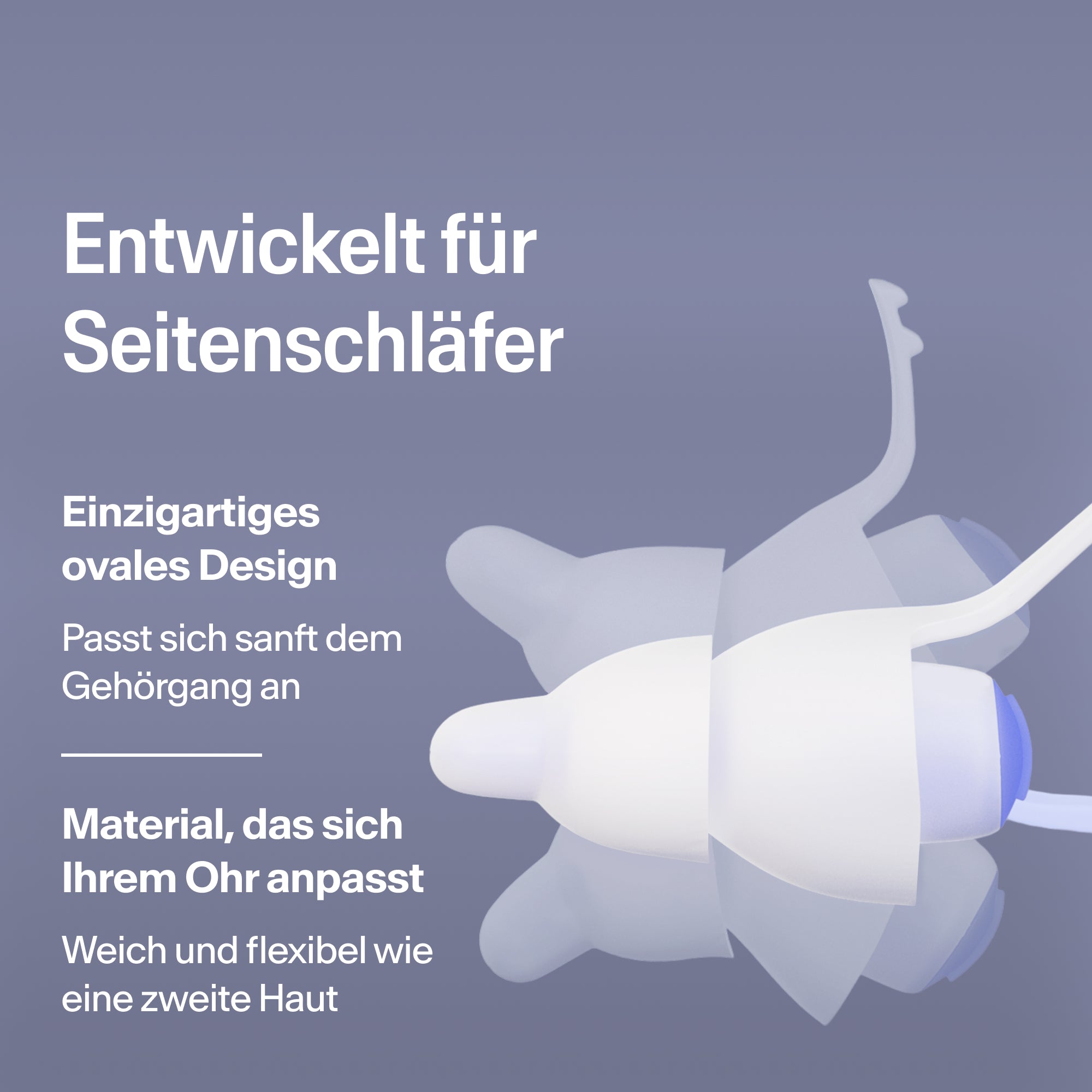
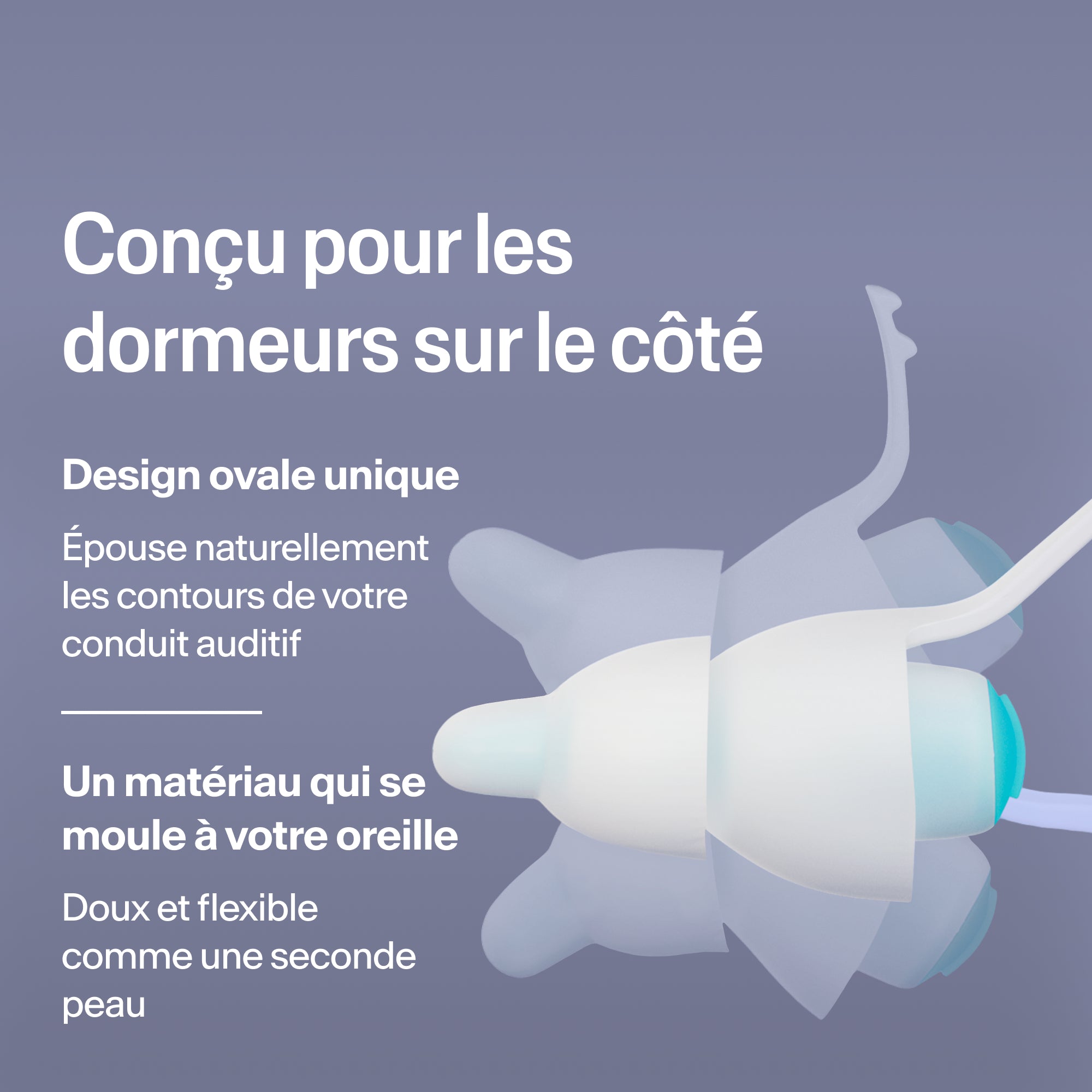
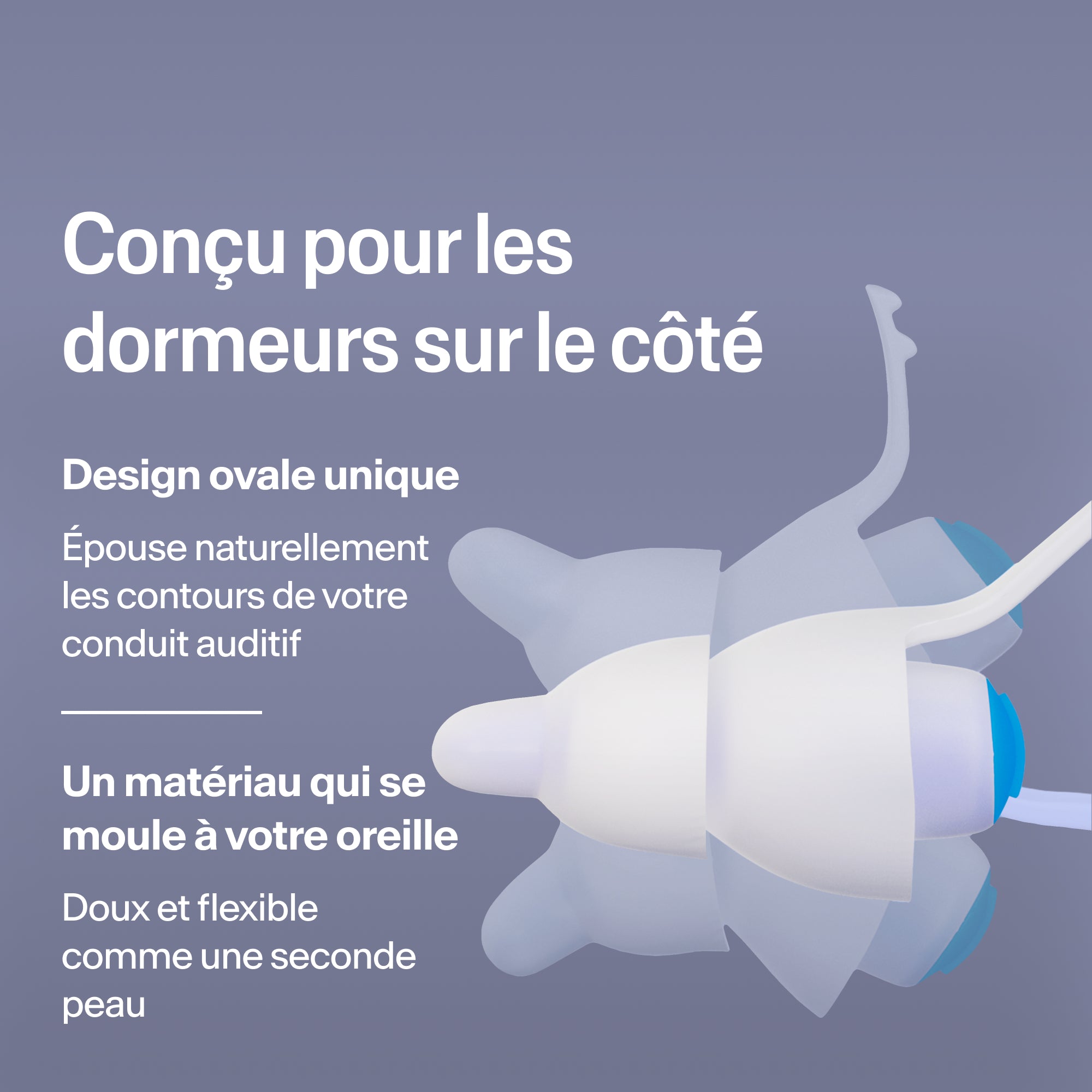
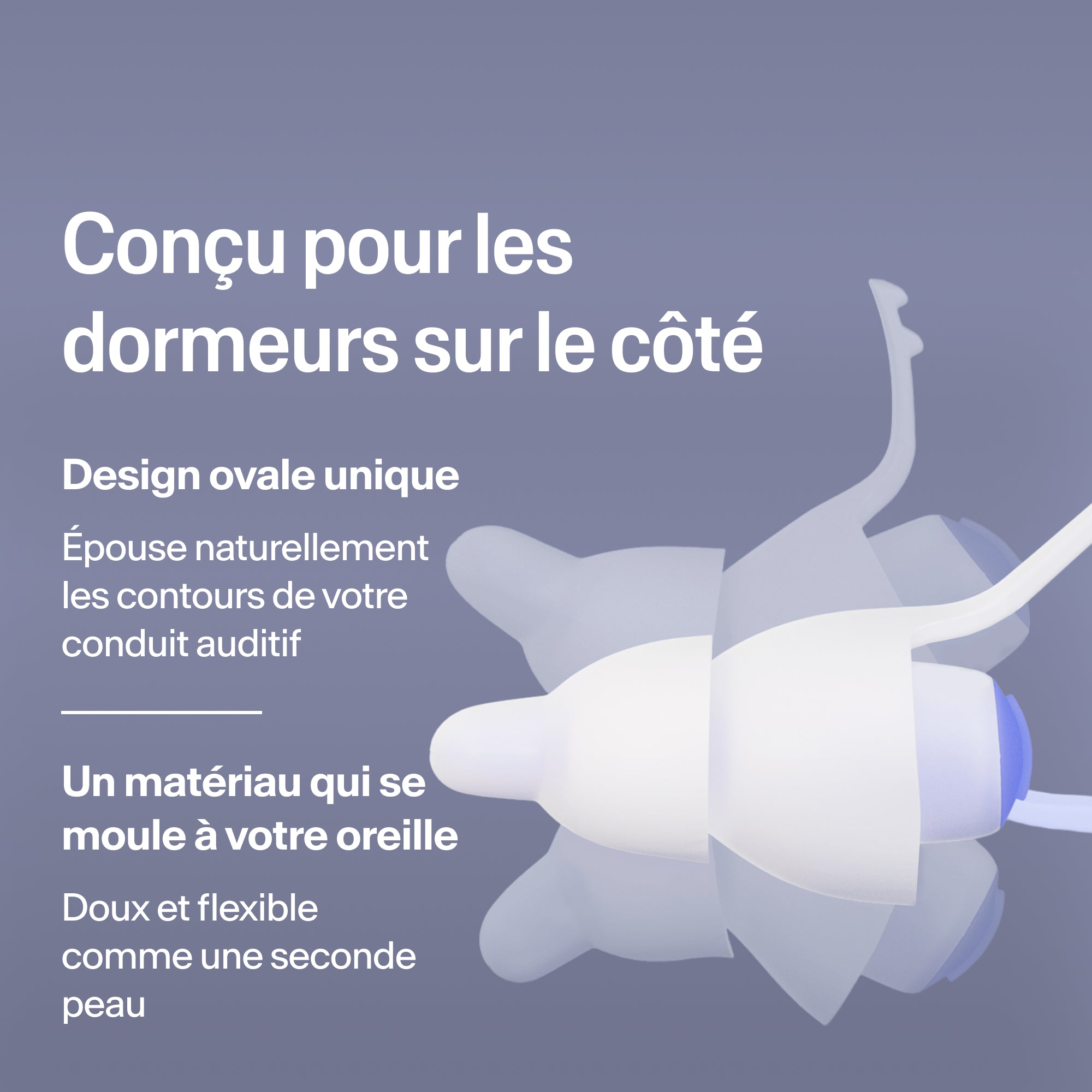
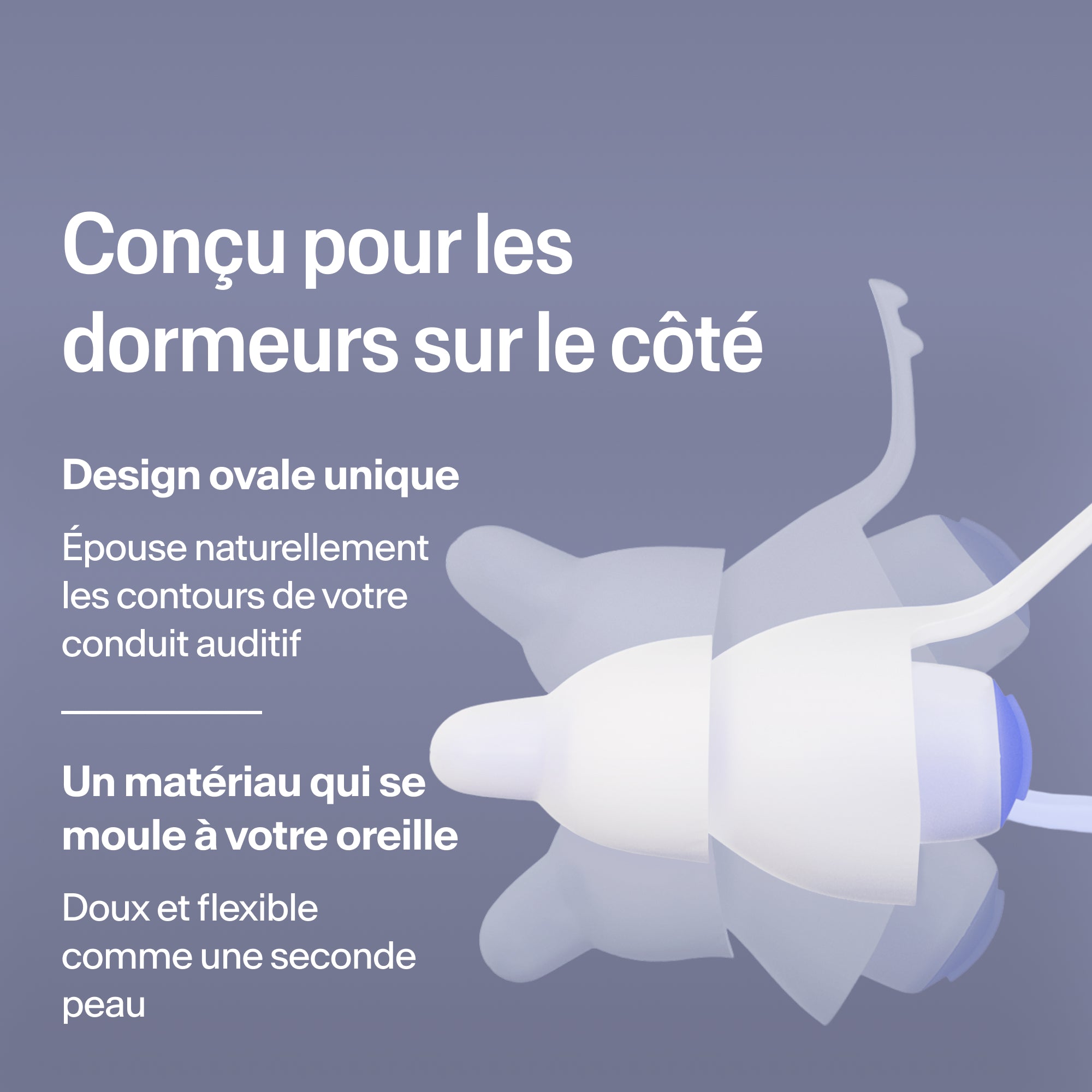
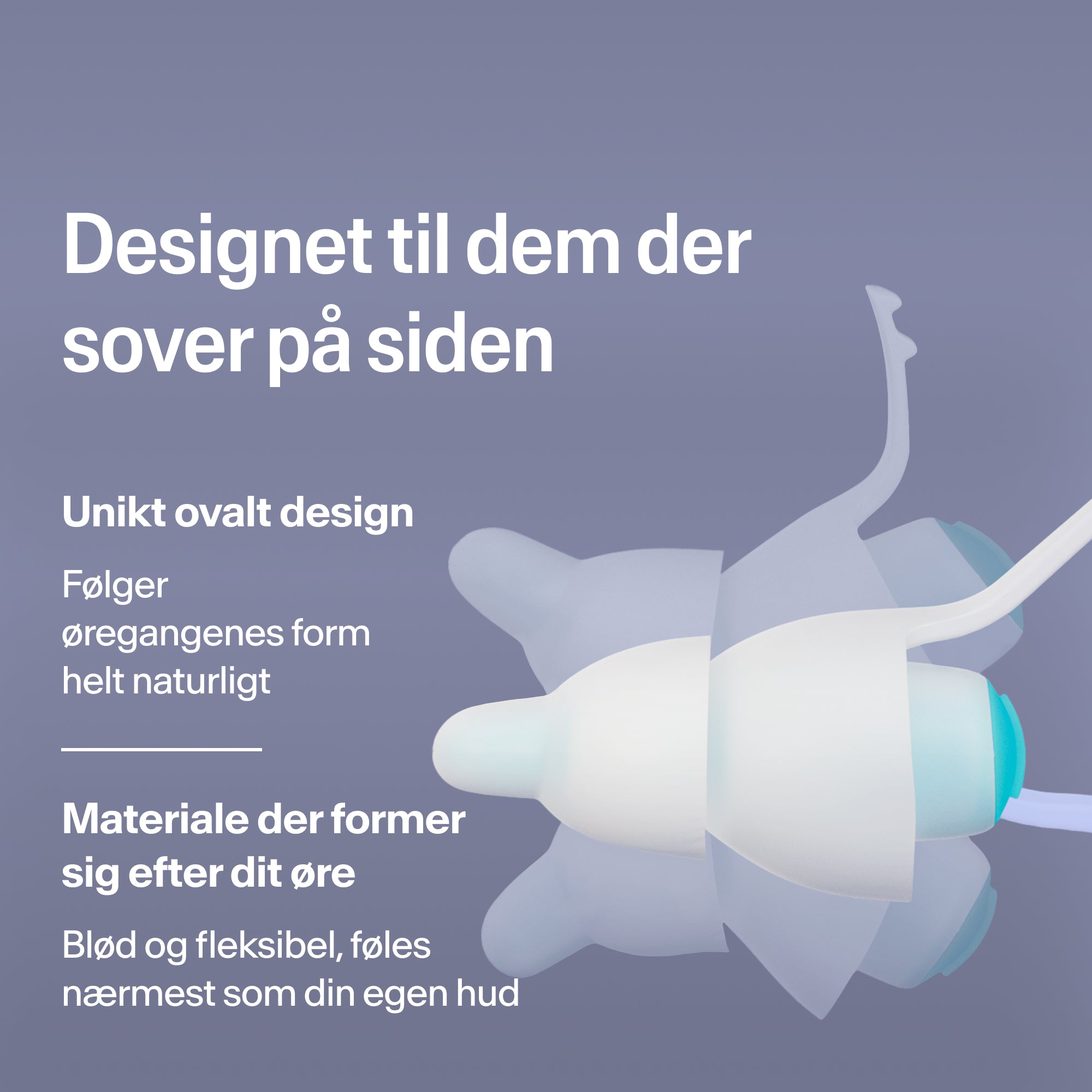
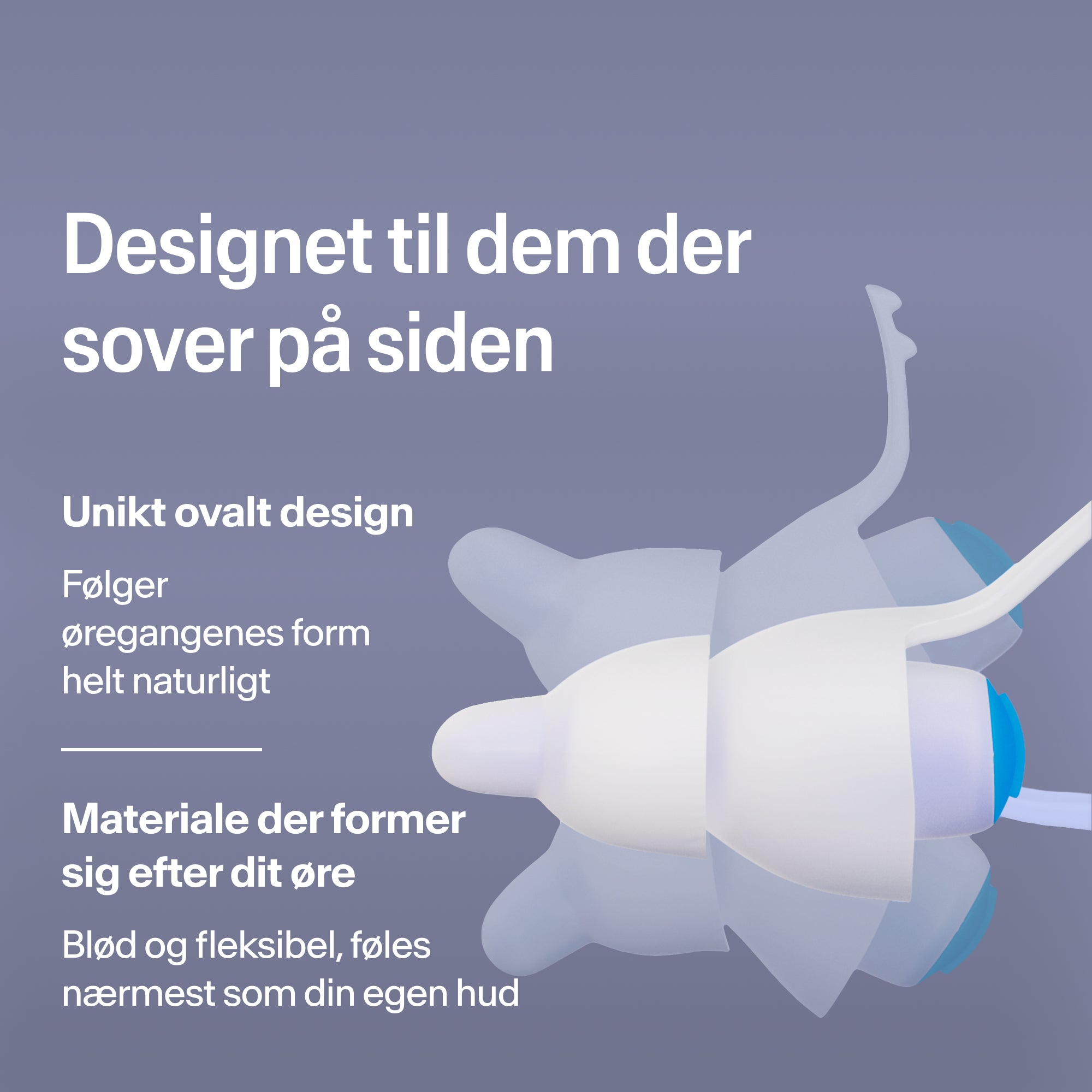
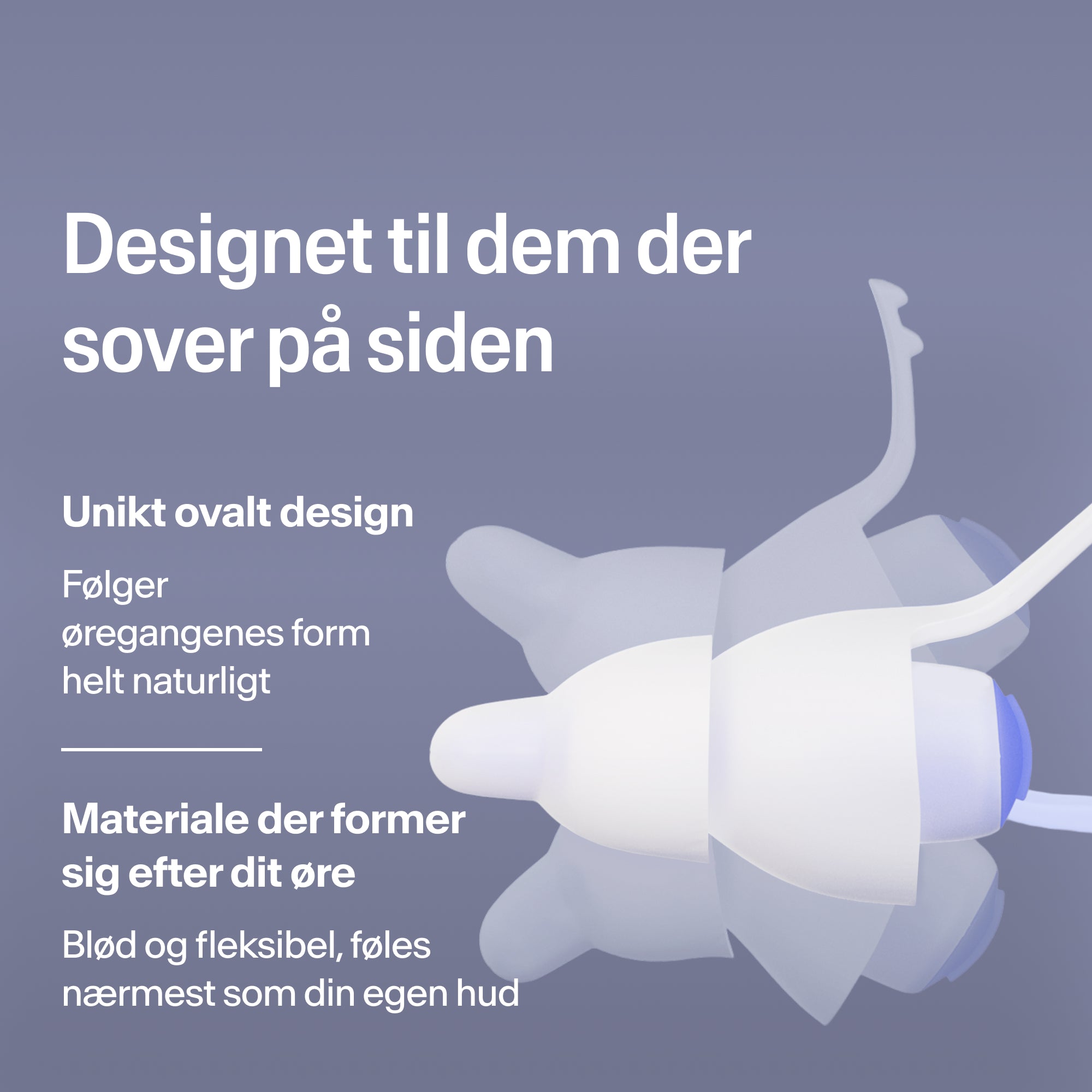
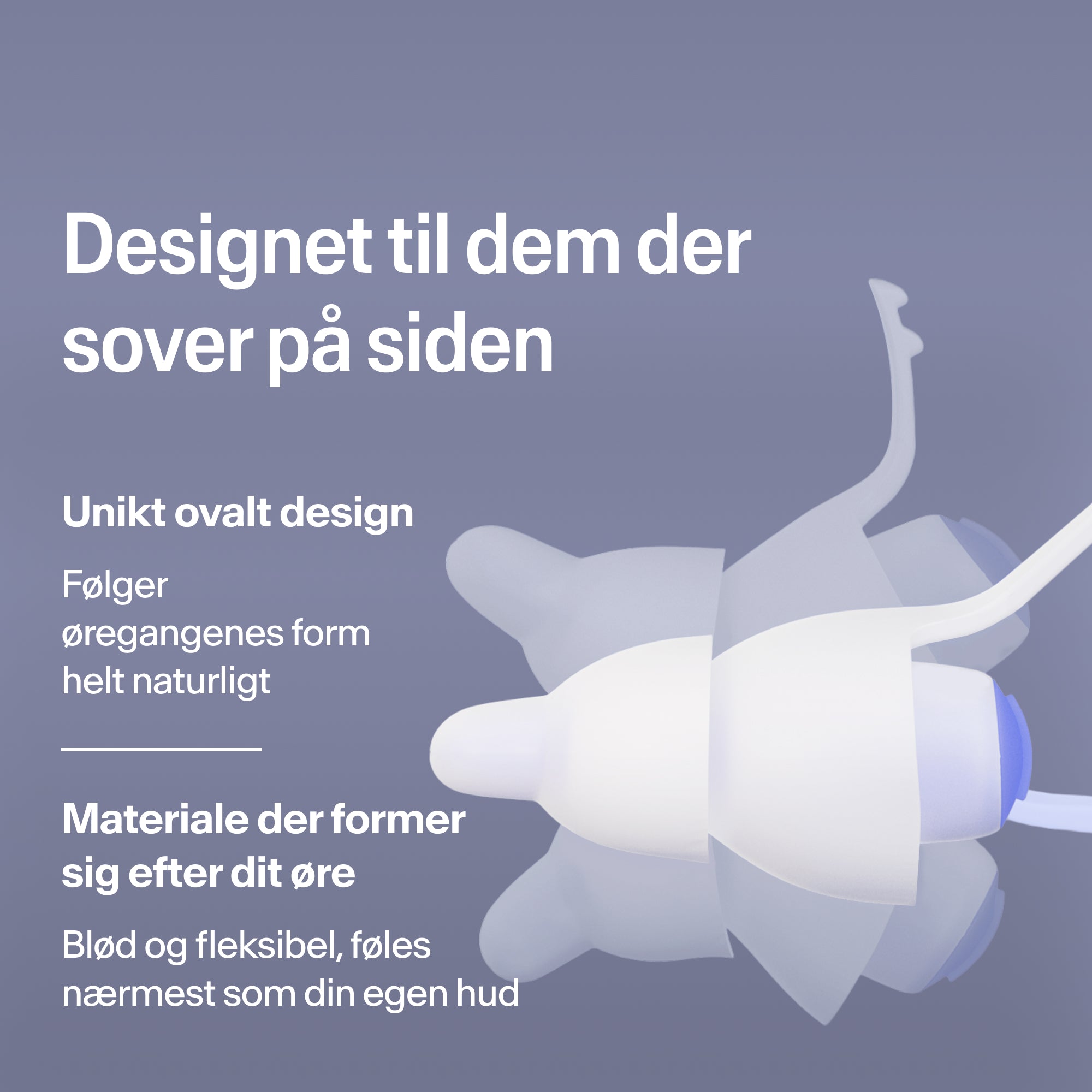
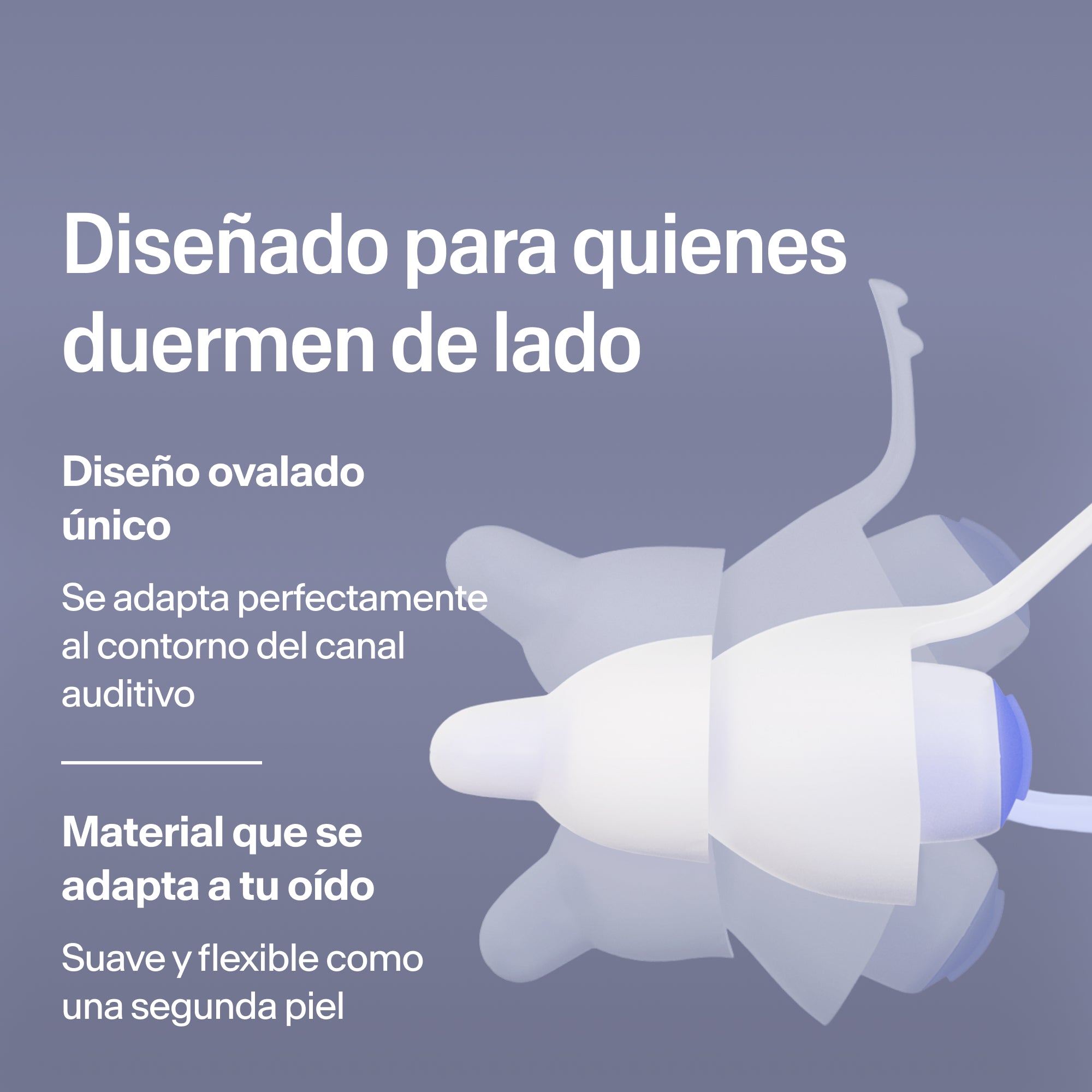
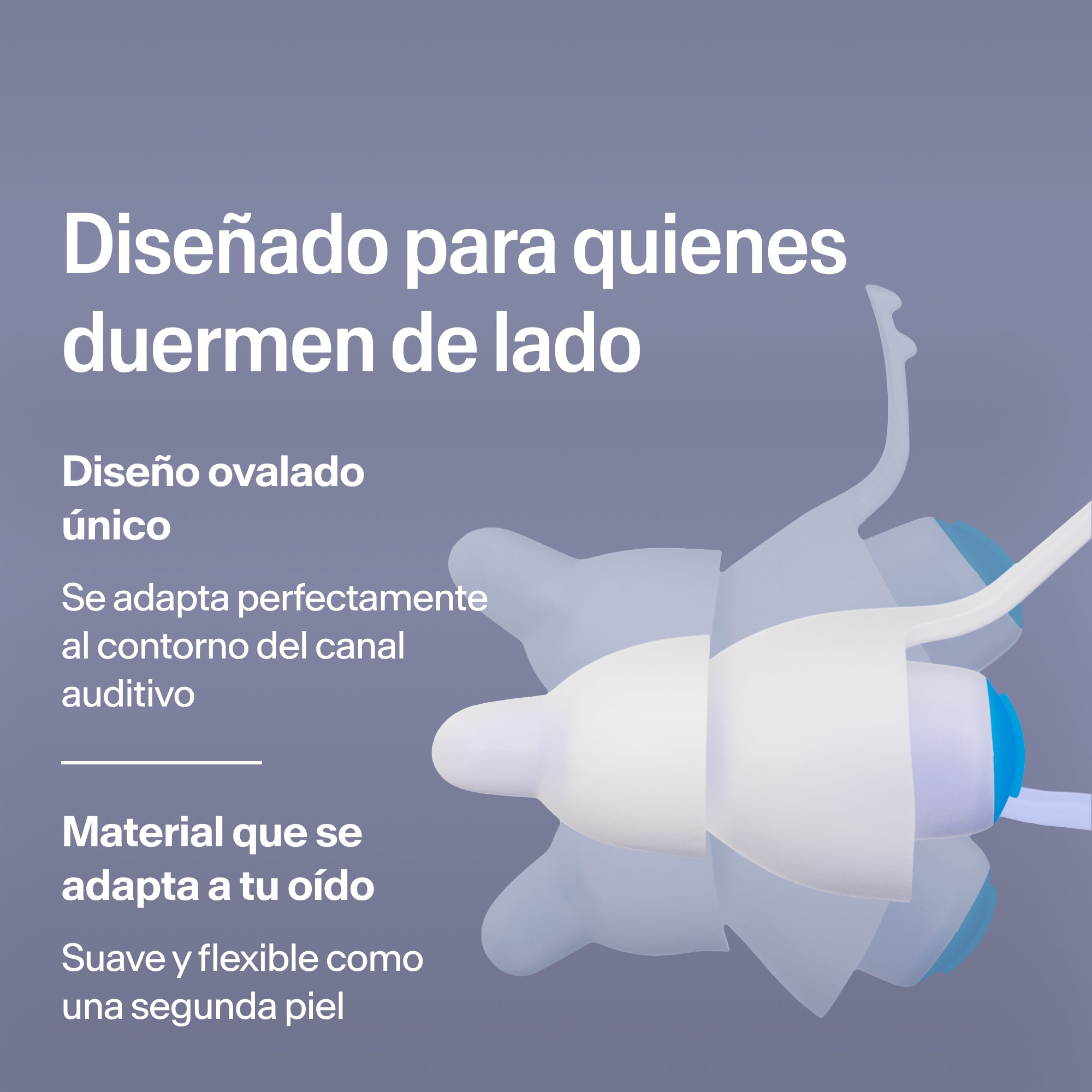
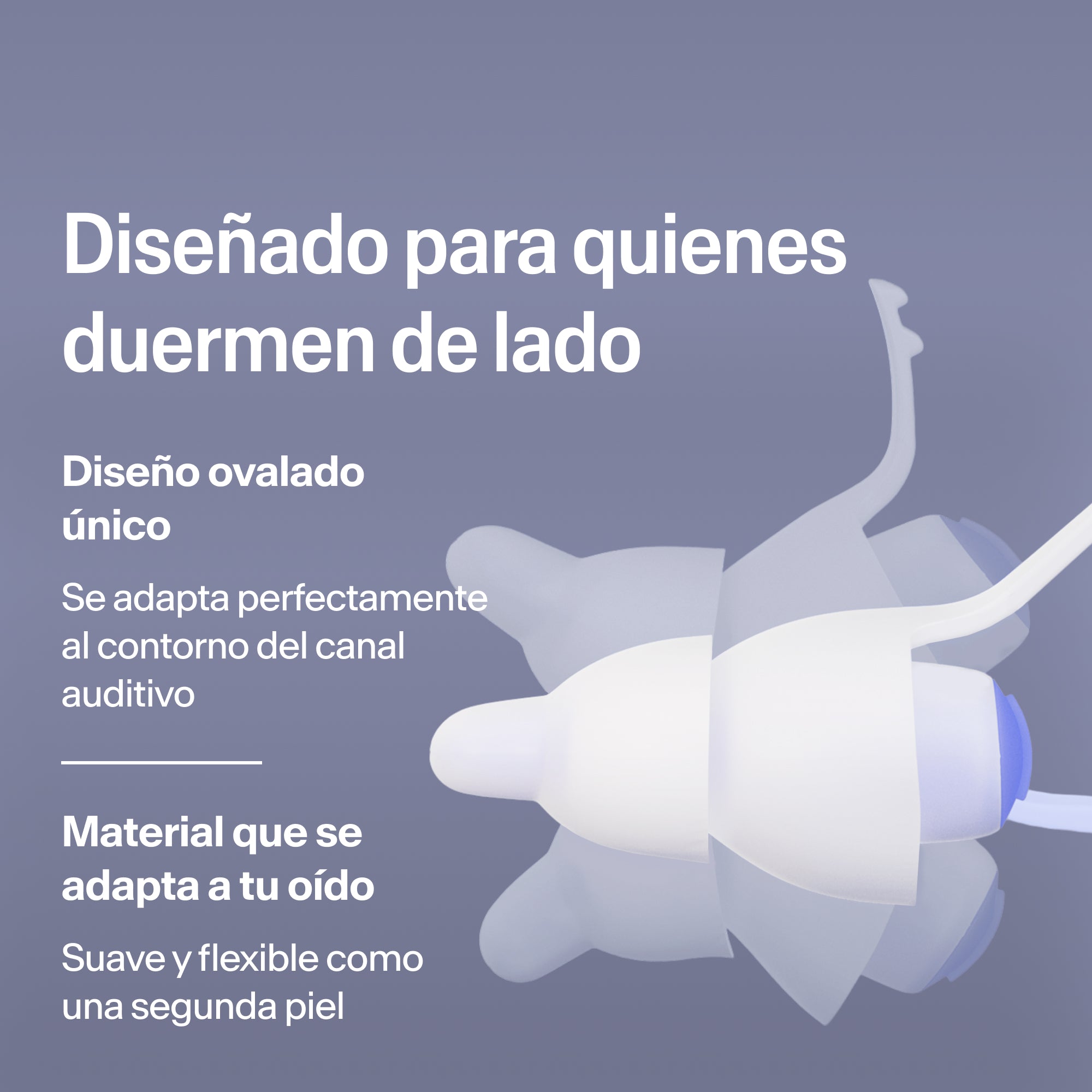
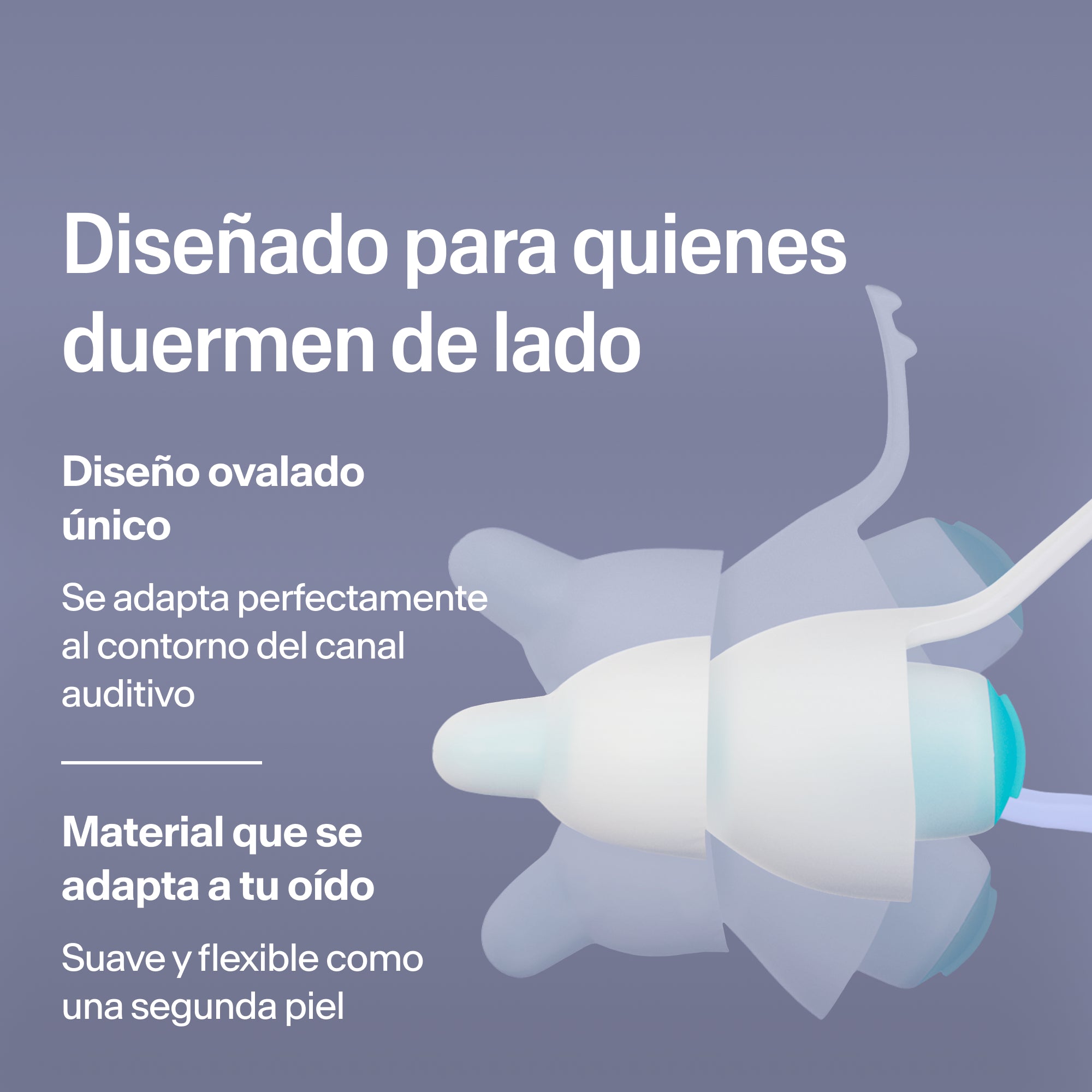
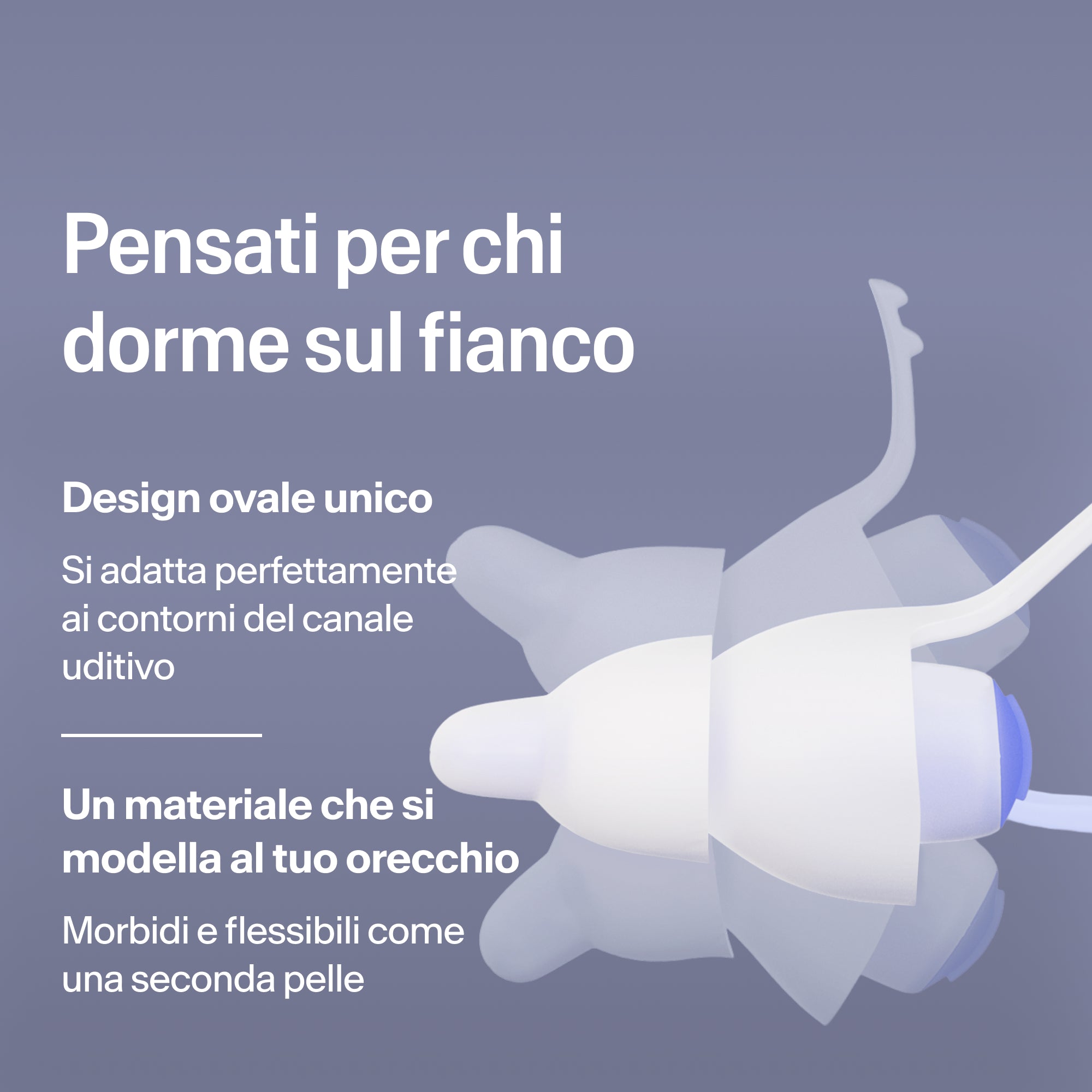
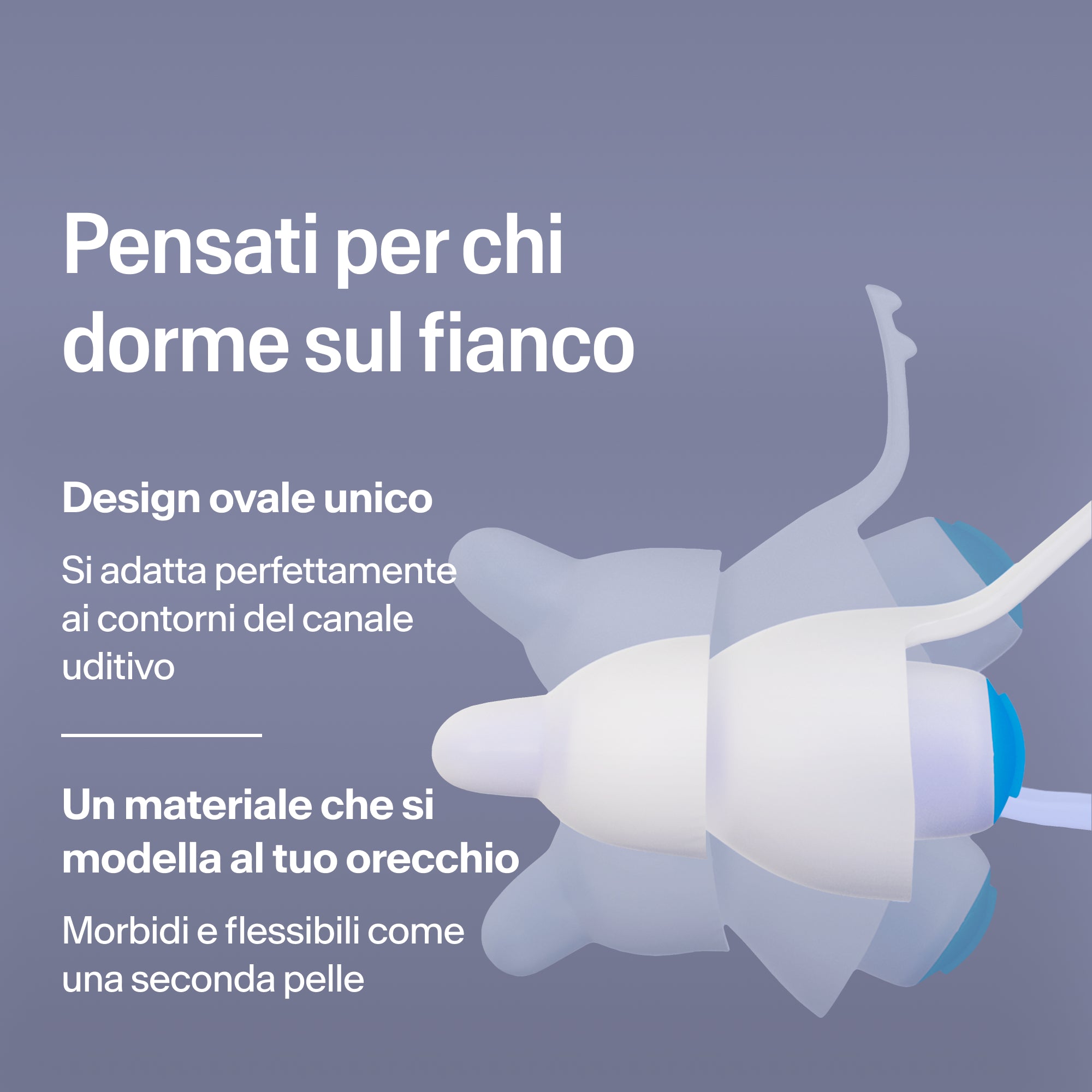
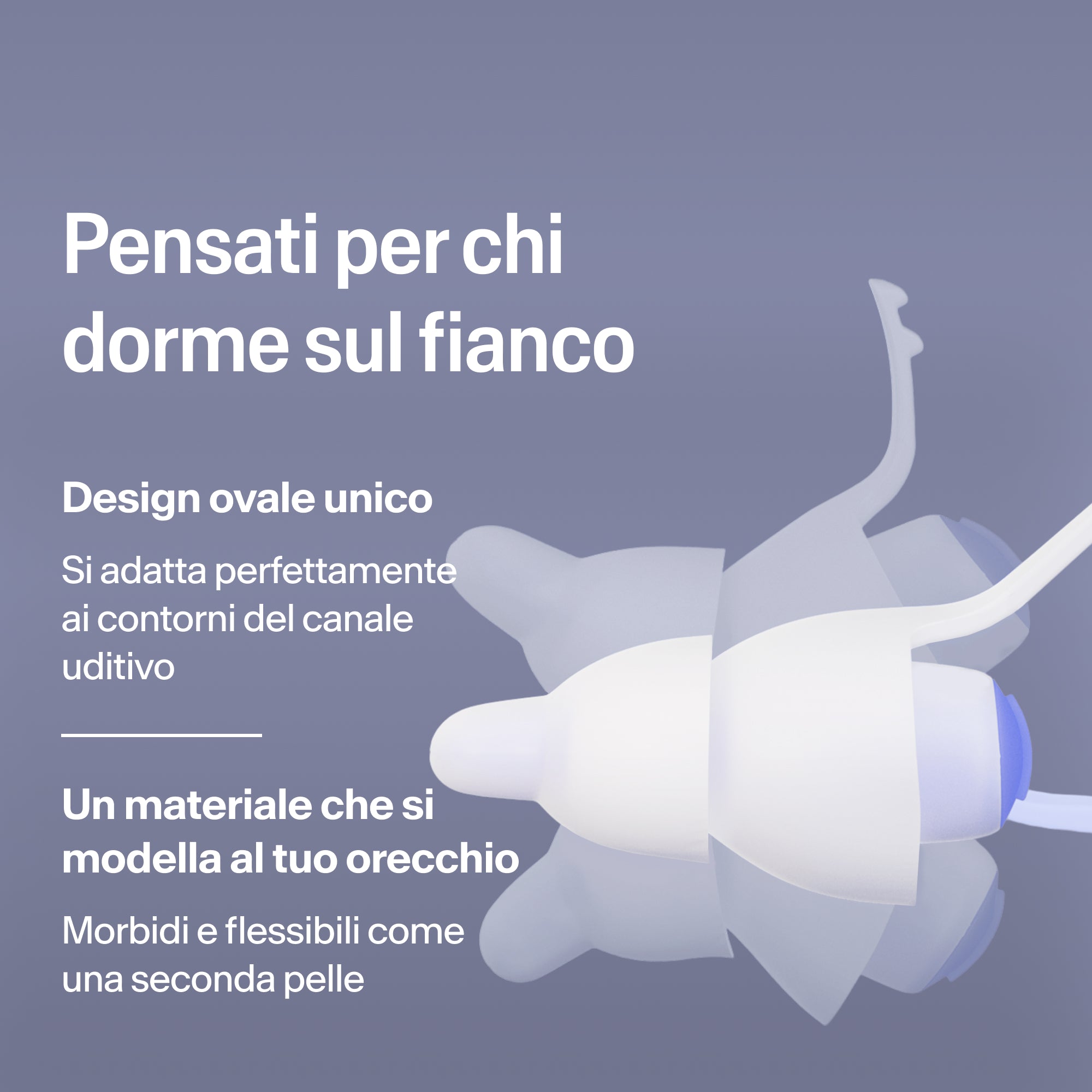
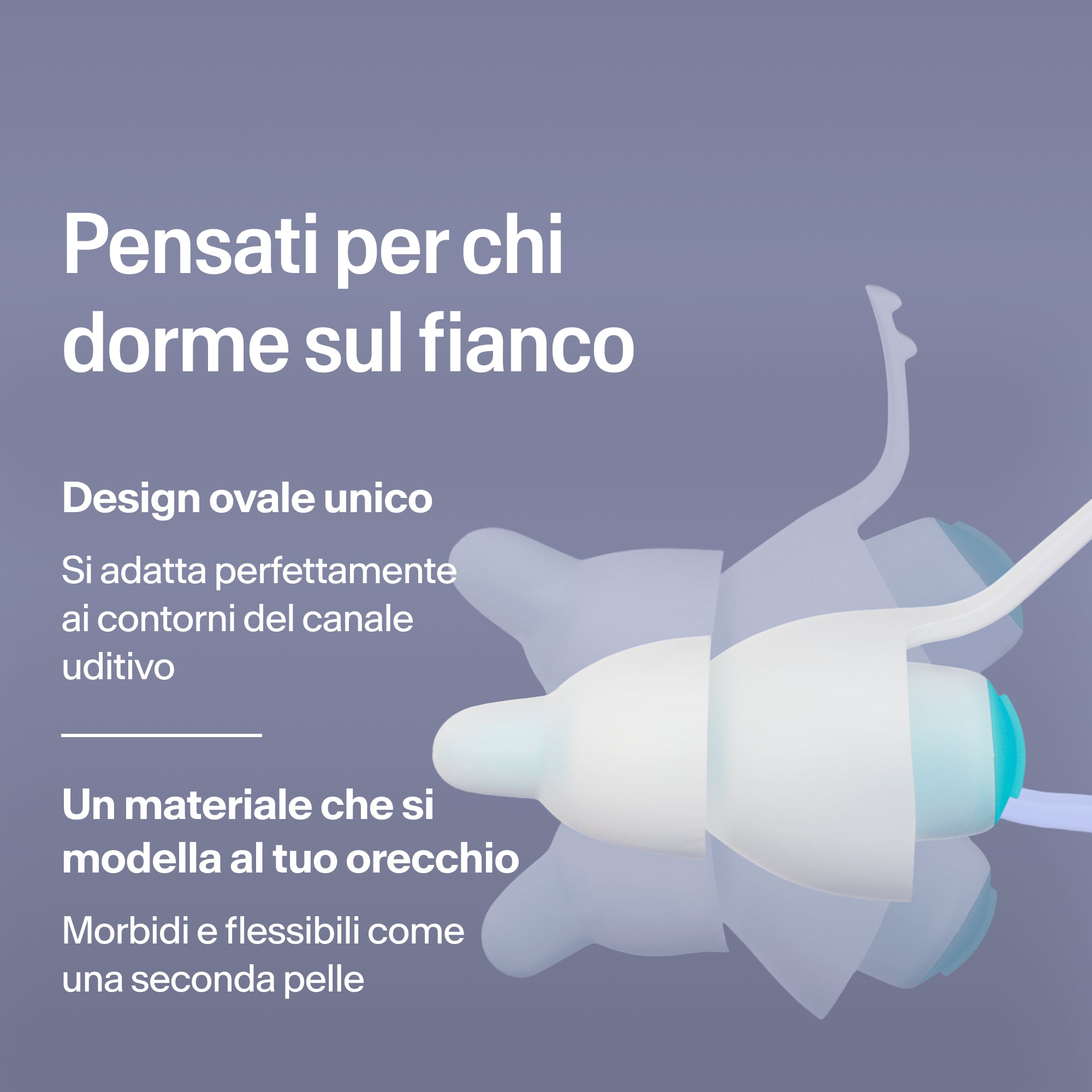
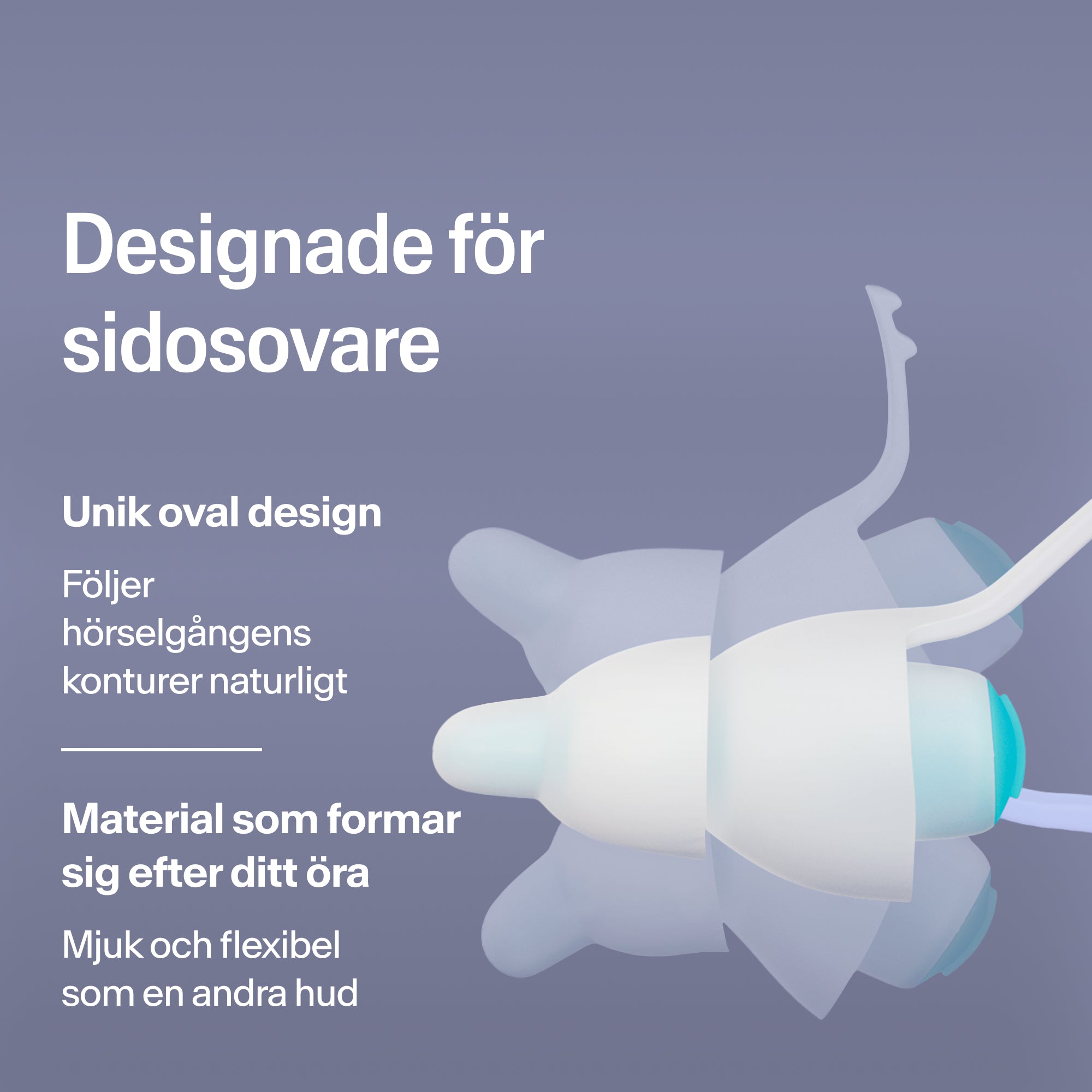
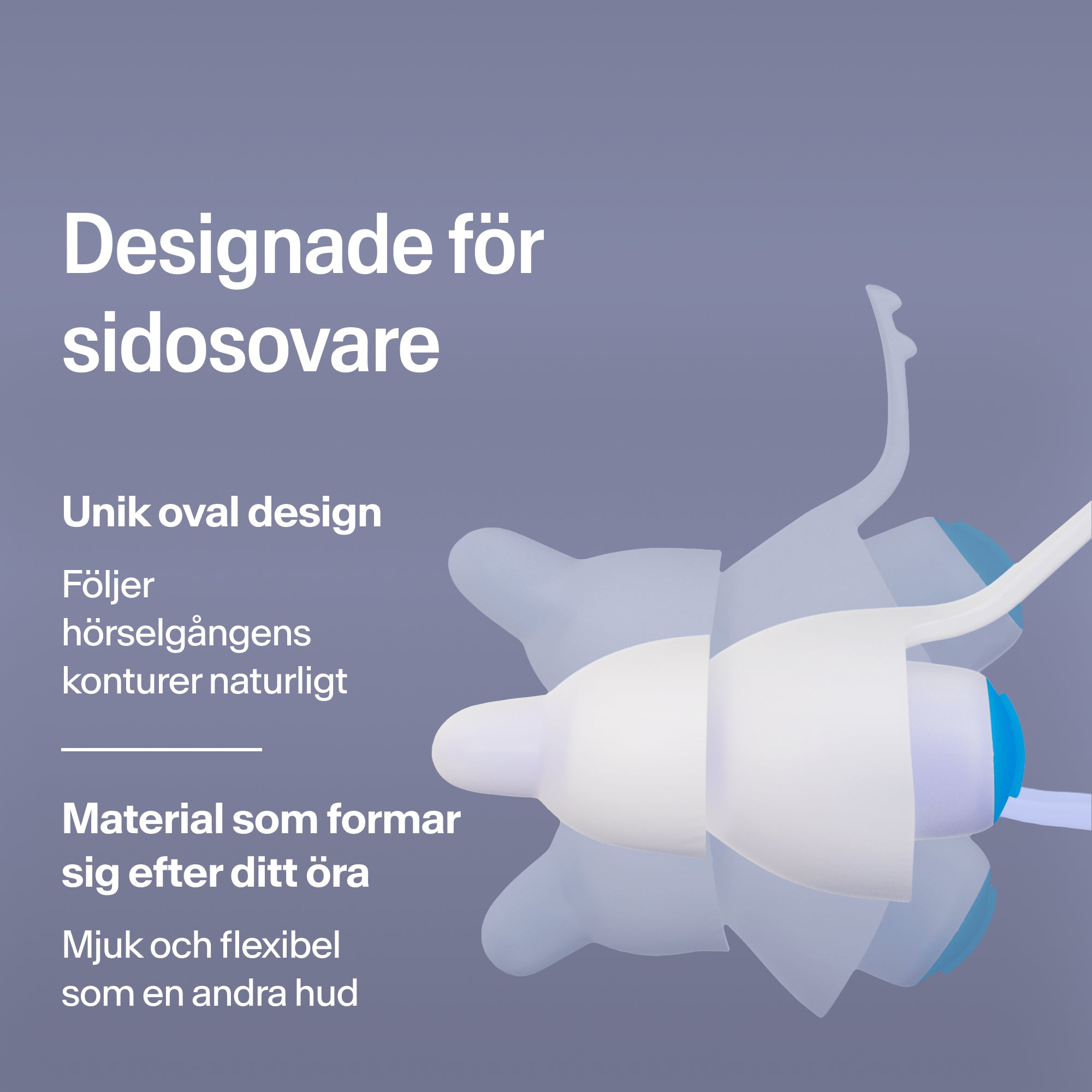
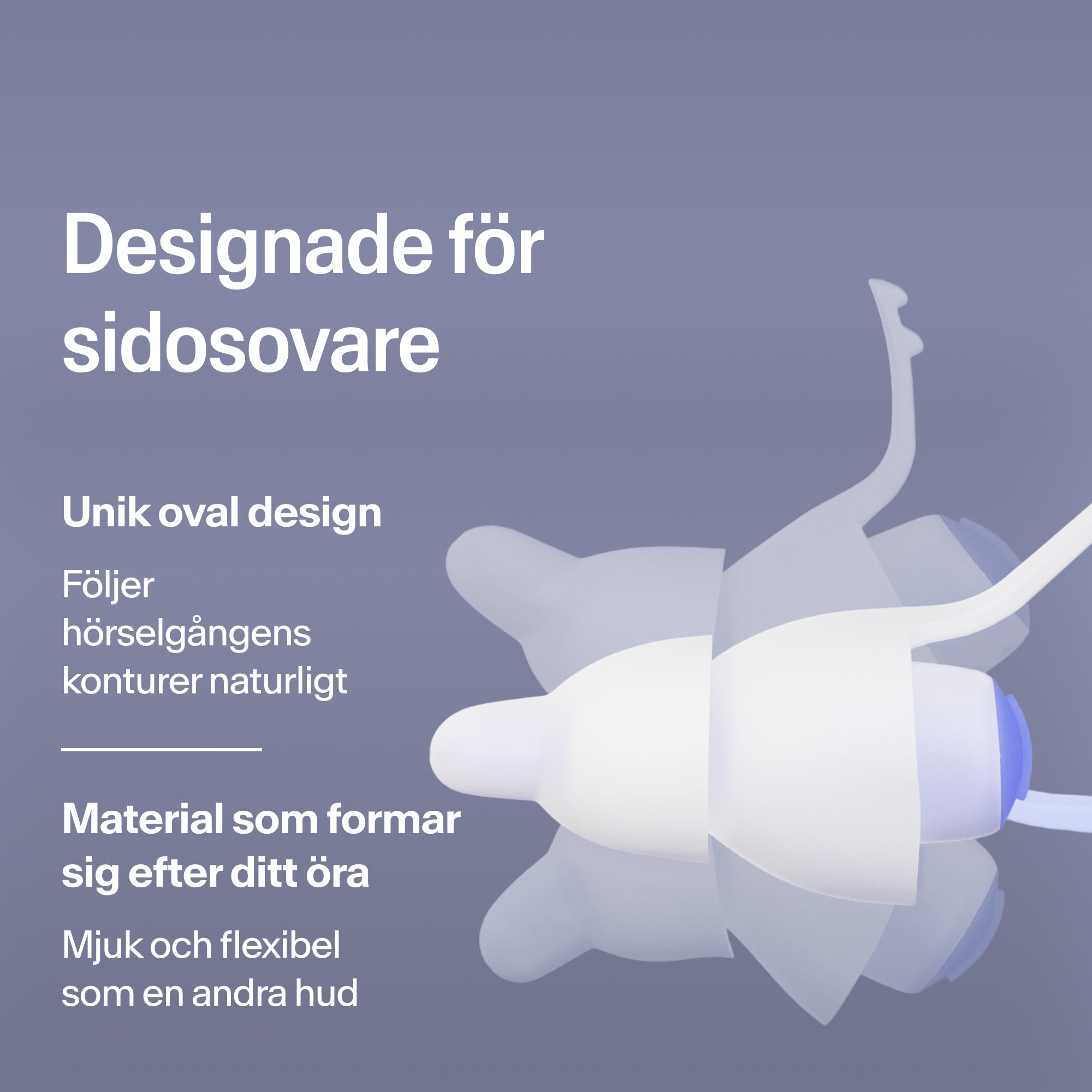
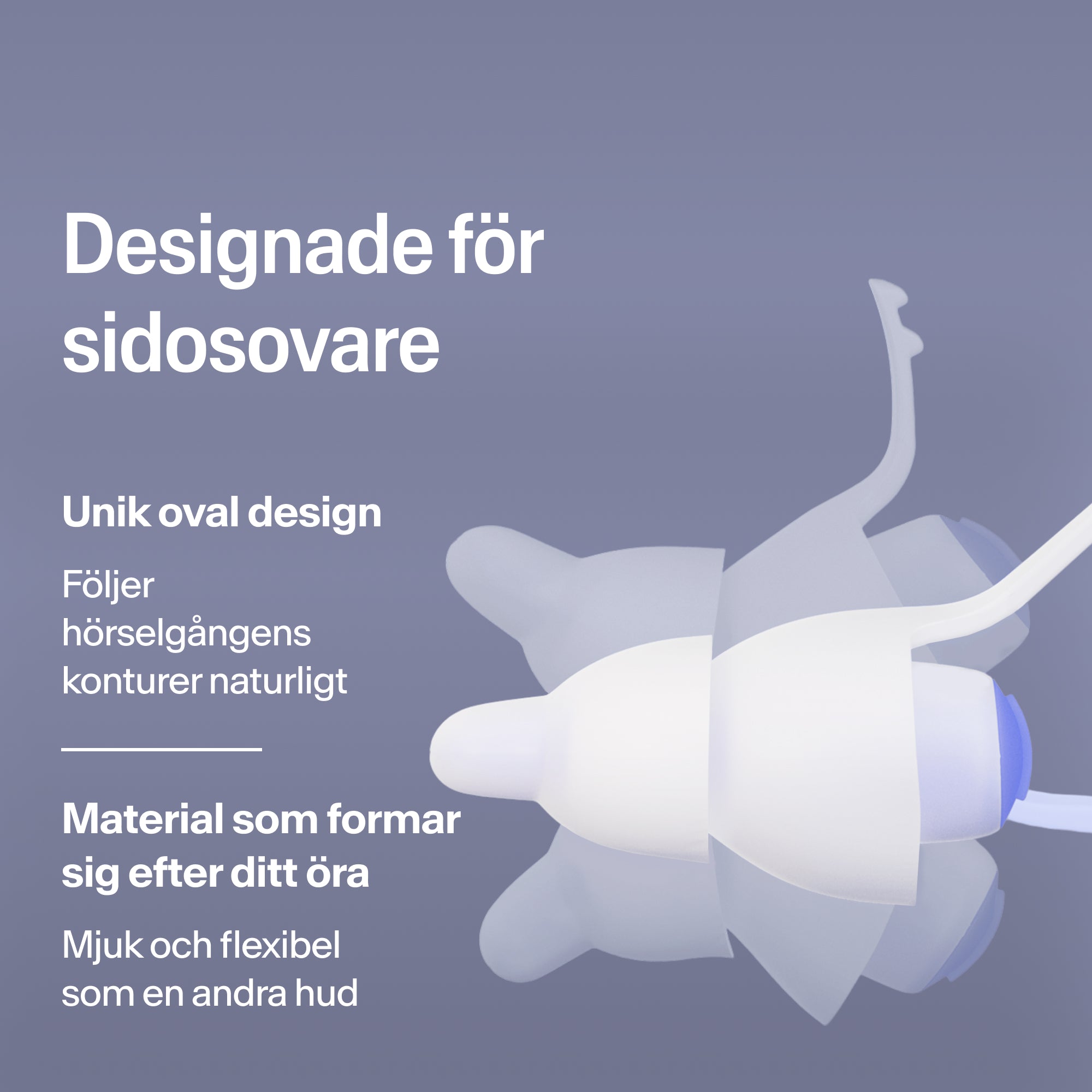
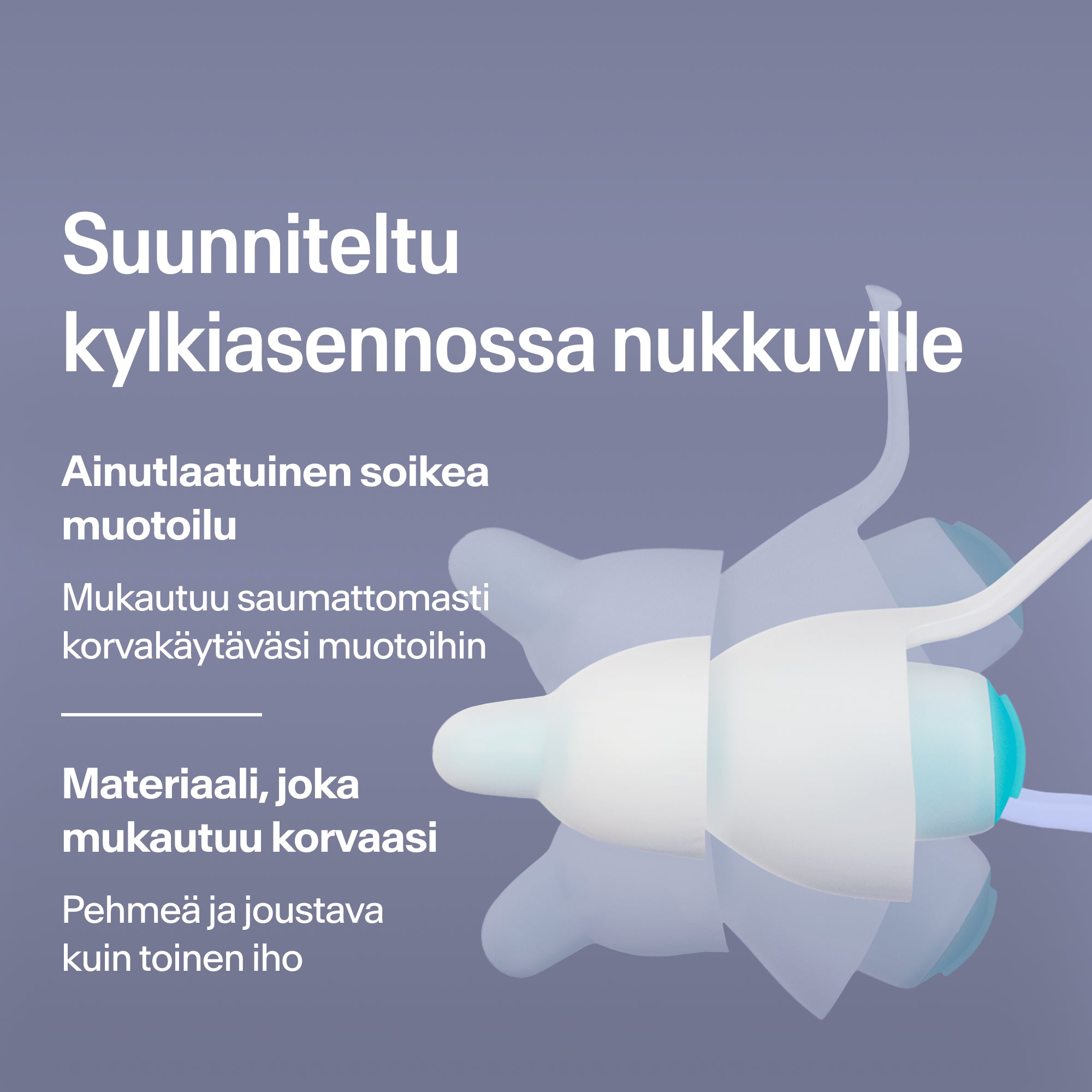
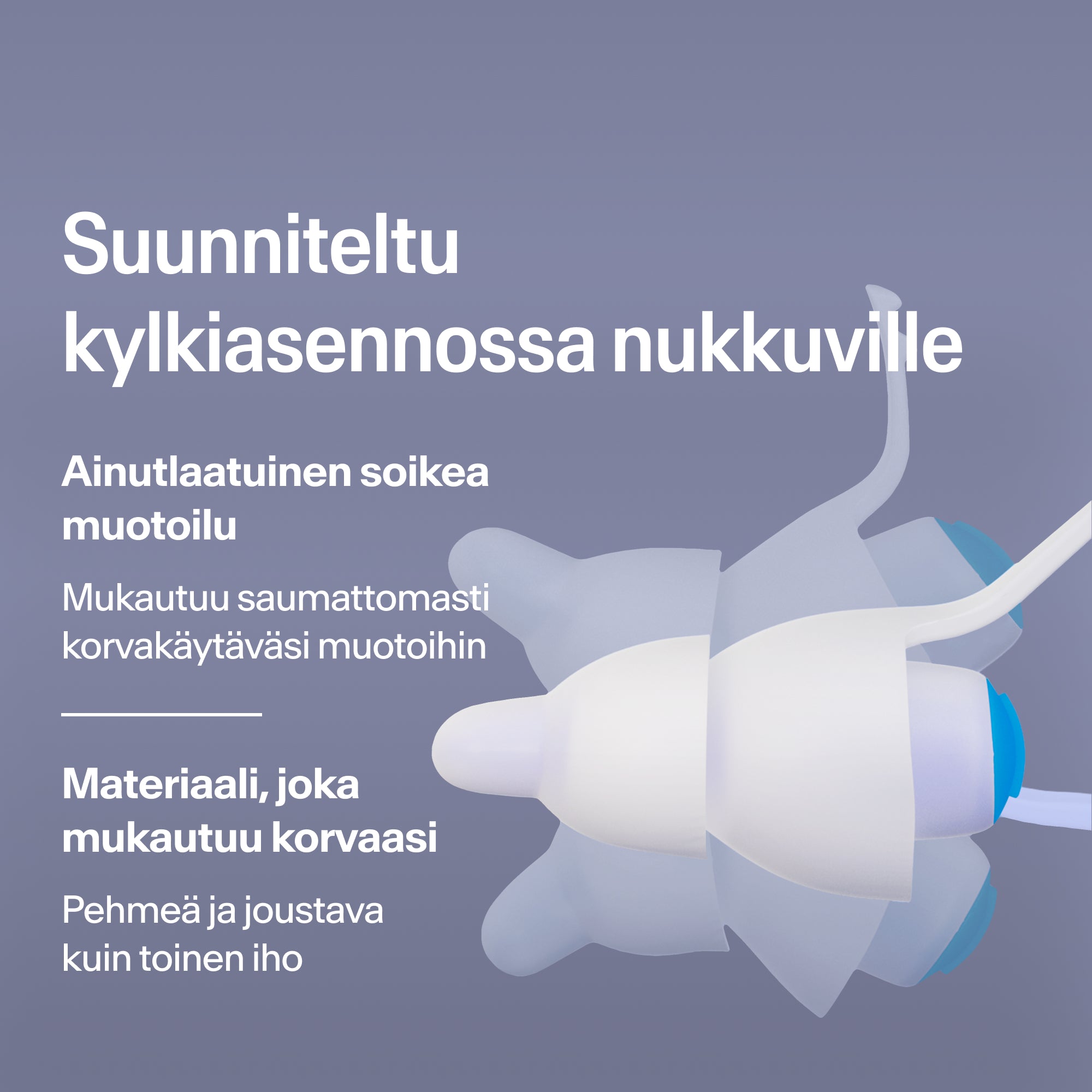
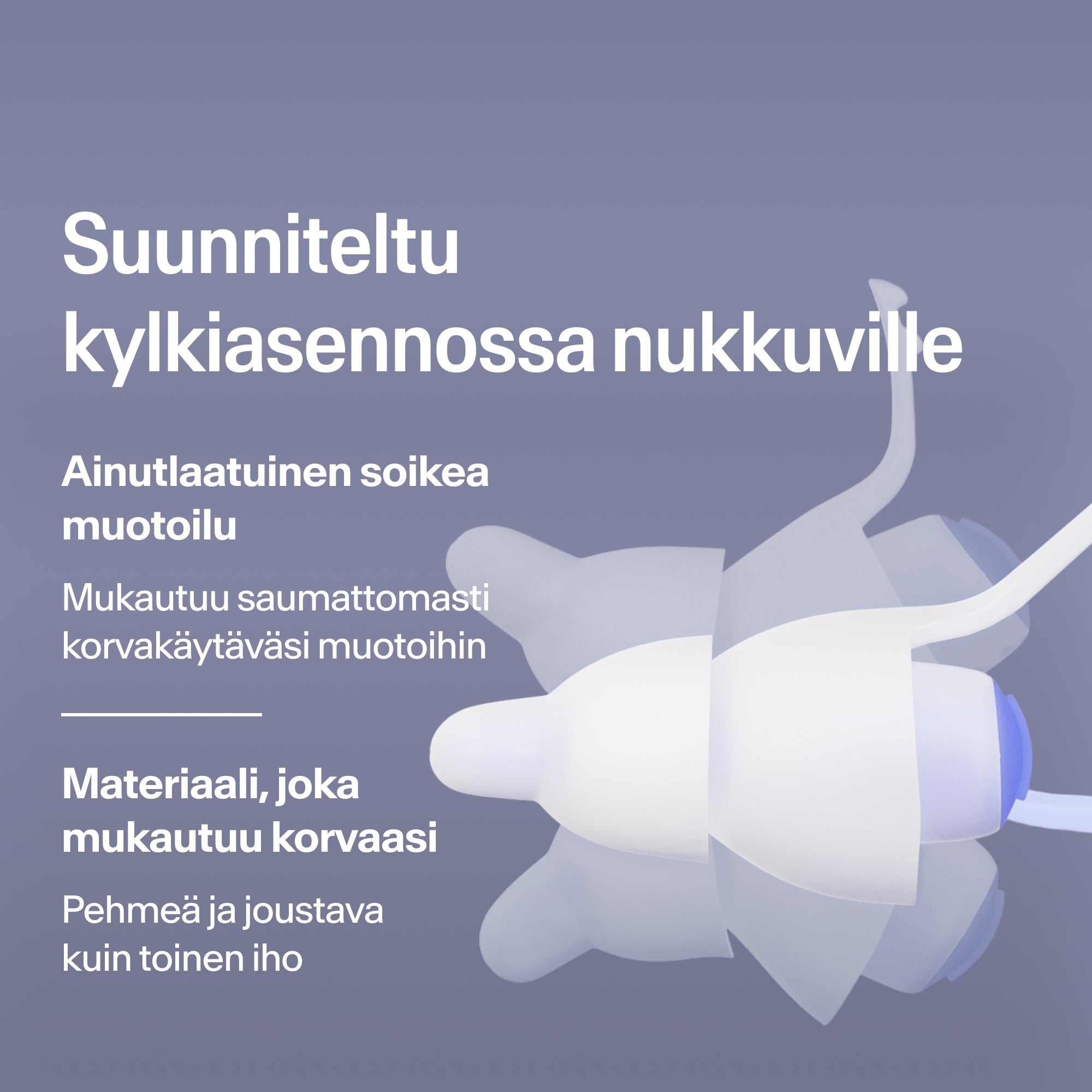
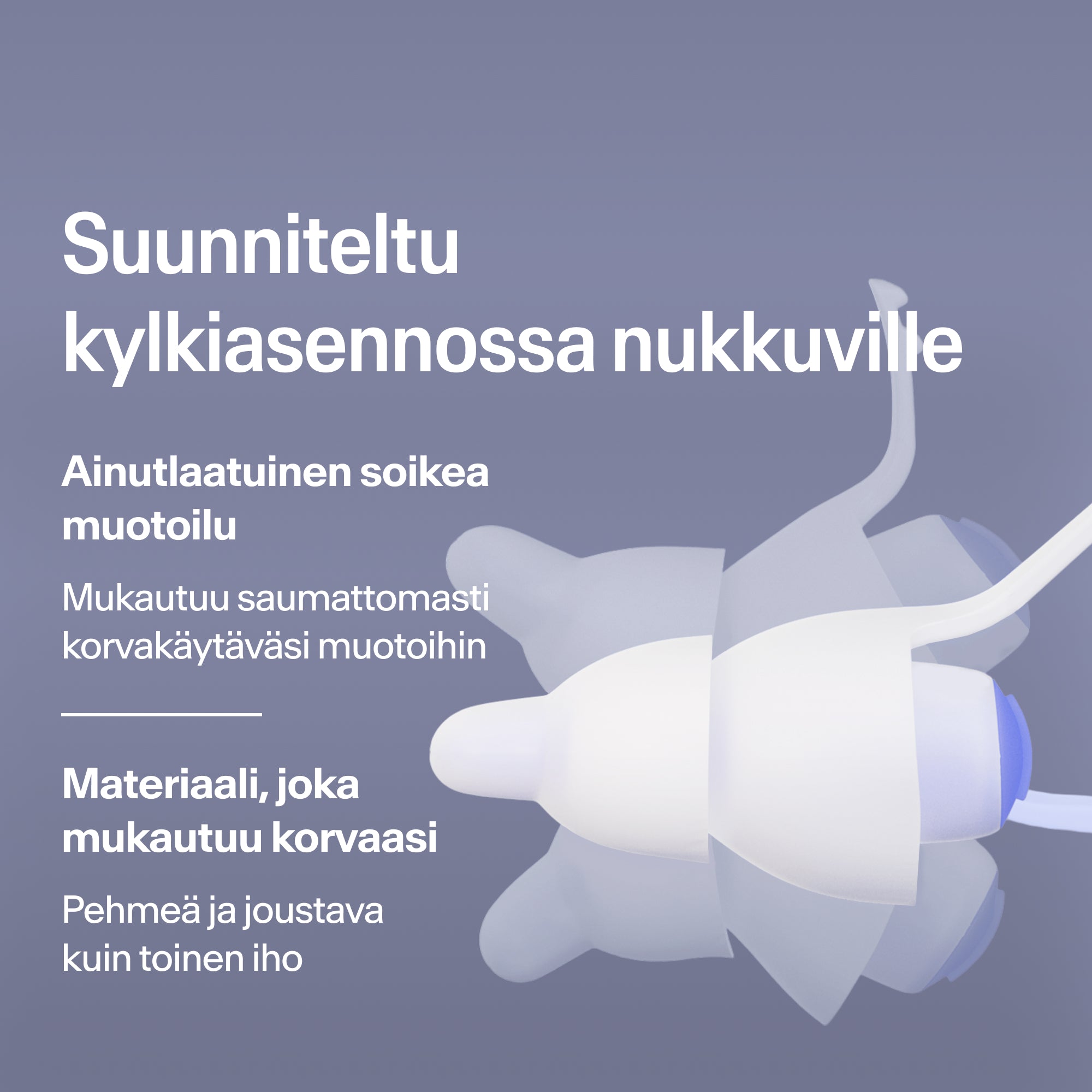
When you lie on your side, the pillow pushes on your ear from all directions. A plug with a hard core doesn't move with you, so it presses back. A flexible plug does: it gives way when you turn, shift or squash your ear into the pillow.
That's why sleep earplugs should bend in every direction, 360 degrees. Looking at silicone earplugs for sleeping? Check that the whole plug stays soft, and not just the tip. Comfortable ear plugs are the ones you forget you're wearing.
Noise reduction ratings (SNR vs. NRR) and pillow-pressure sealing
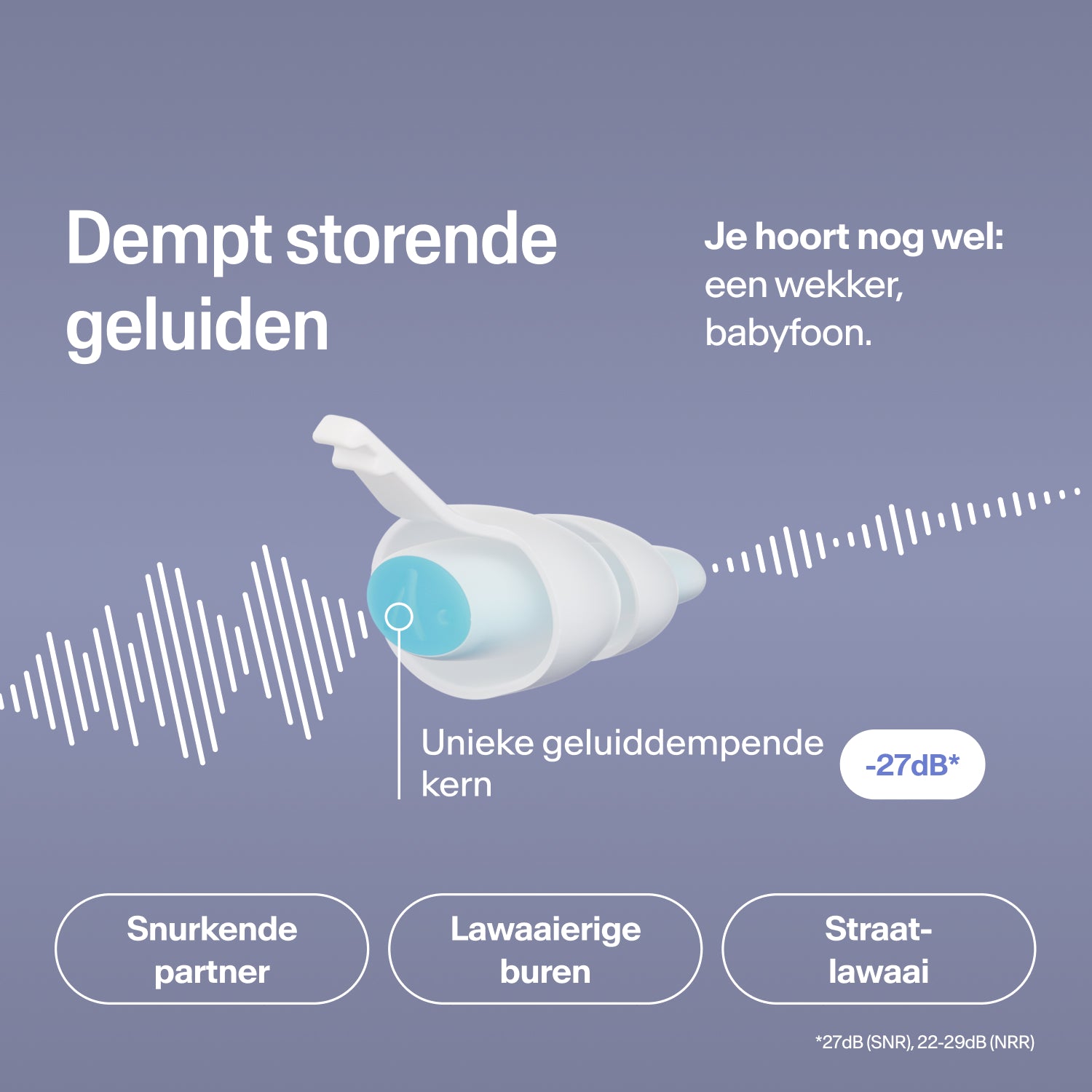
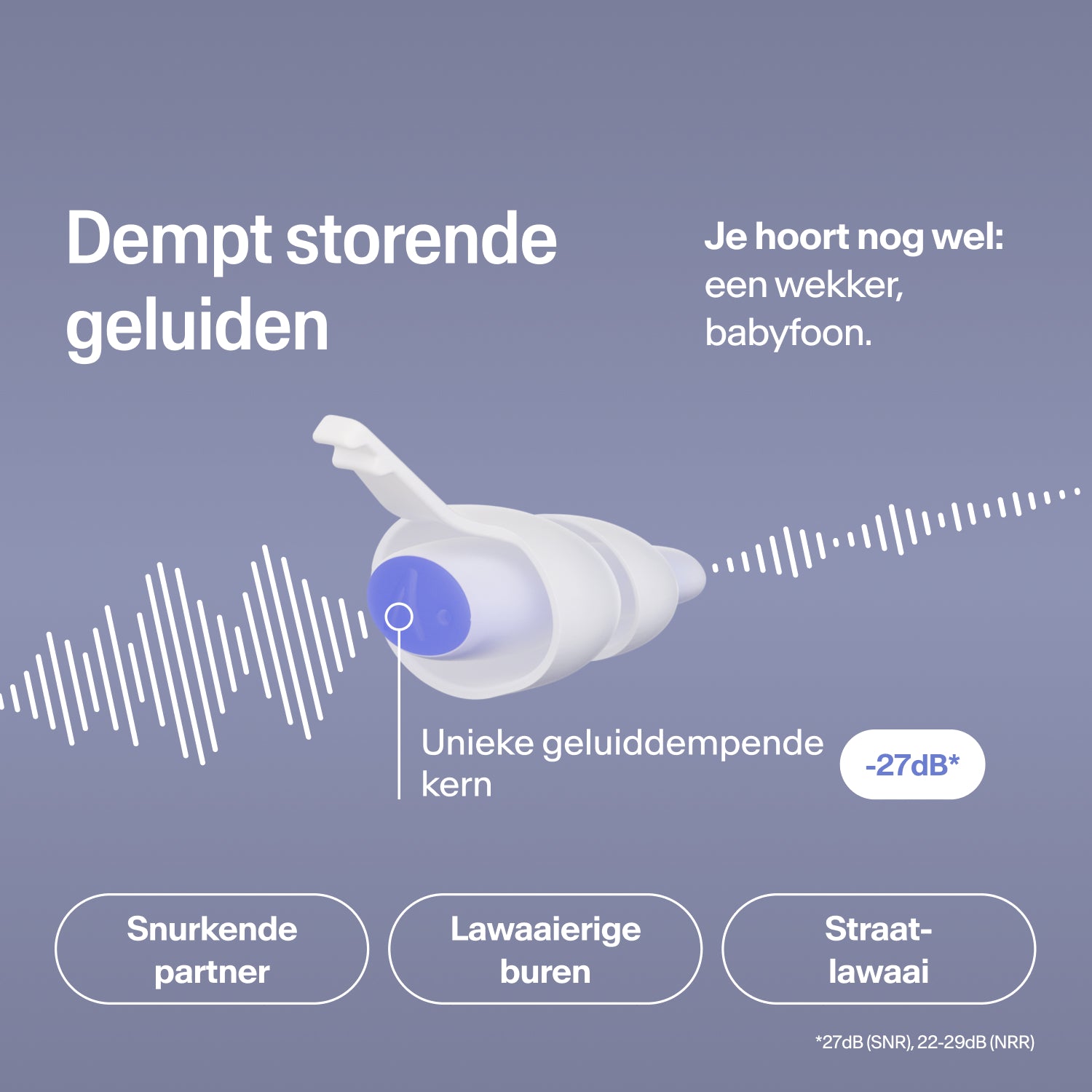
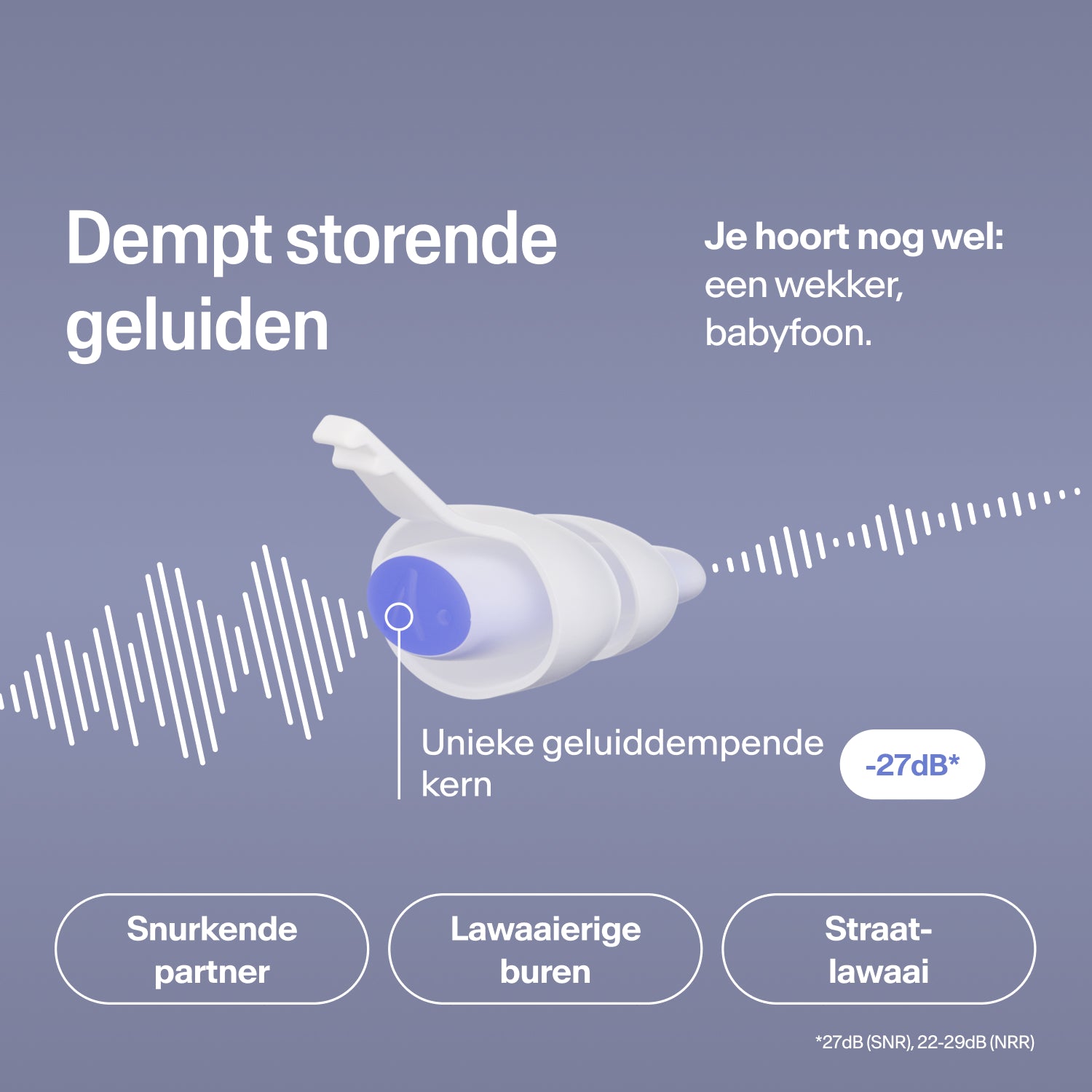
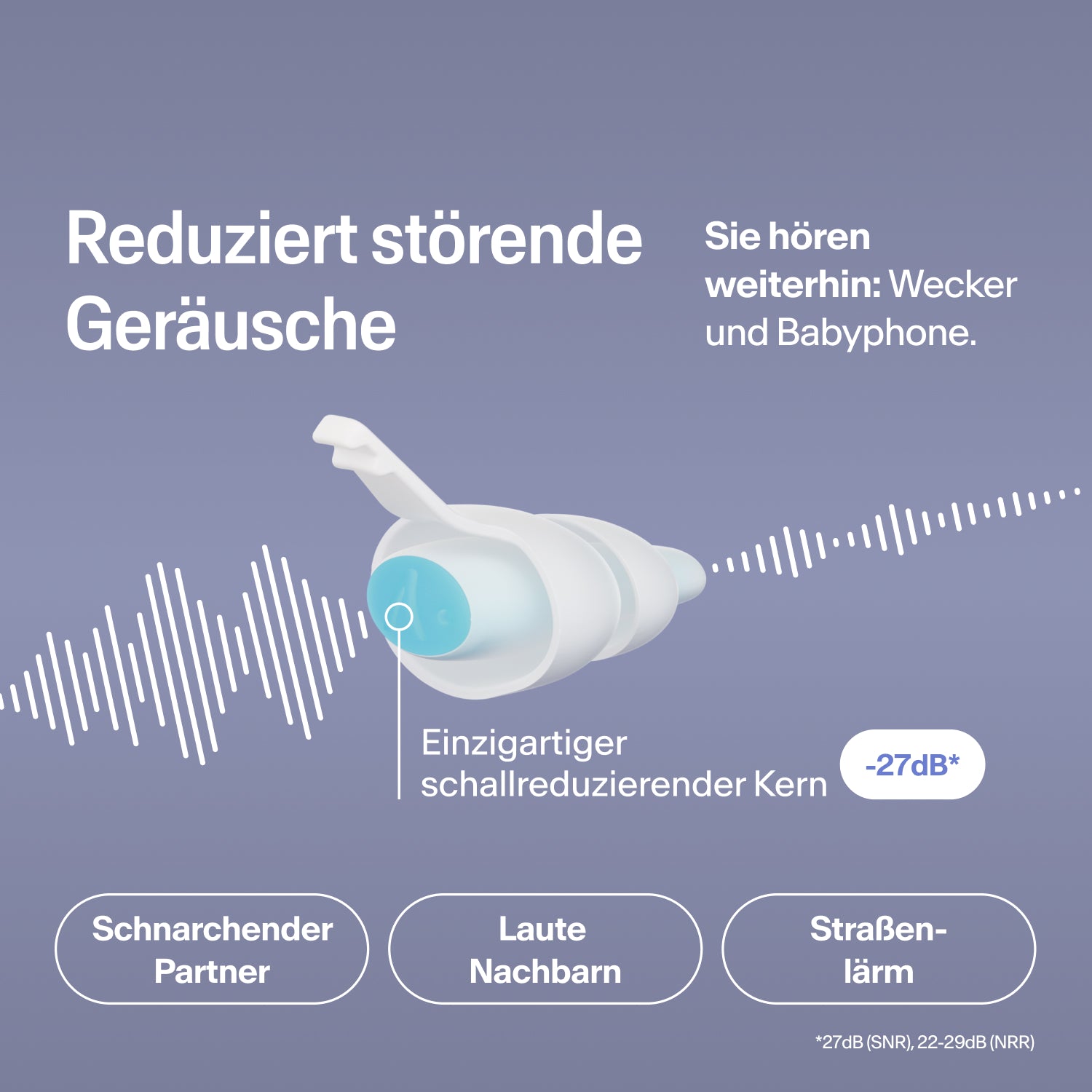
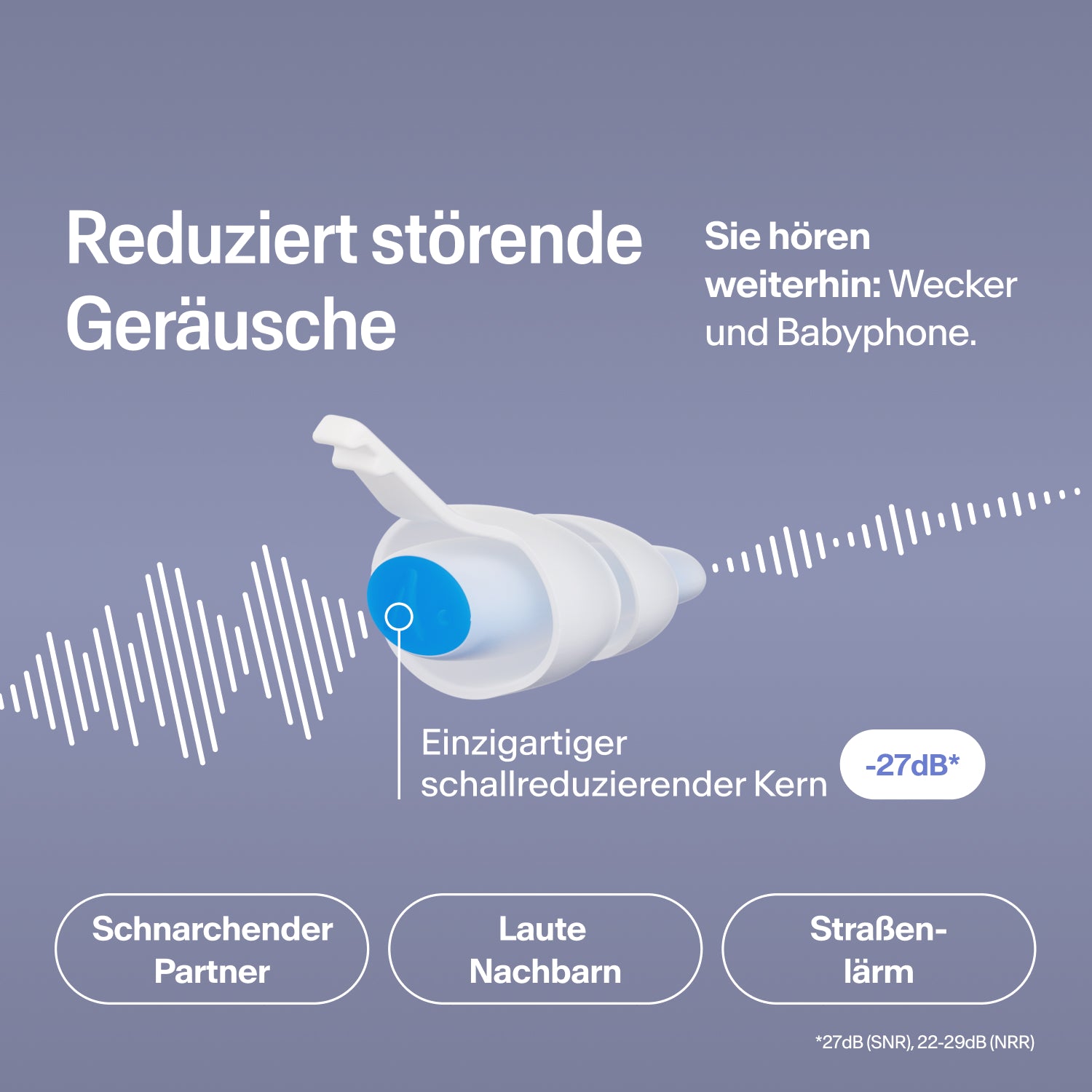
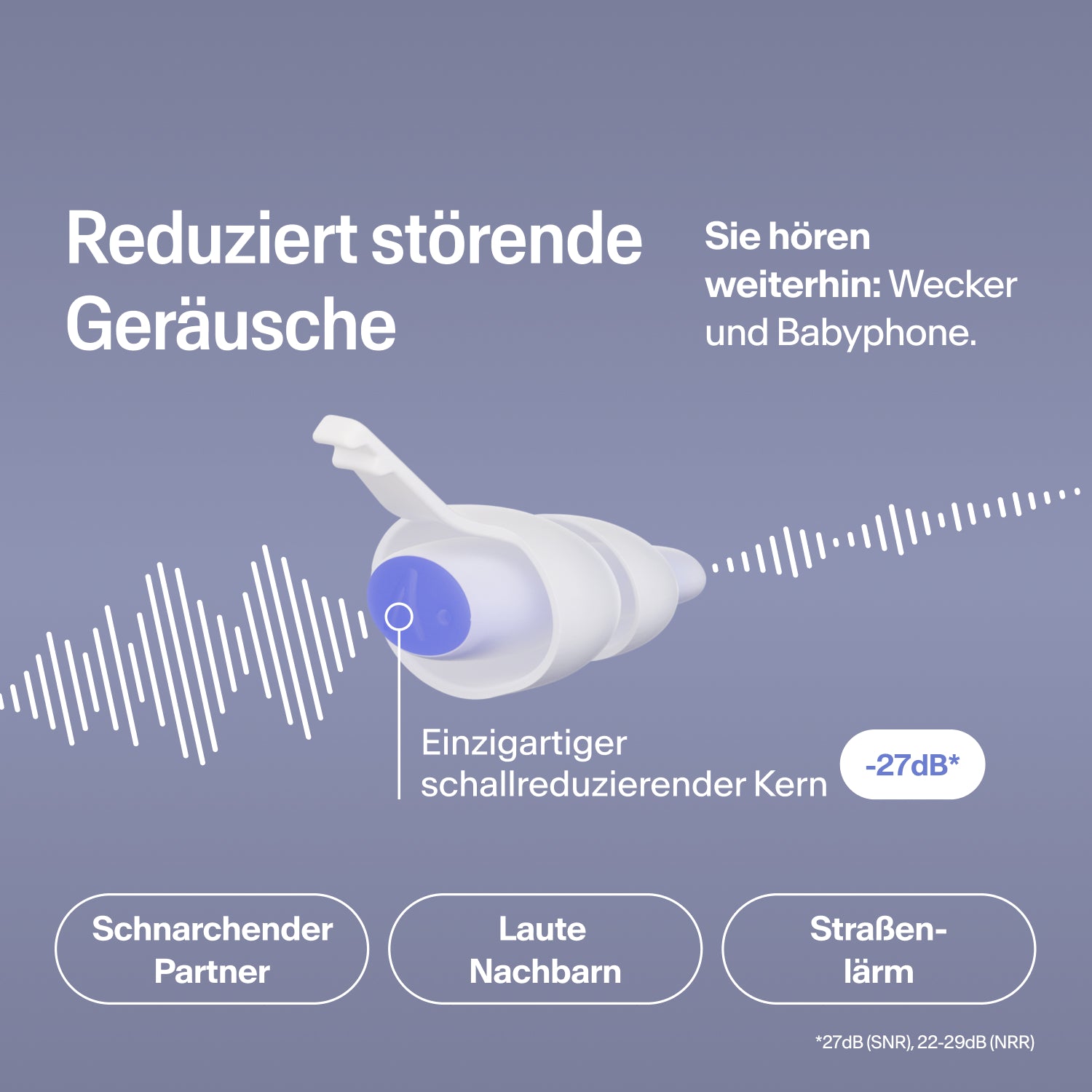
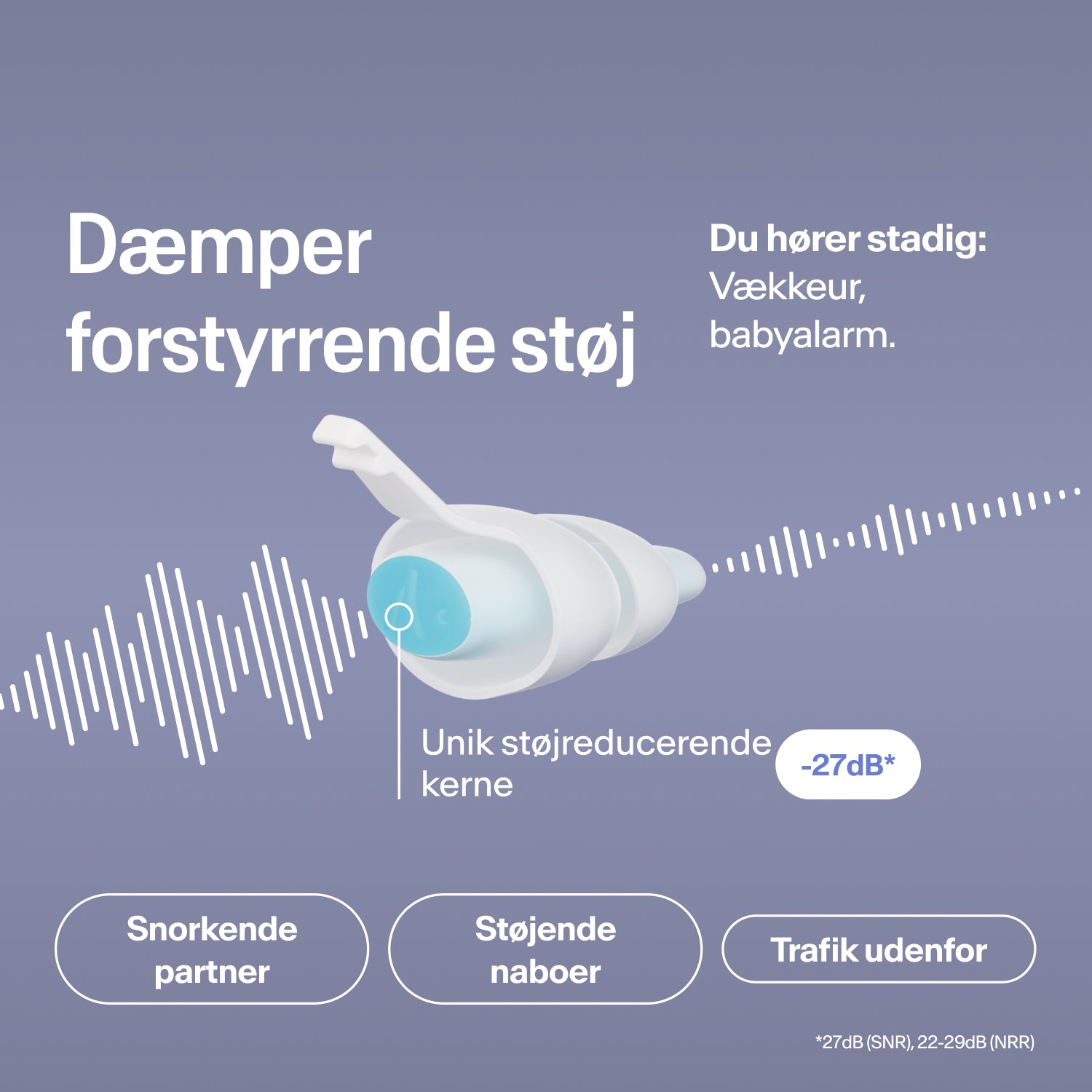
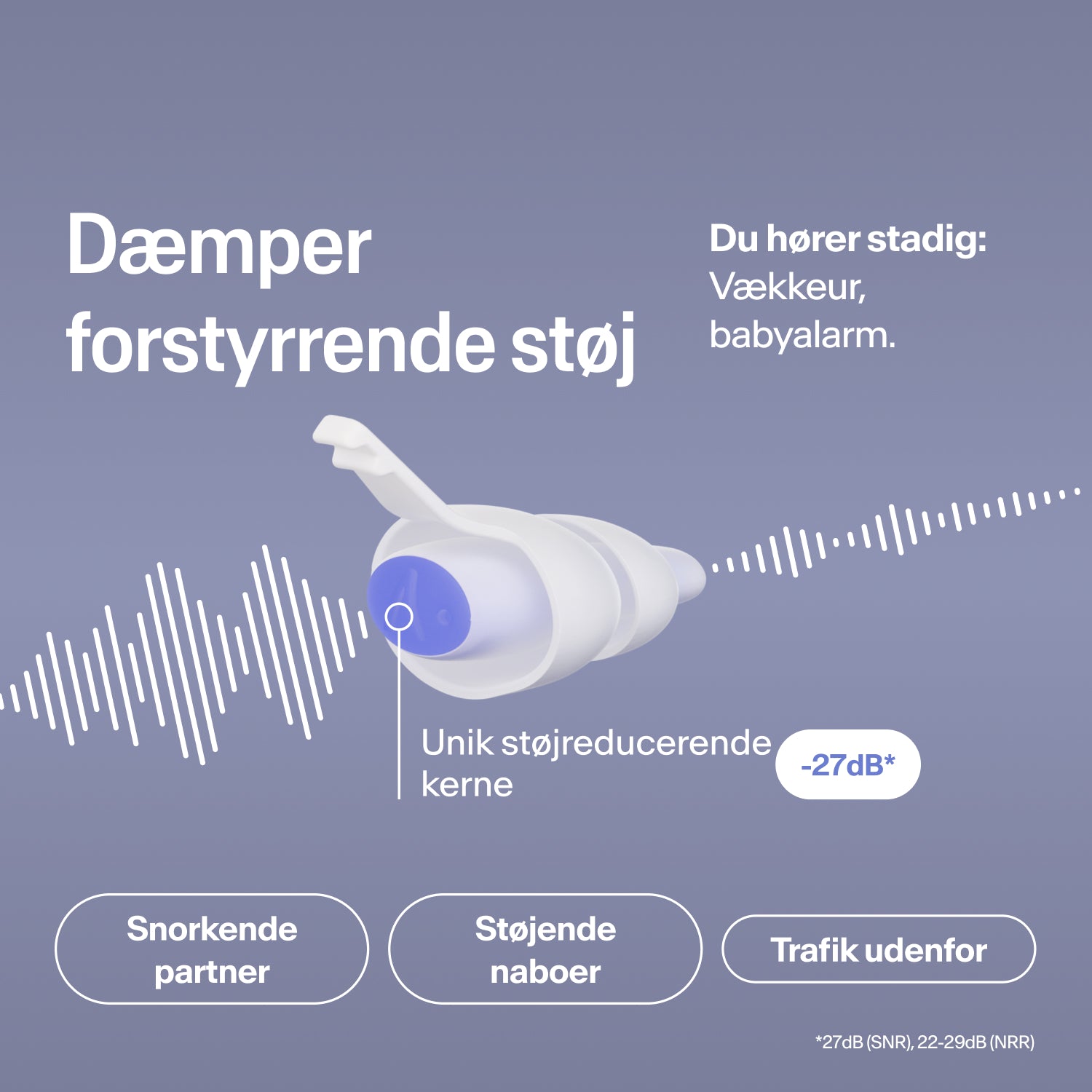
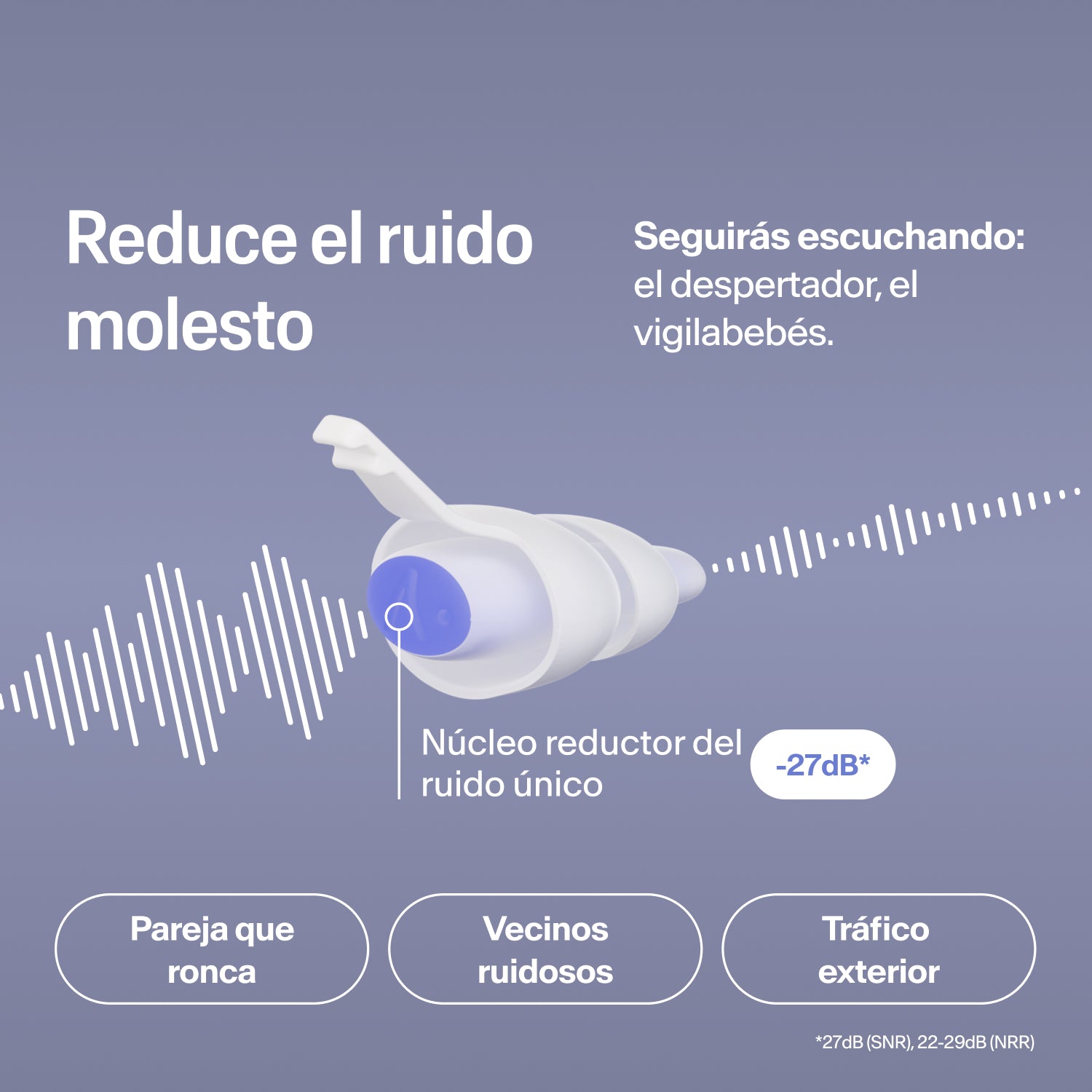
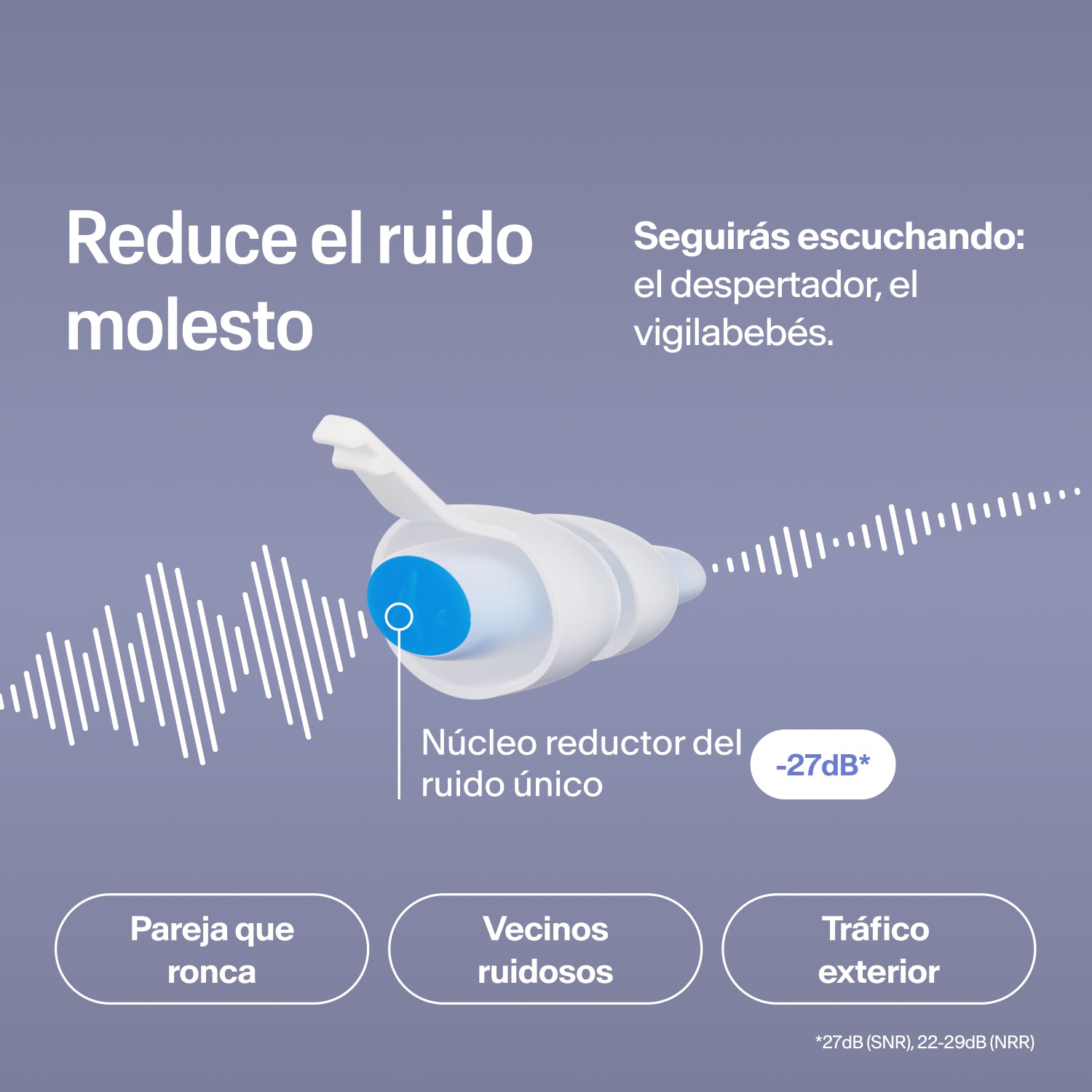
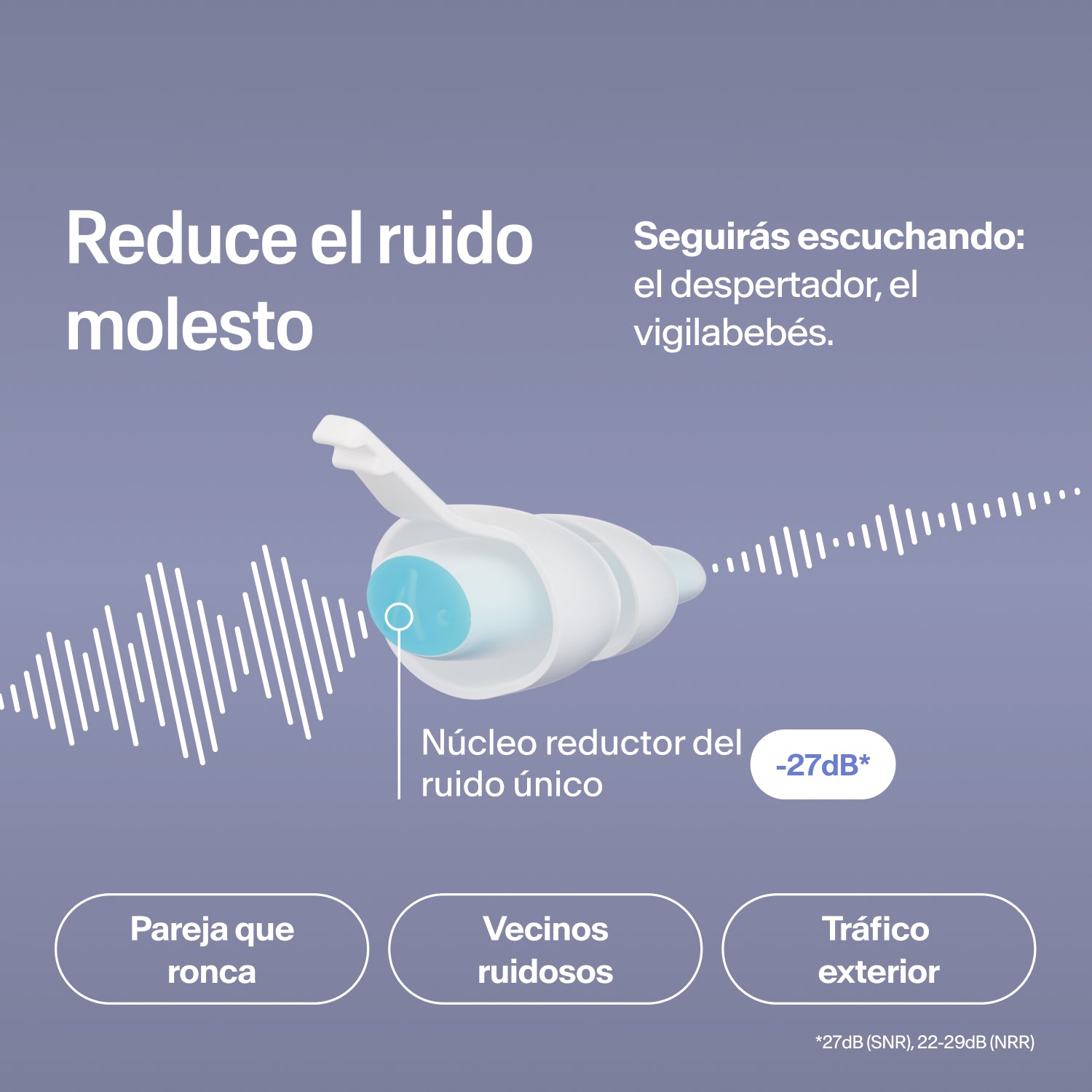
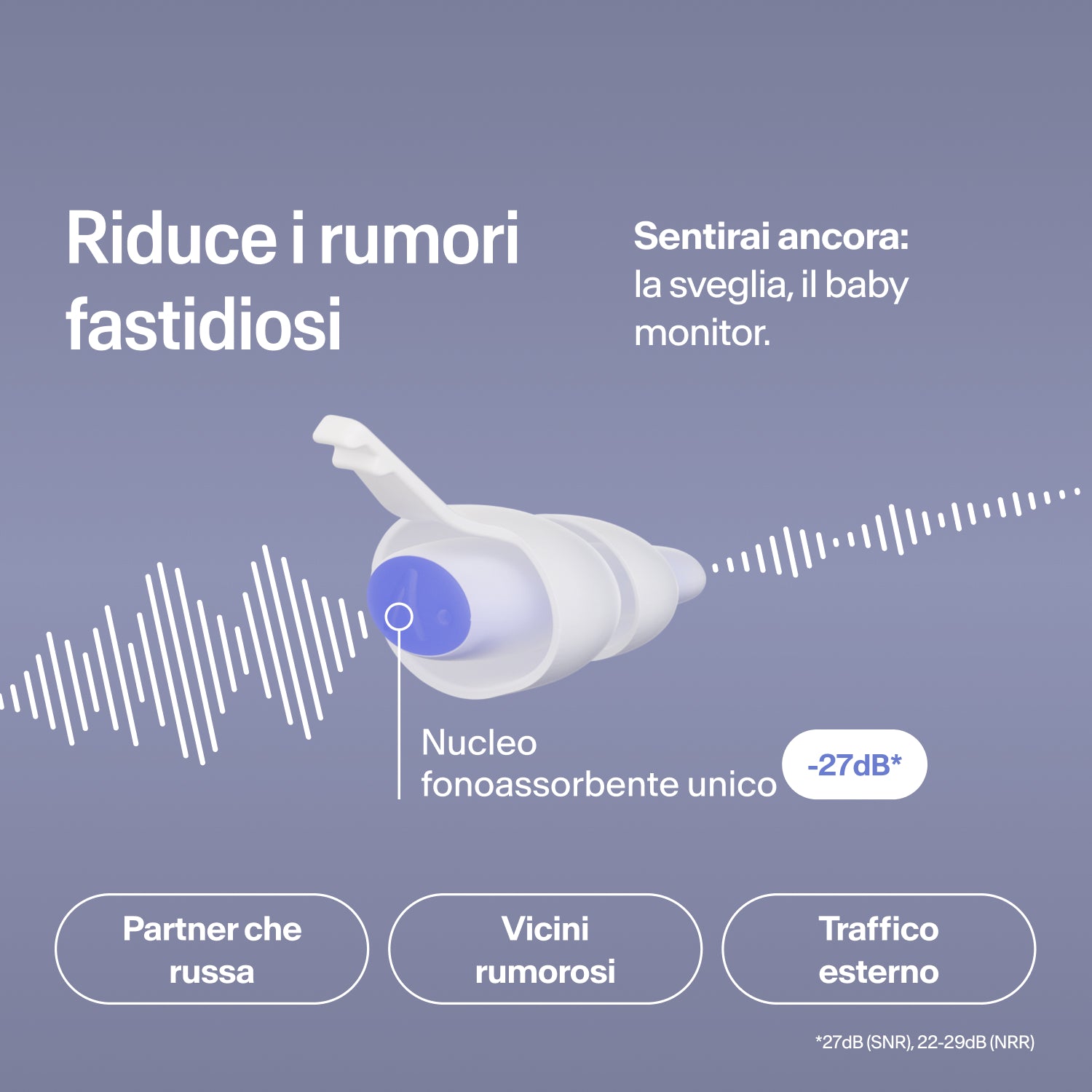
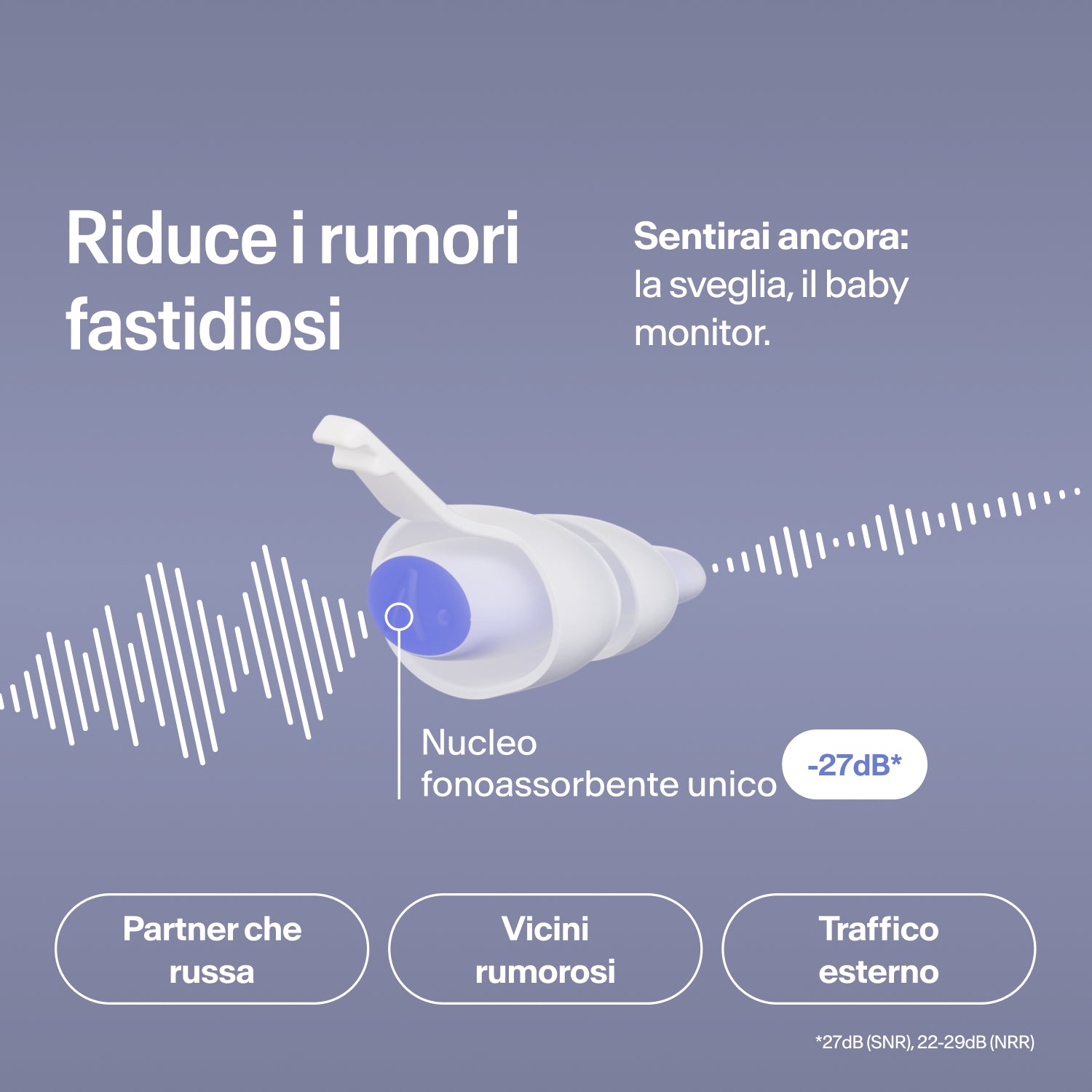
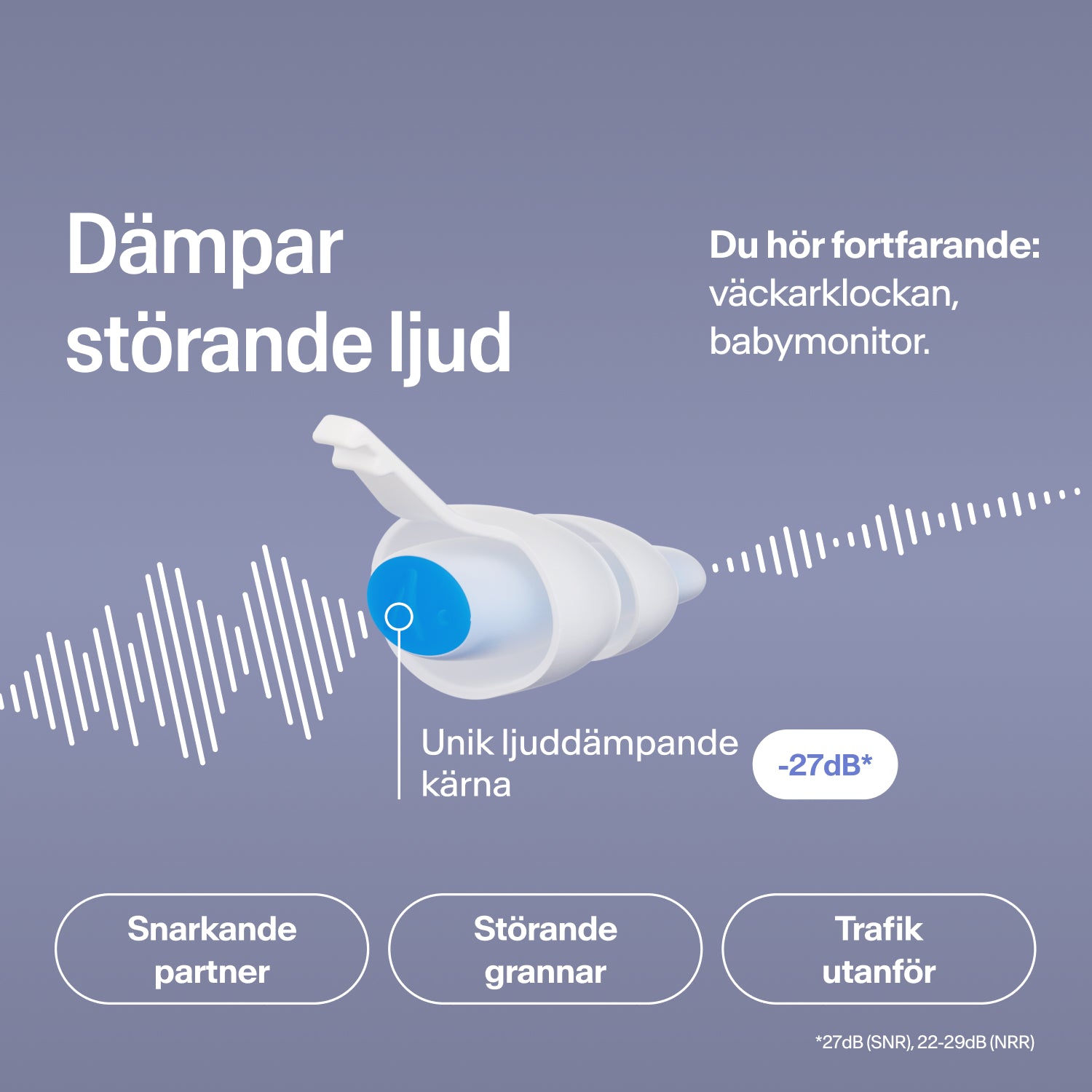
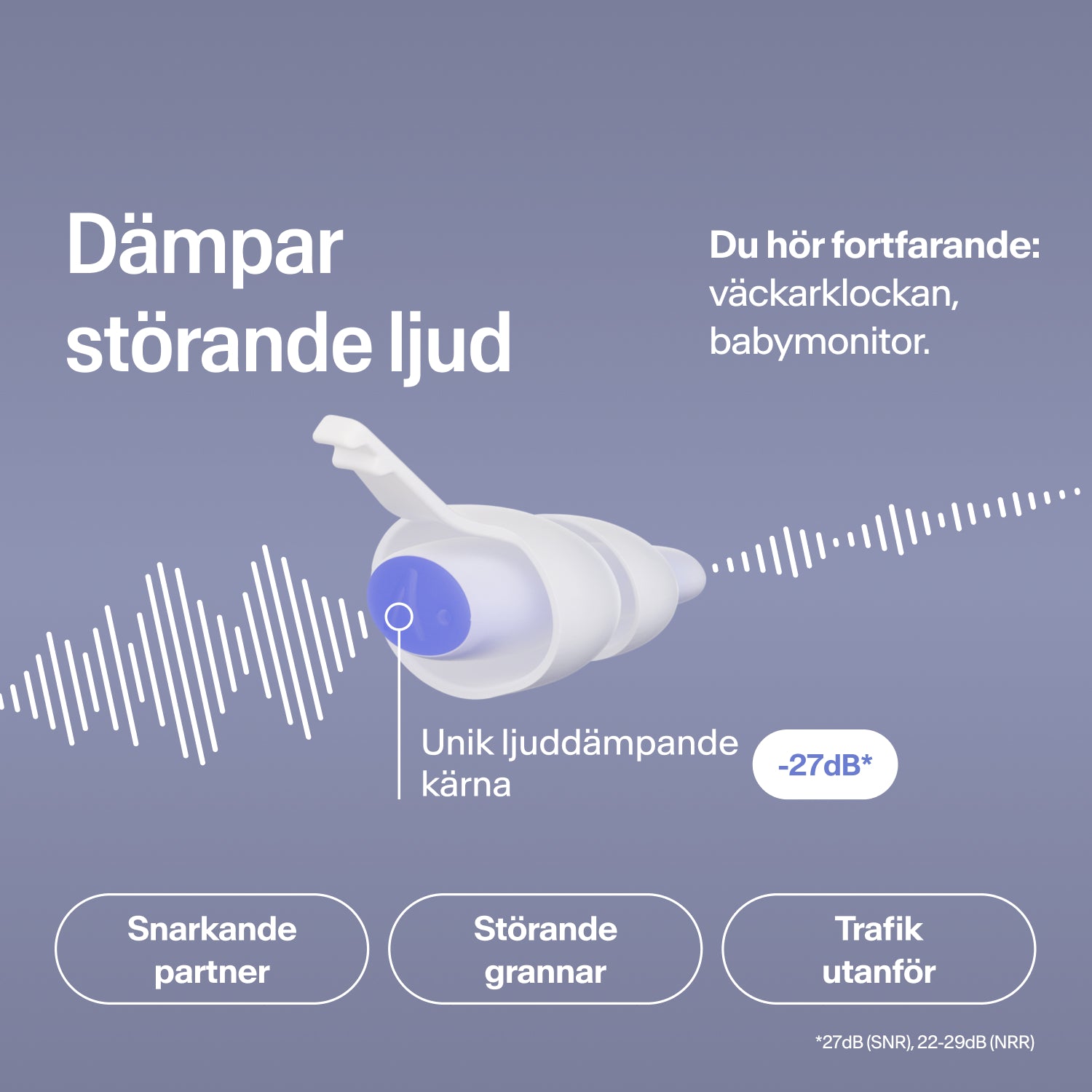
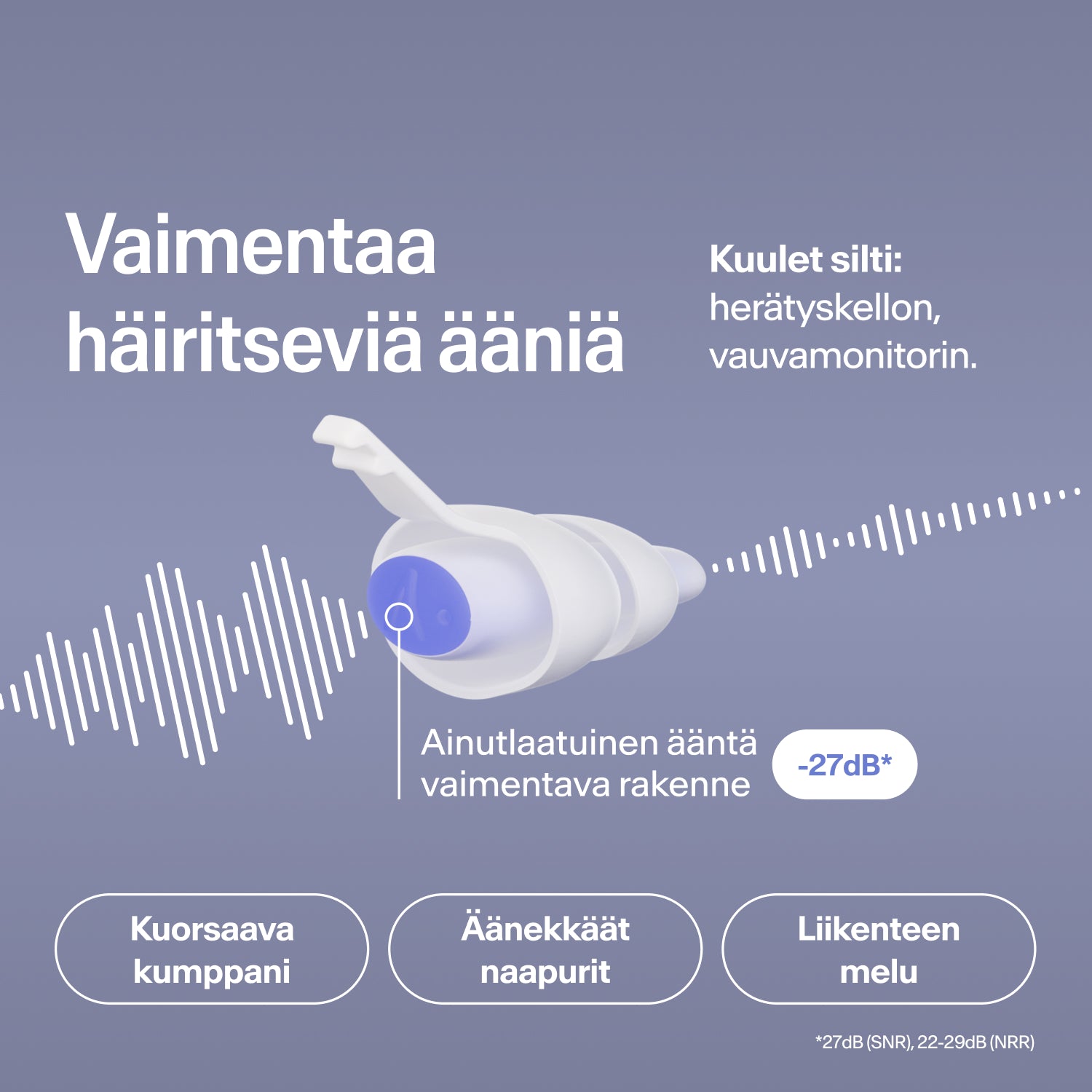
You'll see two ratings on earplug packaging: SNR (Single Number Rating) and NRR (Noise Reduction Rating). SNR is the European standard, NRR the American one. They're measured with different methods, so you can't compare the numbers one to one.
Looking for the highest NRR ear plugs or the highest dB earplugs? A big number doesn't tell you how a plug performs at night. The rating is measured in a lab, but you sleep with your ear pressed into a pillow. If the plug shifts or doesn't seal, you won't get the noise reduction on the box. That's why fit and comfort count as much as the number.
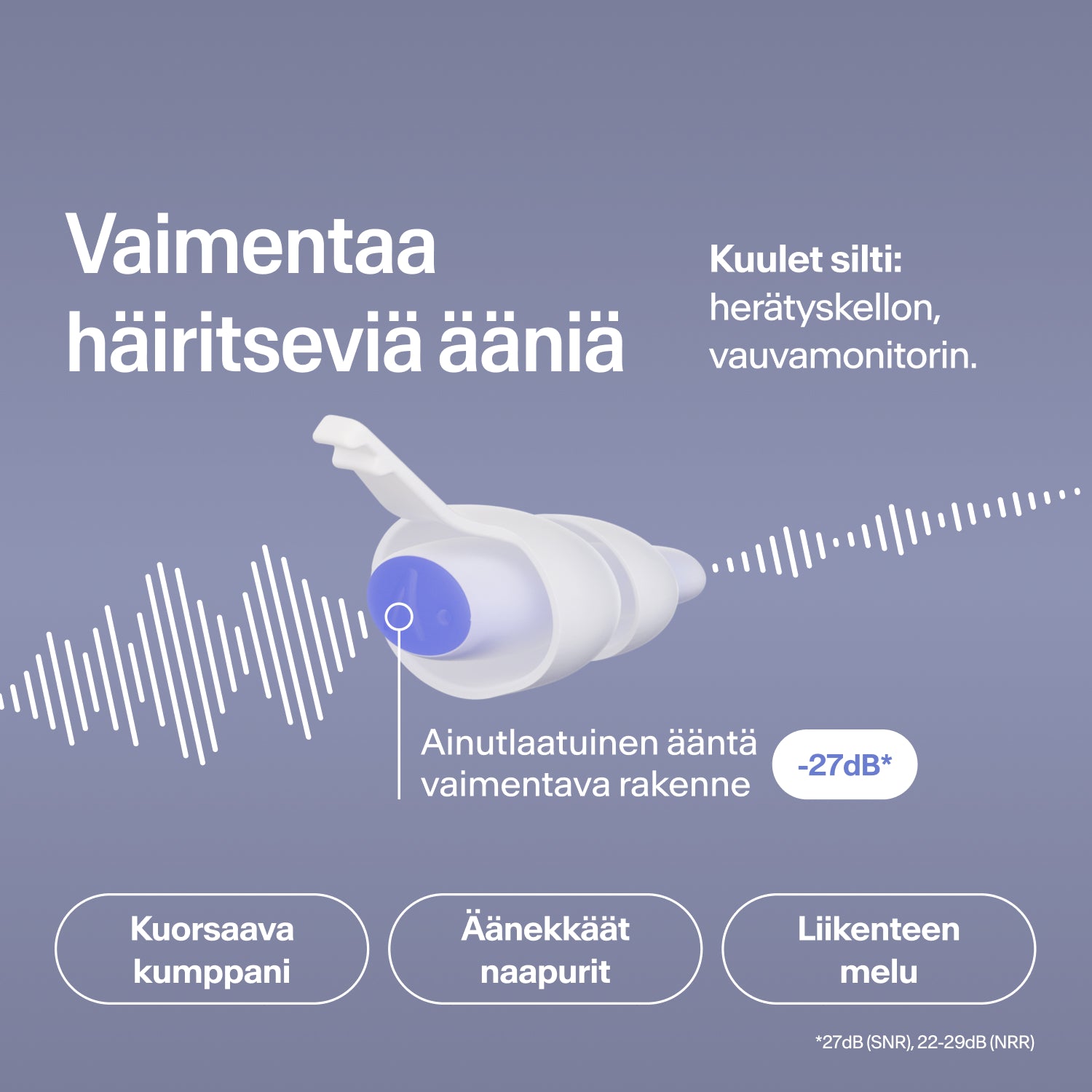
What you need also depends on the noise. Light street noise asks for something different than a partner who's really sawing logs. Pick a rating that suits your situation, and a plug you can wear all night. SleepDeep has an SNR of 27 dB.
Which earplugs suit side sleeping?
Side sleeping asks something different from an earplug: nothing should press against your pillow. Here's how three Alpine earplugs do that, and who each one suits.
SleepDeep: a flush fit
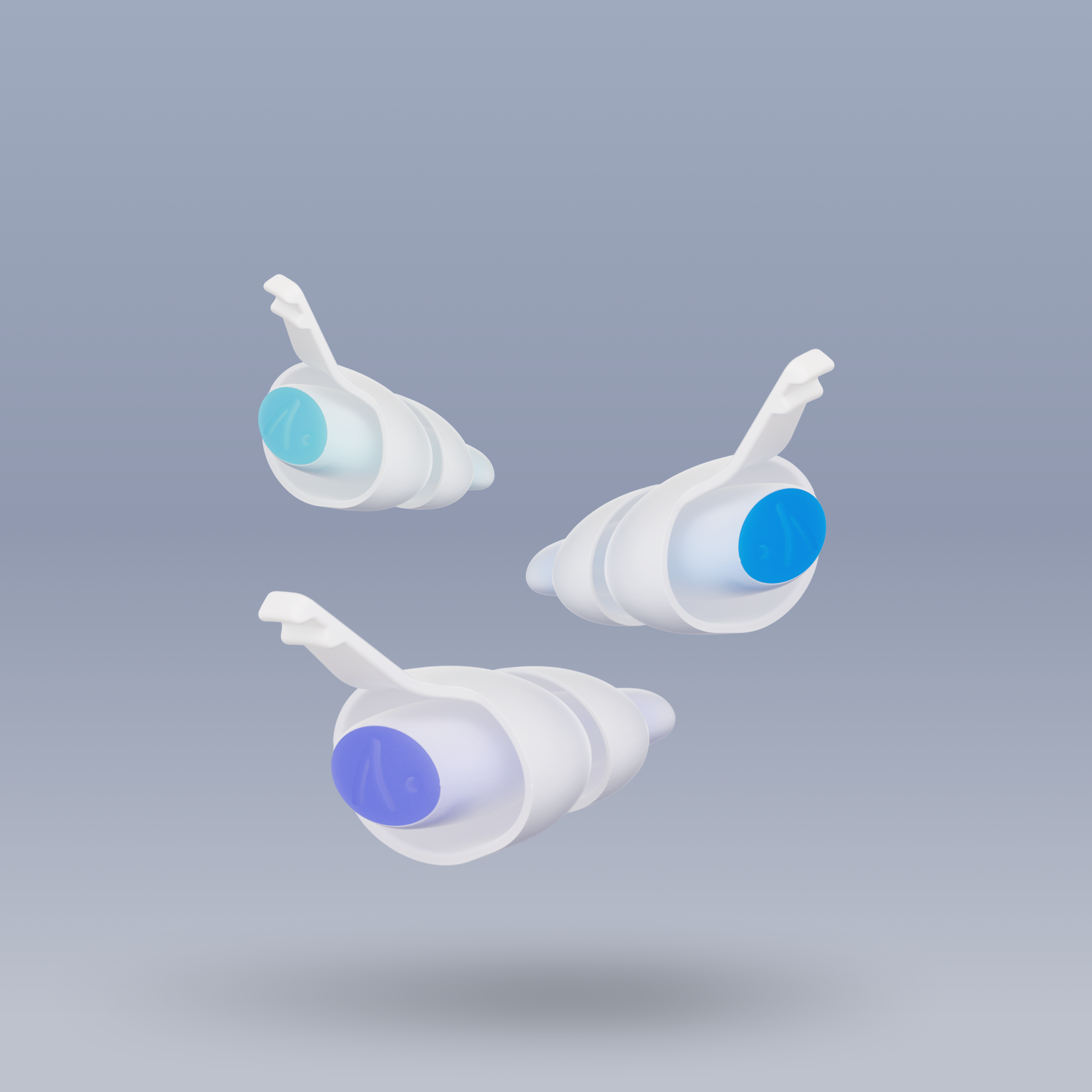
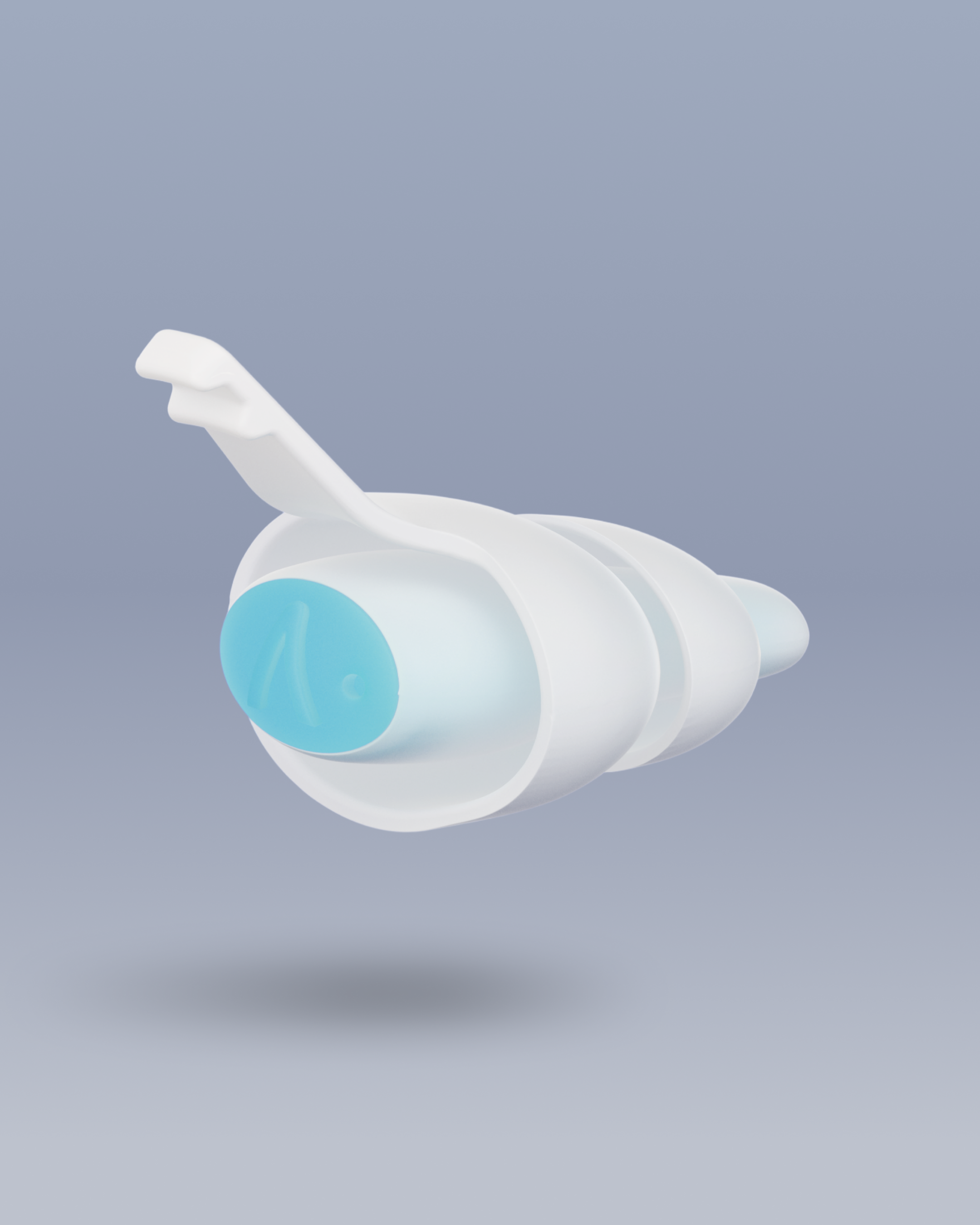
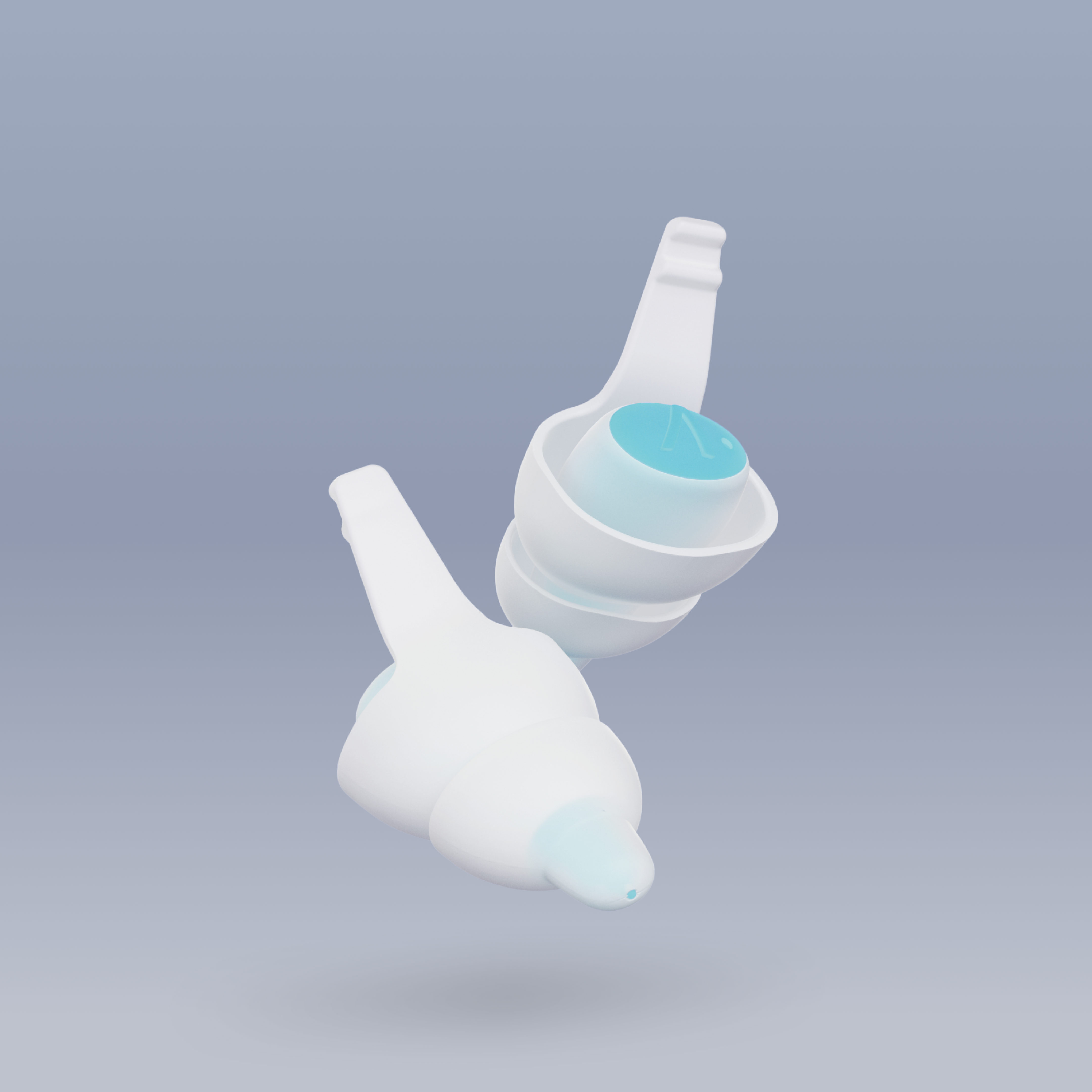
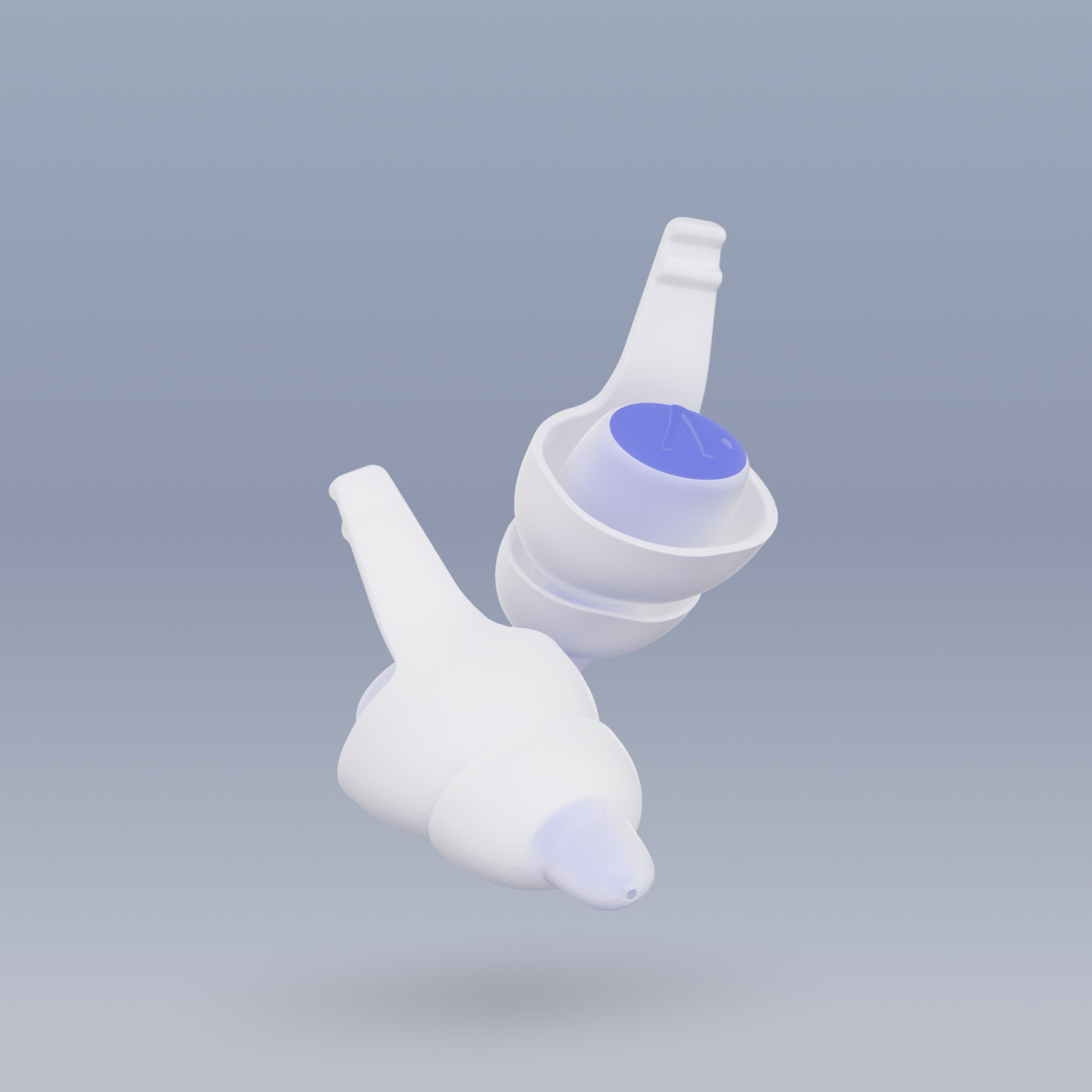
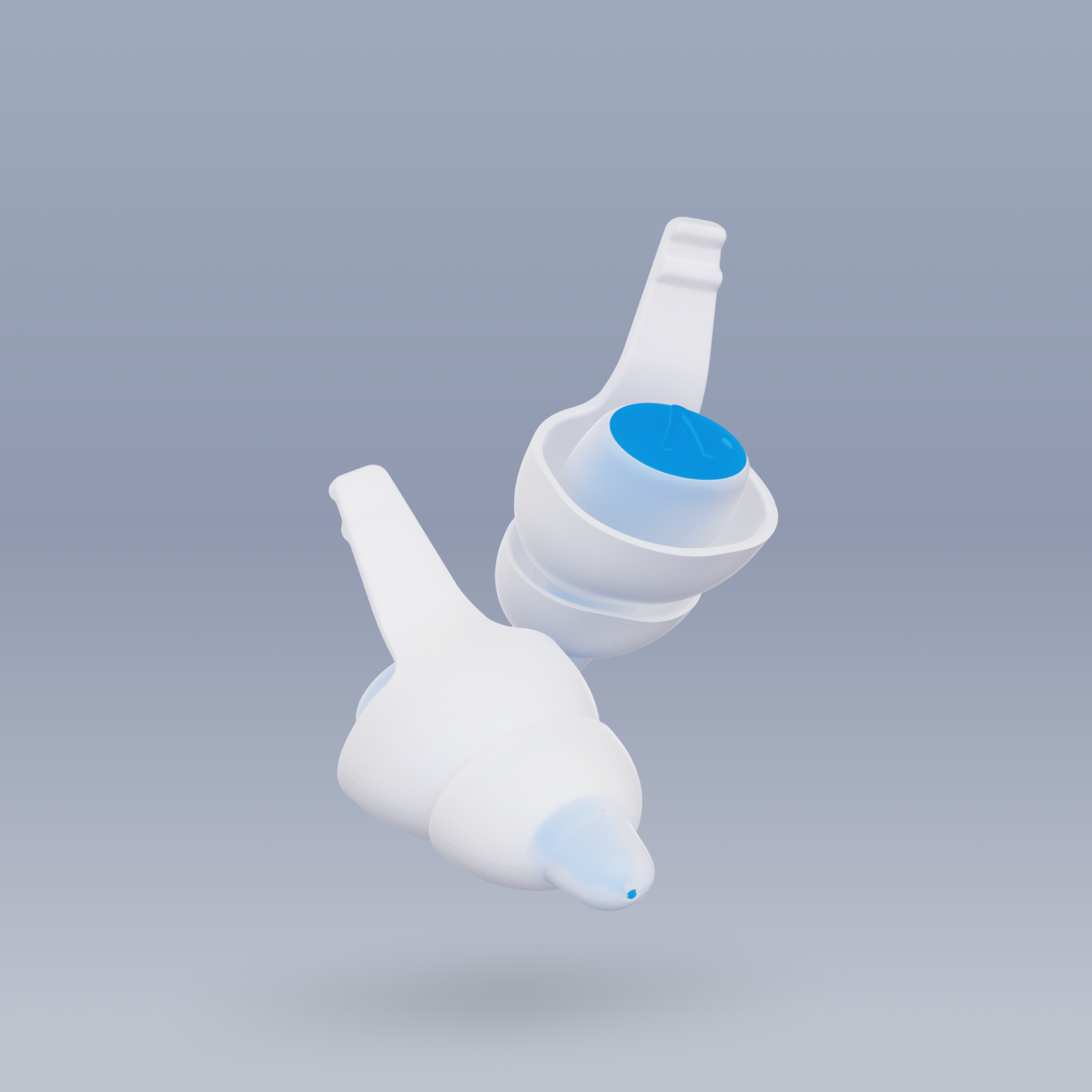
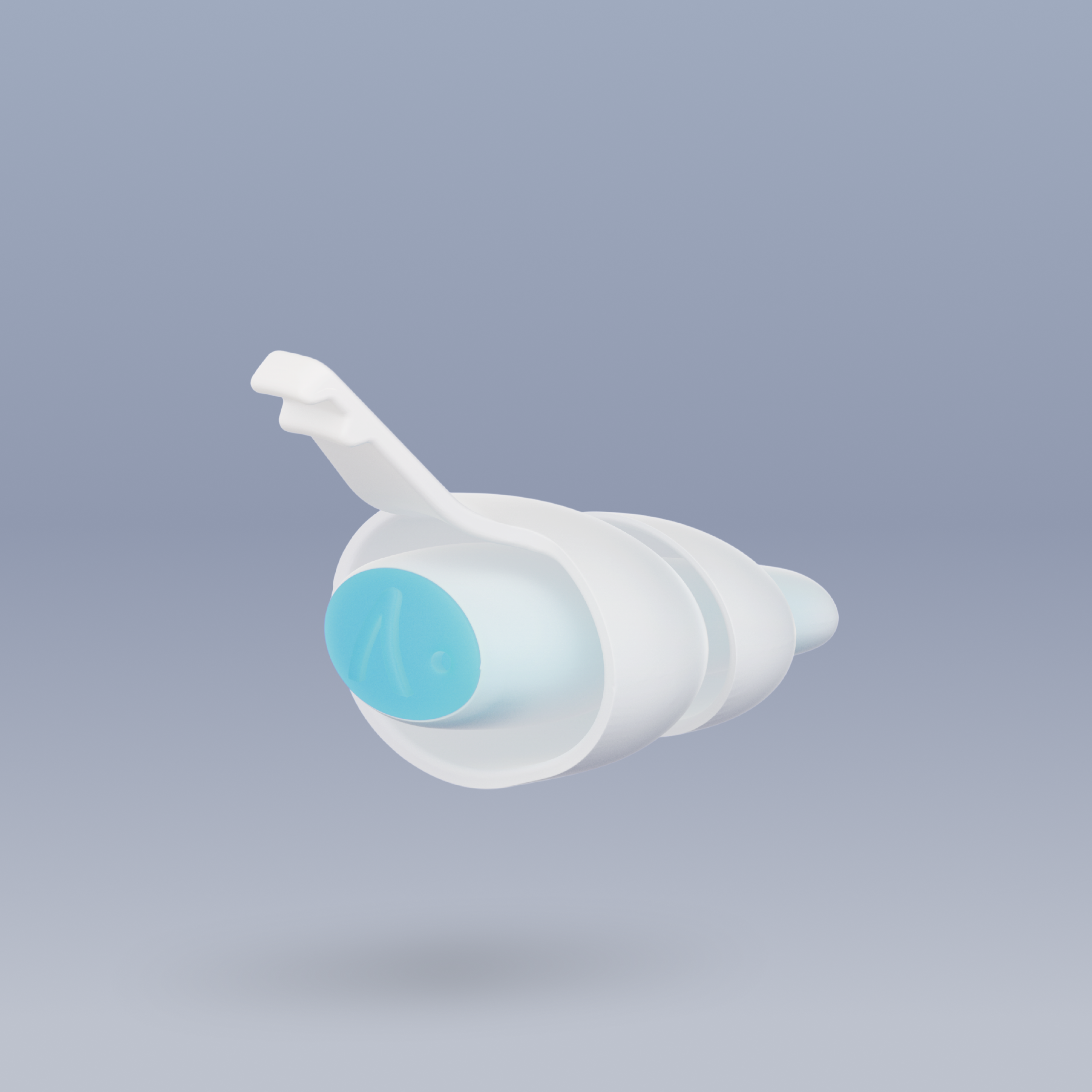
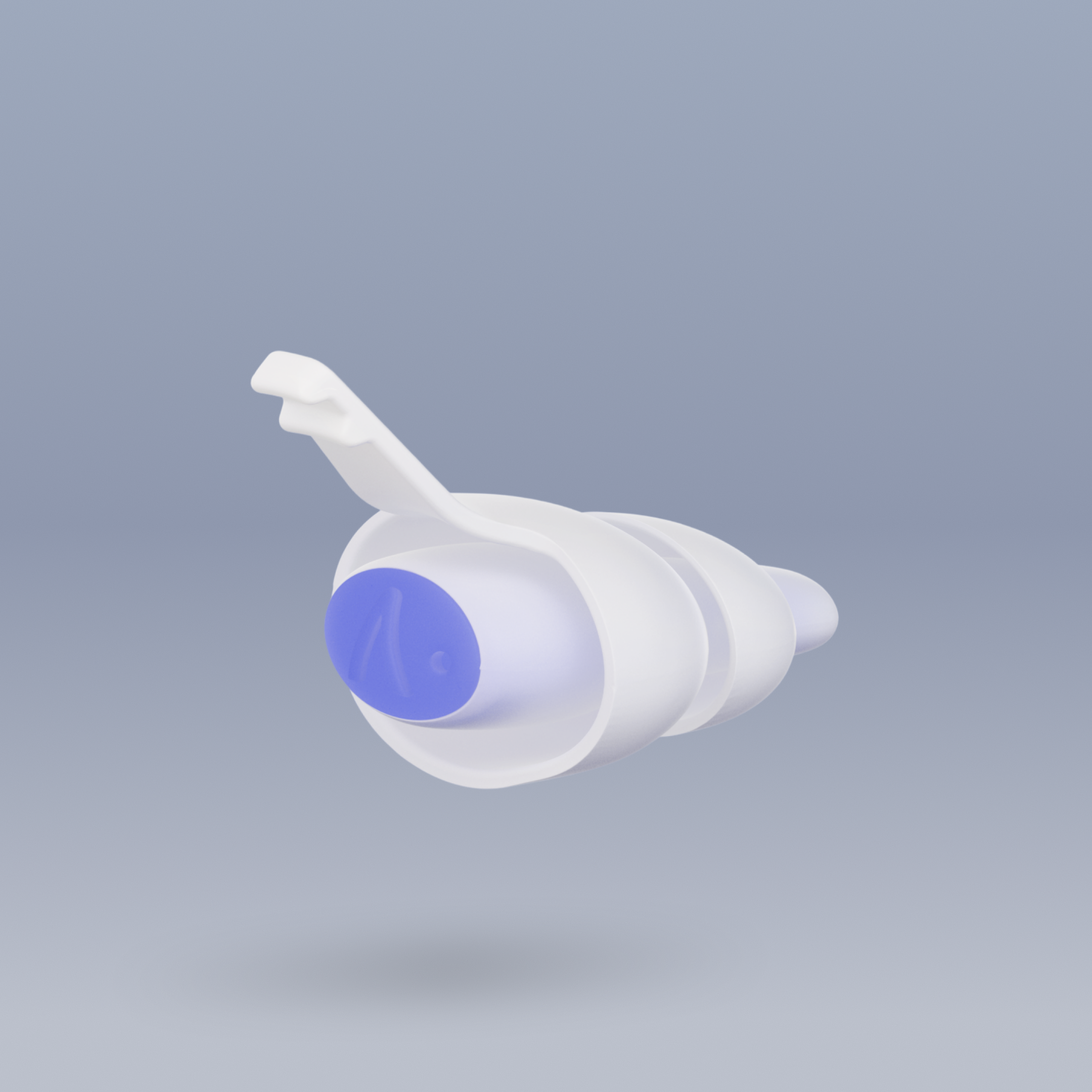
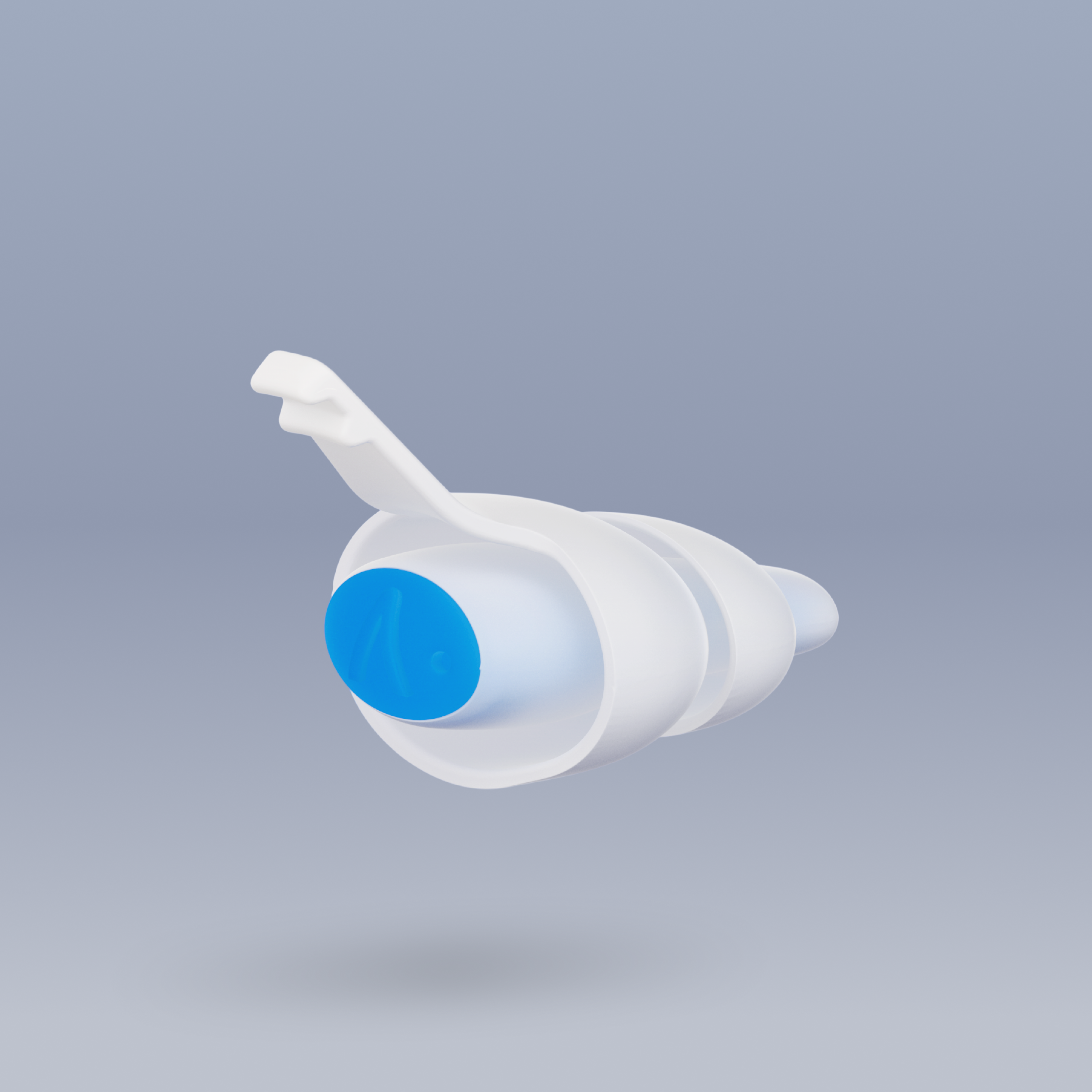
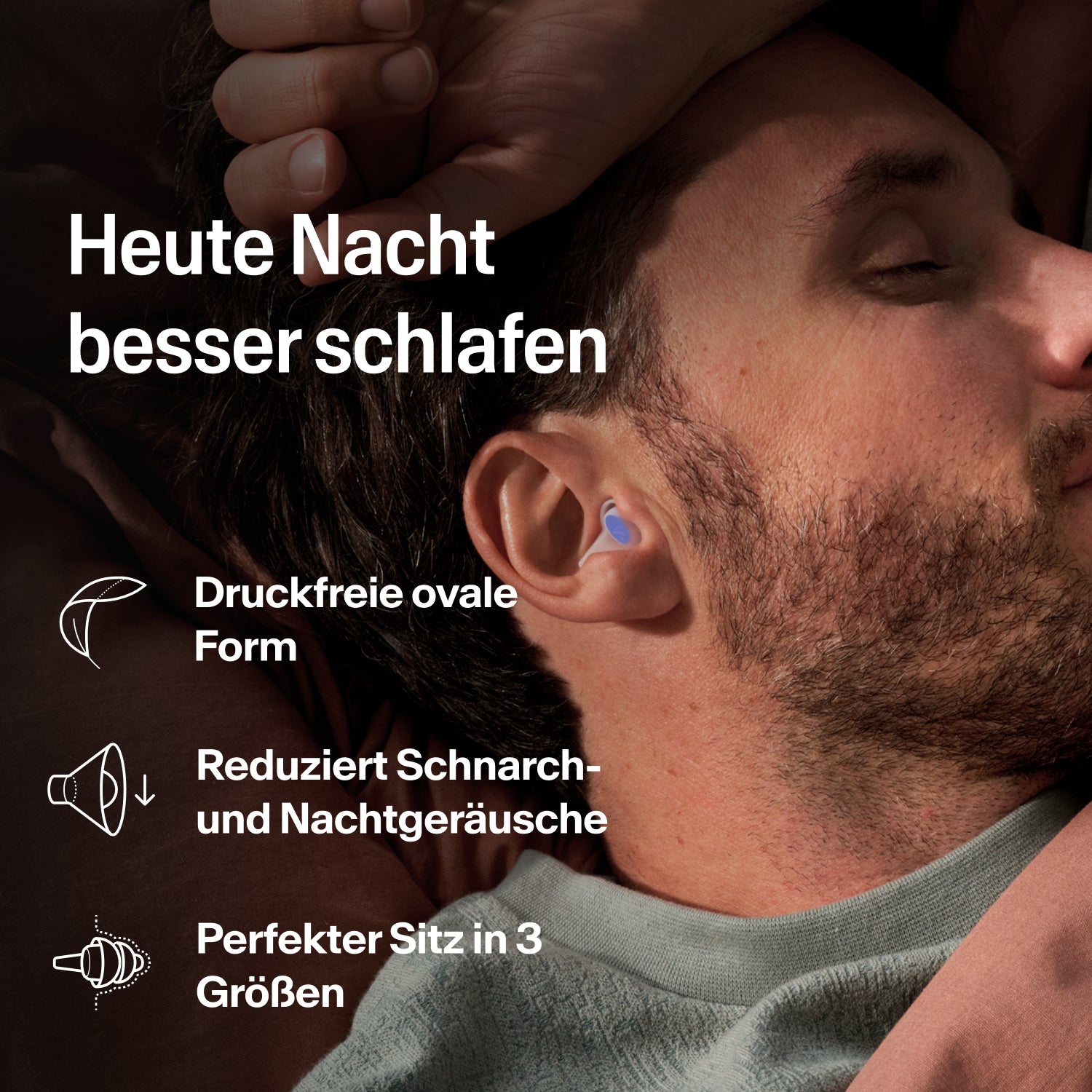
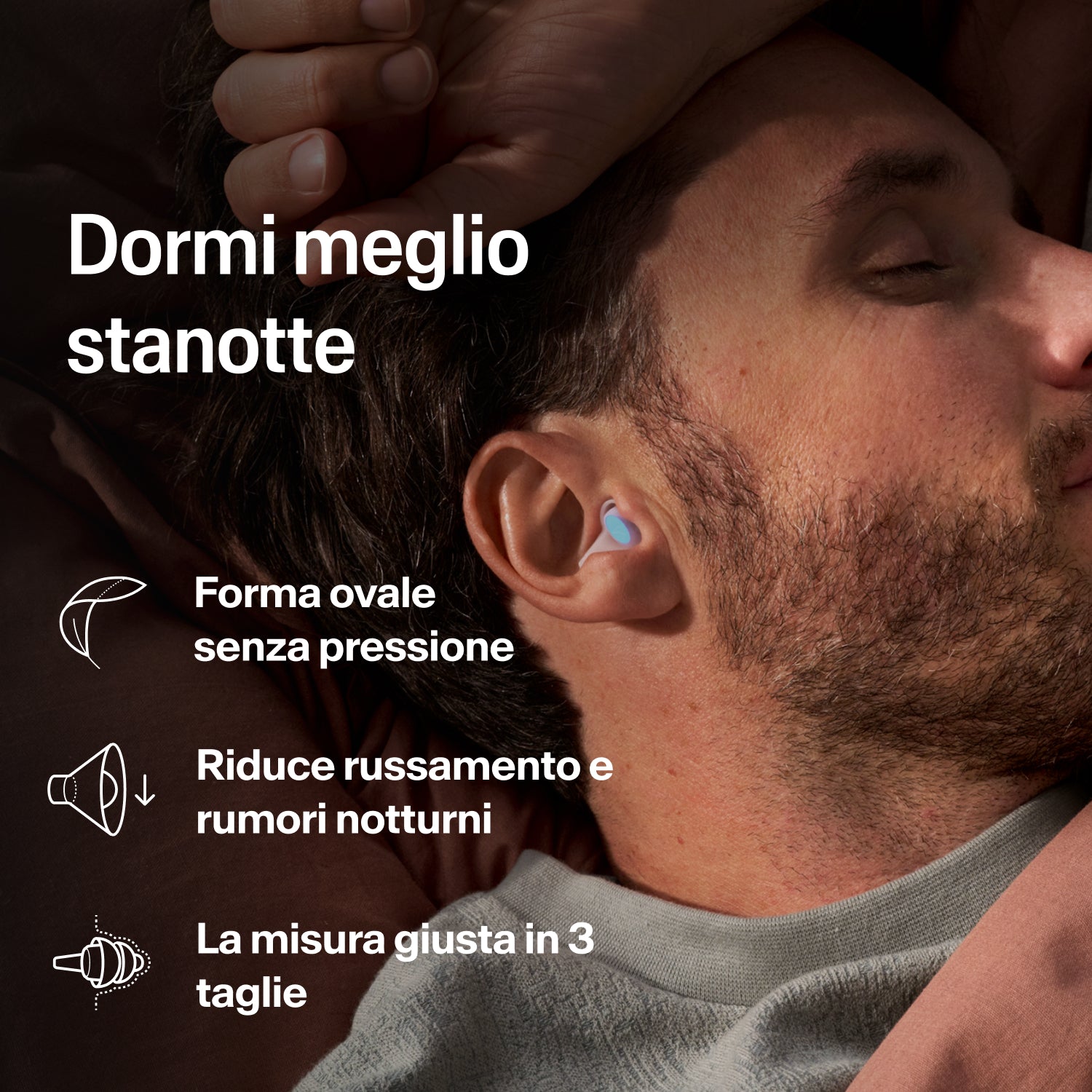
SleepDeep has no hard stem. Pick the right size and it sits flush in your ear, so there's nothing sticking out for the pillow to push against. That makes these earplugs for side sleepers a good match if you toss and turn. SNR: 27 dB. Buying for the first time? Start with the multisize pack and find your fit.
SleepSoft: classic filter earplug with a trimmable stem
SleepSoft is a classic filter earplug with a soft stem. If the stem touches your pillow, trim it shorter. Prefer the feel of a classic earplug, but still want to sleep on your side? This is your pick.
SoftSilicone: moldable and non-sticky
SoftSilicone is a moldable putty that you shape to fit over your ear opening. It sits flat, so it doesn't stick out either. A good option if you like to shape your own fit.
Which one for which situation?
Restless side sleeper, or a snoring partner: SleepDeep
Like a classic earplug, and don't mind trimming the stem: SleepSoft
Like to mold your own fit: SoftSilicone
Choosing side-sleeping earplugs for different ears and noises
Every ear is different, and so is every night. The right pair depends on your ears, and on what keeps you awake. Here's how to find it.
Step 1: Find your size
Ears come in all shapes and sizes, and the only way to know what fits yours is to try. Put the earplug in and lie down on your side for a few minutes. It should stay in place, sit flush and feel comfortable. Slipping out or pressing? Try another size.
- SleepDeep: buying for the first time? Start with the multisize pack, so you can try the sizes. Once you know yours, you can order that size next time.
- Silence: all sizes, from XS to L, come in the box. Keep the pair that fits.
Step 2: Pick the type that suits your ears
- Want a flush fit with no stem? SleepDeep.
- Prefer a classic earplug? SleepSoft has a soft stem you can trim if it touches your pillow.
- Like to shape your own fit? SoftSilicone is a moldable putty.
Step 3: Match it to your noise
Not every night asks for the same amount of noise reduction. A bit of traffic is different from a partner who's really sawing logs. Check the SNR on the box: it tells you how much a pair turns the volume down. SleepDeep has an SNR of 27 dB. Higher isn't always better, because a plug that fits and stays put beats a big number on the box.
Step 4: Check the fit again in the morning
Still in place, and does your ear feel fine? Then you've found your pair. If not, try another size or another type.
Frequently Asked Questions
#1 Why do earplugs hurt when I sleep on my side?
On your side, your ear is pressed into the pillow, so any plug that sticks out gets pushed back against your ear all night. That's where the ache comes from. What helps is a plug that sits flush. SleepDeep has no hard stem, so once you've picked the right size there's nothing sticking out for the pillow to press on.
#2 Are earplugs safe for side sleepers, and can they get pushed too deep?
Used the right way, yes: choose a size that fits, keep them clean and take them out if anything hurts. Is it bad to wear earplugs every night? Not if you look after them and give your ears a break now and then. As for pushing too deep: SleepDeep is designed with dual-ring barriers that help keep the plug from sliding too far in. Still feels lodged? Ease it out slowly, never force it, and see a doctor if it won't come out.
#3 Which earplugs suit side sleepers with small ears?
Ear plugs for small ears start with the right size. Buying SleepDeep for the first time? Start with the multisize pack and find the size that sits flush. Prefer to shape your own fit? SoftSilicone is a moldable putty that adapts to your ear. Searching for earplugs for small ear canals? Try both and keep the pair that feels comfortable lying down.
#4 How can I stop my hair from getting stuck in my earplugs while side sleeping?
Wax ear plugs for sleeping can feel sticky, and on your side, long hair can cling to them overnight. Silicone ear plugs for sleeping can do the same. Choose a reusable earplug with a smooth finish, like SleepDeep or SleepSoft, and rinse it after use. Tie your hair back before bed for extra peace of mind.
#5 Why do foam earplugs fall out when I sleep on my side?
Foam ear plugs for sleeping expand to fill your ear, but a pillow pressing against them, plus a head that moves all night, can nudge them loose. Sleeping earplugs that stay put start with the right fit. Try SleepDeep in the size that sits flush, SleepSoft if you like a classic earplug with a trimmable stem, or SoftSilicone if you like to mold your own fit.
#6 What should I look for in earplugs for side sleeping?
Side sleepers should put four things first:
- Comfort: you should forget you're wearing them.
- A secure fit: the right size, so they stay in place.
- Soft materials: nothing hard pressing against the pillow.
- A shape that doesn't stick out: a flush fit leaves nothing for the pillow to push against.
SleepDeep is designed with exactly this in mind.
#7 What does an NRR of 32 dB mean?
NRR stands for Noise Reduction Rating, the American way of showing how much a hearing protector turns the volume down. It's measured in a lab under ideal conditions. In real life, with a pillow, a moving head and a fit that isn't perfect, you usually get less noise reduction than the number suggests. So an NRR of 32 does not mean 32 dB less noise.
That's why the highest NRR isn't always the right pick. What matters is noise reduction that suits your night. Need to hear your alarm or your kids? Then maximum reduction may not be what you want. Choose a rating that fits your situation, and a plug that stays comfortable and in place.
#8 How to choose the right noise cancelling earplugs for sleeping?
Noise cancelling earplugs for sleeping? Earplugs reduce noise. They don't cancel it actively like electronic headphones do. What you can choose is how much the volume goes down, and what suits you depends on four things:
- Noise reduction: check the SNR on the box and match it to what keeps you awake.
- Comfort: a soft plug you don't feel.
- Fit: the right size, so it stays put.
- Sleeping position: on your side, choose a plug that sits flush with your ear so the pillow can't press against it.
Conclusion: Find the right earplugs for your sleep needs
Side sleeping and earplugs can go together, as long as you pick the right pair. A quick recap:
- Nothing should stick out. On your side, your ear is pressed into the pillow, so a flush fit leaves nothing for the pillow to push against.
- Size matters. Too small slips out, too big feels tight. Not sure which size you are? Try them lying down on your side before you commit.
- Stay flexible. A soft plug moves with you when you turn.
- Don't chase the biggest number. The SNR or NRR on the box is measured in a lab. Choose noise reduction that suits your night, and a plug that stays comfortable and in place.
- Earplugs reduce noise, they don't cancel it. They turn the volume down, so pick the level that suits what keeps you awake.
- Keep them clean. Rinse reusable earplugs and let them dry before you use them again.
Ready to find your pair? SleepDeep is designed for a flush fit for side sleepers, SleepSoft is a classic earplug with a trimmable stem, and SoftSilicone is a moldable putty. Browse the full Earplugs for sleep collection and sleep well, whichever side you're on.