




Sound, hearing damage, and how to protect your ears
Why this is a fun topic?👂
You use your ears all day long, but do you actually know how they work? And did you know that 1 in 7 kids already has some hearing damage? After this presentation, you'll know more about your ears than most adults!
Part 1: How does the ear work?
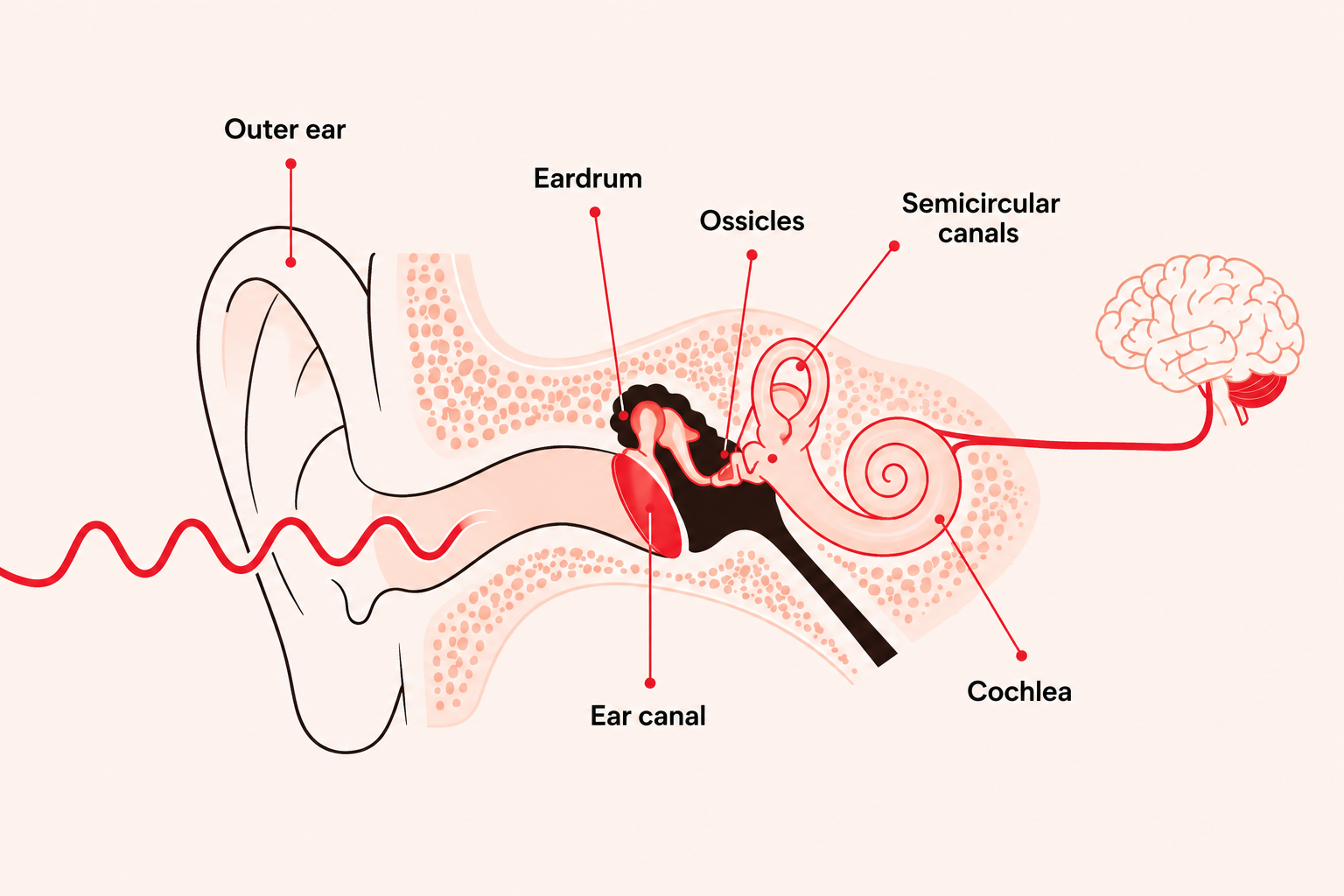
Your ear is a super-smart organ. It picks up sound and sends a message to your brain. But how does that work? It happens in a few steps:
- Sound is a vibration in the air. When someone talks or plays music, the air vibrates along with it.
- Your outer ear (the part you can see) catches that vibration, just like a satellite dish.
- The vibration travels through the ear canal to the eardrum. That starts vibrating too, just like a real drum.
- The vibration is passed on to three tiny bones: the hammer, the anvil, and the stirrup. These are the smallest bones in the human body!
- Those bones send the vibration to the cochlea. This is a snail-shaped organ full of fluid and tiny hairs.
- The hairs move along and send a tiny electrical signal to your brain.
- Your brain translates that signal, and that's how you hear it!
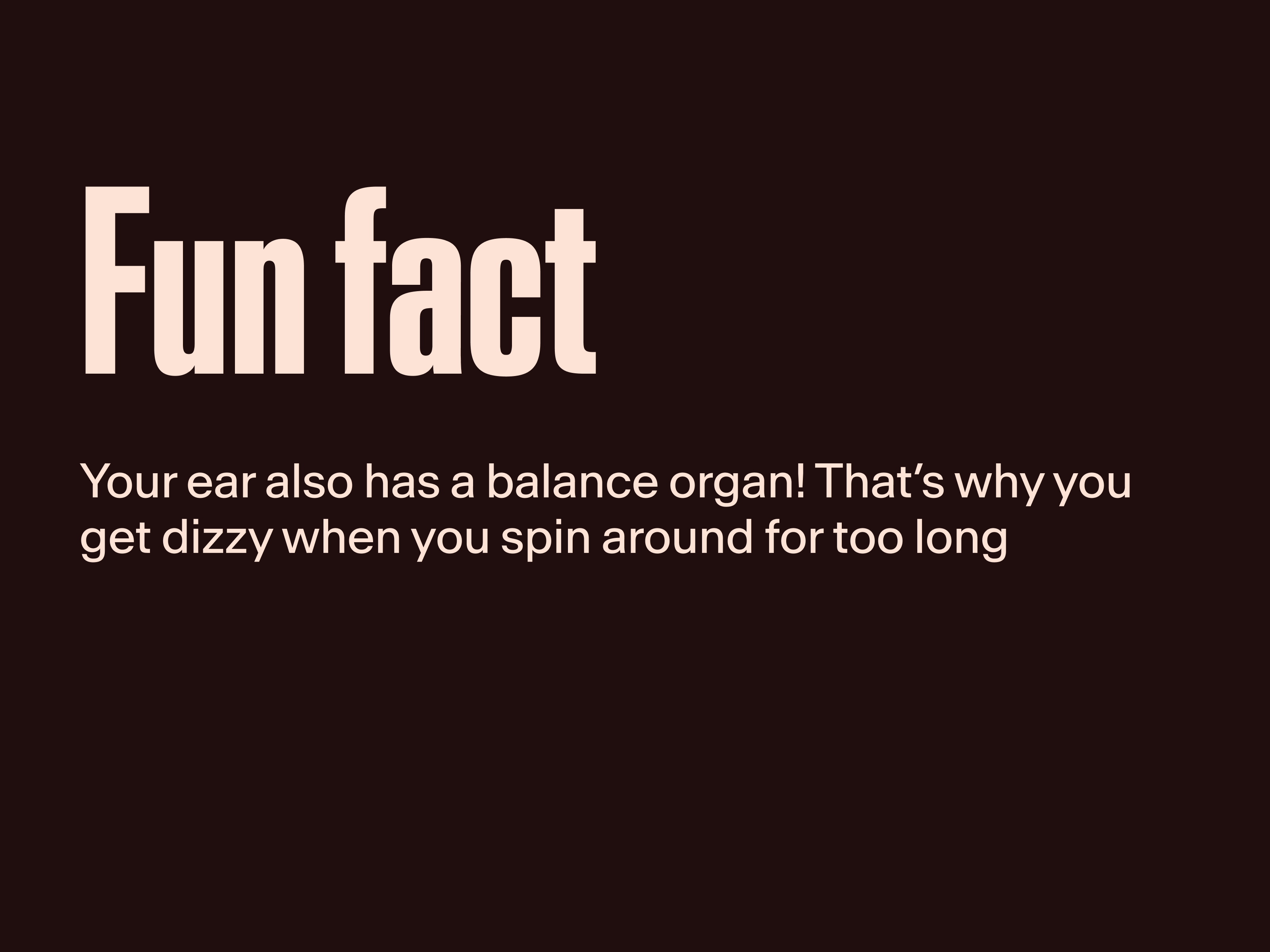
💡 Fun fact:
Your ear also has a balance organ! That'swhy you get dizzy when you spin around for too long.
Part 2: What is sound?
Sound is vibration. Nothing more, nothing less. When a guitar string moves, the air vibrates along with it, and that vibration travels like a wave to your ear.
You can see the sound waves in a slowmotion video: https://www.youtube.com/watch?v=8YGQmV3NxMI
How do we measure sound? With decibels!
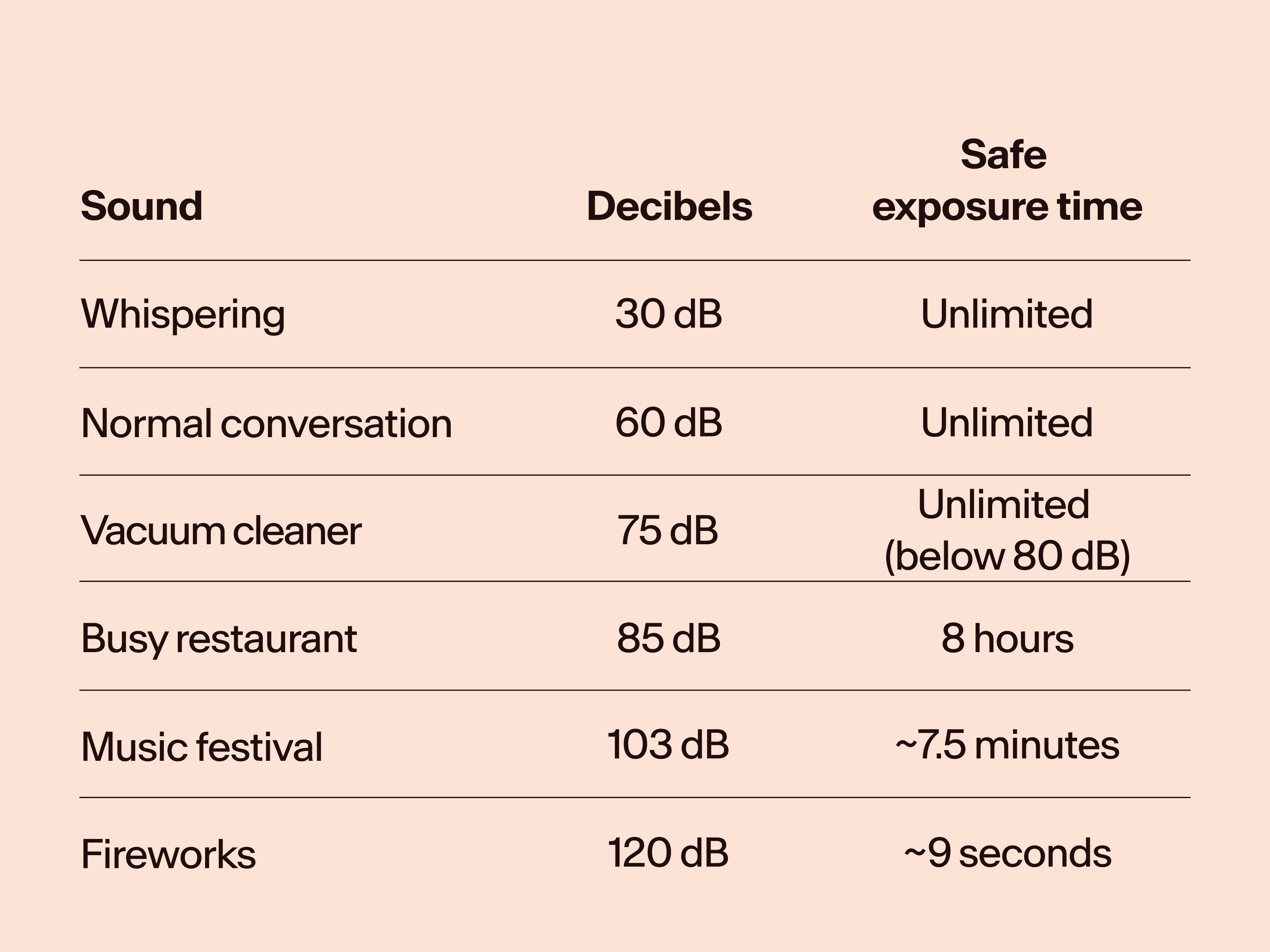
Sound is measured in decibels (dB). The higher the number, the louder the sound. Here are a few examples you might recognize:
Try it yourself: measure the decibels!
Did you know your phone can also be a decibel meter? Download a free app beforehand, such as NIOSH SLM (iPhone) or Sound Meter (Android), and bring your phone to your presentation.
Assignment for the class:
Open the app and first measure how quiet it is when everyone is completely silent. Then have a classmate at the back of the class talk normally for a moment and measure again. Then have a classmate at the front of the class talk normally for a moment and measure it again. Finally, ask the class to cheer as loudly as possible for a few seconds. Compare the results together with the table above: are you already close to a busy restaurant, or maybe even a music festival?
Part 3: How do you turn down the volume?
Good news: you can prevent hearing damage! Here are 4 handy tips:
🔊 Turn the volume down
Use the 60/60 rule: set your headphones to a maximum of 60% volume and don't listen for longer than 60 minutes at a time. Then take a break!
🎧 Use hearing protection
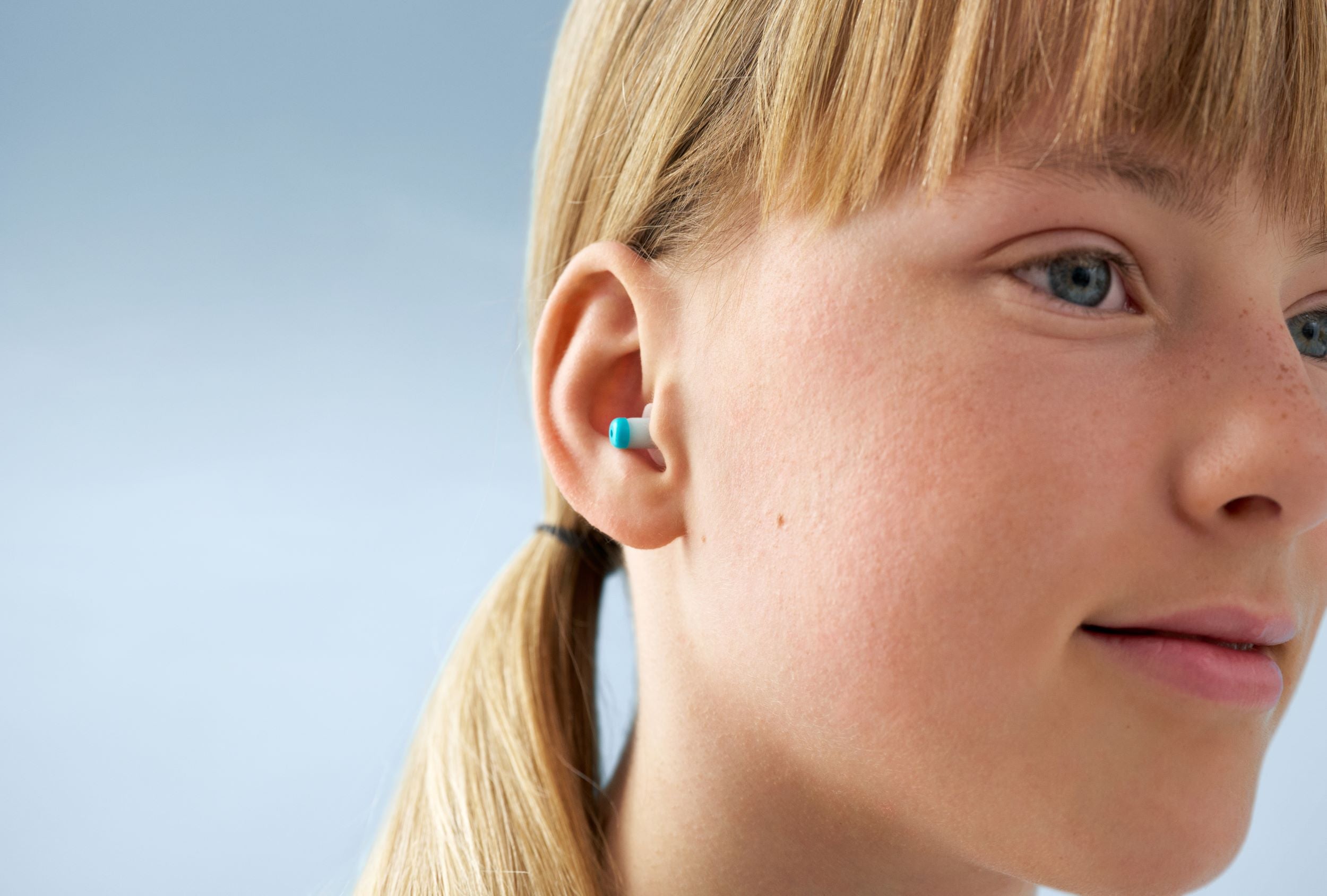
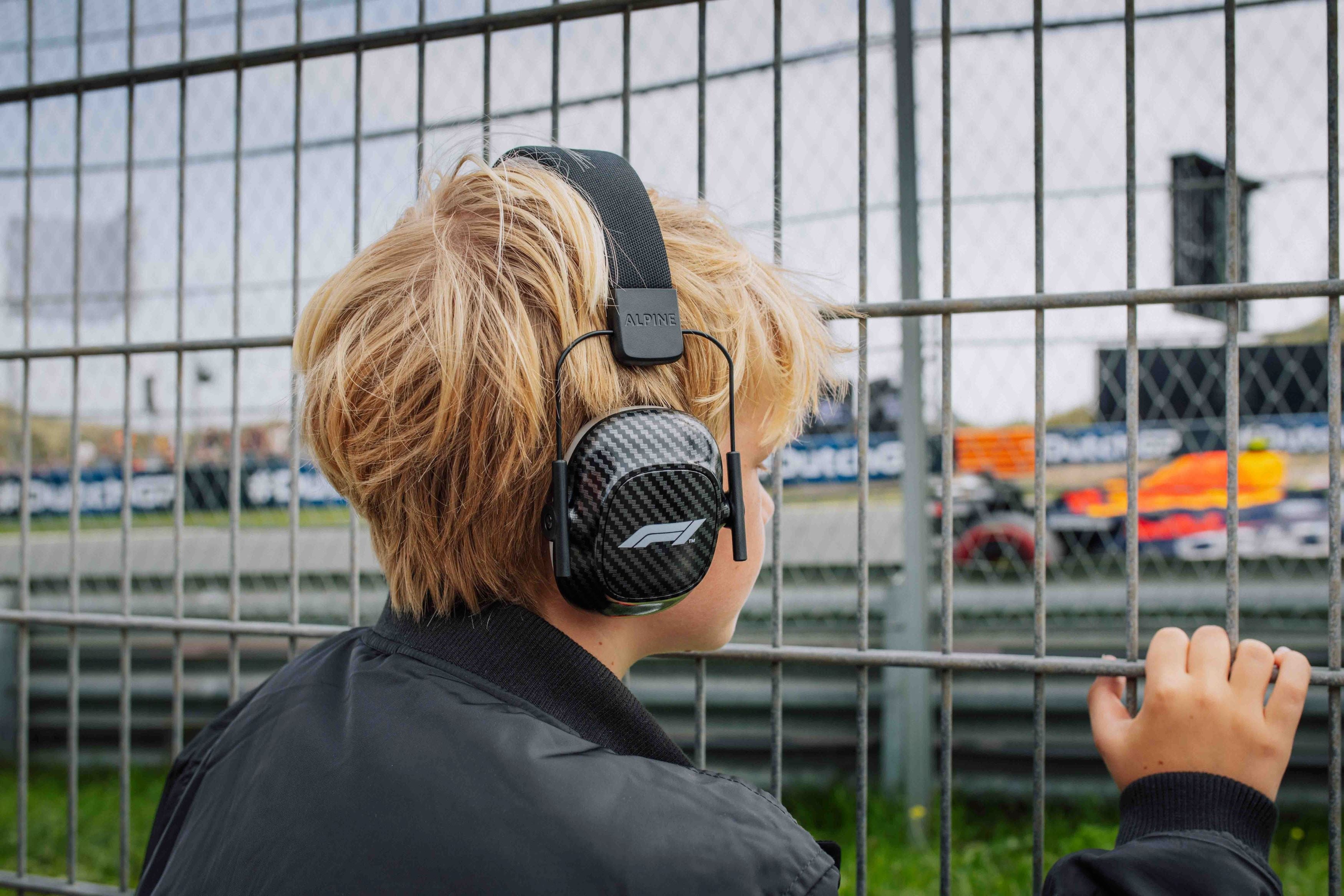
Wear earplugs or earmuffs at fireworks, festivals, or sports events. There are special music earplugs that soften the sound without blocking it out completely.
📊 Keep your distance from speakers
The closer you are to the speakers, the louder the sound. Take a step back — it really helps!
⏸️ Give your ears a rest
After a loud event: go to a quiet spot for a bit. Your ears will partly recover, but no amount of rest fixes damaged hair cells. Prevention is better than cure!


Summary: What should you remember?
- Sound is a vibration that travels through the air to your ear
- Your ear picks up sound and sends a signal to the brain via hair cells in the cochlea
- Sound is measured in decibels (dB)
- Turn the volume down: wear earplugs, keep your distance from speakers and give your ears a break.
Tips for your presentation
- Start with a catchy question for the class: “Who has been to a really loud concert or festival?”
- Bring hearing protection along as a show-and-tell item
- Have the class guess how loud certain sounds are in decibels
- End with the message: Take good care of your ears, because you'll need them for the rest of your life!
Get your Alpine Presentation Kit
What's in the kit?
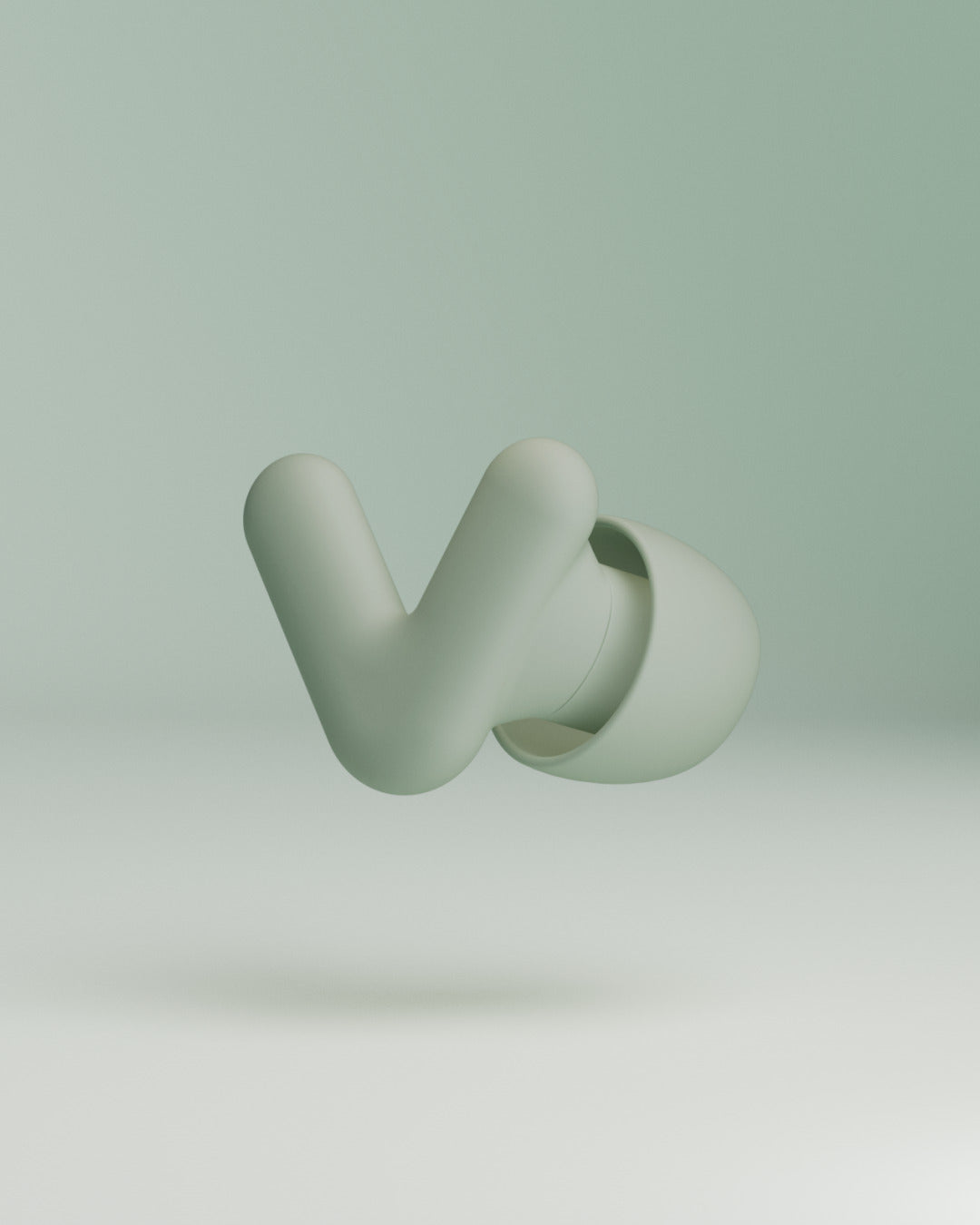
Alpine Silence
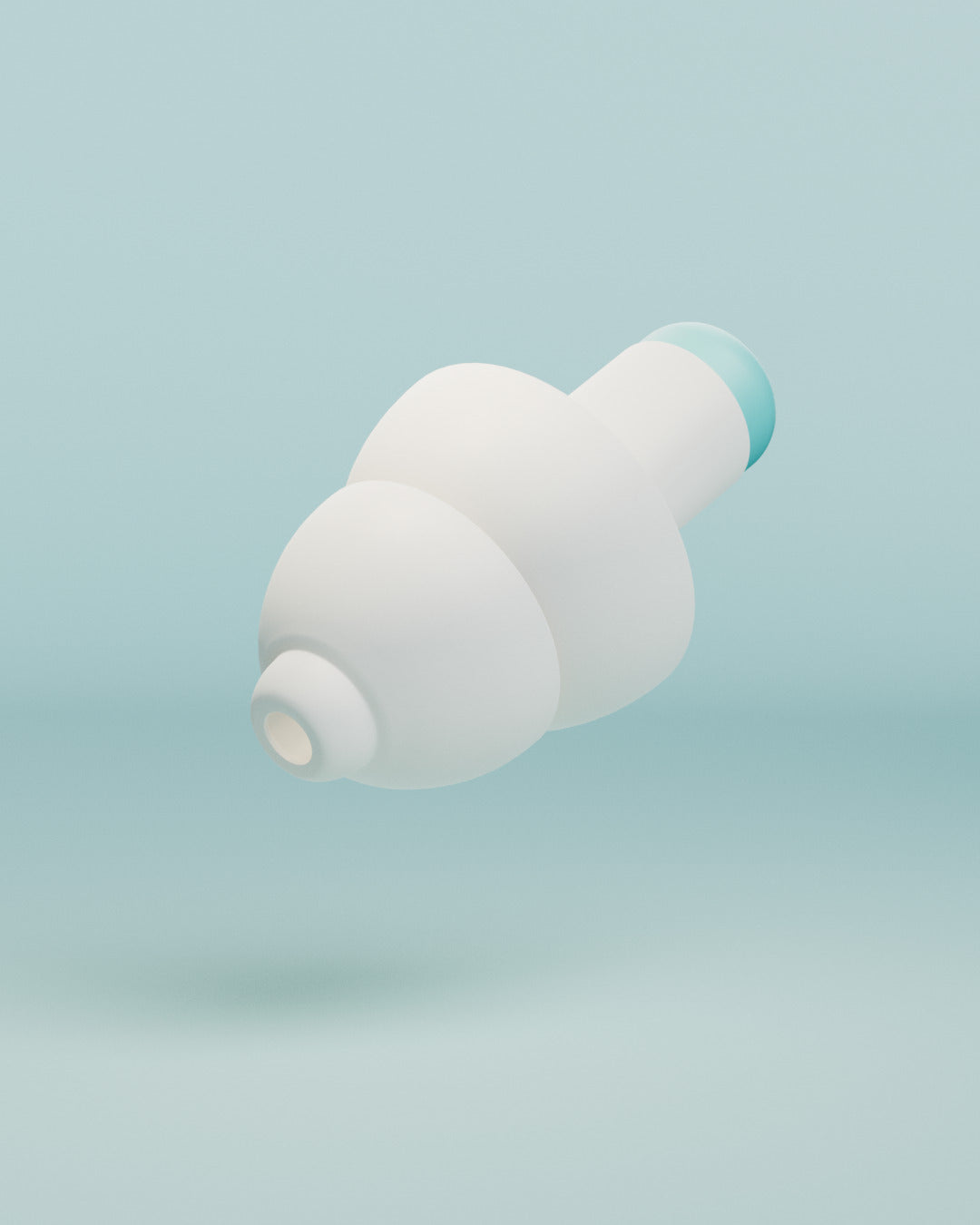
Alpine Pluggies

Alpine Soft Silicone
Want to know more?
Check out our blogs for more information on hearing protection.